




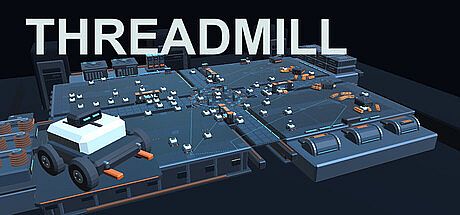


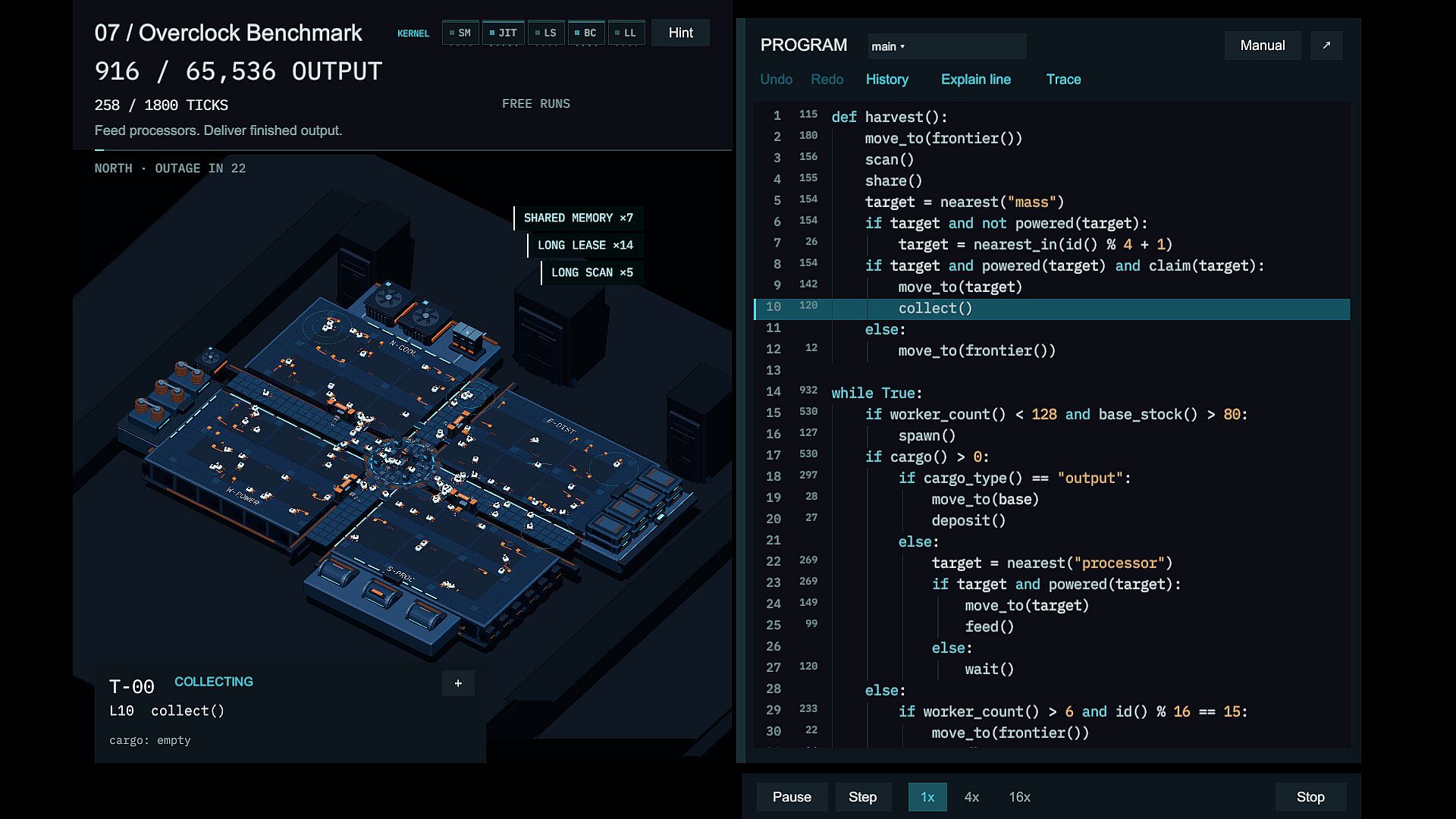
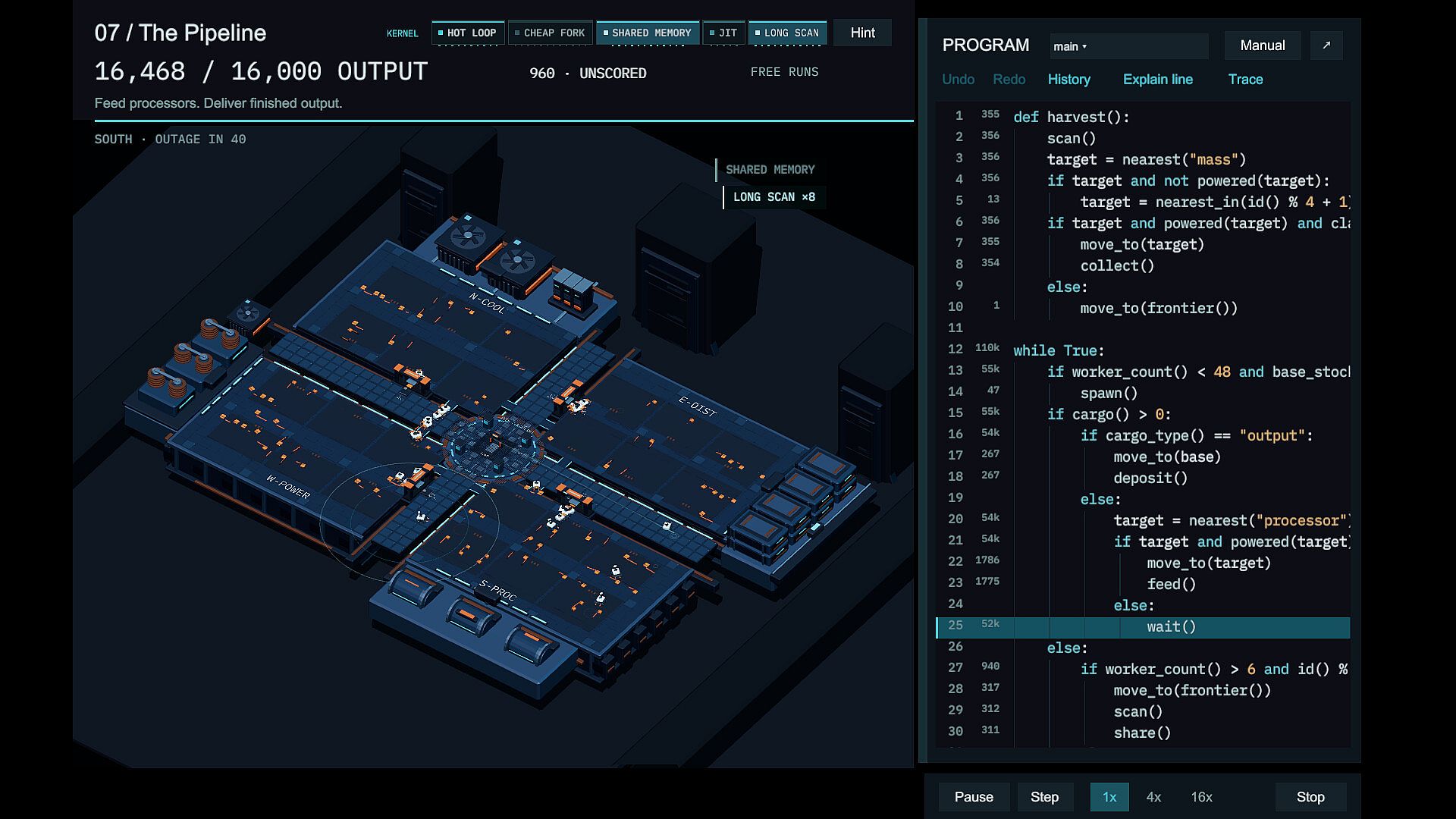
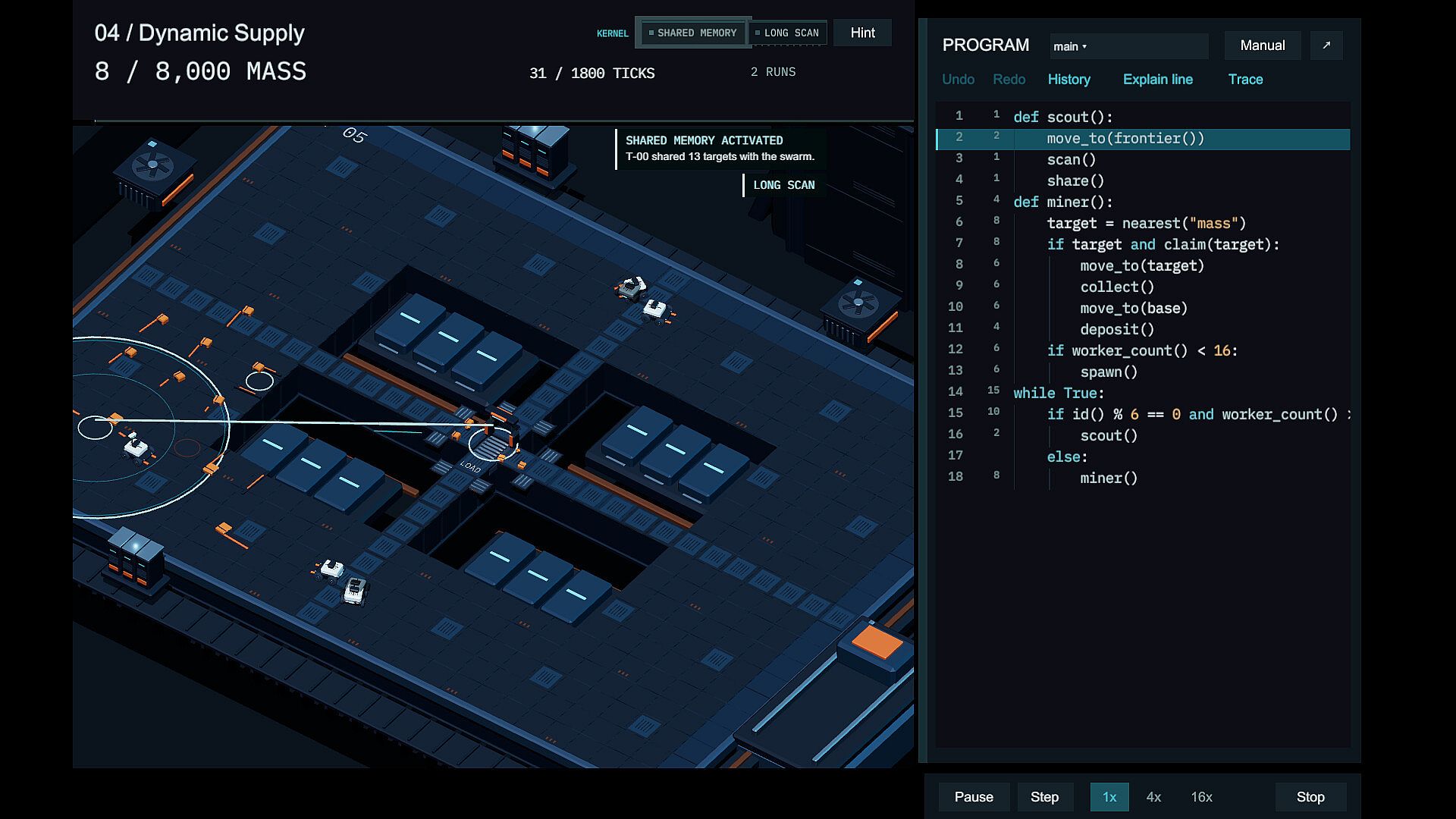
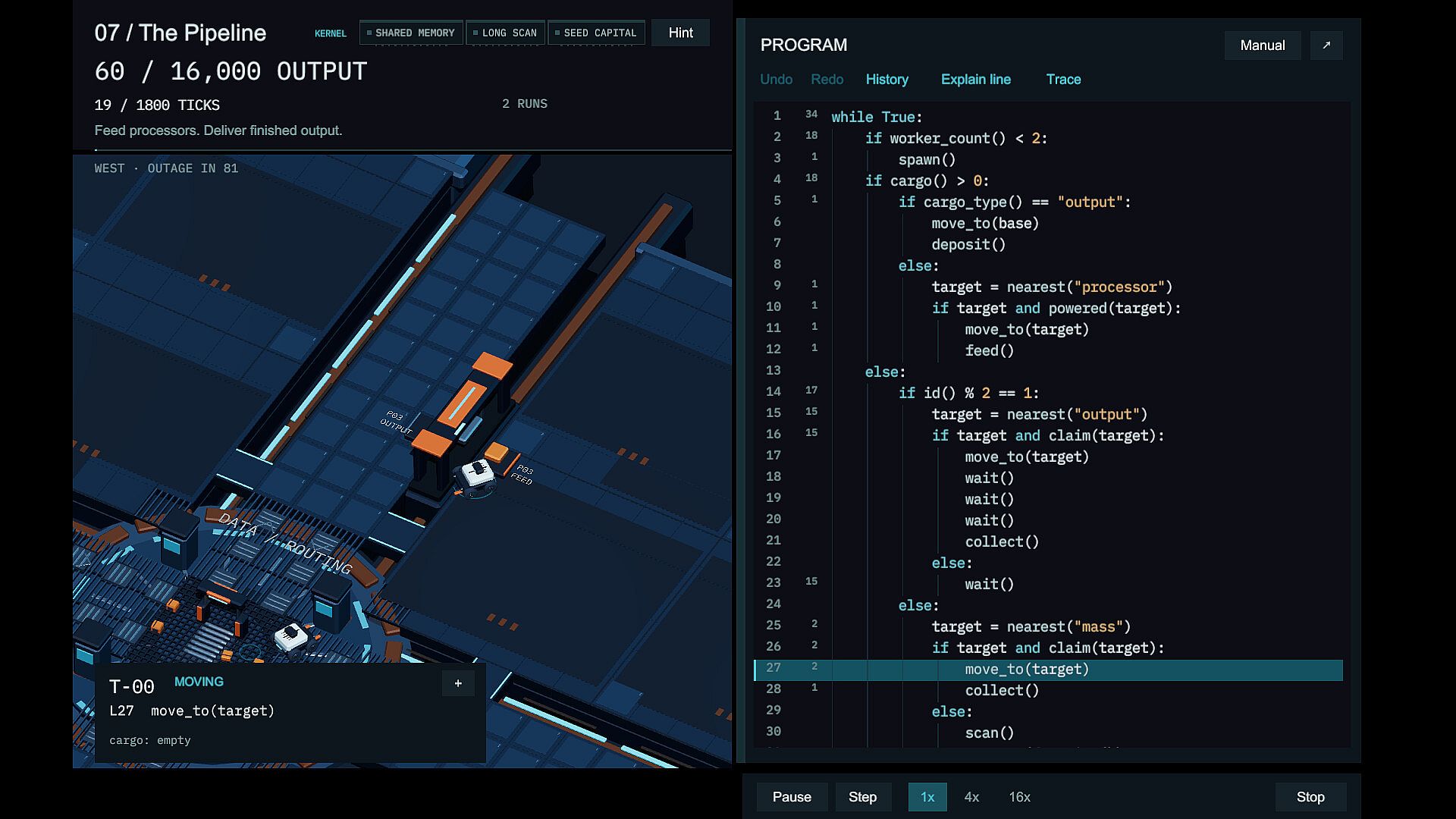
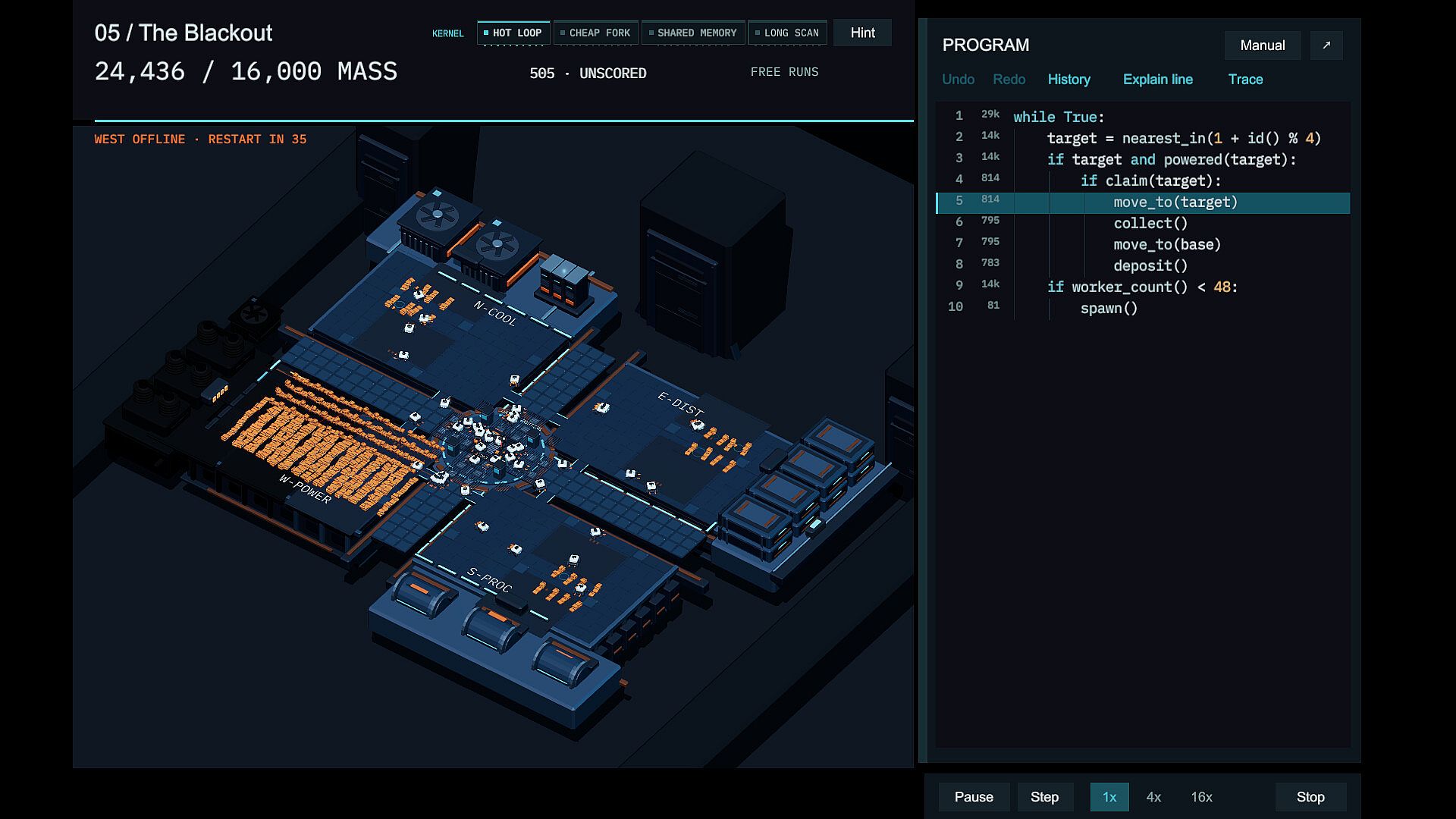
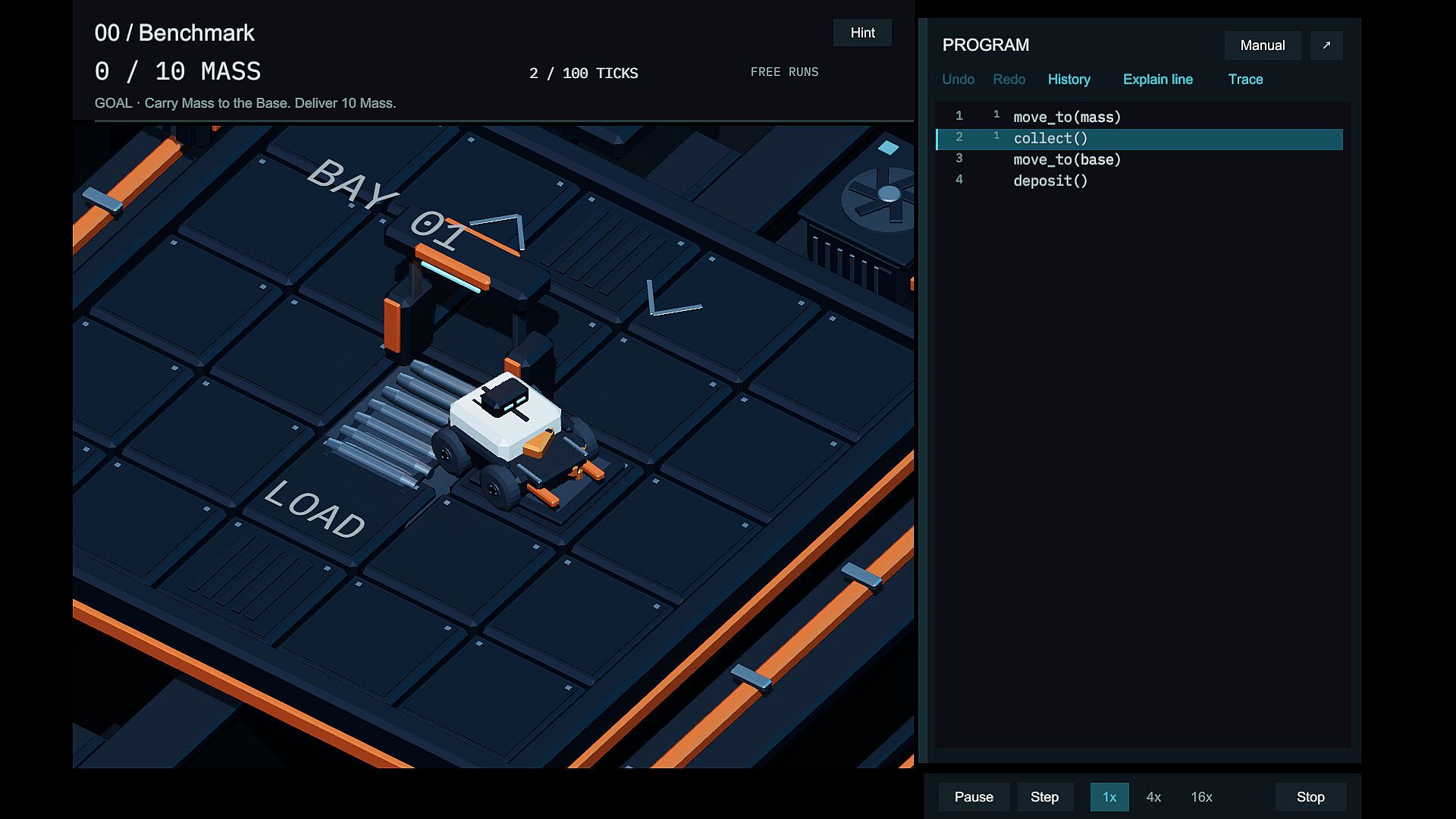
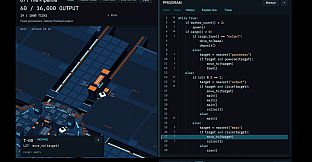
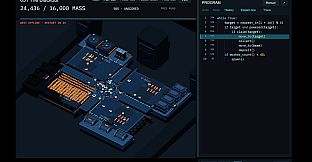
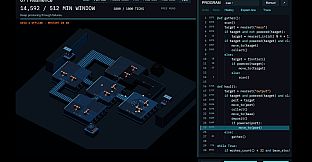
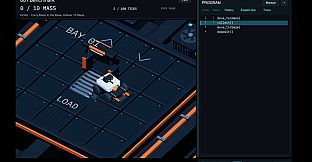
THREADMILL is a strategy, indie, and simulation game for PC in which players write code to direct industrial robots. The experience centers on building and refining a single program that starts with one unit and expands into coordinated swarms of up to 128 robots that all execute the same instructions.
Gameplay
The core loop revolves around writing and iterating on code that every worker follows. A single change to a line can alter the behavior of the entire group once the program runs again. Players begin with basic control over an individual robot and gradually introduce more units while maintaining the same underlying script.
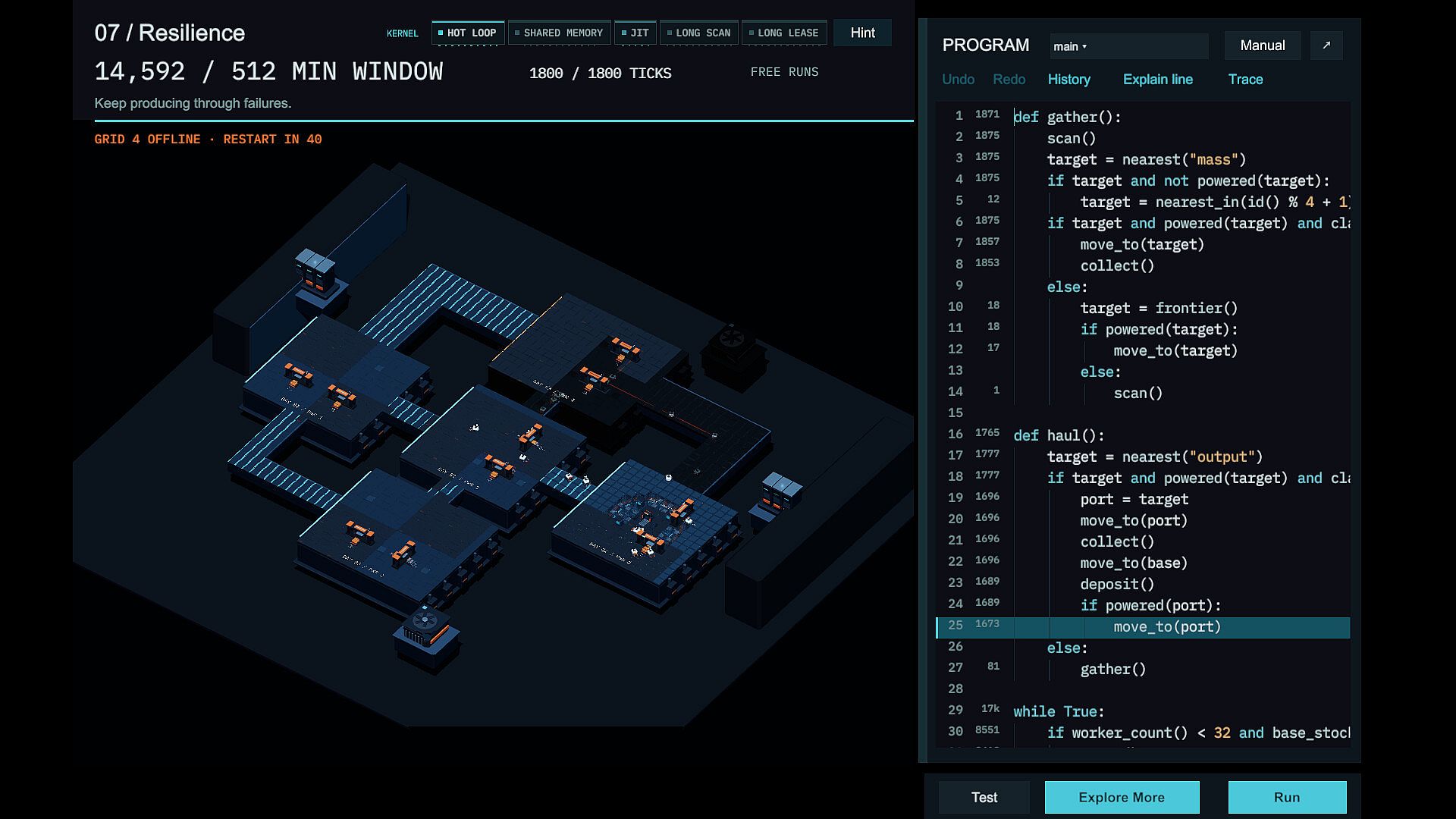
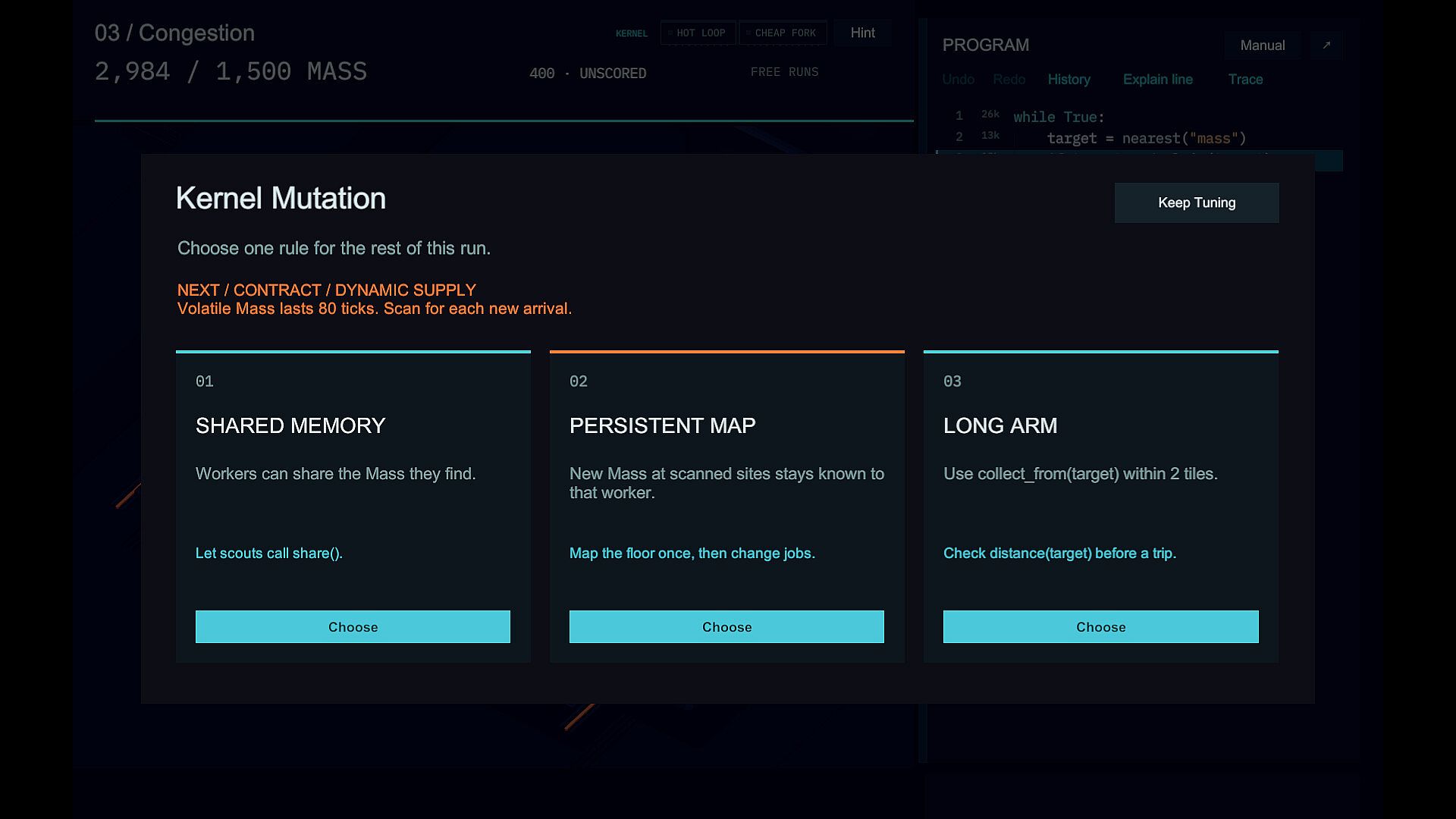
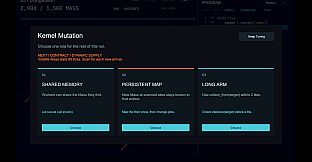
Kernel mutations form a key system for expanding capabilities. These modifications alter what the program can accomplish and activate during runtime, allowing new behaviors to emerge as the workforce grows. Coordination involves directing robots to feed processors and route finished output through a factory layout that the player has programmed.
External pressures force ongoing adjustments. Supply levels fluctuate, power interruptions occur, and initial plans fail under real conditions. Successful play requires rewriting sections of the system on the fly to keep operations running. Generated facilities and seeded challenges present fresh layouts and constraints each time, rewarding code that scales efficiently rather than simply adding more robots.
Game Modes
THREADMILL structures its experience around a continuous cycle of programming, scaling, and adaptation rather than separate named modes. The primary focus remains on building and maintaining one evolving program across sessions. Procedural elements generate new factory layouts and task sets, providing repeated opportunities to test and refine the same codebase against different conditions.
Players progress by increasing the number of active robots while preserving program stability. The emphasis stays on optimization: discovering efficient instruction sequences that handle larger swarms without requiring constant manual intervention. This approach creates a single-player sandbox where the challenge lies in code quality and system resilience instead of competitive or story-driven branches.
Core Systems and Progression
Progression ties directly to the number of robots under control and the sophistication of the kernel mutations applied. Early stages involve simple commands for a lone unit, while later stages demand instructions that manage resource flow, processor feeding, and output movement across an entire facility. The same program must handle both routine operation and sudden disruptions.
Optimization becomes the central skill. More robots do not automatically improve results; poorly written code can lead to bottlenecks or failures even with a large workforce. Players learn to balance complexity with reliability, rewriting sections to accommodate new challenges presented by generated content.
Is It Worth Playing?
THREADMILL suits players who enjoy programming mechanics within a strategy and simulation framework. The game rewards careful iteration on code and the satisfaction of watching a single script manage an expanding industrial system. Those drawn to systems thinking, debugging under pressure, and procedural problem solving will find the core loop engaging.
The experience remains single-player and focused on one evolving program, making it a good fit for sessions centered on refinement rather than quick matches or multiplayer coordination. Without confirmed updates or additional content layers, the title stands on its foundational mechanics of code scaling and adaptation. Players interested in indie simulations that blend coding with factory management will likely appreciate the depth available from the start.











