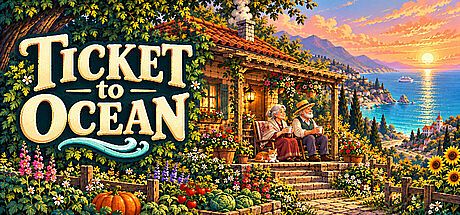


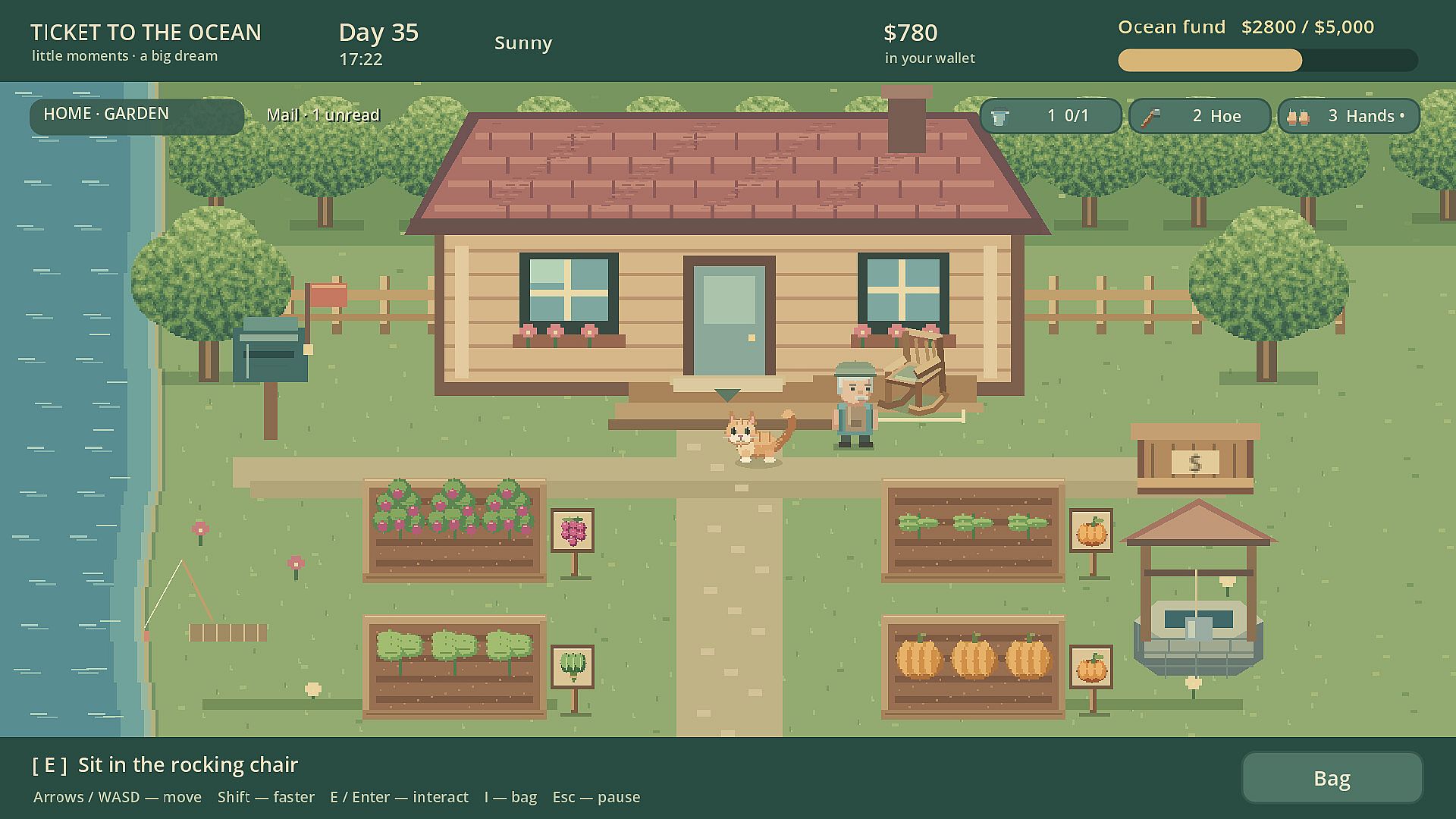
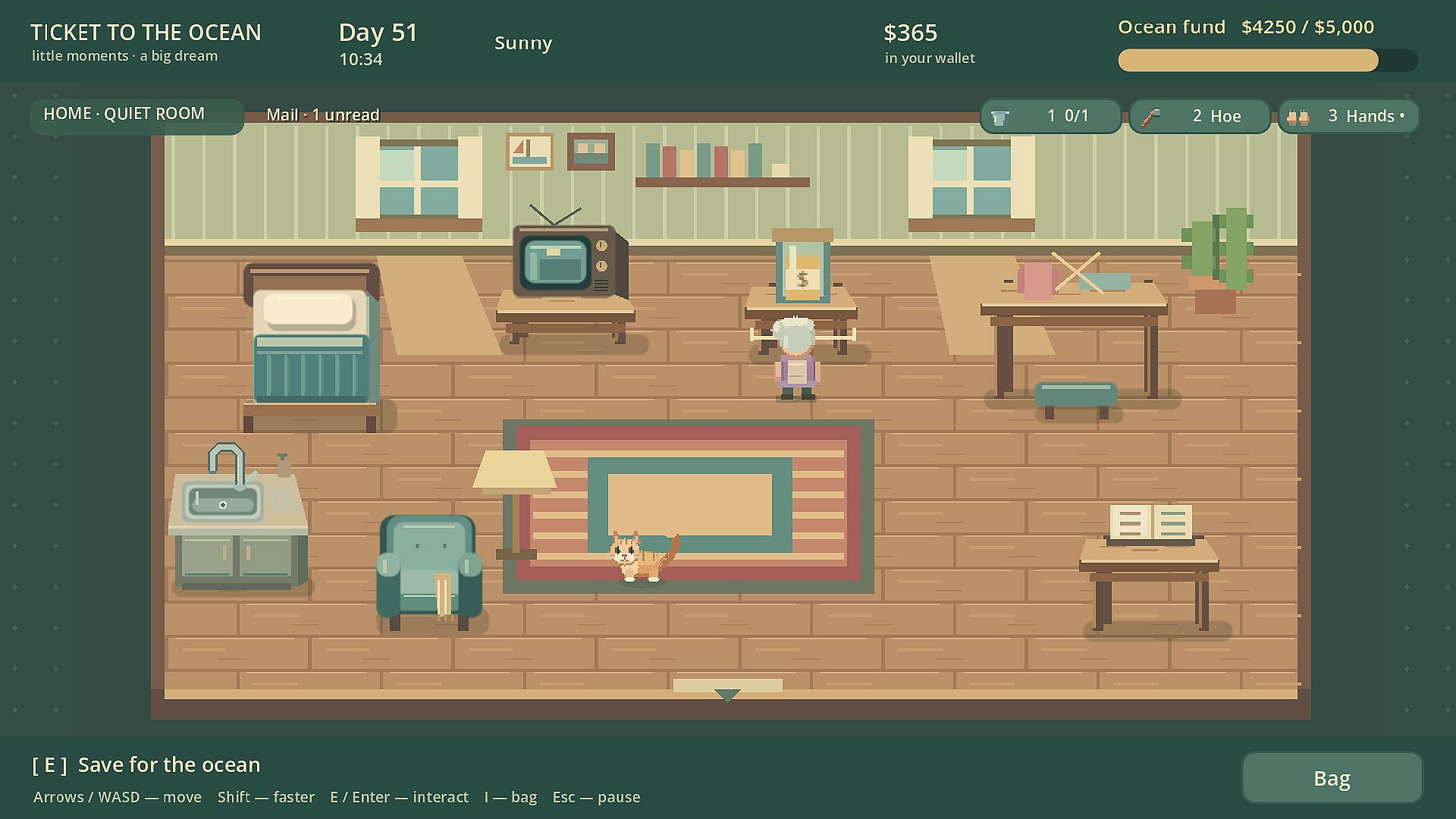
Ticket to Ocean is a casual simulation game set in a peaceful rural environment where players step into the role of a grandparent living a quiet daily routine while working toward one clear goal. The experience centers on simple chores, creative hobbies, and gradual home improvements, all without time pressure or failure states. Players manage a small home and yard, interact with a cat, and decide how to allocate earnings between immediate comforts and long-term savings for an ocean cruise ticket priced at five thousand dollars.
Gameplay
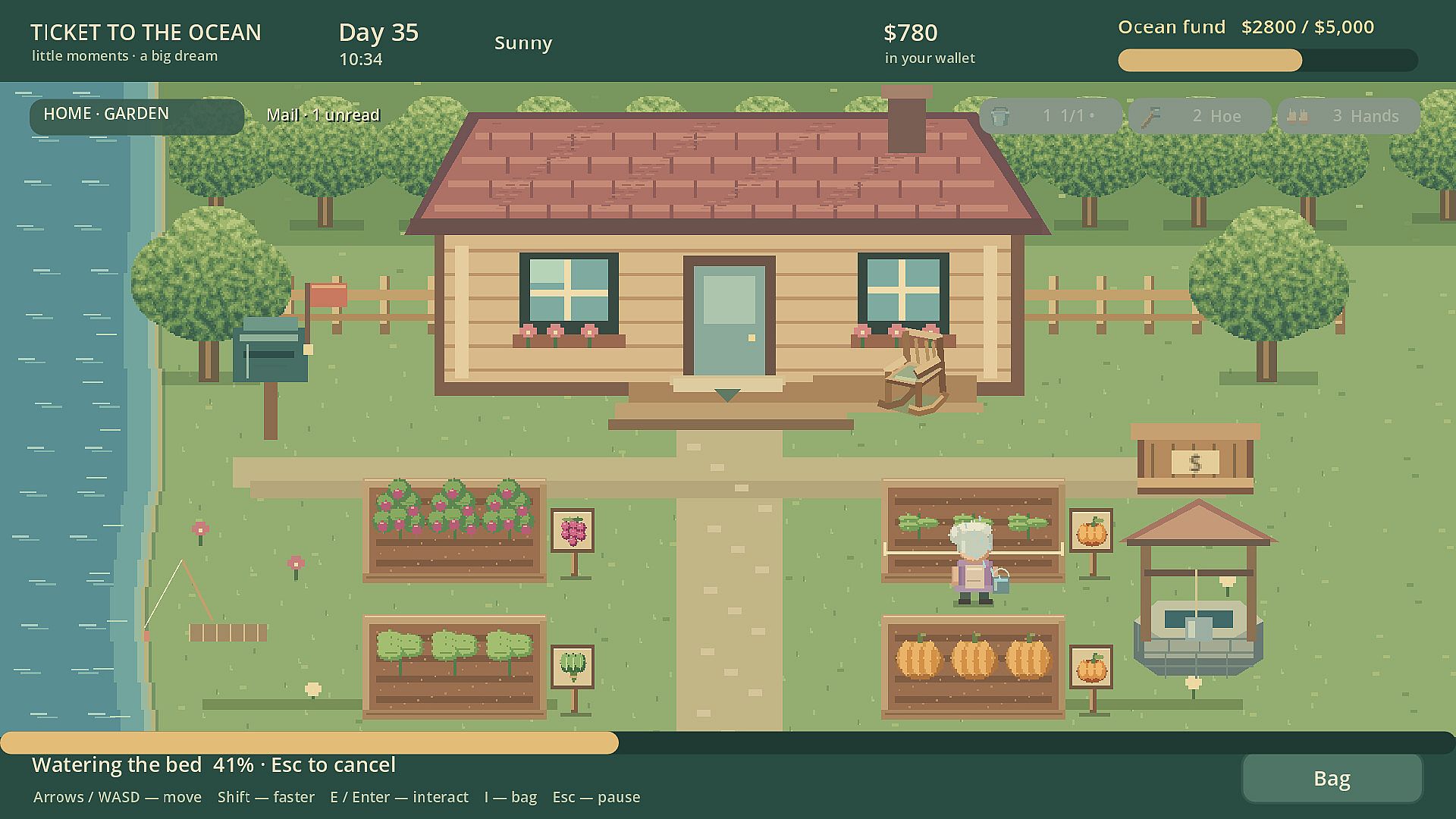
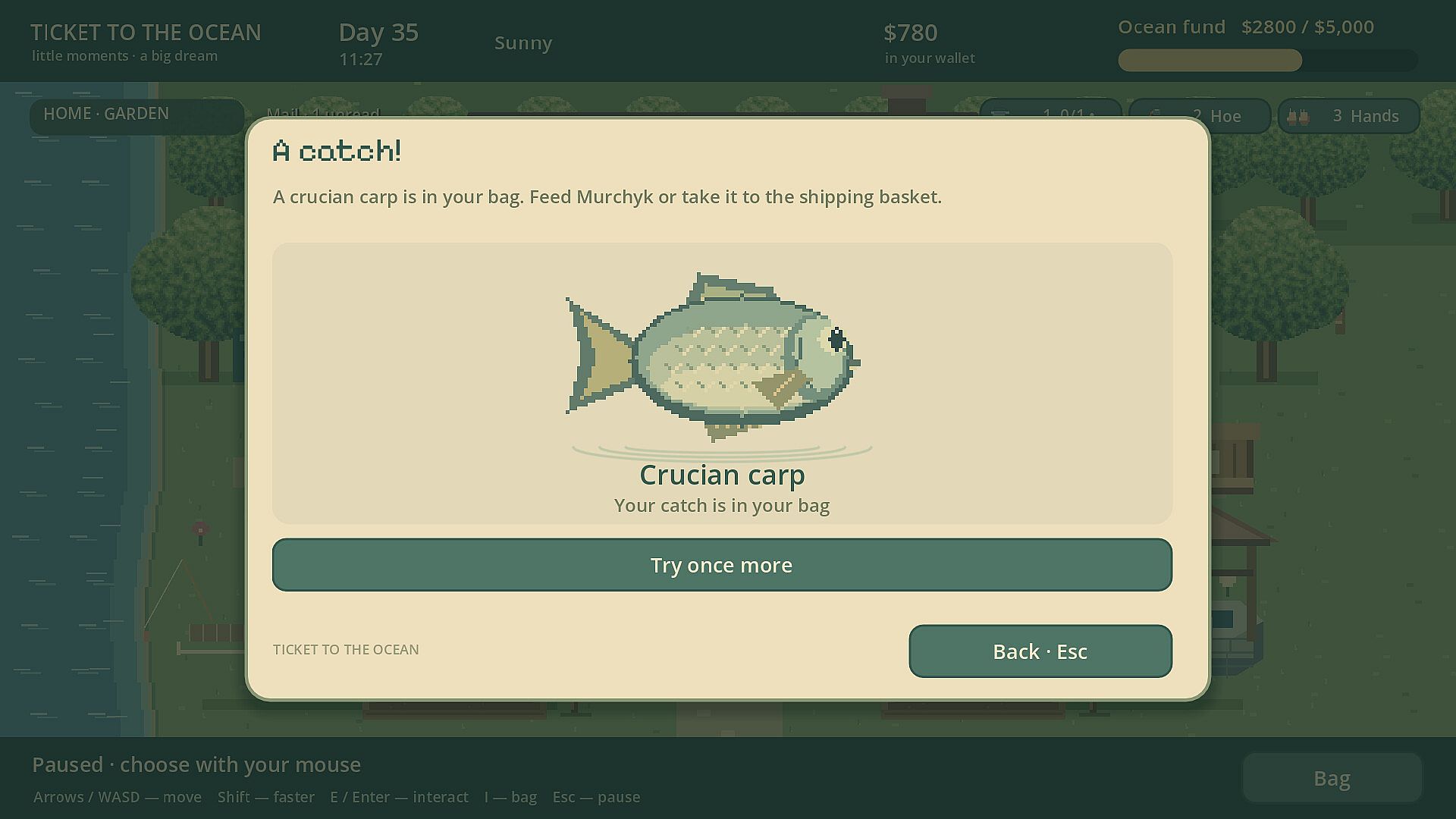
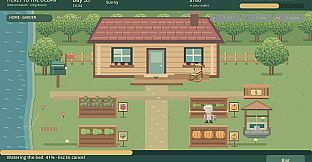
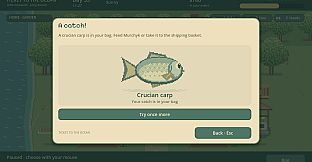
Each day starts at eight in the morning with routine checks on the television for weather and market prices. Gardening involves watering beds using water from a well, though plants remain healthy even if neglected for a time. Players can grow fast-maturing radishes, raspberries, or attempt larger projects like a prize pumpkin intended for a local autumn fair. Fishing provides another outdoor activity that fits into the unhurried schedule.
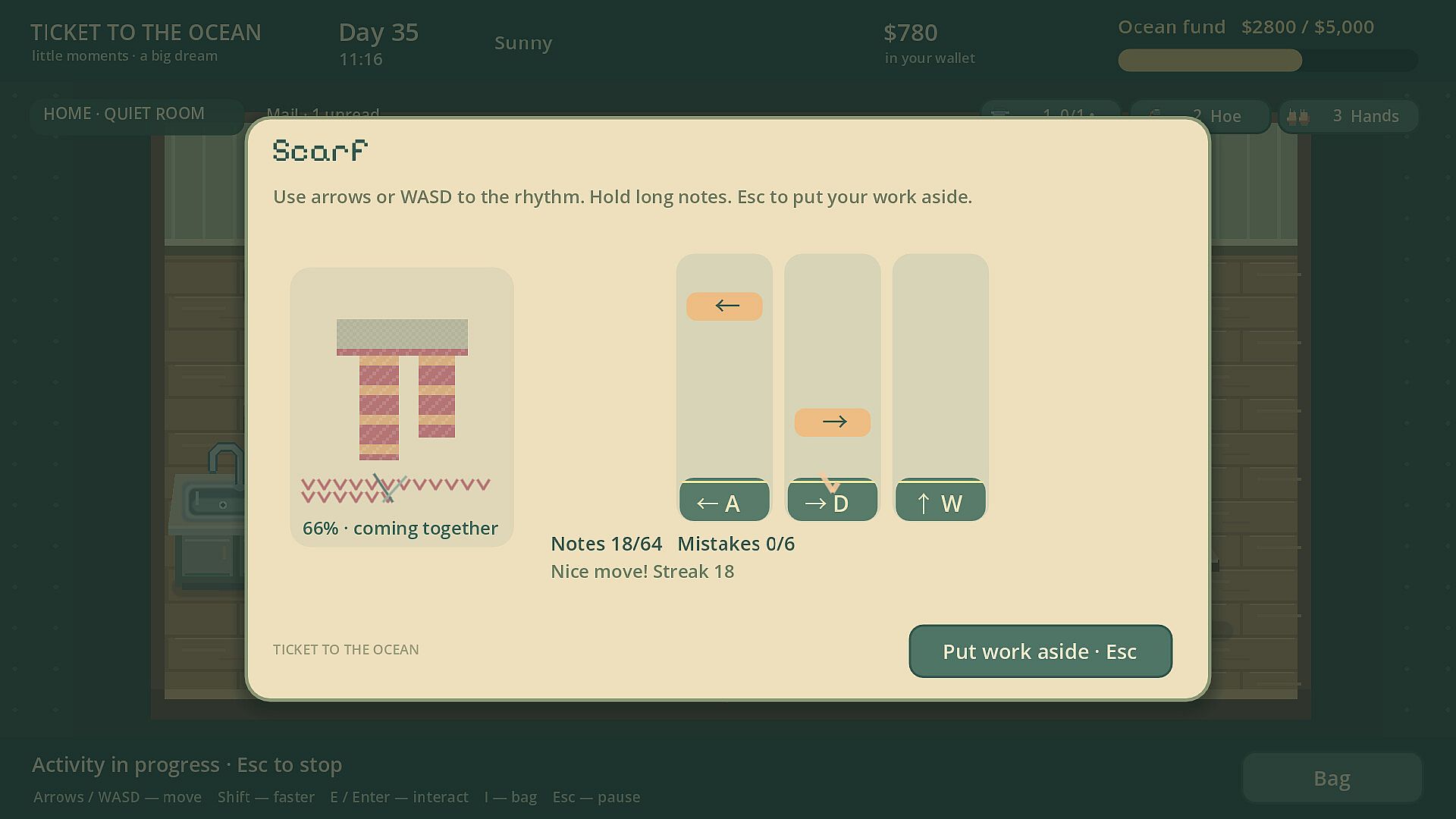
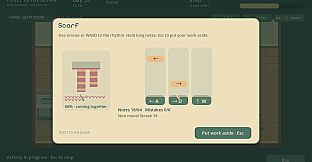
Crafting forms a central loop. Selecting the grandpa character leads to woodworking sessions that produce figurines and clocks through a rhythm-based mini-game. Choosing the grandma character shifts the focus to knitting scarves and sweaters with a similar rhythmic input. Completed items can be sold at festivals or mailed to family members in the city. Mistakes during crafting do not consume materials permanently, allowing repeated attempts without loss.
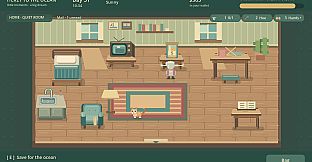
Home customization uses earnings to add furniture, change wall colors, or place decorative items such as a monstera plant or fresh window-box flowers. Letters arrive via a mailbox flag system, delivering family updates and occasional keepsakes that players can display indoors. The ginger cat provides ambient presence throughout these activities.
Game Modes
The game operates as a single continuous simulation without separate named modes or competitive structures. All activities occur within the same daily cycle that players advance at their own speed. The choice between grandpa and grandma defines the primary hobby and associated crafting rhythm, but both paths share the same gardening, fishing, home-building, and saving systems. Progress toward the ocean cruise remains the unifying objective across every session.
Core Systems and Daily Life
Two separate money containers keep spending decisions clear. Earnings enter a daily wallet for immediate purchases while a dedicated glass jar holds funds reserved exclusively for the cruise ticket. This separation encourages thoughtful choices about whether to upgrade the living space now or accelerate the long-term goal. Festivals offer periodic opportunities to sell crafted goods, and family correspondence adds sentimental value through exchanged gifts and received decorations.
The simulation emphasizes relaxation through environmental details such as rain sounds and the cat's presence. No penalties apply for slow progress or missed tasks, allowing sessions to last as long or as short as desired. The overall loop combines light resource management with meditative crafting and incremental environmental changes.
Is It Worth Playing?
Ticket to Ocean suits players who enjoy relaxed single-player simulation experiences focused on routine and personal goals rather than challenges or competition. The absence of deadlines or consequences makes it appropriate for short daily sessions or longer relaxed play. Because the game remains in a coming-soon state with no released version or player feedback available, any decision to purchase should rest on interest in its described cozy mechanics of gardening, rhythm crafting, home decoration, and steady saving. Those seeking a low-pressure environment with clear progression toward a single endpoint will find the core loop aligned with that preference.