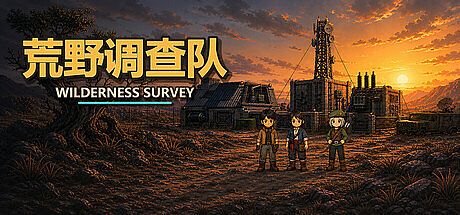


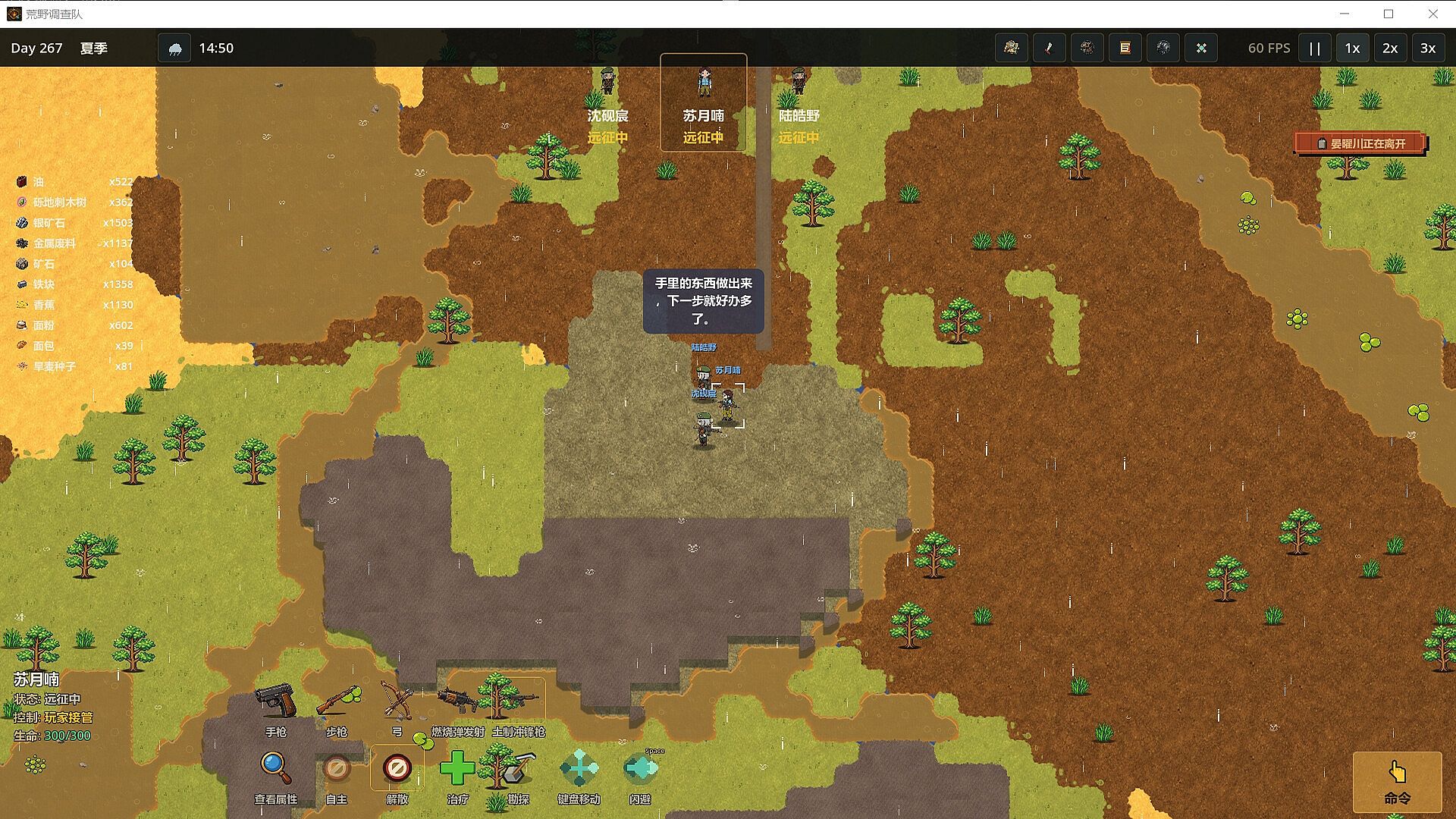
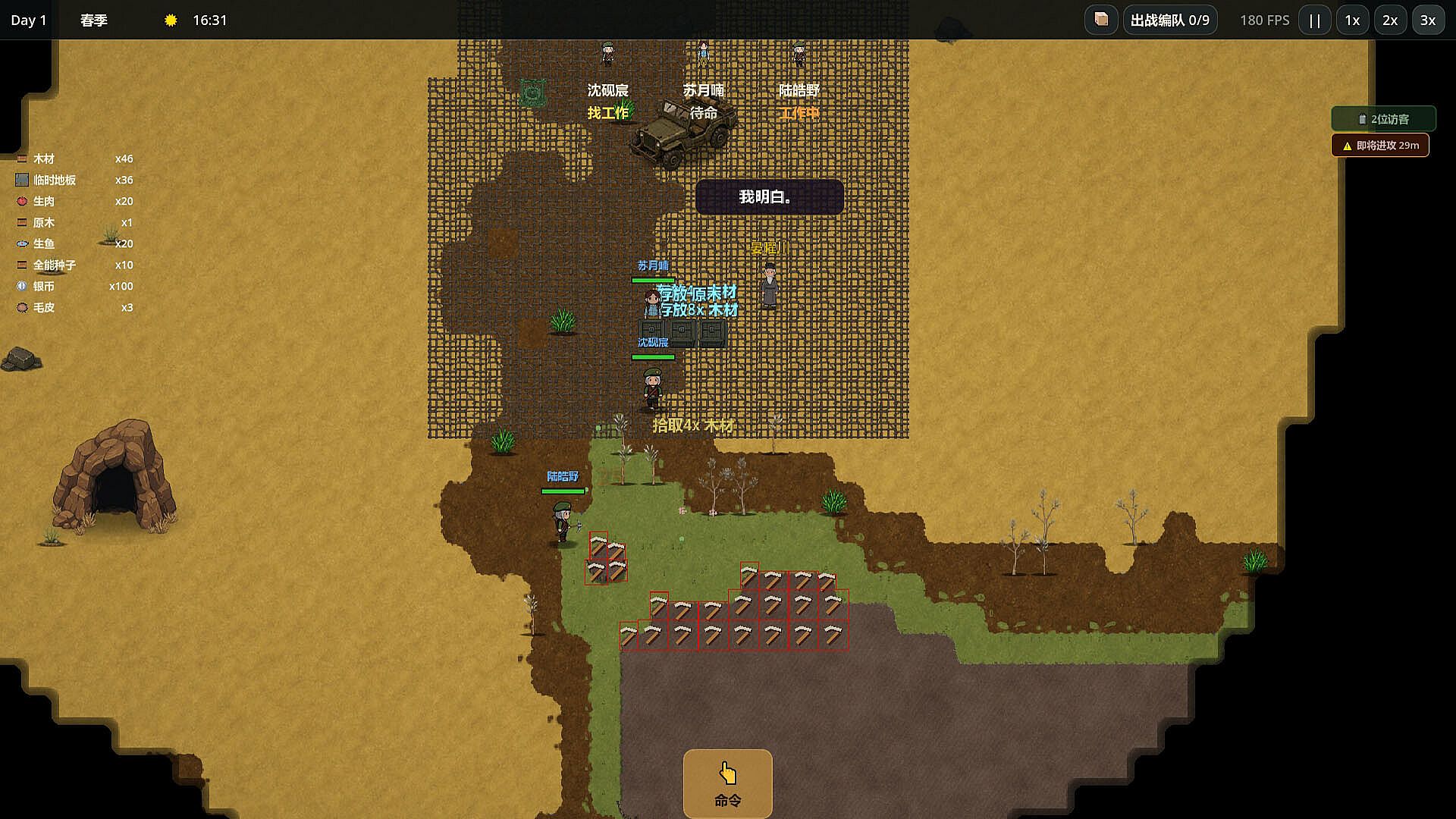
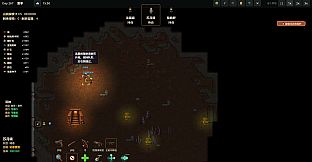
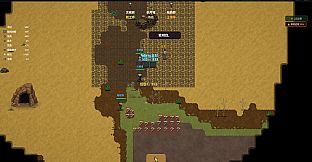
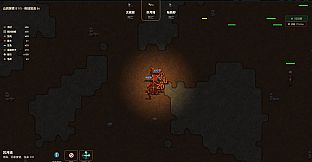
Wilderness Survey is a top-down strategy, simulation, and adventure game set in a post-apocalyptic wilderness where old-world infrastructure has begun to fail. Players lead a survey team tasked with establishing a functional camp while sending members out on expeditions to recover resources, locate survivors, and repair usable equipment from caves, ruins, and abandoned facilities. The game combines colony management with direct control over individual team members during outings, all on PC in Early Access.
Gameplay
The core loop centers on balancing settlement upkeep with risky expeditions into the surrounding wilderness. Players start with basic shelters and expand by placing housing, storage, farmland, workshops, and defensive structures. Resources such as food, wood, ore, and parts must be gathered, stored, and transported efficiently, as poor placement or scheduling quickly reduces productivity. Characters handle their own needs for hunger, rest, and health but require oversight to avoid breakdowns in the workflow.
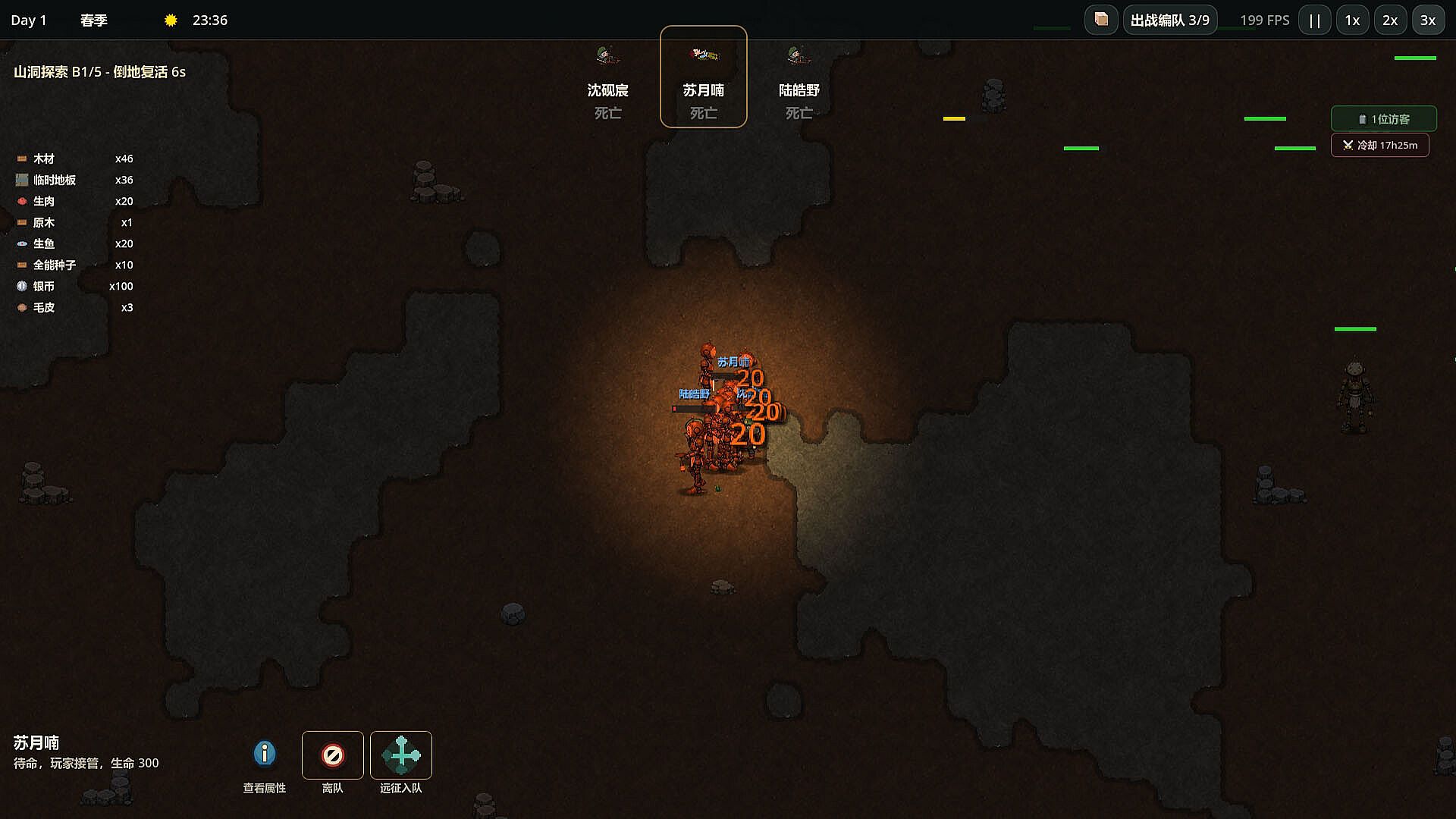
Each survey member carries personal equipment, health status, and task priorities. Managers assign production, rest, or combat roles while preparing teams for specific environments by equipping weapons, supplies, and roles suited to the mission. Direct control lets players move, aim, and fight with expedition members when threats appear, turning routine scouting into active engagements against wildlife, mechanical foes, or environmental hazards.
Day-night cycles, weather shifts, and random events constantly alter conditions. Harsh weather slows work, while attacks or equipment failures force immediate changes to defense and production plans. A single poorly prepared expedition can remove key personnel and gear from the settlement permanently.
Game Modes
Wilderness Survey offers two intertwined play styles that players switch between fluidly. Settlement mode focuses on long-term planning: constructing facilities, managing resource flows, crafting tools and expedition kits, trading with visitors, and responding to incidents that arise inside the camp perimeter. Characters move and work autonomously once tasks are set, rewarding careful layout and priority decisions.
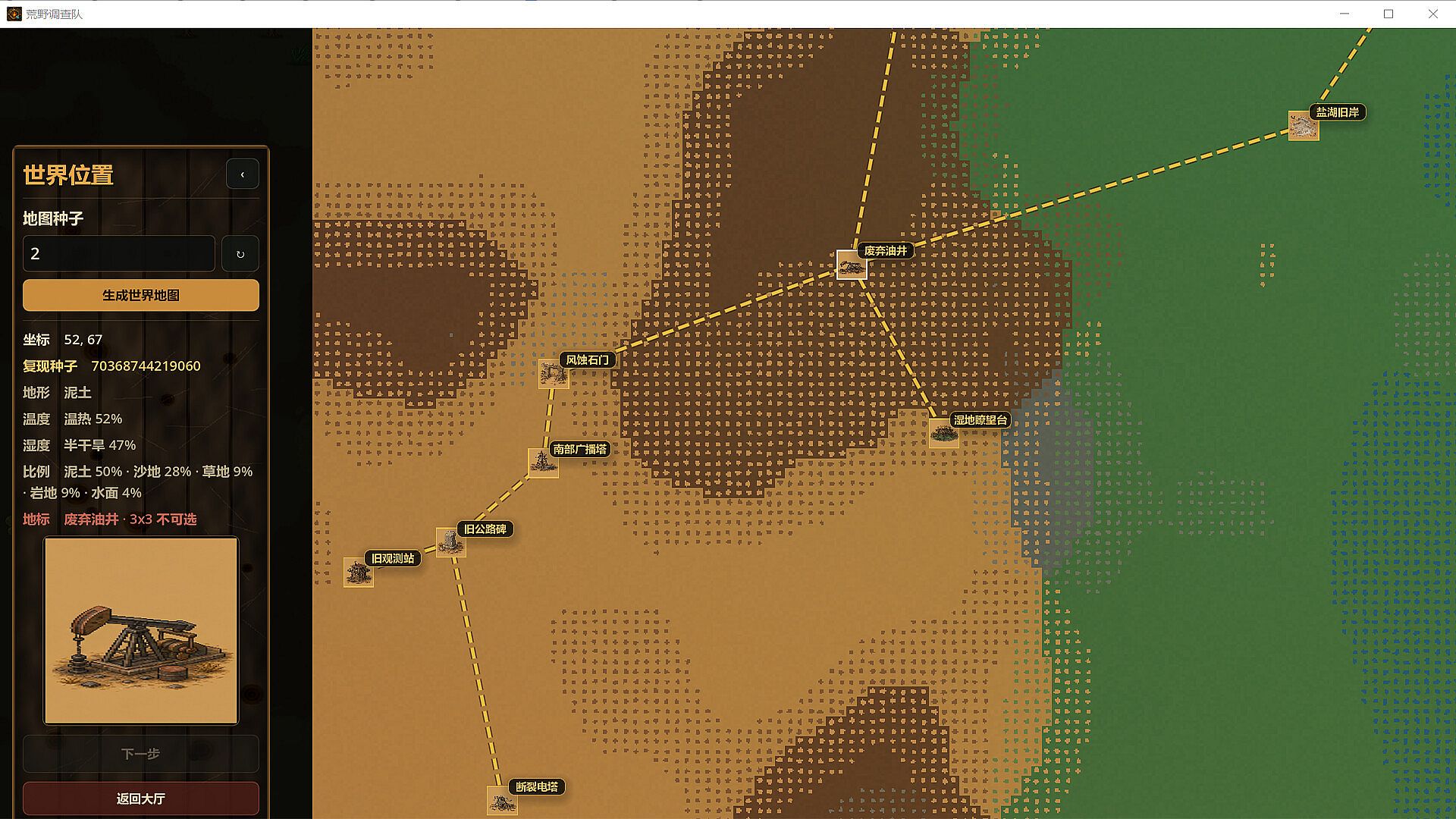
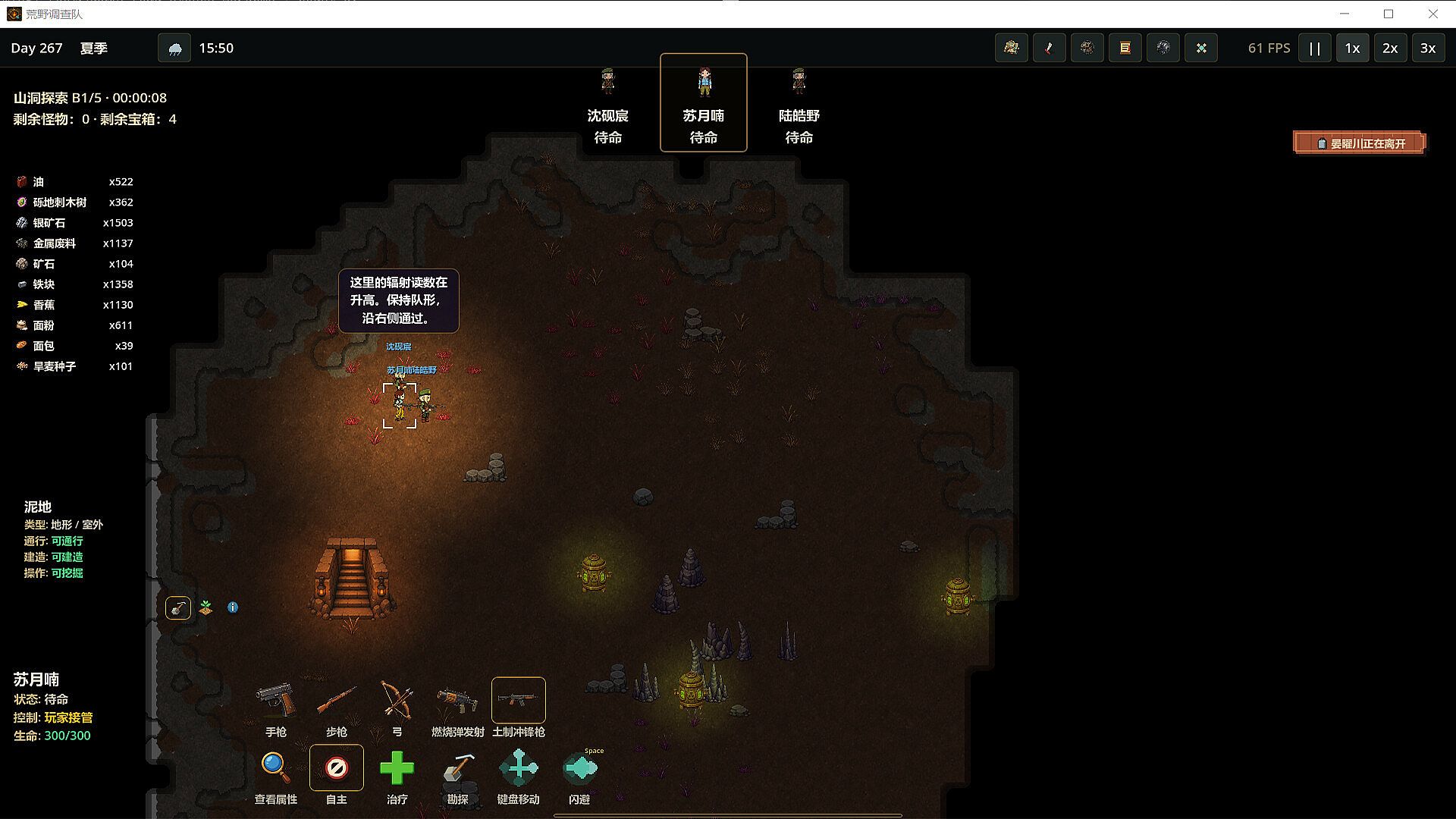
Expedition mode shifts to smaller-scale exploration and survival. Players assemble teams and venture into fixed landmark maps or cave systems, where they navigate terrain, solve mechanisms, engage enemies in real time, and search for survivors or salvage. Separate areas such as southern broadcast towers add distinct objectives that combine driving vehicles with on-foot tasks. These outings feed new materials and recruits back into the settlement, creating a continuous cycle between base expansion and outward discovery.
Building and Survival Systems
Construction begins with simple outposts and grows into specialized zones for farming, crafting, and storage. Workbenches produce weapons, consumables, and expedition gear, while visitor interactions provide trade opportunities and occasional crises that test current stockpiles. Efficiency depends on logistics: moving goods between buildings, matching worker skills to jobs, and maintaining defenses against external threats.
Character management adds depth because every team member tracks individual hunger, fatigue, health, and morale. Limited personnel means overlapping roles are common, forcing trade-offs between sending strong fighters on expeditions and keeping enough hands at the base for daily production. Pre-expedition loadouts matter, as the wrong weapons or supplies can turn a promising run into a costly loss.
Is It Worth Playing?
Wilderness Survey suits players who enjoy methodical colony builders paired with hands-on exploration and combat in a single-player setting. The Early Access version already delivers the full core loop of camp construction, resource management, crafting, trading, combat, cave exploration, landmark expeditions, vehicle use, and save support. Updates continue to refine balance, controls, interface, and stability, with the possibility that future changes may affect existing mechanics or save files.
Those comfortable with iterative development and willing to adapt to ongoing adjustments will find a coherent survival experience focused on steady progress and careful risk assessment. Players seeking polished, feature-complete titles may prefer to wait for further updates before committing.