

Jurassic World Evolution 3: Prehistoric East serves as a strategy and simulation expansion for dinosaur park management on PC. It adds five new prehistoric species along with themed construction options that expand the core experience of designing, populating, and maintaining parks filled with living dinosaurs.
Gameplay
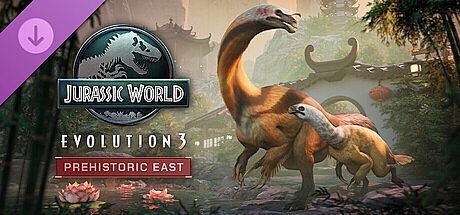
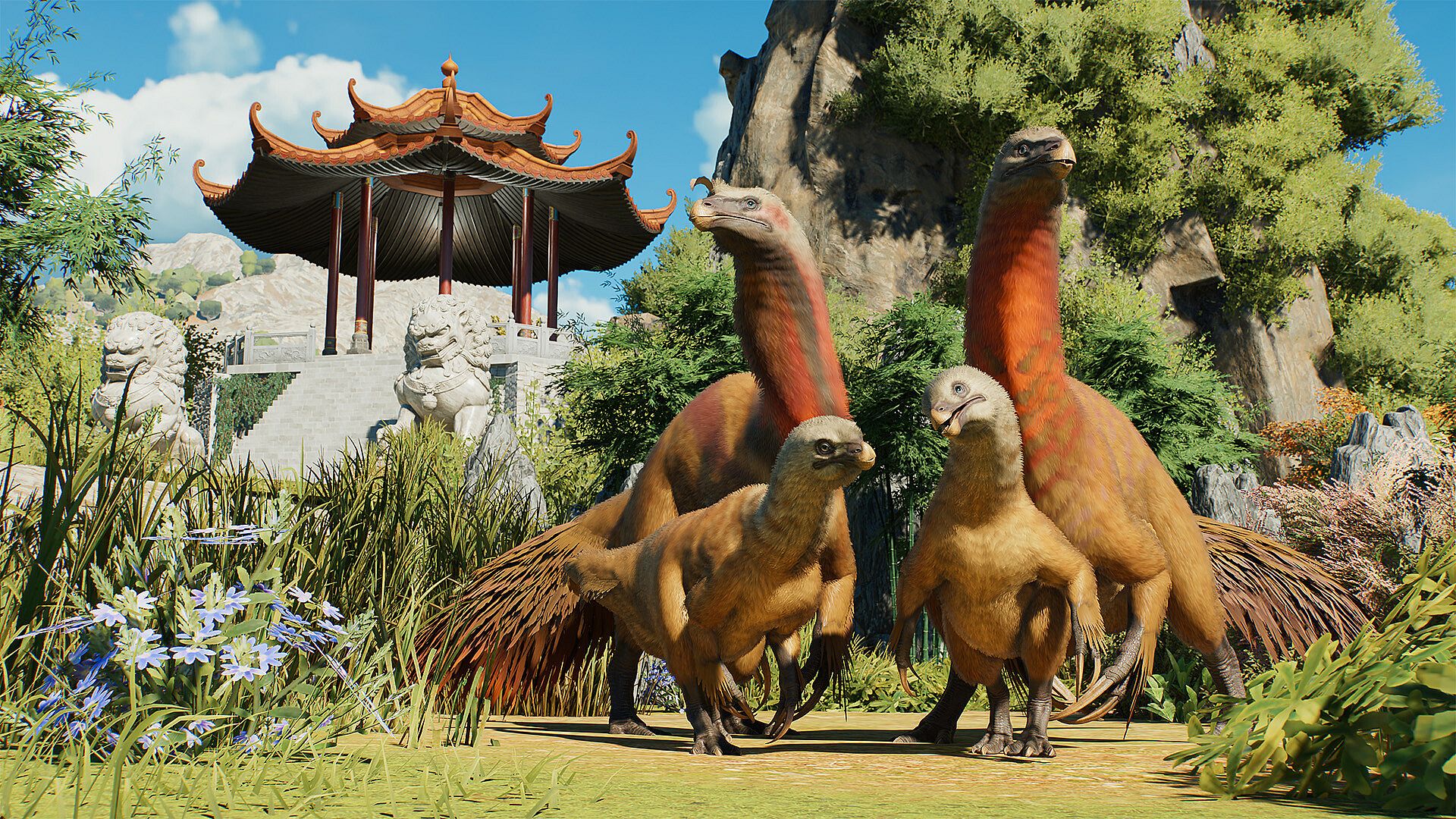
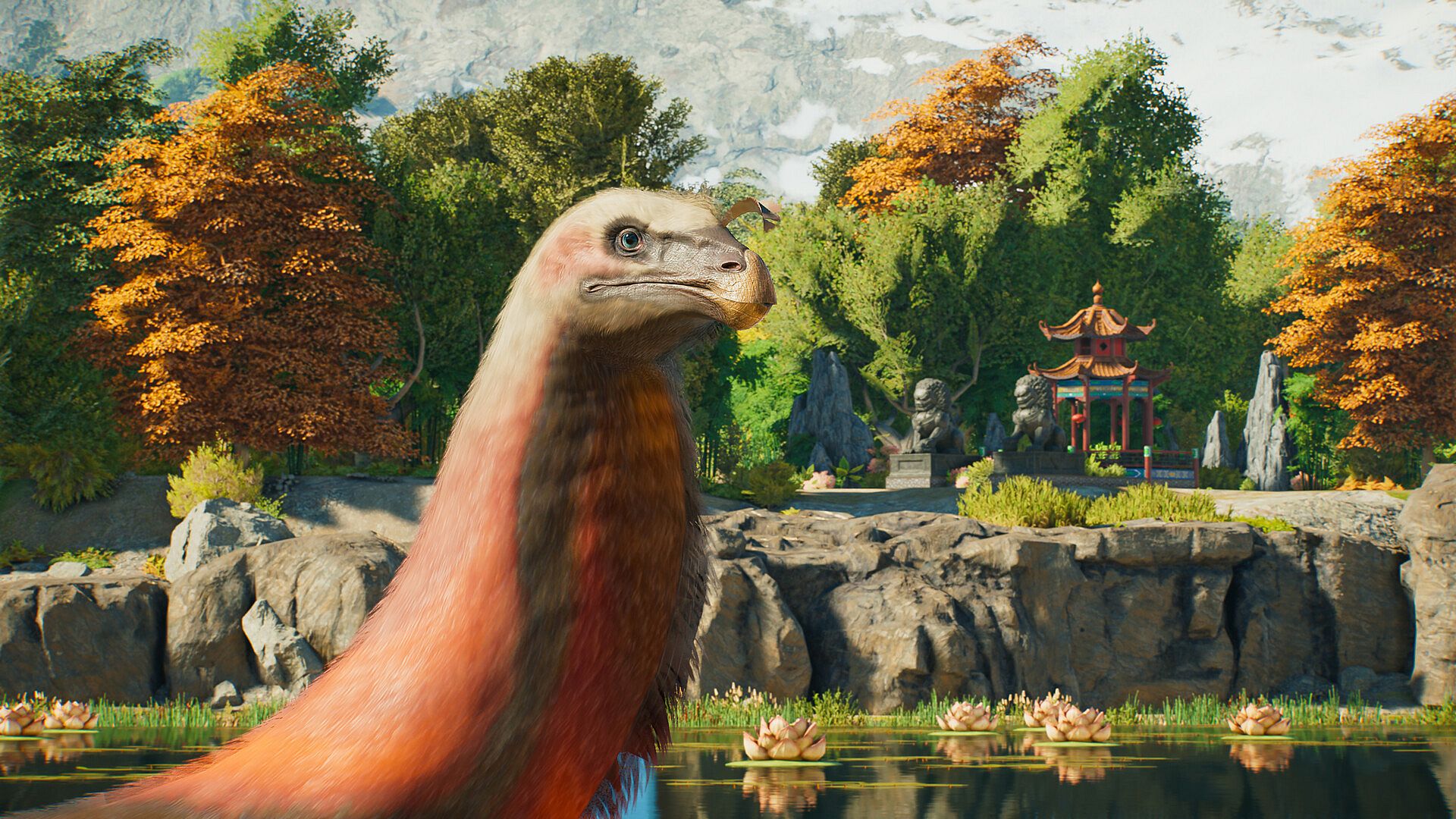
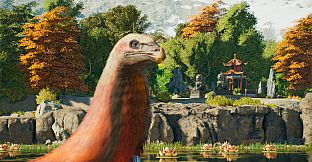
Players focus on constructing secure enclosures tailored to the needs of new dinosaur family units. The Nanshiungosaurus stands out as a gentle therizinosaur covered in plumage, featuring a large tail, long neck, and recurved claws suited for foraging. Males display a bushier tail and colorful head feathers that draw guest attention. The Gobisaurus functions as a sturdy ankylosaur herbivore from fossil-rich regions, suited for interactive guest encounters. The Yangchuanosaurus acts as an apex theropod predator from the Jurassic period in what is now China, equipped with powerful jaws and distinctive tusk-like teeth, while offering varied pattern and color options during synthesis. The Sinosauropteryx arrives as a smaller carnivore family unit that requires minimal cover yet demands careful observation to prevent escapes. The Tarbosaurus brings a full family unit of a large theropod reaching around 10 meters in length and five tonnes in weight, requiring robust security measures in its enclosure.
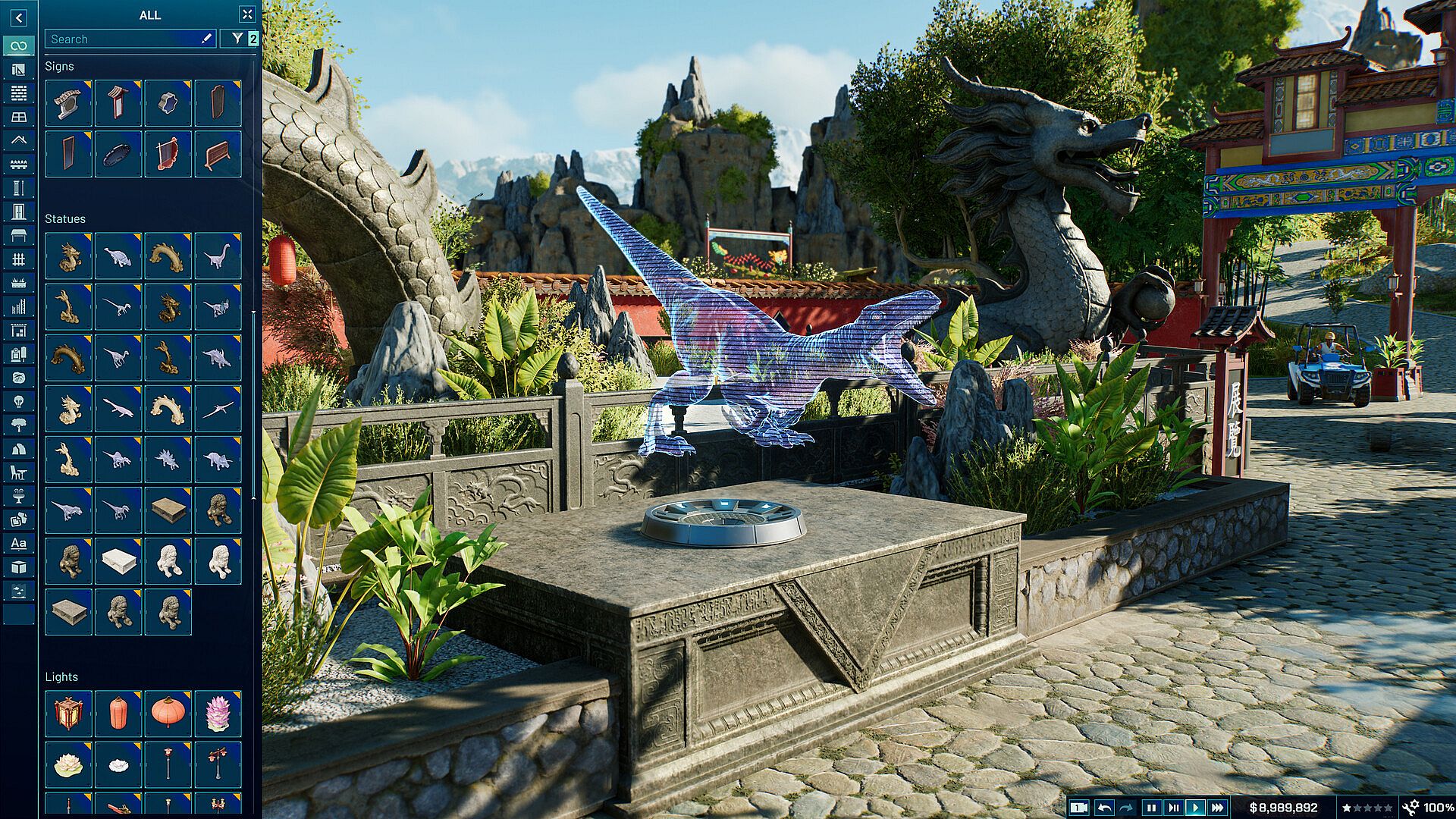
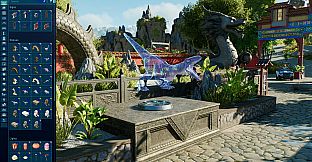
Additional systems allow placement of holographic statues depicting iconic dinosaurs. These can stand alone or integrate into custom blueprints, each supporting selectable animations for dynamic displays. East Asia inspired scenery pieces include bronze dragon statues, marble guardian lions, paper lanterns, and lotus flowers. Builders access new wall, roof, and trim elements plus ready-made blueprints for pagodas, gates, and walled gardens to shape guest areas and enclosures.
Game Modes
The expansion supports the established modes of the base simulation. Campaign mode guides players through structured park development across global locations while incorporating the new species and decorative elements. Challenge mode presents targeted objectives that test enclosure design, dinosaur management, and guest satisfaction using the added content. Sandbox mode provides unrestricted access to terrain editing, building tools, and the full roster of dinosaurs, allowing free experimentation with holographic features and themed scenery across generated or legacy maps.
New Species Integration
Each added dinosaur arrives as a complete family unit with male, female, and juvenile variants. Synthesis options include custom patterns and colors, particularly for the Yangchuanosaurus. Enclosure planning must account for dietary needs, social behaviors, and security requirements specific to carnivores like the Sinosauropteryx and Tarbosaurus versus herbivores such as the Nanshiungosaurus and Gobisaurus. The new scenery elements complement these habitats by creating culturally themed environments that enhance both dinosaur welfare and visitor appeal.
Creative Construction Options
Modular building tools receive fresh components for walls, roofs, and trims that support intricate garden layouts and architectural details. Holograms extend creative freedom by enabling animated displays that can be combined with physical structures. These features encourage detailed park layouts where natural landscapes blend with handcrafted East Asia inspired pieces to form cohesive visitor zones and dinosaur habitats.
Is It Worth Playing?
This expansion suits players who already enjoy the dinosaur park management loop of research, synthesis, enclosure building, and ongoing care. The addition of five family units and specialized scenery provides immediate new goals for existing parks or fresh starts in any mode. Those seeking expanded creative tools for themed environments will find value in the holograms and decorative blueprints. The content integrates directly into ongoing play without altering core mechanics, making it a targeted upgrade for fans of the simulation style.