


Restitutor: Three Kingdoms United is a free to play strategy and simulation game set during China's Three Kingdoms period. Players begin in 194 AD amid rival warlords competing for control and work to rise from provincial governor to king and finally emperor through a series of historical events that span until 280 AD.
Gameplay
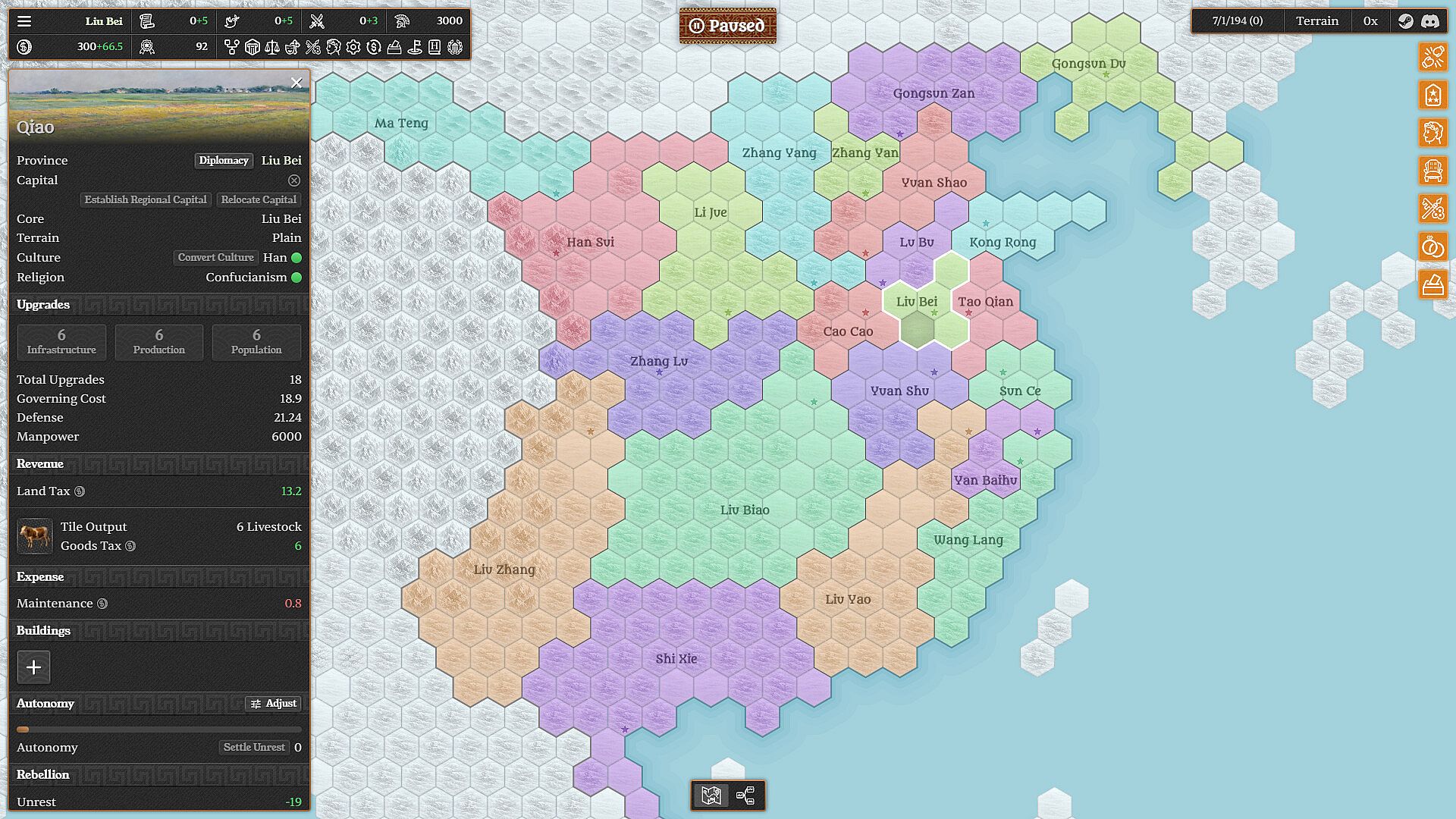
The core loop centers on high level statecraft and long term planning. Players manage provincial resources, expand influence through diplomacy and calculated military actions, and respond to shifting alliances among competing factions. Research unlocks new options for administration and warfare while a system of missions provides direction without forcing a single path. Each warlord faction features distinct events and mechanics that shape available strategies and outcomes.
Progression follows an expanded track where successful governance leads to greater titles and expanded authority. Historical figures from the era appear as civil officials and military commanders, each bringing specialized capabilities that influence decisions in administration or conflict. The simulation emphasizes strategic choices over direct unit control, allowing focus on economy building, alliance formation, and responses to major events across the timeline.
Game Modes
The primary experience unfolds as a single player scenario that follows the reunification arc from 194 to 280 AD. Players select a starting warlord position and navigate the divided empire through successive phases of consolidation. Faction specific missions and spirits introduce variety, encouraging different approaches depending on the chosen leader and regional strengths.
Long term engagement comes from repeated campaigns that build on prior results. A rebirth mechanic carries forward legacy elements, strengthening subsequent runs and supporting multiple attempts at different starting conditions or victory conditions within the same historical framework.
Factions and Historical Context
Distinct warlord groups each carry unique event chains, mission sets, and mechanical bonuses that reflect their historical roles. These differences encourage experimentation across multiple playthroughs as players test strategies suited to particular regional advantages or leadership styles. Events tied to the broader timeline from 194 AD onward introduce dynamic challenges and opportunities that alter the balance of power.
Legendary characters serve as key assets, offering bonuses in governance or combat that players must weigh when assigning roles or responding to crises. The simulation draws from the period's documented rivalries and shifting loyalties while allowing player decisions to influence how those events resolve.
Is It Worth Playing?
The game remains in active early access with regular content updates that expand provinces, mechanics, and historical narratives. Current player feedback highlights the depth of strategic decision making and the appeal of the incremental progression system for those who enjoy grand strategy titles. It suits players interested in historical simulation without heavy micromanagement, particularly those drawn to the Three Kingdoms setting and the challenge of rising through the ranks to reunify the empire. Availability as a free to play title lowers the barrier for trying the core experience and its scenario focused content.