


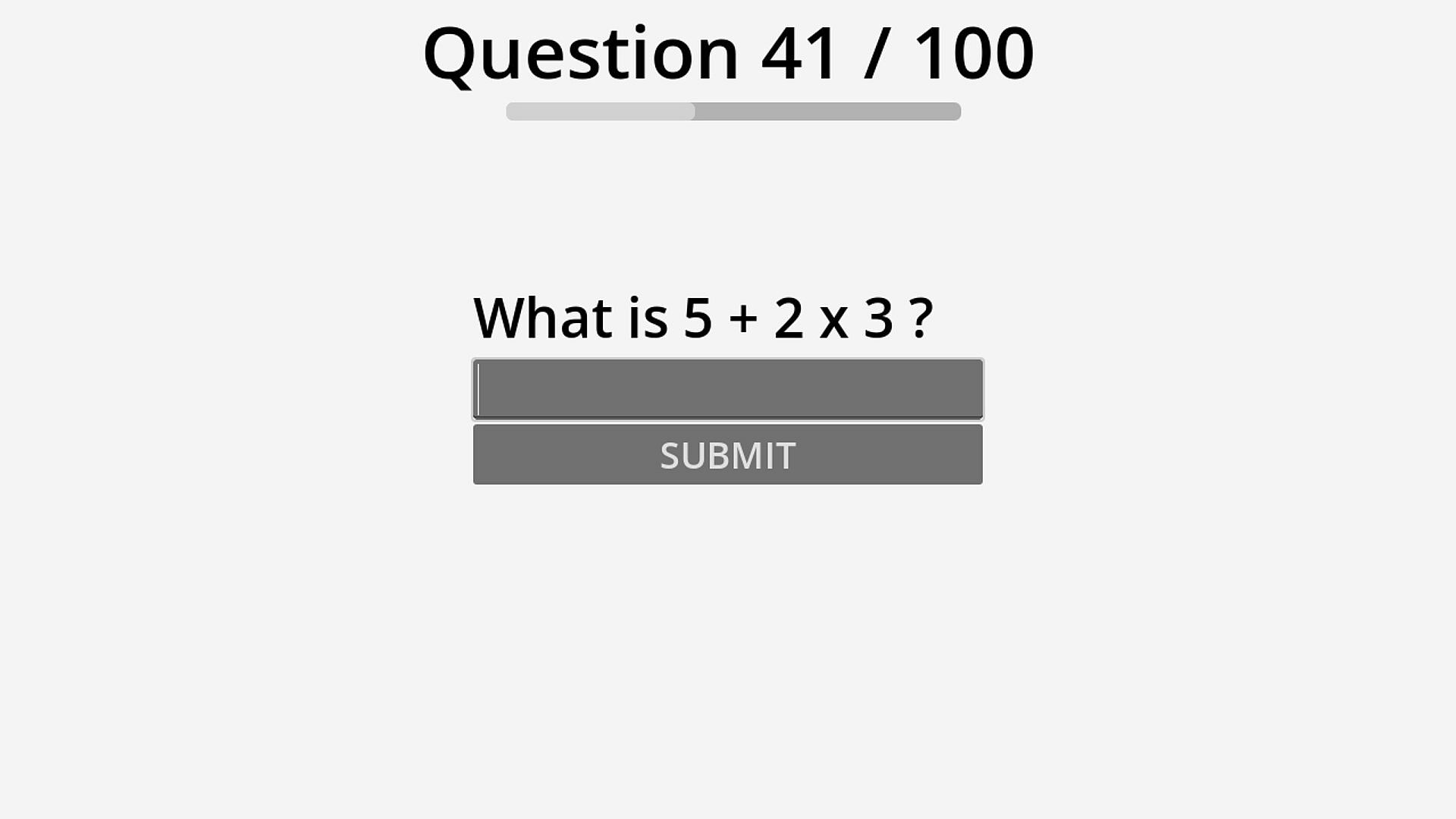
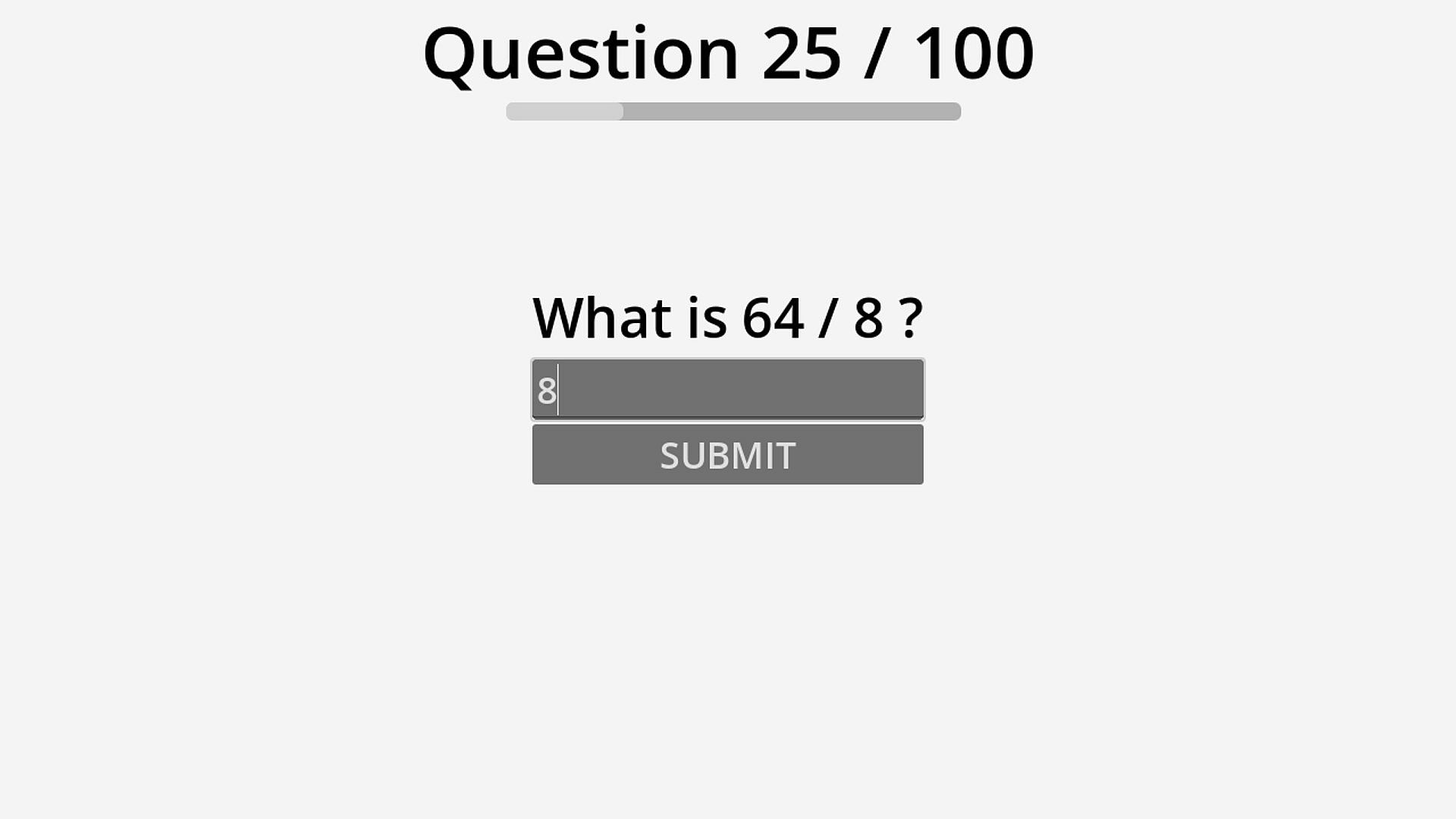
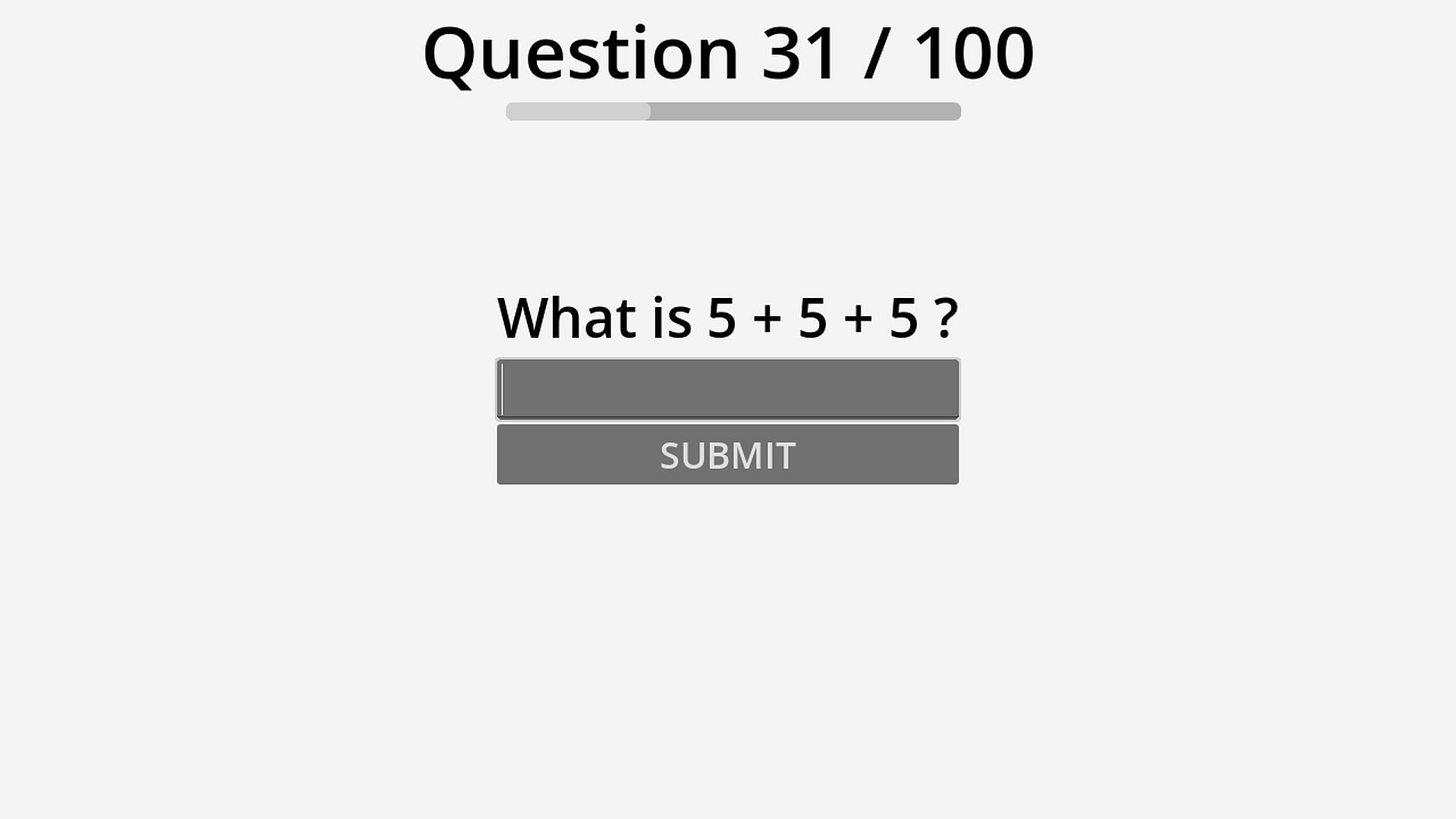
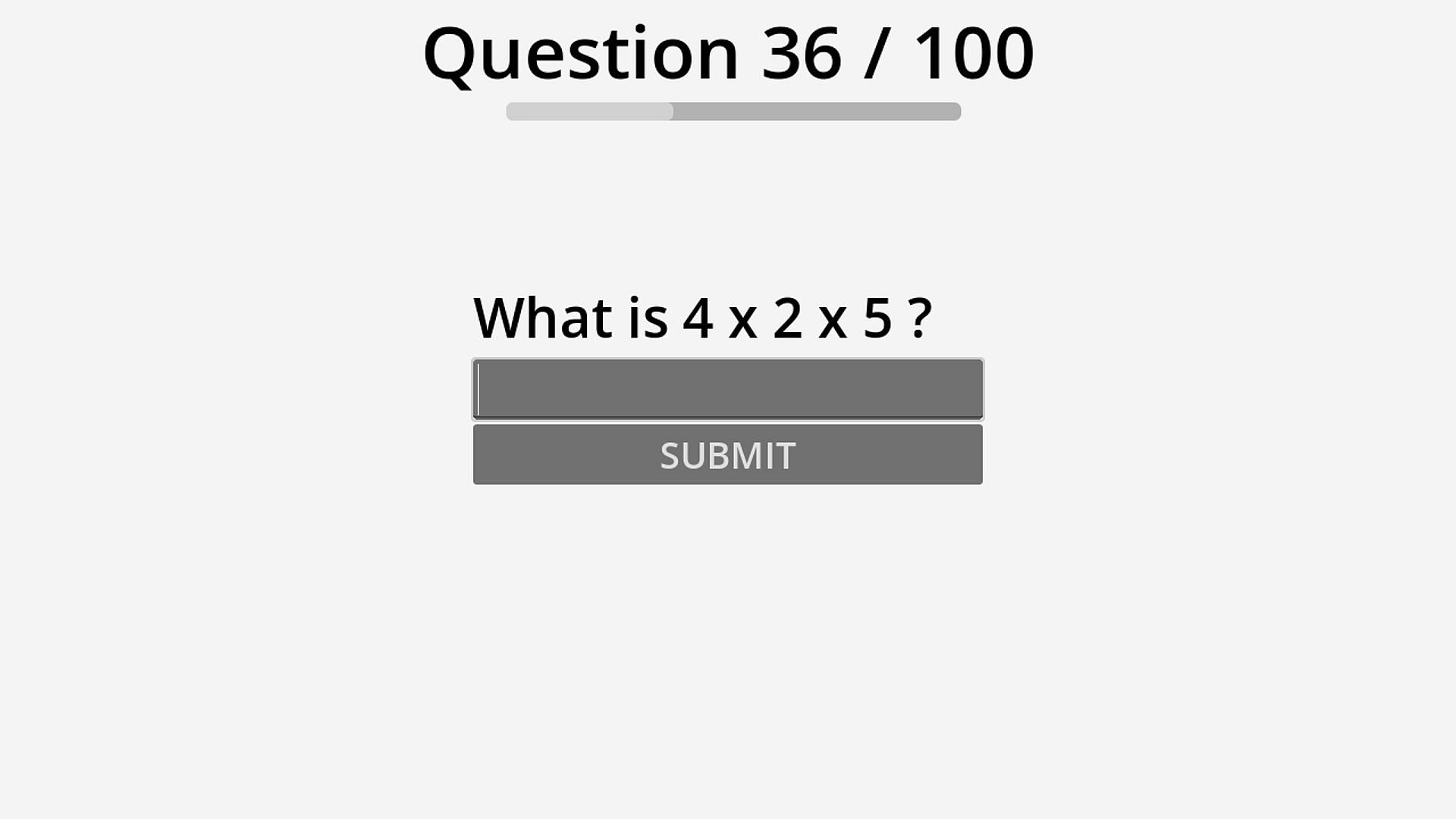
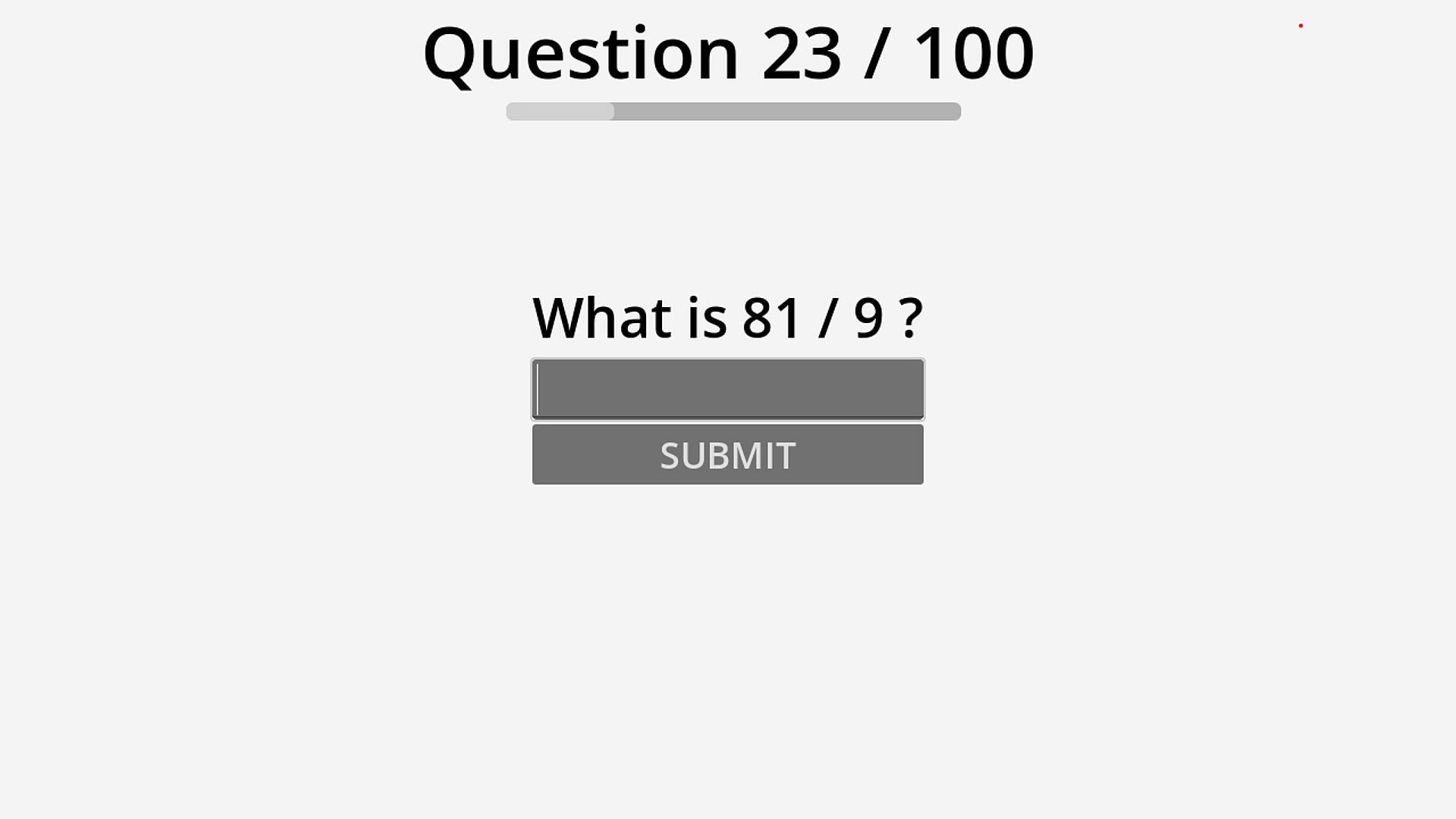
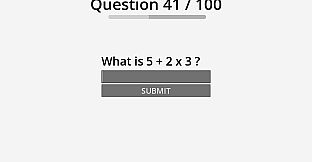
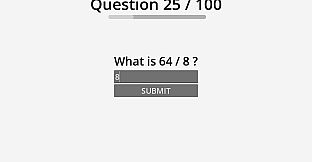
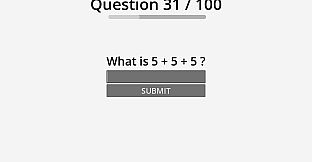
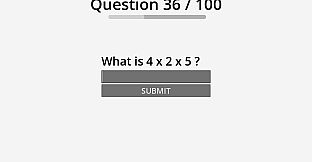
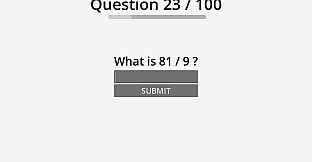
100 Easy Maths ist ein entspanntes Einzelspieler-Mathe-Puzzle für den PC. In einer minimalistischen Umgebung lösen Spieler nacheinander 100 einzigartige Gleichungen und konzentrieren sich dabei auf ruhiges, fokussiertes Vorankommen statt auf Handlung oder visuelle Effekte. Jede richtige Lösung wird automatisch gespeichert, sodass sich Spielsitzungen jederzeit unterbrechen und fortsetzen lassen.
Gameplay
Im Mittelpunkt steht das Lösen von Gleichungen, die nacheinander auf dem Bildschirm erscheinen. Die Eingabe erfolgt über einfache Steuerungselemente. Die Aufgaben starten mit grundlegender Addition und werden schrittweise anspruchsvoller. Korrekte Antworten werden optisch und akustisch bestätigt, während die Oberfläche bewusst schlicht gehalten ist. Der Fortschritt wird automatisch übernommen, sodass Spieler ohne Menüs oder manuelles Speichern genau dort weitermachen können, wo sie aufgehört haben. Das Konzept eignet sich sowohl für kurze Pausen als auch für längere, konzentrierte Runden.
Die Schwierigkeit steigt über die gesamte Spielzeit hinweg kontinuierlich an. Zunächst stehen einfache Rechenoperationen im Vordergrund, später kommen komplexere Aufgaben mit mehreren Rechenschritten und Variablen hinzu. Vorkenntnisse über die Grundrechenarten hinaus sind nicht erforderlich. Dank niedriger Systemanforderungen läuft das Spiel auch auf älteren Laptops mit integrierter Grafik flüssig.
Spielmodi
100 Easy Maths ist ausschließlich als Einzelspielererlebnis konzipiert. Es gibt keine Mehrspieler- oder Wettbewerbsmodi. Das Spiel gliedert sich in zehn thematische Runden, die in fester Reihenfolge durchgespielt werden. Jede Runde baut auf der vorherigen auf und führt schrittweise Operatorenregeln sowie grundlegende Algebra ein. Mit dem Abschluss einer Runde werden die nächsten Aufgaben freigeschaltet, und jede korrekte Lösung bringt einen eigenen Erfolg. Es gibt keine alternativen Spielweisen, Zeitlimits oder Abzweigungen.
Puzzle-Verlauf
Die 100 Aufgaben sind gleichmäßig auf die zehn Runden verteilt und bieten einen stetigen Anstieg der Herausforderung. Die ersten Runden beschränken sich auf Addition und Subtraktion, später kommen Multiplikation, Division, Klammern und Operatorenregeln hinzu, bis schließlich Aufgaben mit Variablen folgen. Jede Gleichung ist eigenständig, sodass Fehler nur die jeweilige Aufgabe betreffen und den Gesamtfortschritt nicht beeinträchtigen.
Lohnt sich das Spiel?
100 Easy Maths richtet sich an Puzzle-Fans und Lernende, die regelmäßiges Kopfrechnen in überschaubarem Rahmen suchen. Dank automatischer Speicherung und kurzer Einzelaufgaben eignet sich das Spiel gut für den täglichen Einsatz am PC. Die geplante Veröffentlichung Anfang August 2026 und das Fehlen bisheriger Spielerbewertungen machen es zu einer risikoarmen Option für alle, die an entspanntem Knobeln interessiert sind. Wer klare Ziele und ein lineares Puzzle-Erlebnis ohne zusätzliche Spielschichten bevorzugt, findet hier ein passendes Format für kurze oder längere Einheiten. Das Einzelspieler-Konzept und das Erfolgssystem bieten klare Abschlussziele für Sammler.