








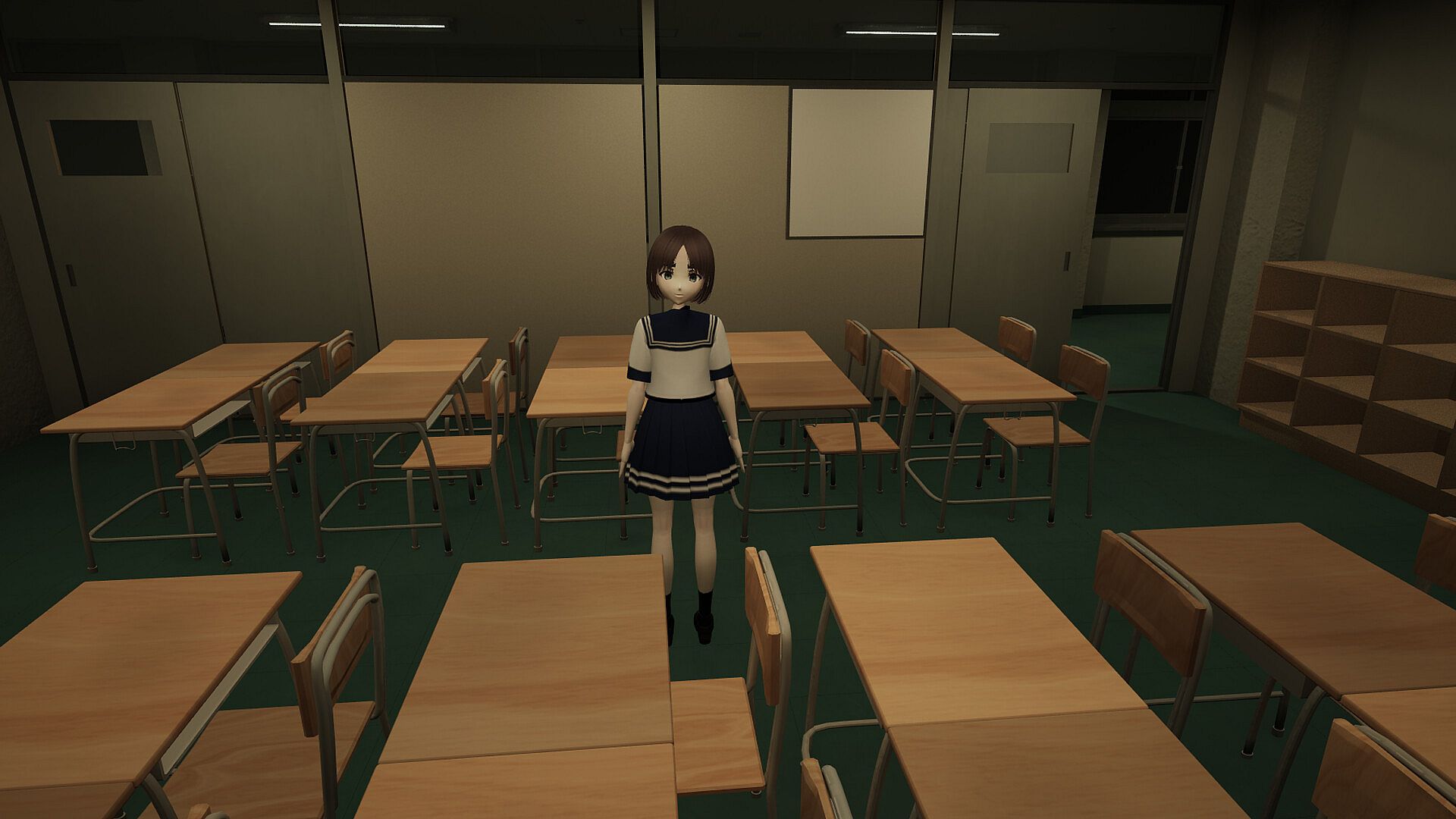
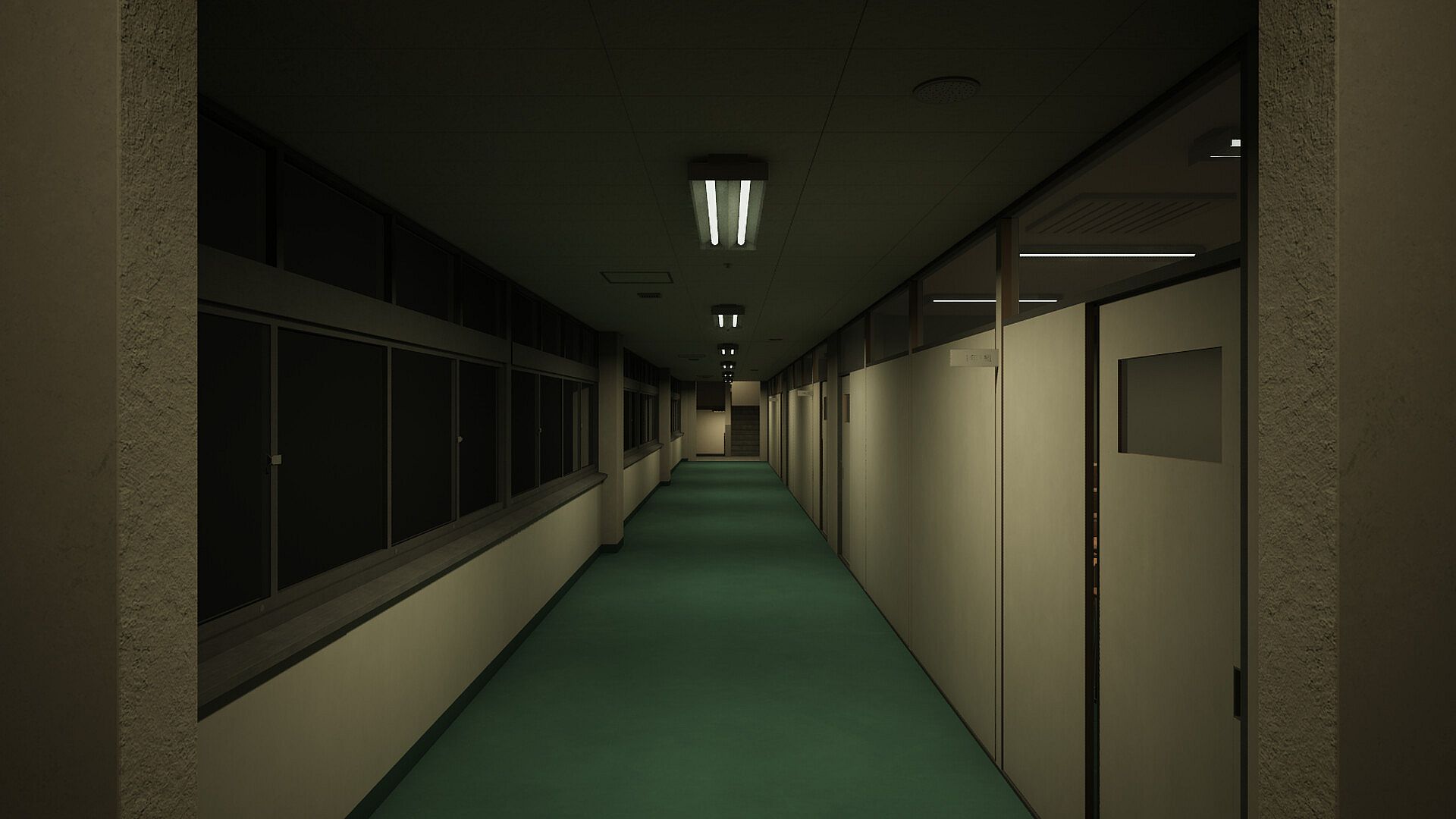
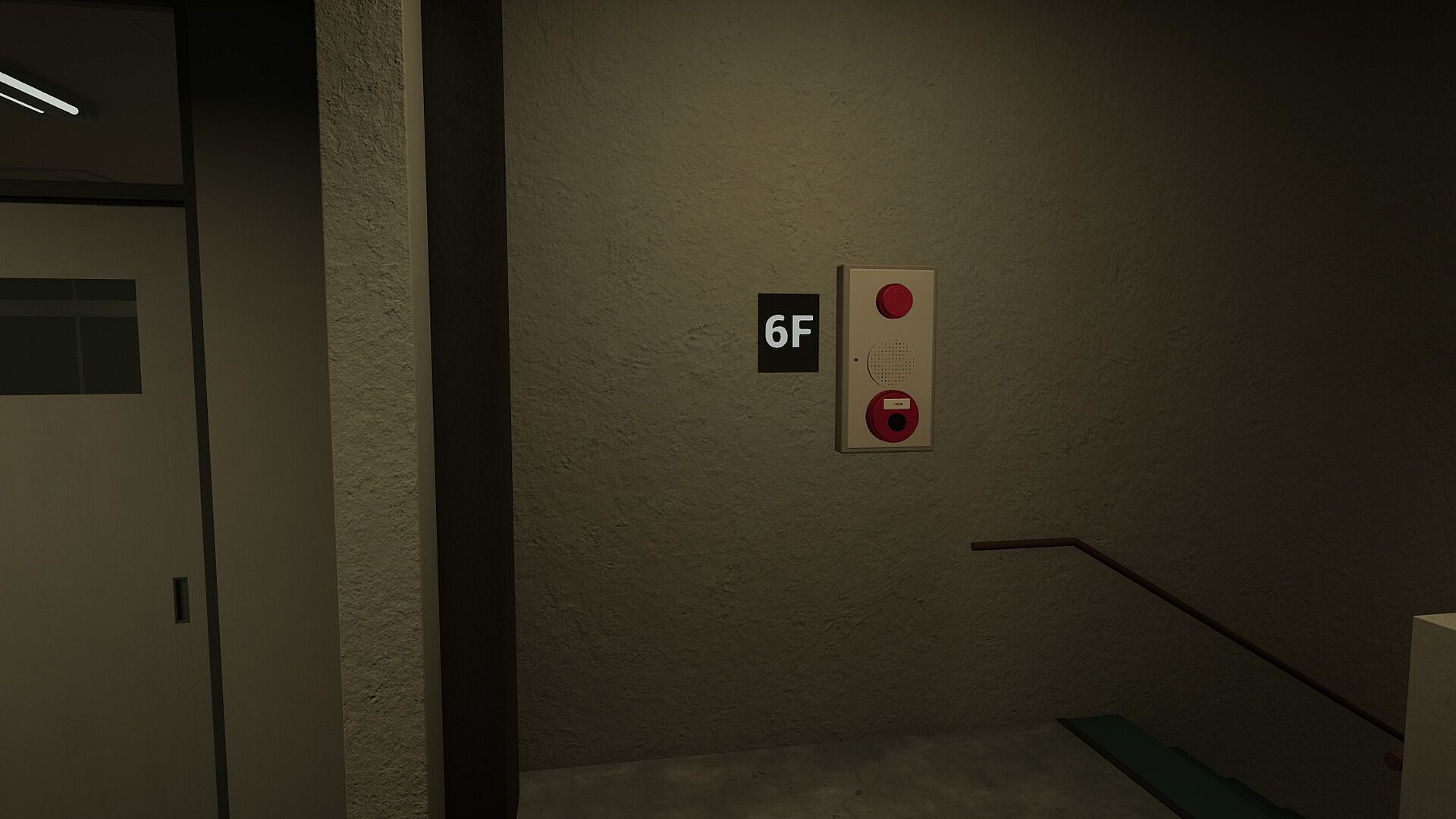
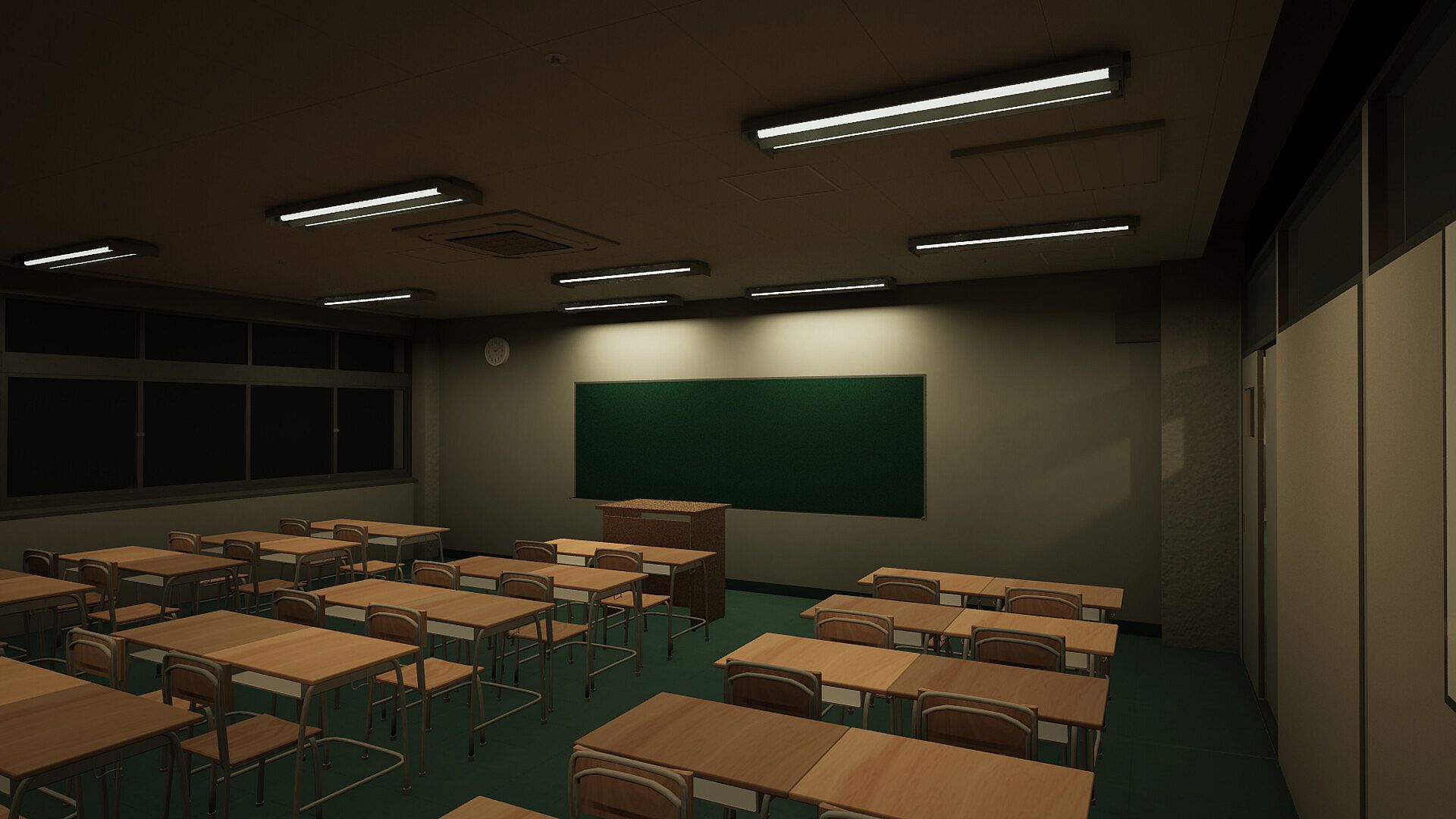
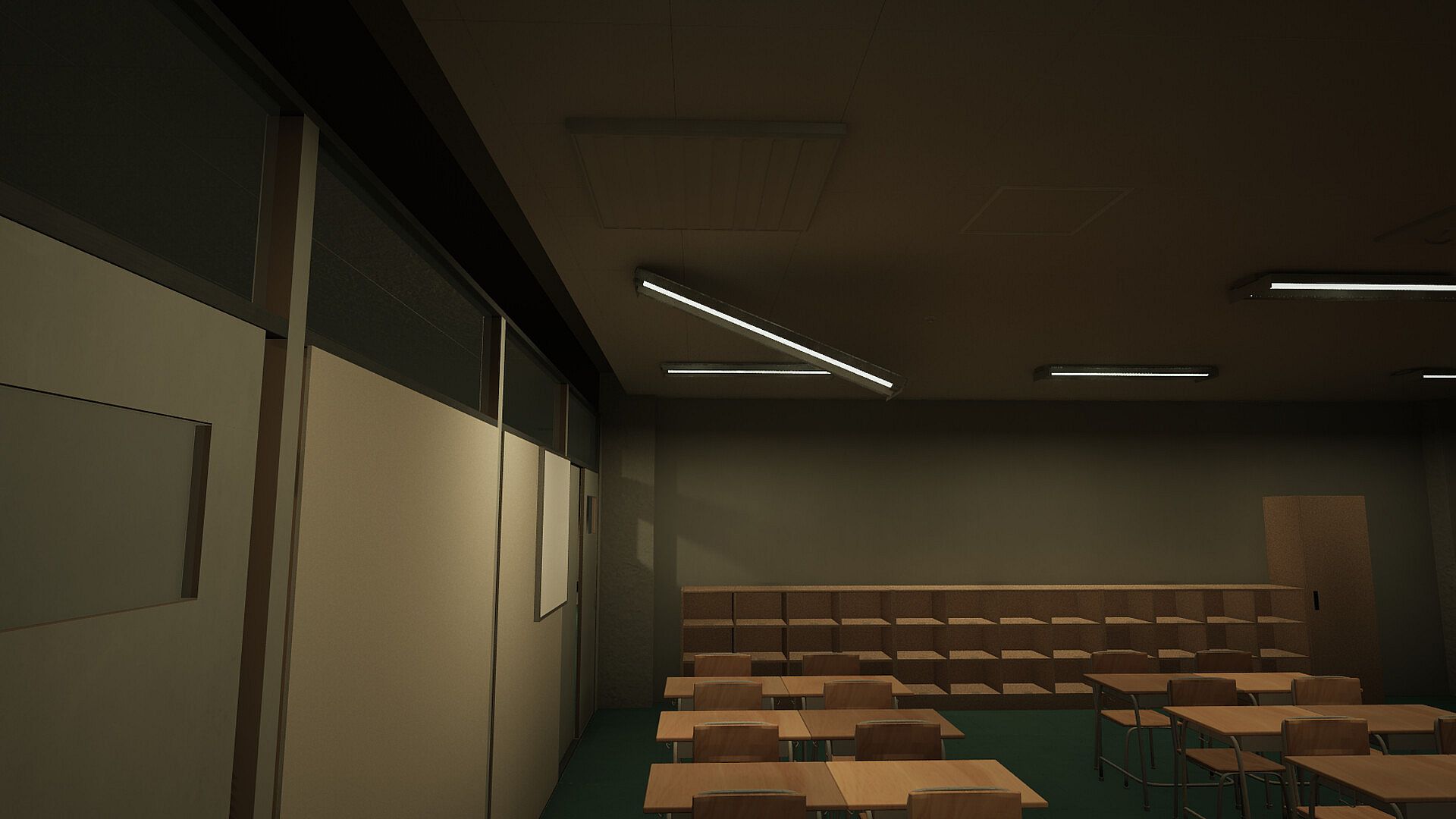
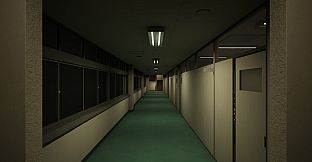
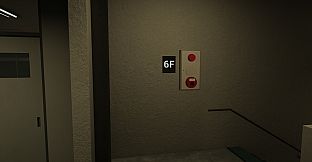
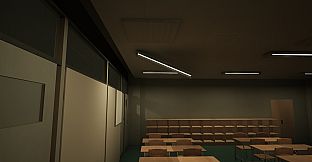
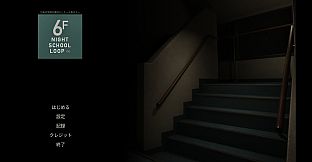
6F: NIGHT SCHOOL LOOP∞ is a first-person adventure horror game set inside an empty Japanese junior high school at night. Players start on the sixth floor and navigate a single corridor repeatedly while watching for small environmental shifts that signal whether to descend or ascend the stairs to progress toward an exit.
Gameplay
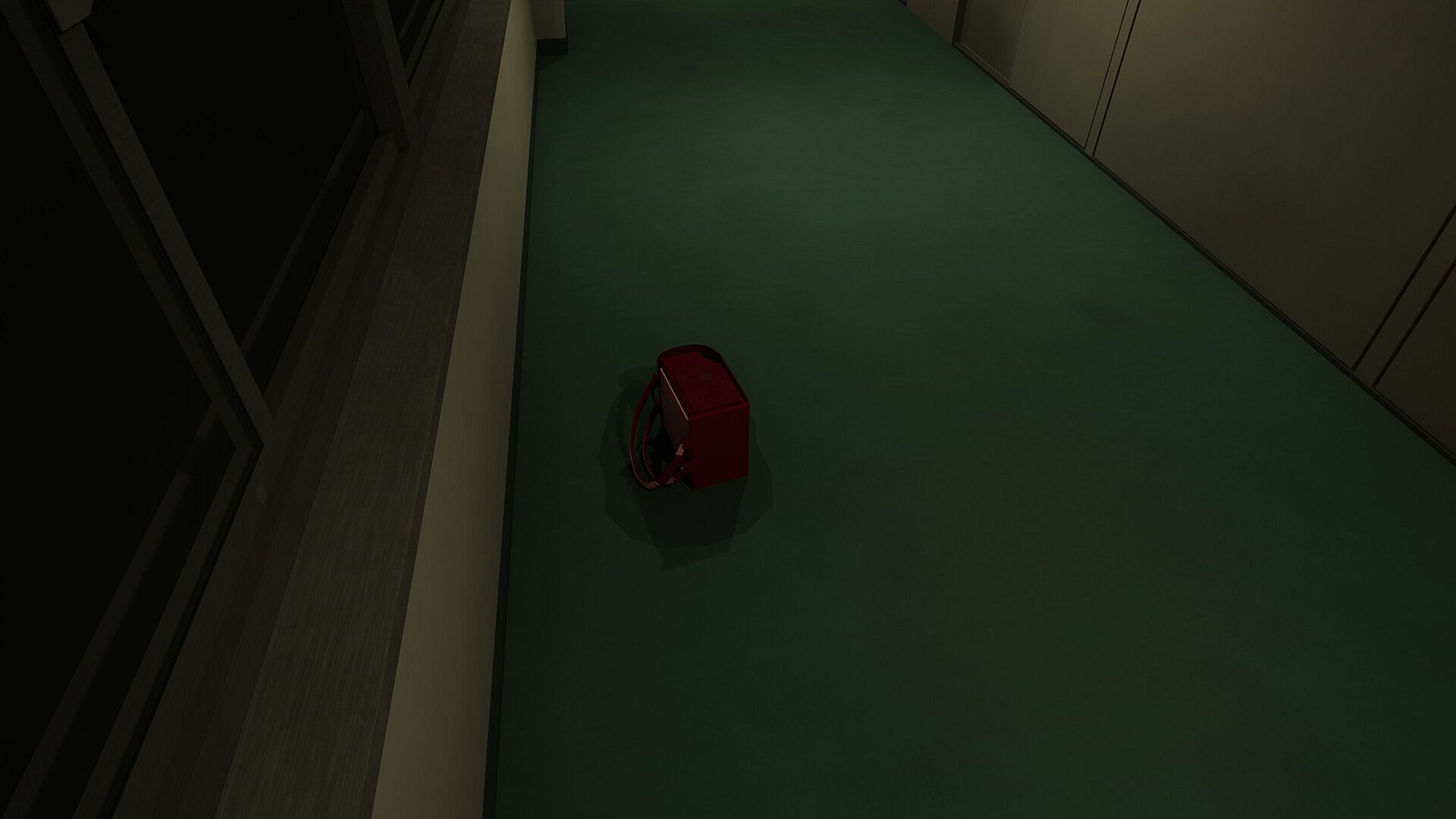
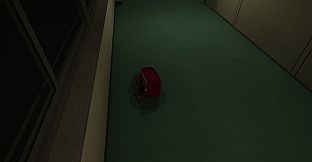
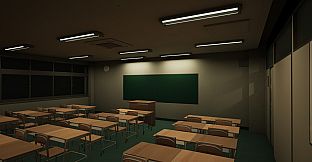
The core loop centers on repeated passes through the same hallway under flickering fluorescent lights. Each traversal requires close observation of the entire length of the corridor to detect any differences from the previous run. Anomalies appear as subtle alterations such as a tilted light fixture, a waterlogged school bag, or an unexpected figure in a classroom doorway. These changes can appear differently depending on the direction of approach, so players must judge the scene directly rather than relying on memory alone. Opening classroom doors reveals additional details that may confirm or contradict initial impressions. A wrong choice at the stairs resets the player back to the starting floor, forcing another full pass. The experience remains grounded in realistic 1990s Japanese school architecture and lighting, with no supernatural elements beyond the looping structure itself. Interface support for both Japanese and English keeps the focus on visual cues rather than text-heavy instructions.
Game Modes
The game offers a single continuous experience built around the looping corridor mechanic. There are no separate game modes or selectable variants. Progression depends entirely on accurate observation and decision-making within the one hallway environment, leading to a defined ending once the correct sequence of choices is made. The structure encourages multiple short sessions to refine judgment of anomalies without introducing additional layers such as combat, inventory management, or branching story paths beyond the core escape condition.
Setting and Atmosphere
The nighttime school draws directly from typical Japanese junior high layouts of the 1990s, featuring long corridors, standard classroom doors, and overhead fluorescent lighting that casts consistent shadows. Small, unsettling alterations to familiar objects create tension without relying on jump scares or overt horror tropes. The same anomaly can shift in appearance based on viewing angle, rewarding careful back-and-forth movement along the corridor. This design keeps attention on environmental details rather than character interaction or exploration of multiple floors at once.
Technical Details
Developed for PC with support for both Windows and macOS, the title runs as a compact first-person experience. Controls focus on walking, turning, and interacting with doors to inspect rooms. The short length suits players seeking a complete session that can be finished in one or two focused playthroughs once the anomaly patterns become clear. Bilingual interface options make the visual judgment process accessible regardless of language preference.
Is It Worth Playing?
Players who enjoy observation-based horror and precise decision-making in a confined space will find the loop structure engaging. The game delivers a self-contained narrative arc with a clear ending, making it suitable for those who prefer short, focused sessions over extended campaigns. Its emphasis on directional anomaly detection and memory comparison sets it apart from broader exploration titles. Availability on PC platforms with cross-OS support broadens access for users interested in this specific style of environmental puzzle horror. Those seeking longer-form adventures or varied mechanics may find the single-corridor focus limiting after the initial loops are mastered.












