


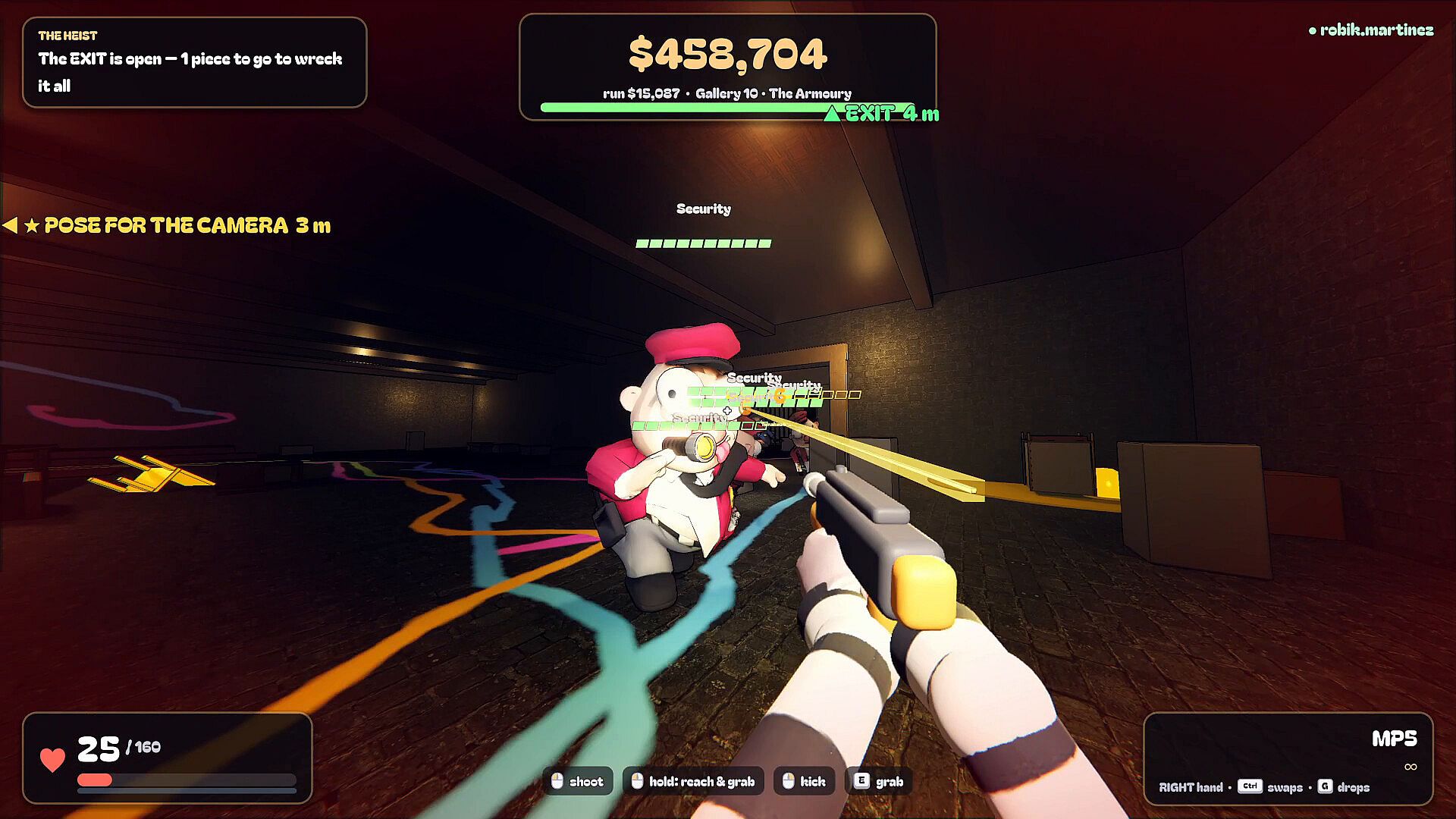
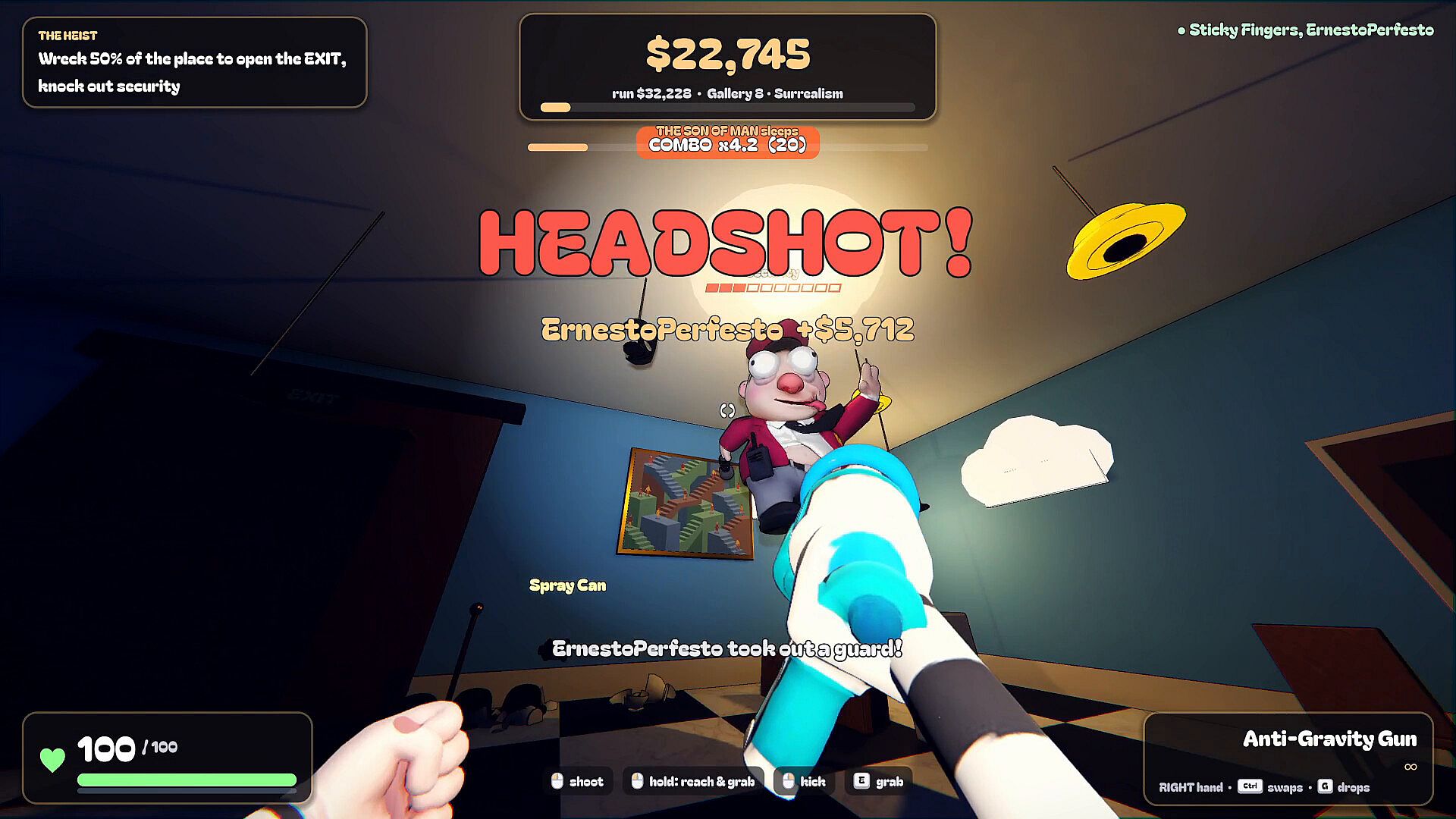
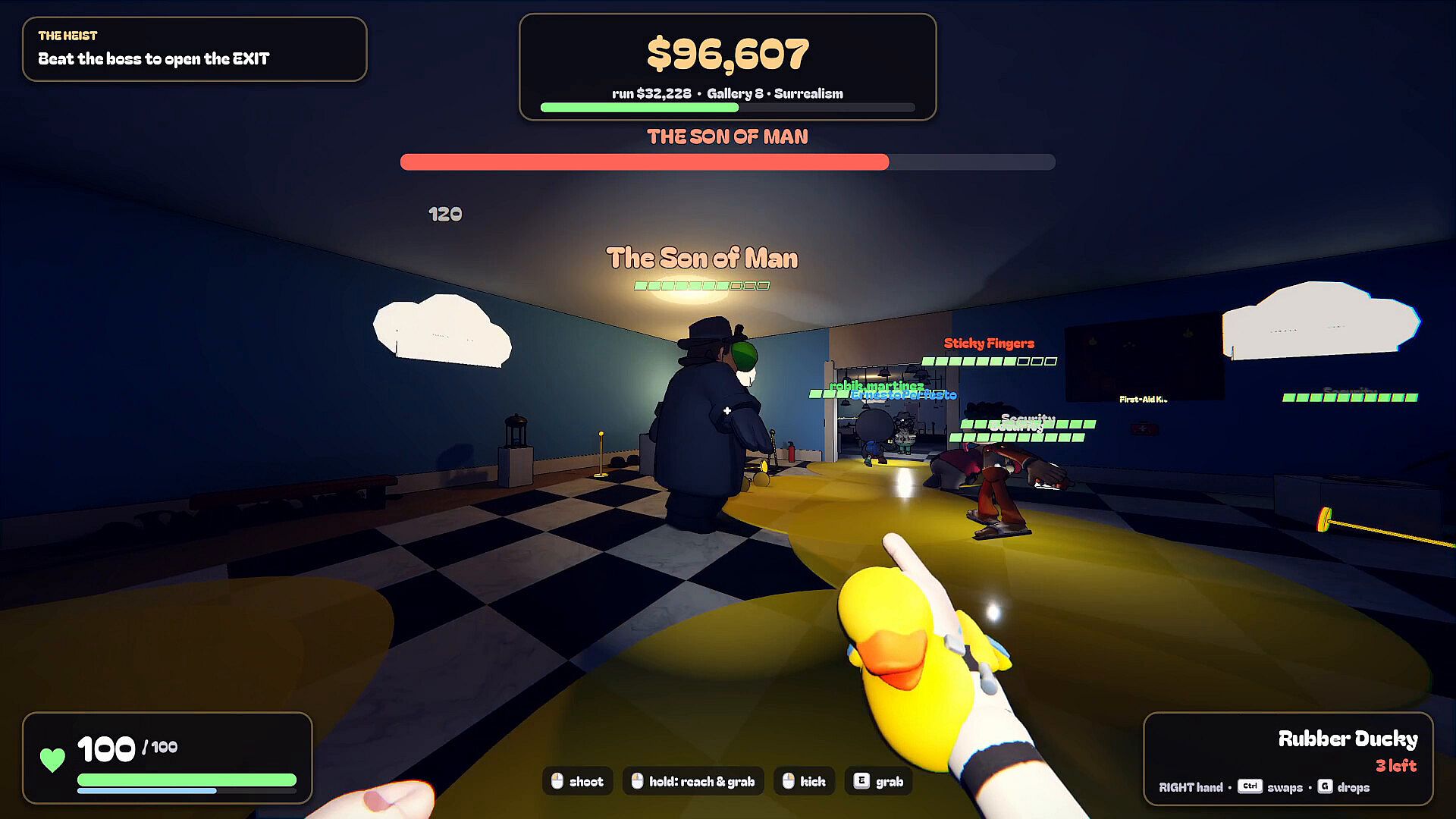
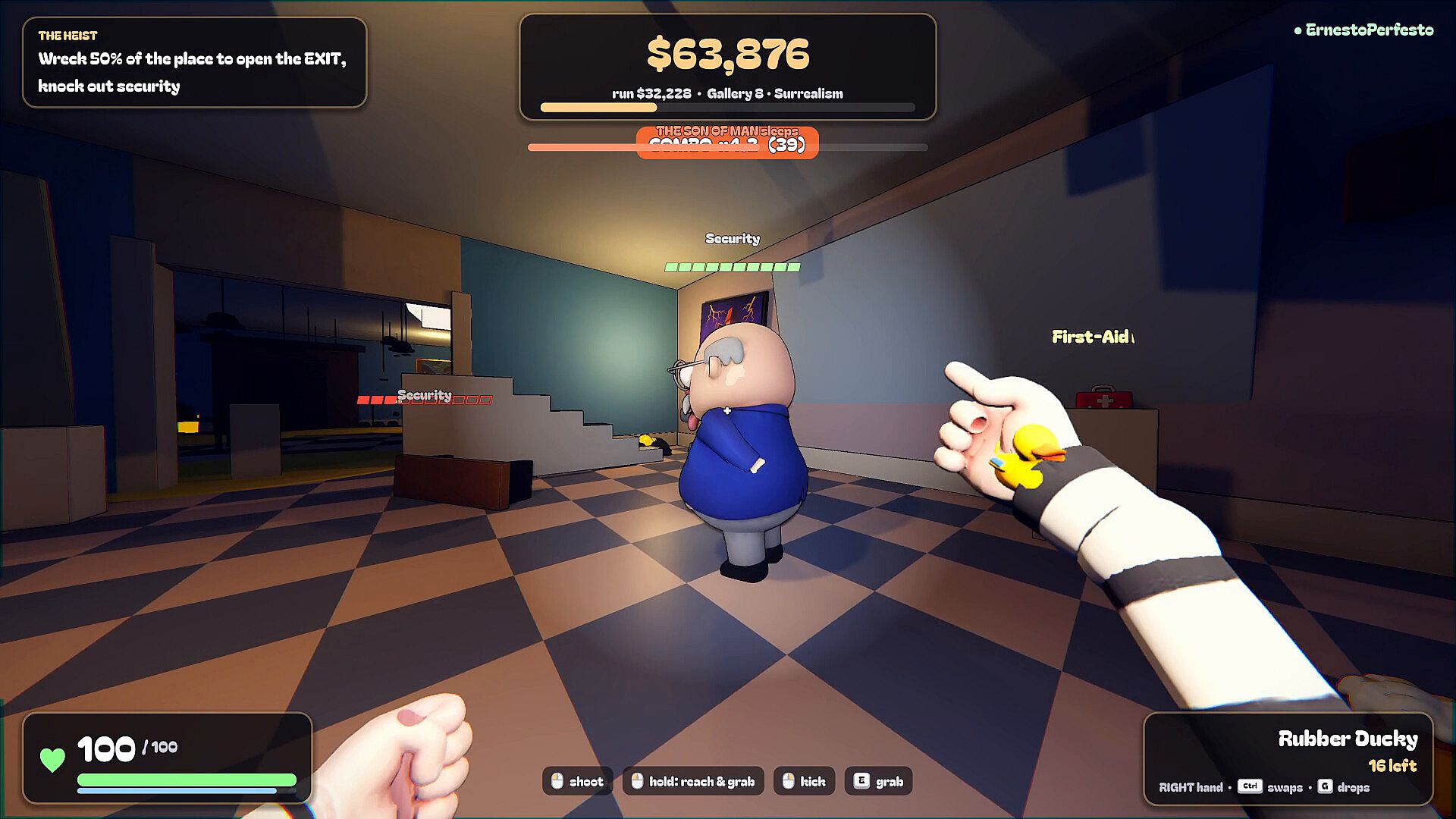
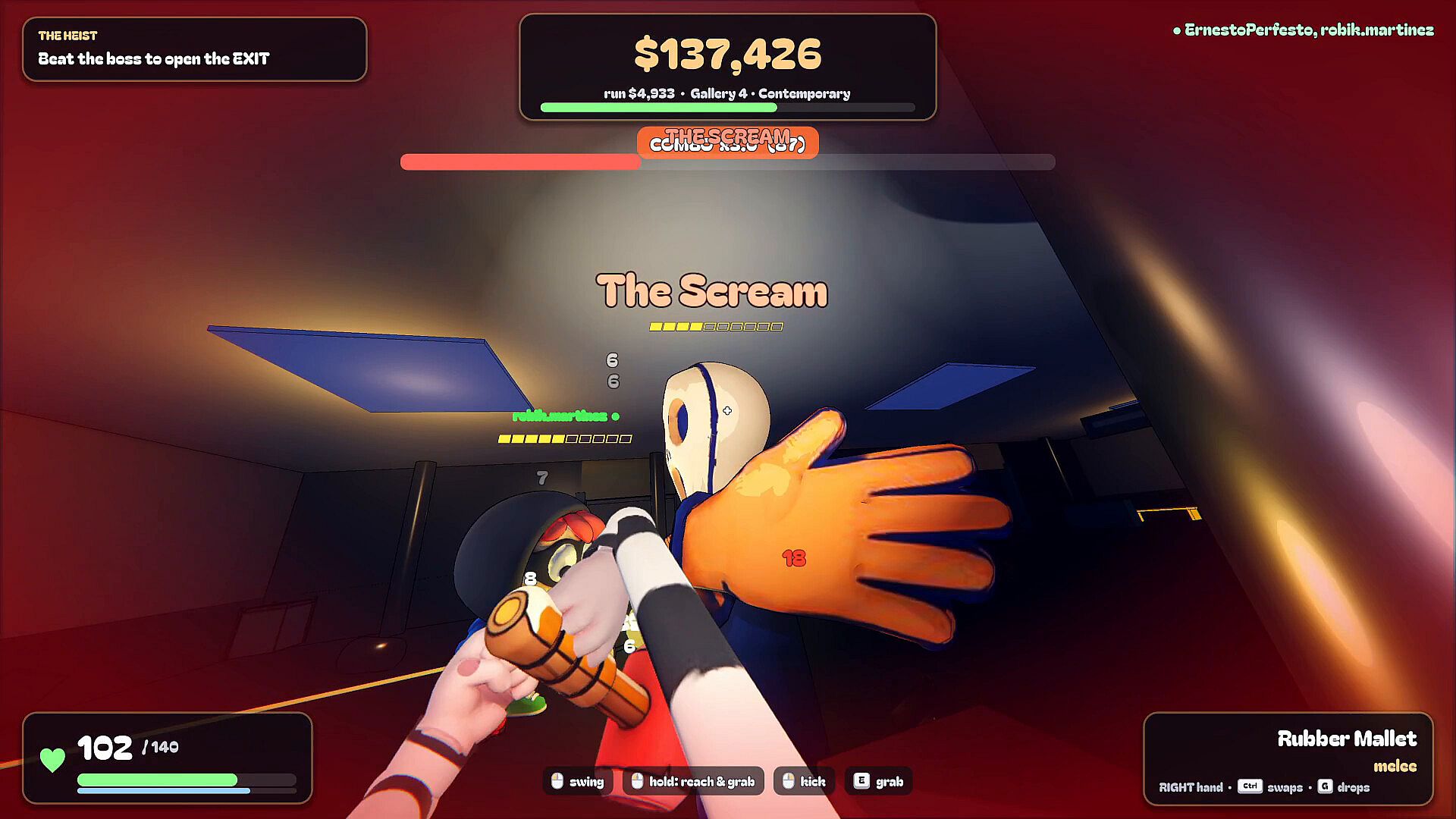









A few at the Museum is a physics-based destruction game that blends action, indie, casual, and adventure elements on PC. Players team up in groups of one to four to smash through museum exhibits, topple statues, and cause maximum chaos while dodging security. The core appeal lies in its straightforward yet satisfying loop of wrecking everything in sight to rack up cash for better tools and upgrades.
Gameplay
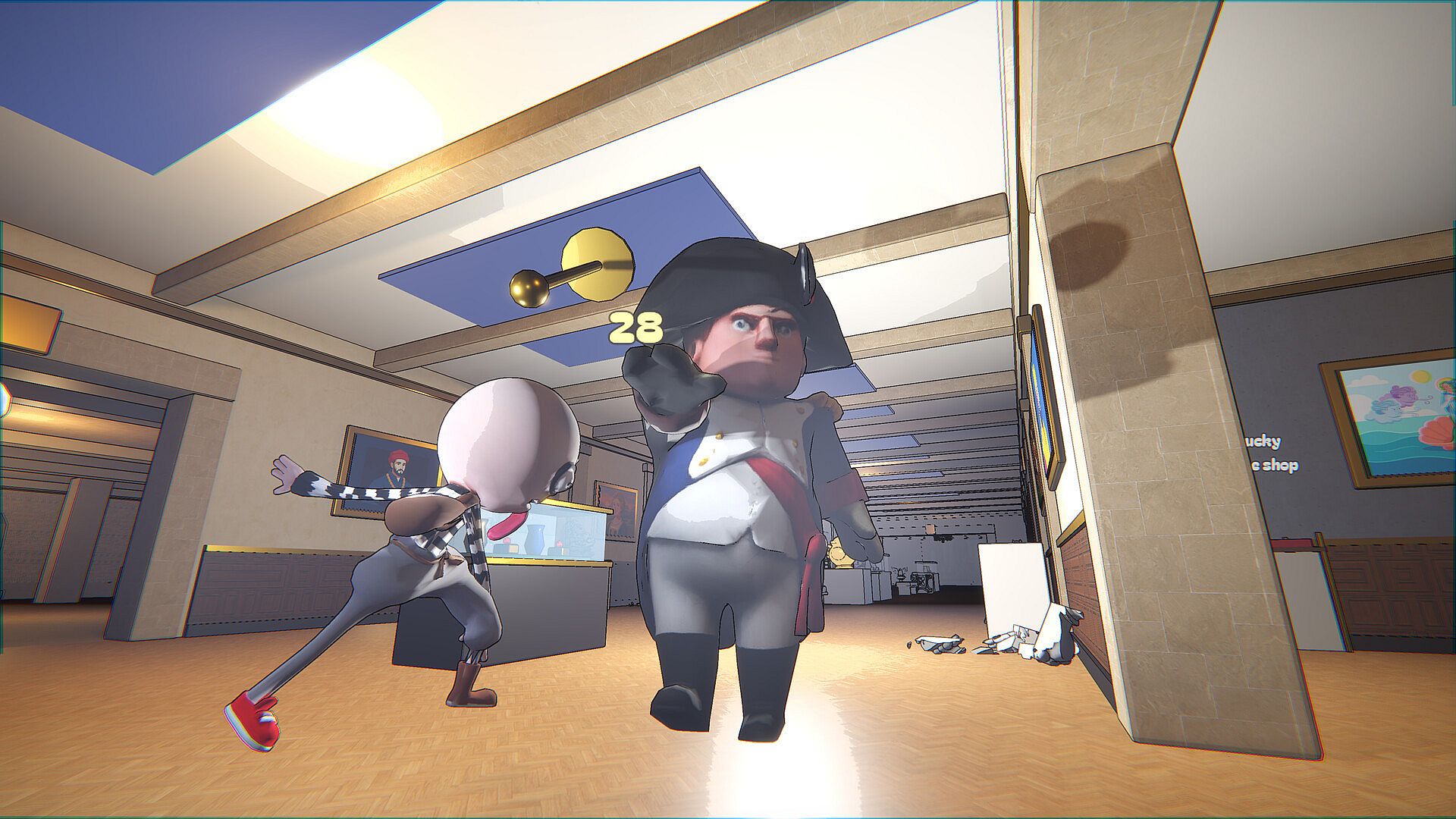
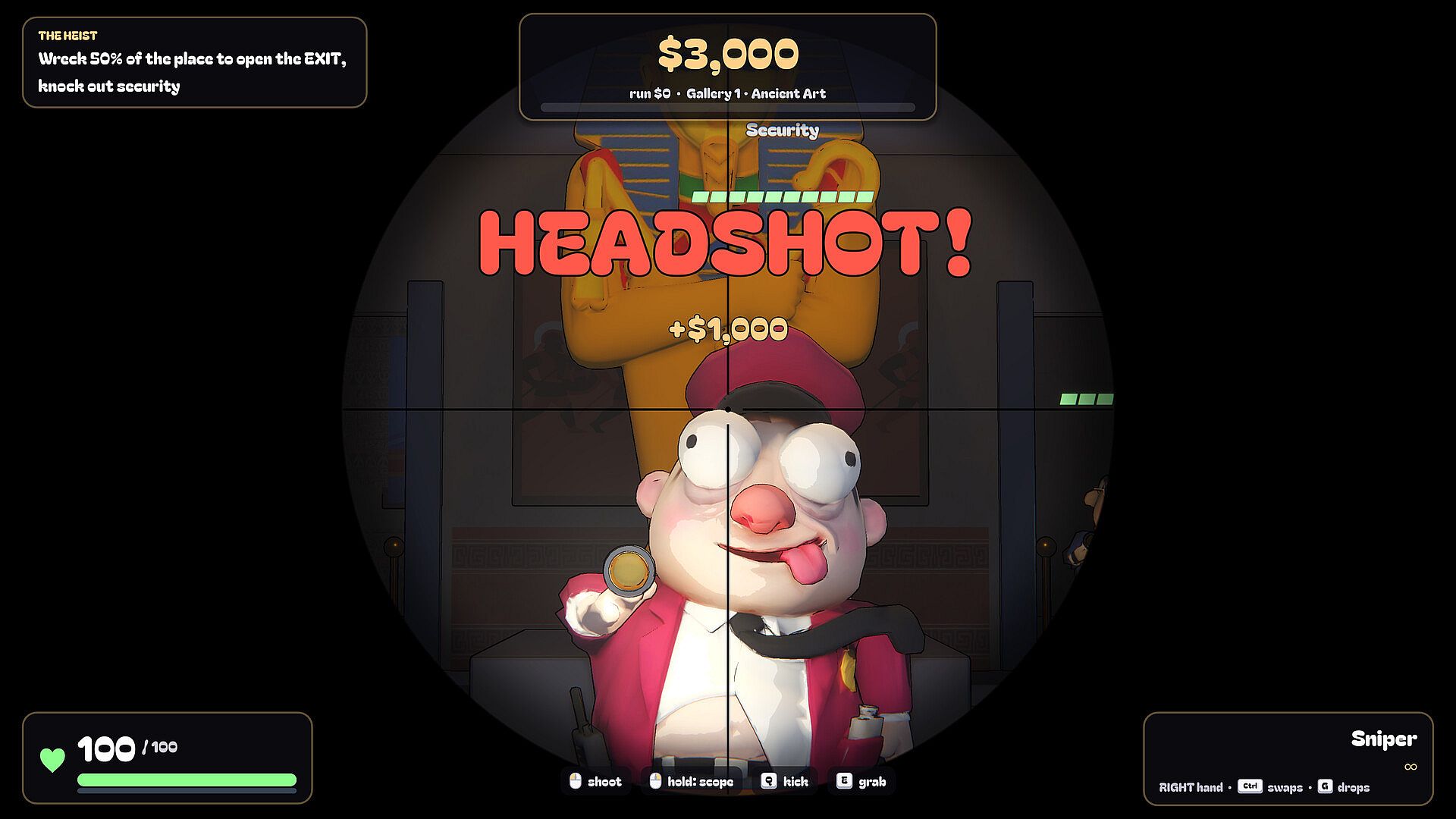
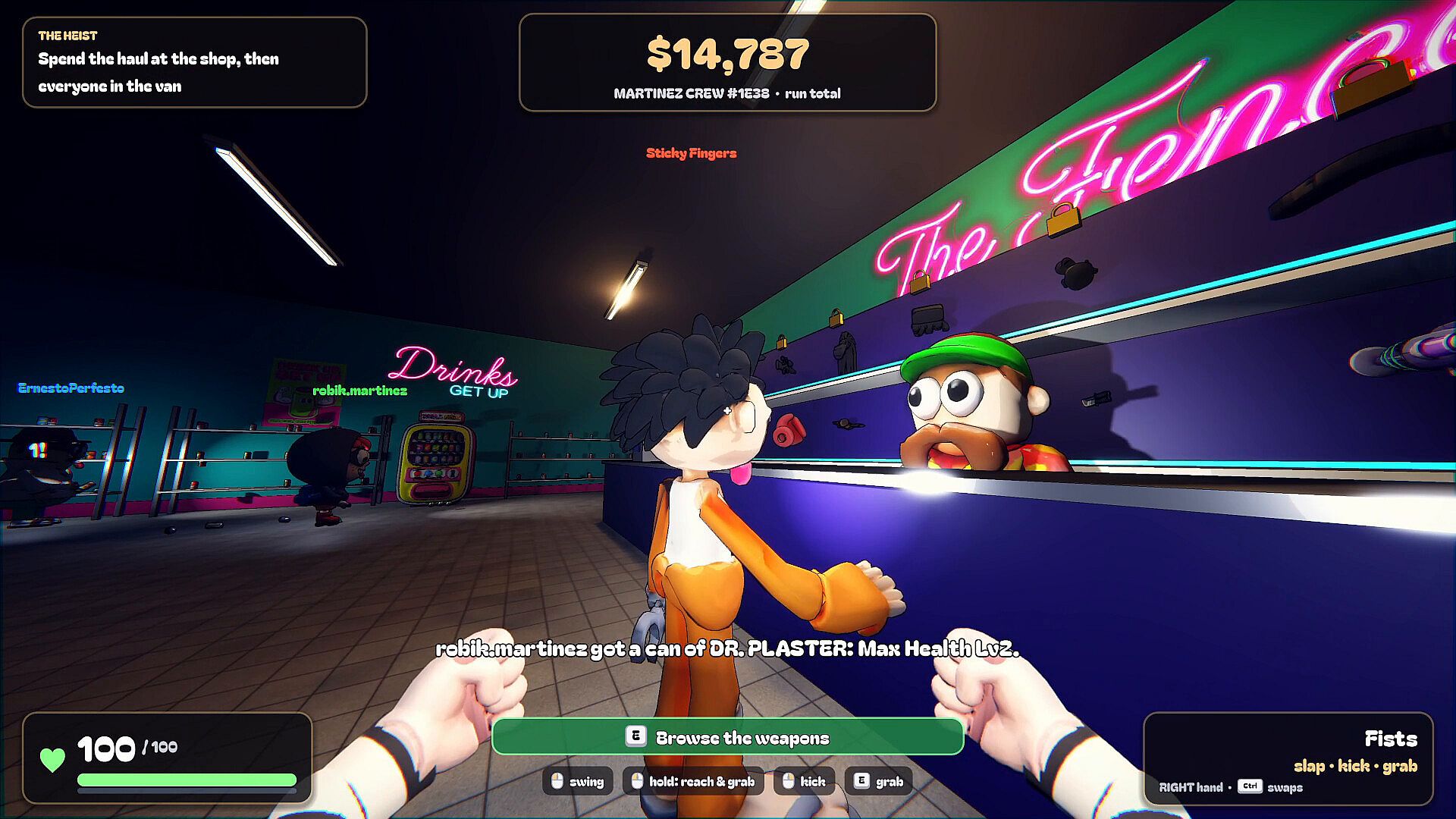
The experience centers on tearing apart gallery after gallery using a mix of basic starting weapons and progressively weirder upgrades purchased with earnings. Players smash displays, hurl objects, and execute precise trick shots to maximize destruction and score. Ancient statues serve as recurring bosses that must be confronted directly, often requiring creative approaches to defeat and move forward into new areas. A vending machine system lets participants spend accumulated funds on enhancements that improve combat effectiveness and destructive potential. The physics engine handles object interactions, throws, and impacts in ways that reward experimentation and timing over precise aiming alone.
Progression feels tied to clearing successive galleries, with each new space introducing fresh targets and challenges. Solo play works through the same systems, though the cooperative focus shines when multiple people coordinate throws, distractions, and boss takedowns. Security guards add tension by patrolling and pursuing players, forcing quick decisions on when to fight, flee, or use the environment to escape.
Game Modes
Support for one to four players defines the structure, with options for solo runs or group sessions that emphasize shared destruction goals. Co-op allows friends to divide tasks such as drawing security attention while others focus on high-value targets or lining up trick shots. The absence of rigid competitive modes keeps the emphasis on collaborative chaos and collective earnings. Sessions revolve around gallery-clearing objectives that scale naturally with player count, encouraging repeated attempts to refine techniques and unlock further upgrades.
Progression and Upgrades
Earning money through thorough destruction funds weapon purchases and vending machine improvements that alter how players approach each gallery. Trick shots and efficient boss fights accelerate earnings, creating a feedback loop where better tools enable more ambitious destruction. Multiple galleries provide variety in layout and targets, keeping the core loop fresh as players advance. The system rewards creativity in how objects are manipulated and enemies are handled rather than following a single prescribed path.
Who the Game Targets
Fans of lighthearted physics destruction titles will find the museum setting and statue bosses a distinctive twist on the formula. The casual accessibility pairs with action elements that scale in intensity during boss encounters and security chases. Indie sensibilities show in the focused scope and humorous tone around drunk guards and over-the-top statue fights. Those seeking quick co-op sessions or solo experimentation with destruction mechanics will appreciate the straightforward entry point and upgrade-driven progression.
Is It Worth Playing?
The game remains in a pre-release state with no user reviews available yet, so any assessment rests on the described mechanics and features. Its physics-driven destruction, cooperative support up to four players, and boss encounters against museum statues offer a clear draw for players who enjoy chaotic, object-focused gameplay. The upgrade and trick-shot systems add depth without overcomplicating the experience. Those interested in early access to an indie title built around gallery-smashing co-op should monitor its launch for the full picture of how the systems hold up in practice. If the premise of punching ancient statues and outrunning security appeals, it aligns well with that style of play.