

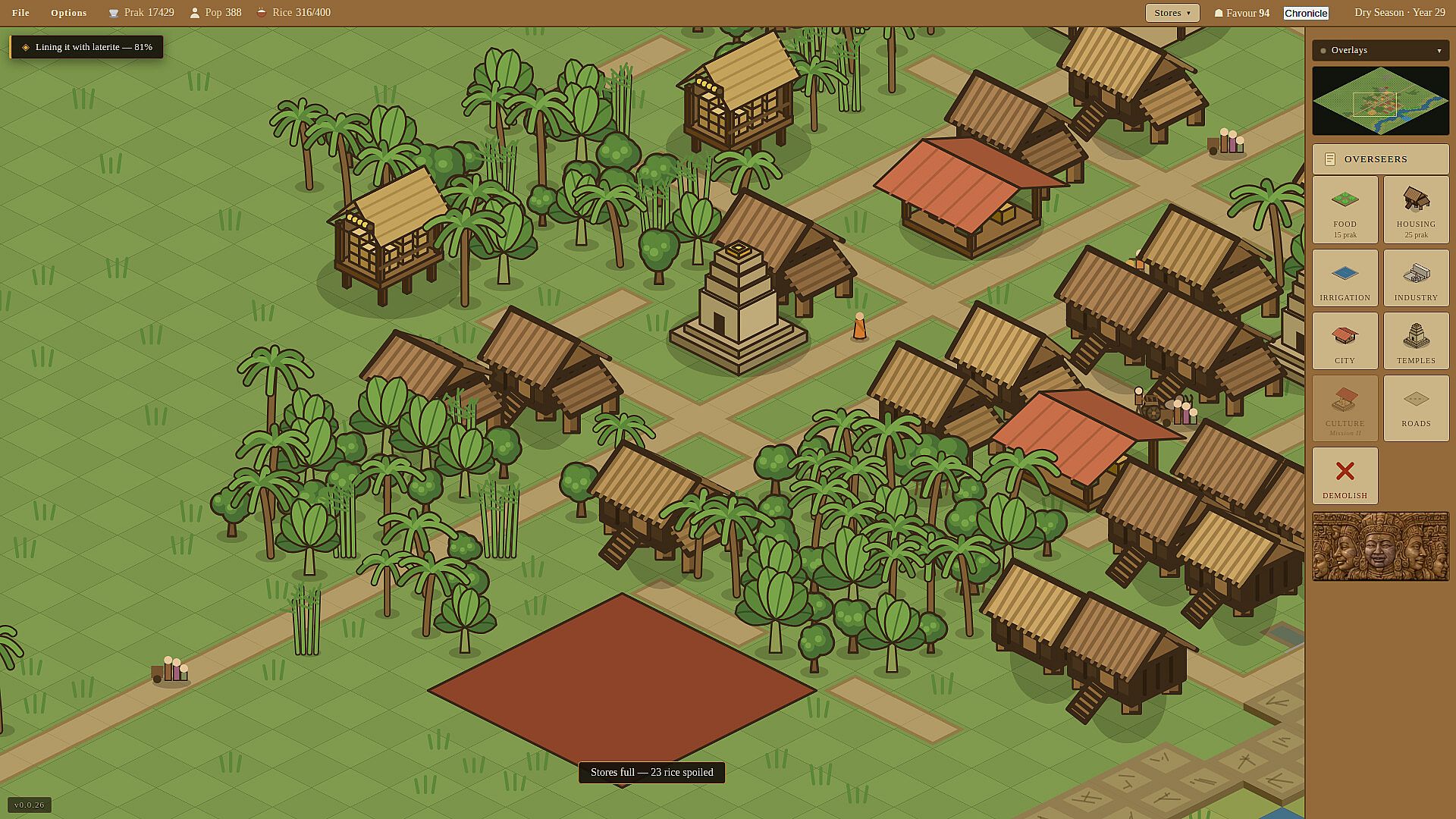
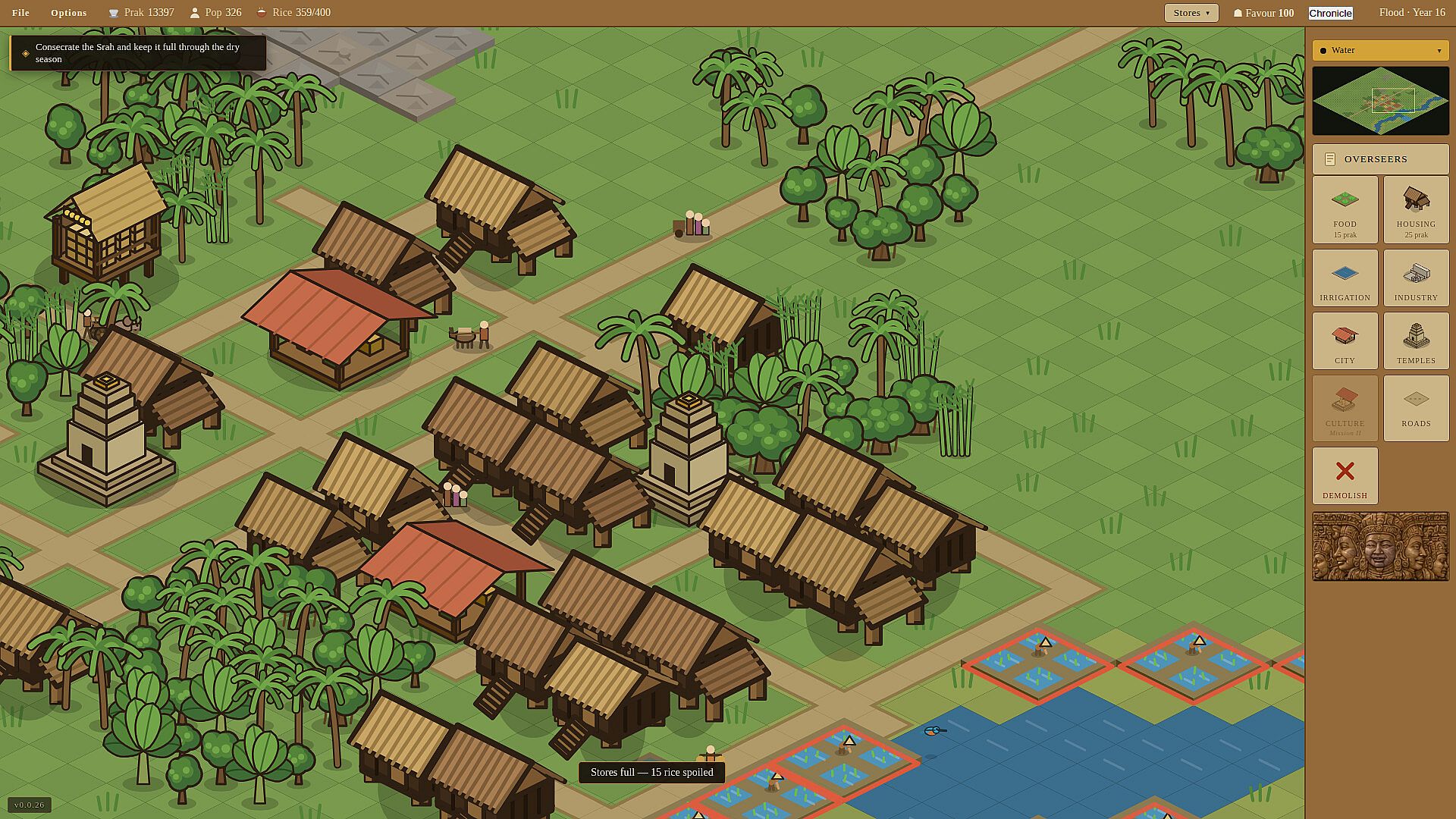
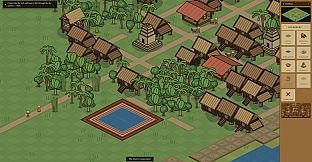
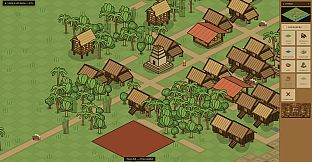
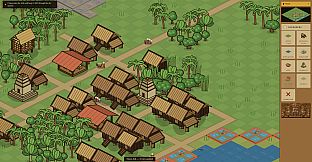
Angkor is a strategy city builder set in the Khmer empire, where players manage water resources to develop settlements across historical locations in Cambodia. The game centers on the challenges of building in a floodplain environment that alternates between flooding and drought, drawing from the real engineering feats of the Khmer people nine hundred years ago.
Gameplay
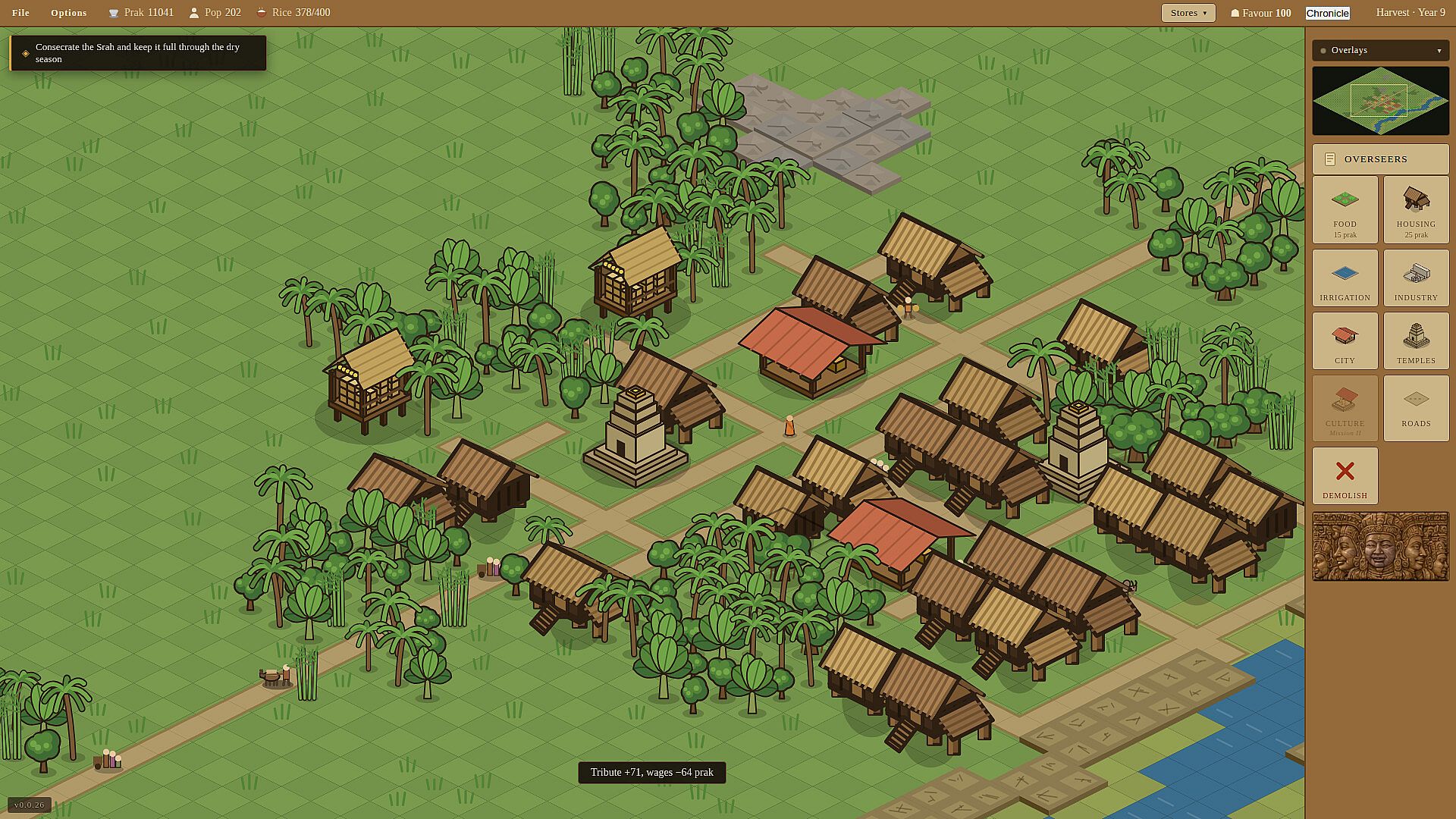
The core loop involves planning city layouts with roads and housing plots while ensuring that resources like grain, stone, and labor reach their destinations. Every structure generates a walker that follows assigned routes, making efficient pathing essential for progress. Misaligned infrastructure can stall construction projects, such as temple foundations that require steady material deliveries from masons.
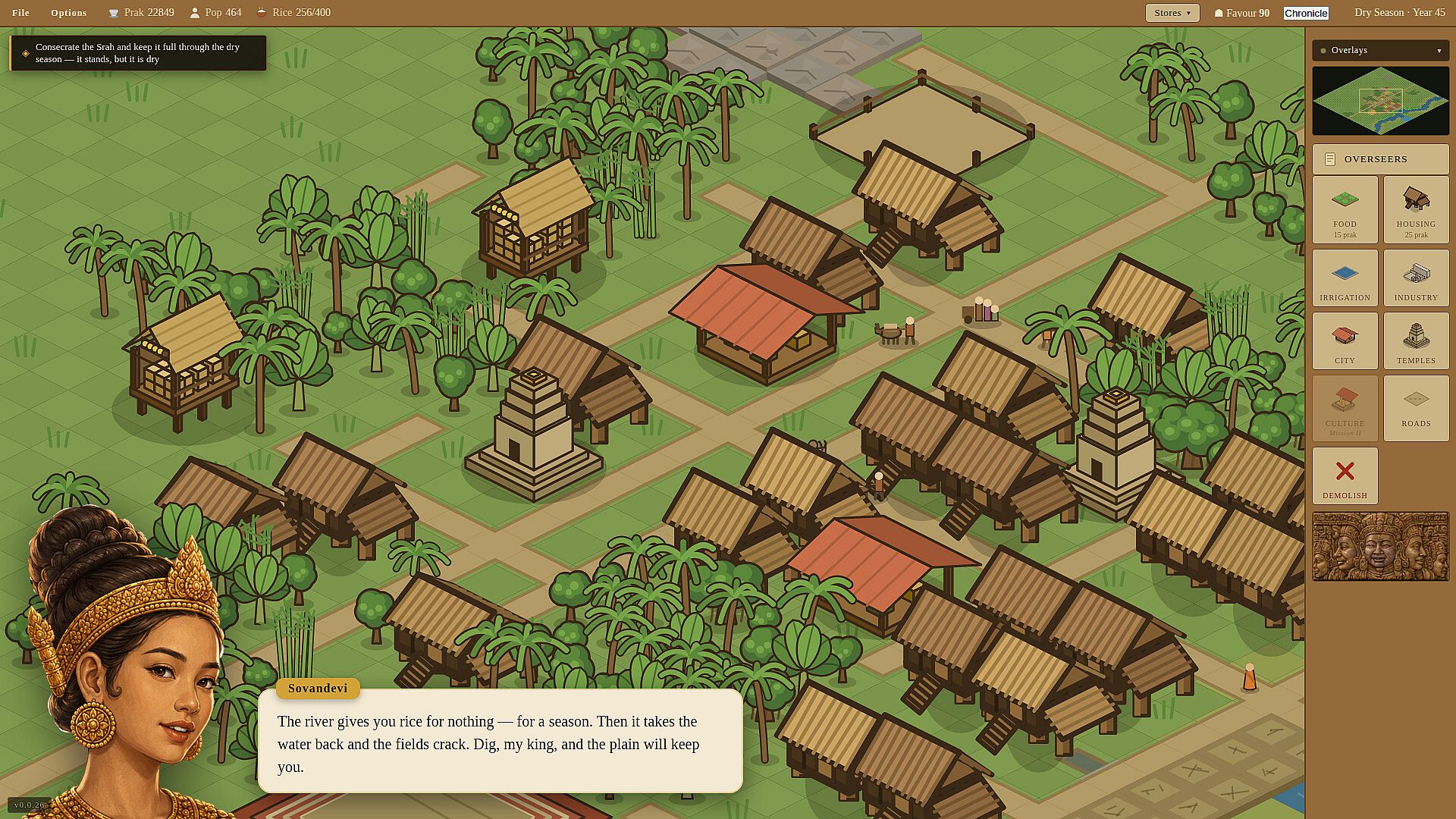
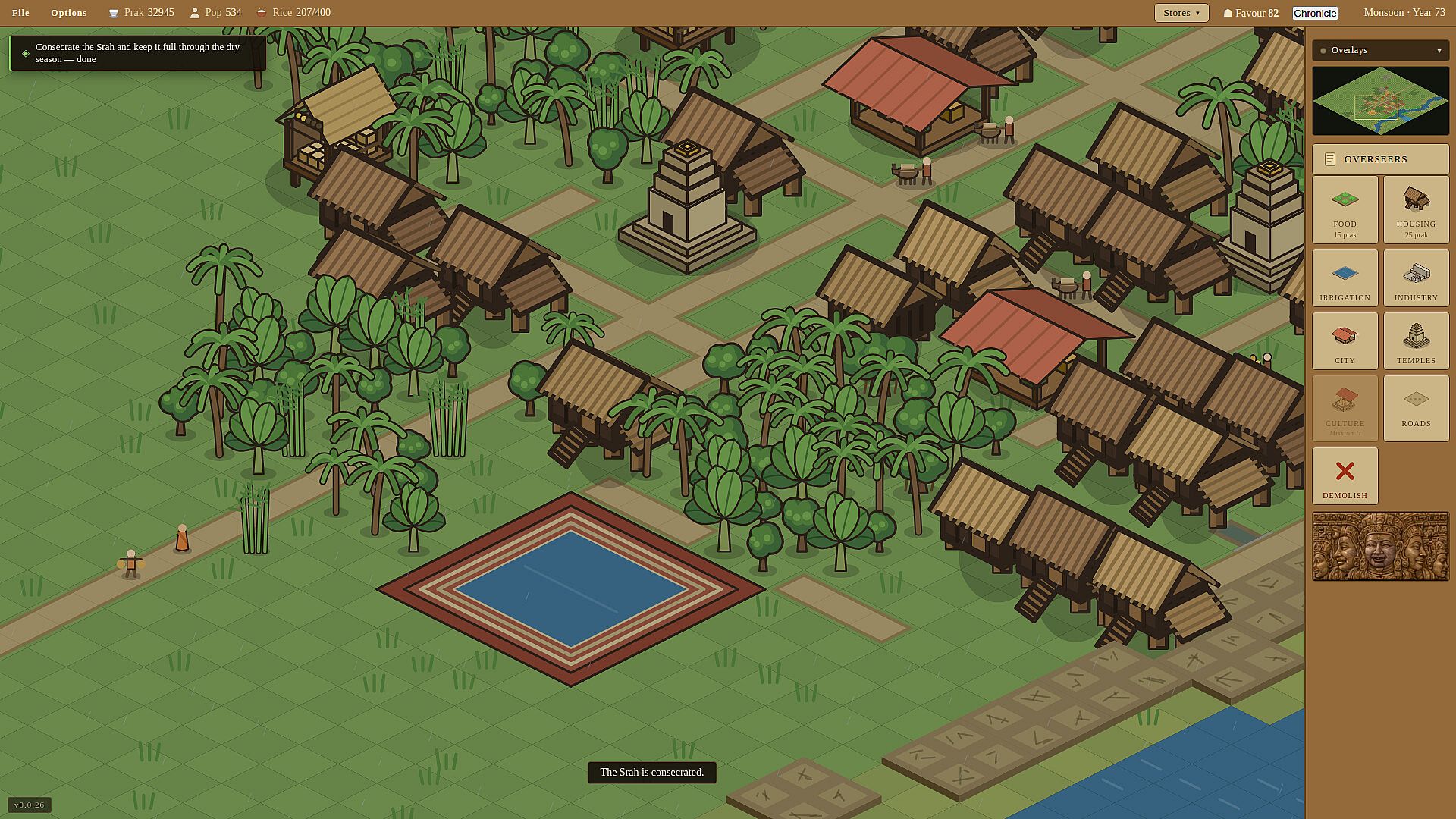
Water functions as a primary system. Players dig canals, construct barays and reservoirs, and account for monsoon cycles to direct floodwater into rice paddies and storage. This setup determines settlement viability in different terrains, from delta areas to drier frontiers. Monument building proceeds in distinct stages, beginning with foundations and advancing through completion to consecration, all supported by the underlying supply chains.
Isometric visuals reflect traditional Khmer architecture, with buildings and infrastructure styled to match historical precedents. The emphasis remains on balancing growth, labor allocation, and environmental adaptation rather than combat or external threats.
Game Modes
The game features a campaign structured around three distinct cities. Angkor Borei serves as an introductory delta settlement where players learn to integrate arriving water flows into basic infrastructure. The capital city of Angkor requires commanding seasonal floods, filling large barays, and constructing major monuments like Angkor Wat. Banteay Chhmar represents a frontier outpost distant from major rivers, demanding creative solutions to secure and distribute limited water supplies.
Each city presents progressive challenges tied to its geography and historical context. Progression builds on prior lessons in water routing and resource movement, culminating in the development of large-scale temple complexes. No additional modes such as sandbox or competitive play are confirmed beyond this campaign structure.
Historical Context and Mechanics
Angkor draws directly from the Khmer empire's achievements in hydraulic engineering, which supported the largest pre-industrial city of its era. The simulation treats water not as a background element but as a dynamic resource that influences every aspect of expansion, from agriculture to construction timing. Players must anticipate seasonal changes and design networks that sustain continuous growth.
Building placement and route optimization form the tactical layer. Families occupy plots and expand homes organically once connected properly, while production chains for stone and grain require uninterrupted walker access. This creates a focus on spatial planning that rewards careful foresight over rapid expansion.
Who the Game Appeals To
Fans of detailed city builders that prioritize infrastructure and environmental systems will find the water-centric mechanics engaging. The historical setting adds specificity to the challenges, distinguishing it from generic resource management titles. Those interested in single-player experiences centered on planning and problem-solving rather than action or multiplayer elements will appreciate the deliberate pace.
The isometric presentation and Khmer-inspired designs provide visual consistency throughout the campaign cities. Emphasis on staged monument construction offers long-term goals that integrate with daily management tasks.
Is It Worth Playing?
Angkor suits players who enjoy methodical city building with a strong emphasis on logistics and environmental adaptation. The campaign across three cities provides structured progression that teaches core systems gradually while increasing complexity. Verified mechanics around walker routes, water networks, and phased construction deliver focused gameplay without extraneous features.
Availability on PC supports the detailed simulation needs of the genre. For those drawn to historical strategy titles that model real engineering constraints, the game offers a targeted experience centered on Khmer water management and urban development. Reception details remain limited at this stage, so interest should stem from alignment with the described systems rather than broad popularity metrics.