




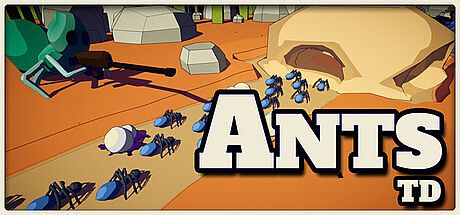


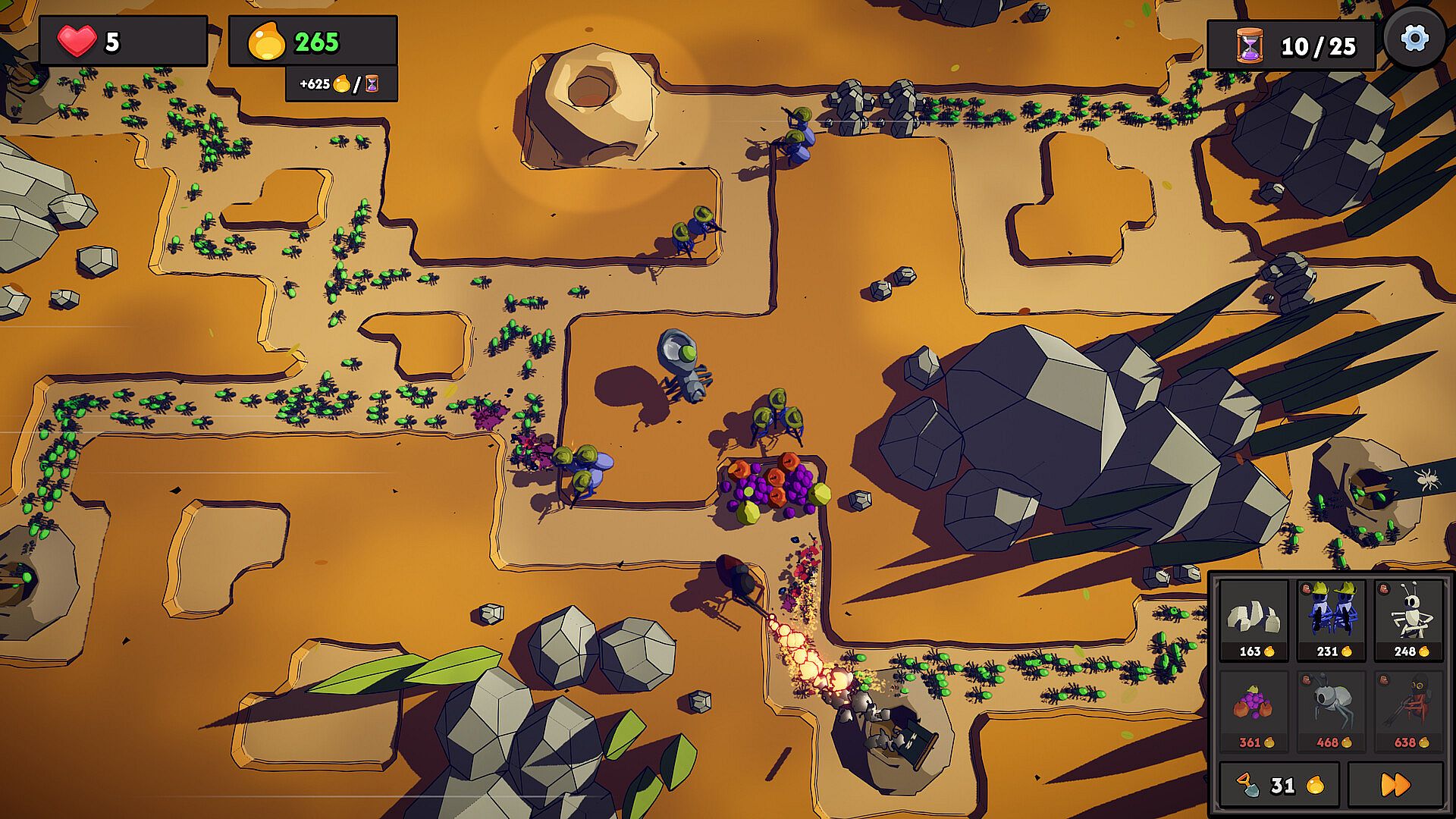
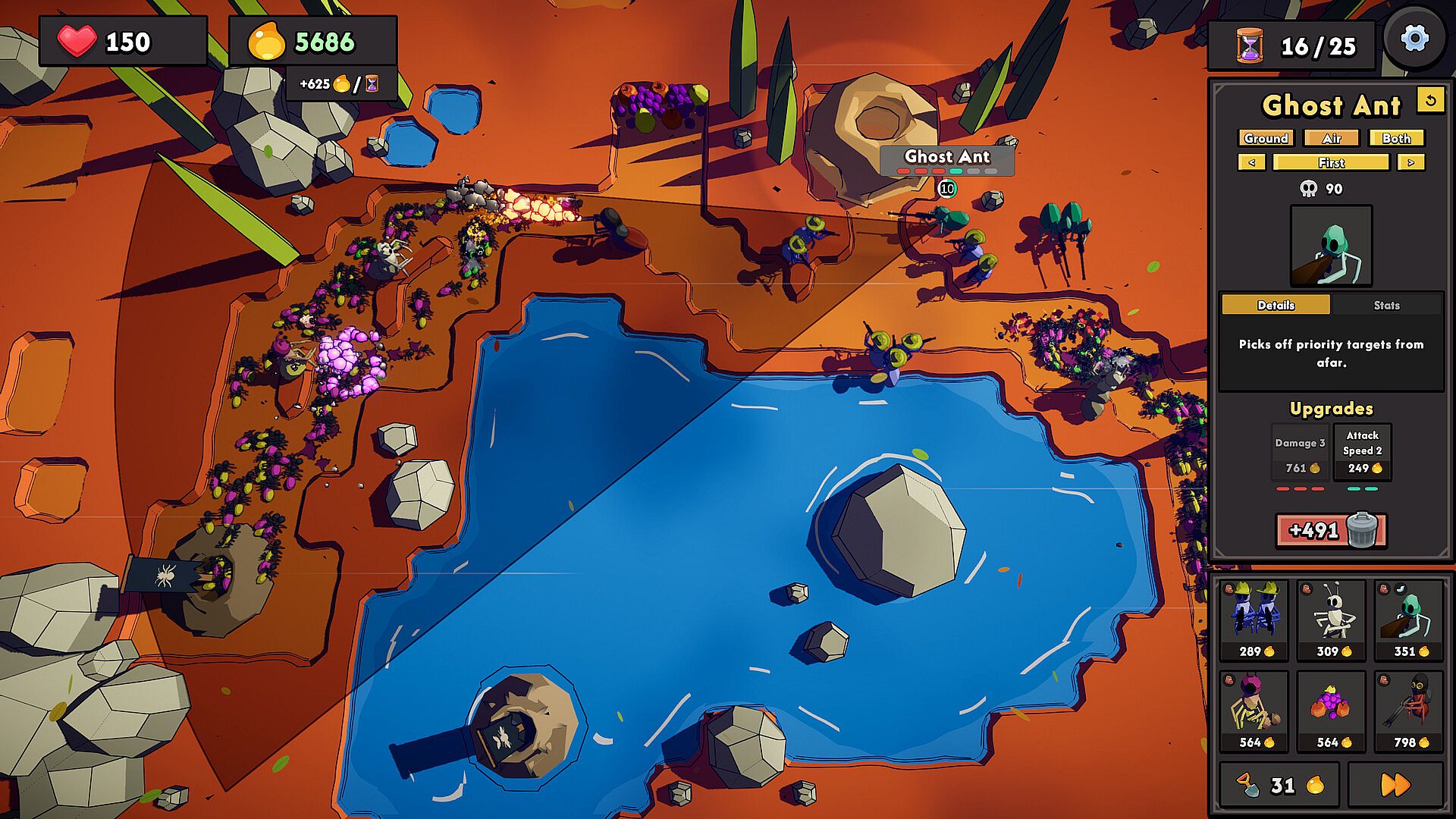
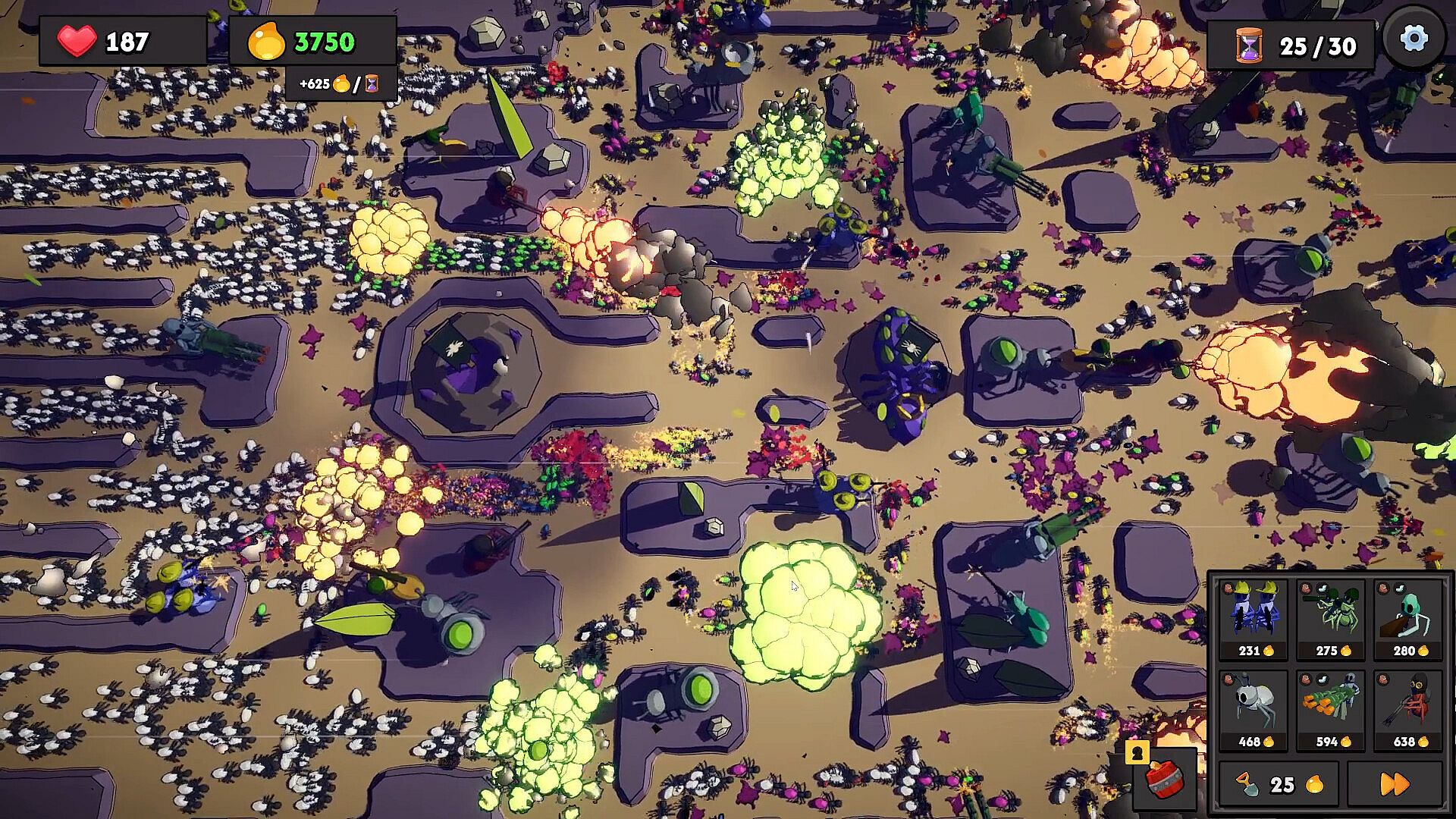
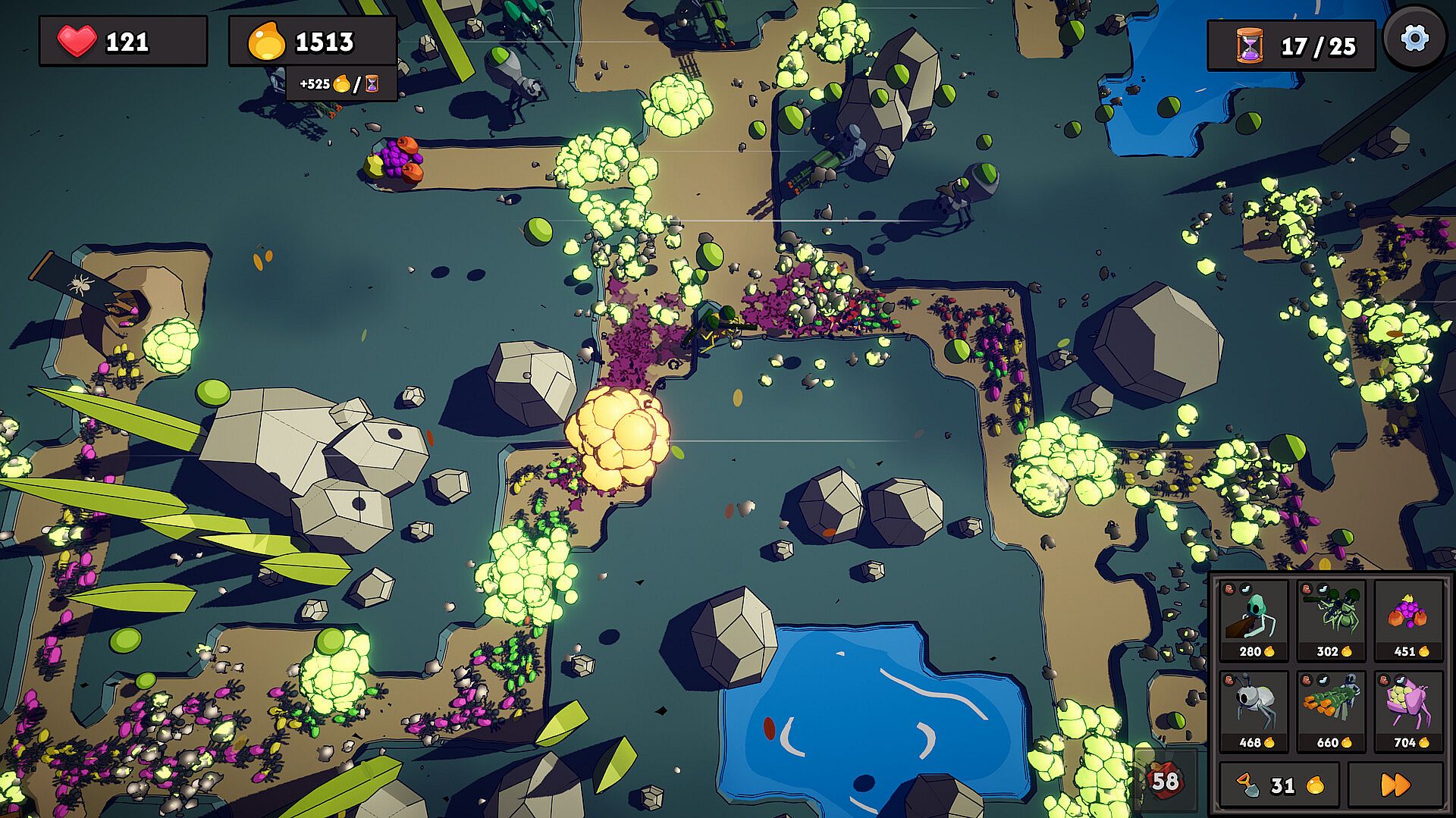
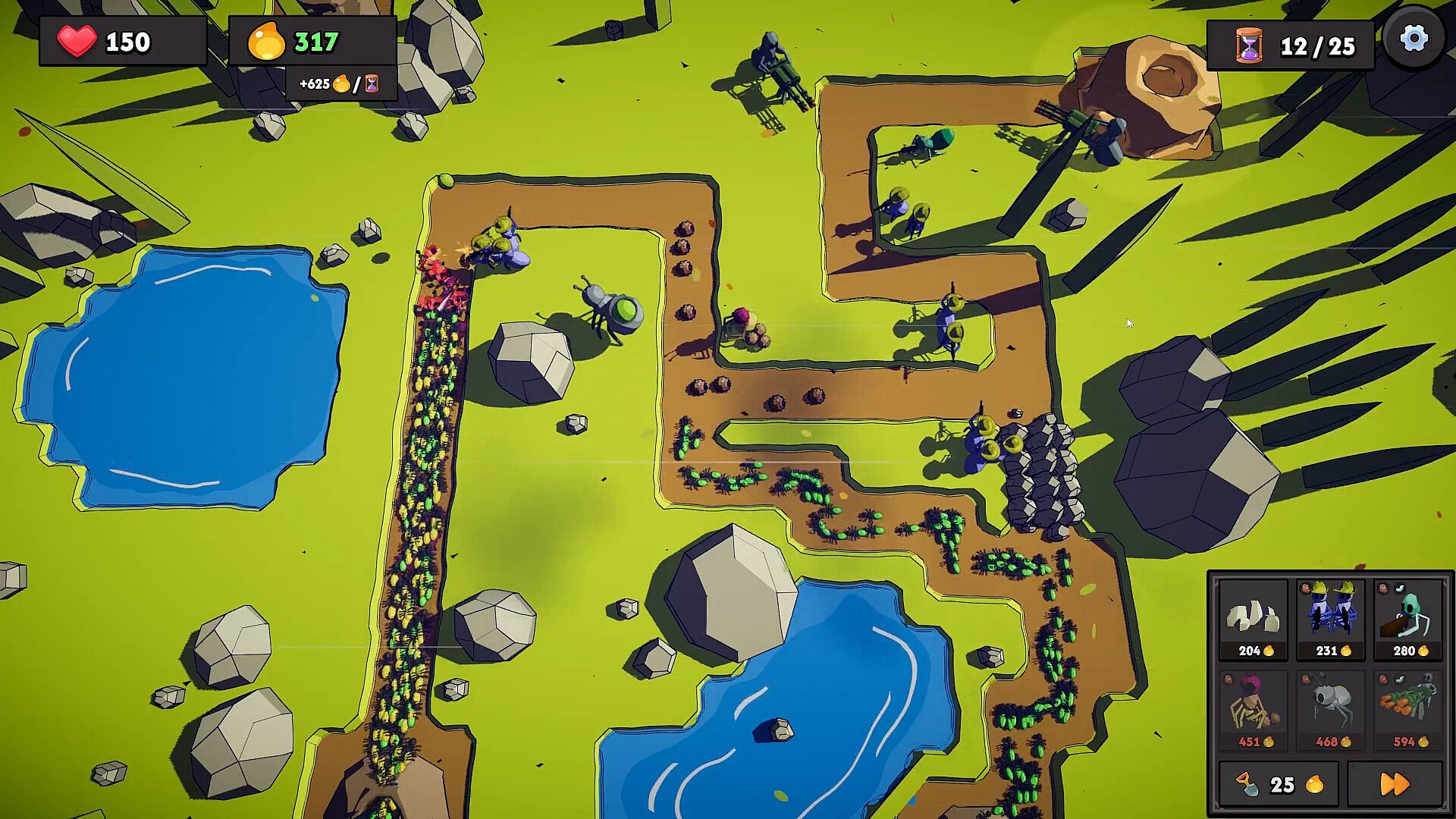
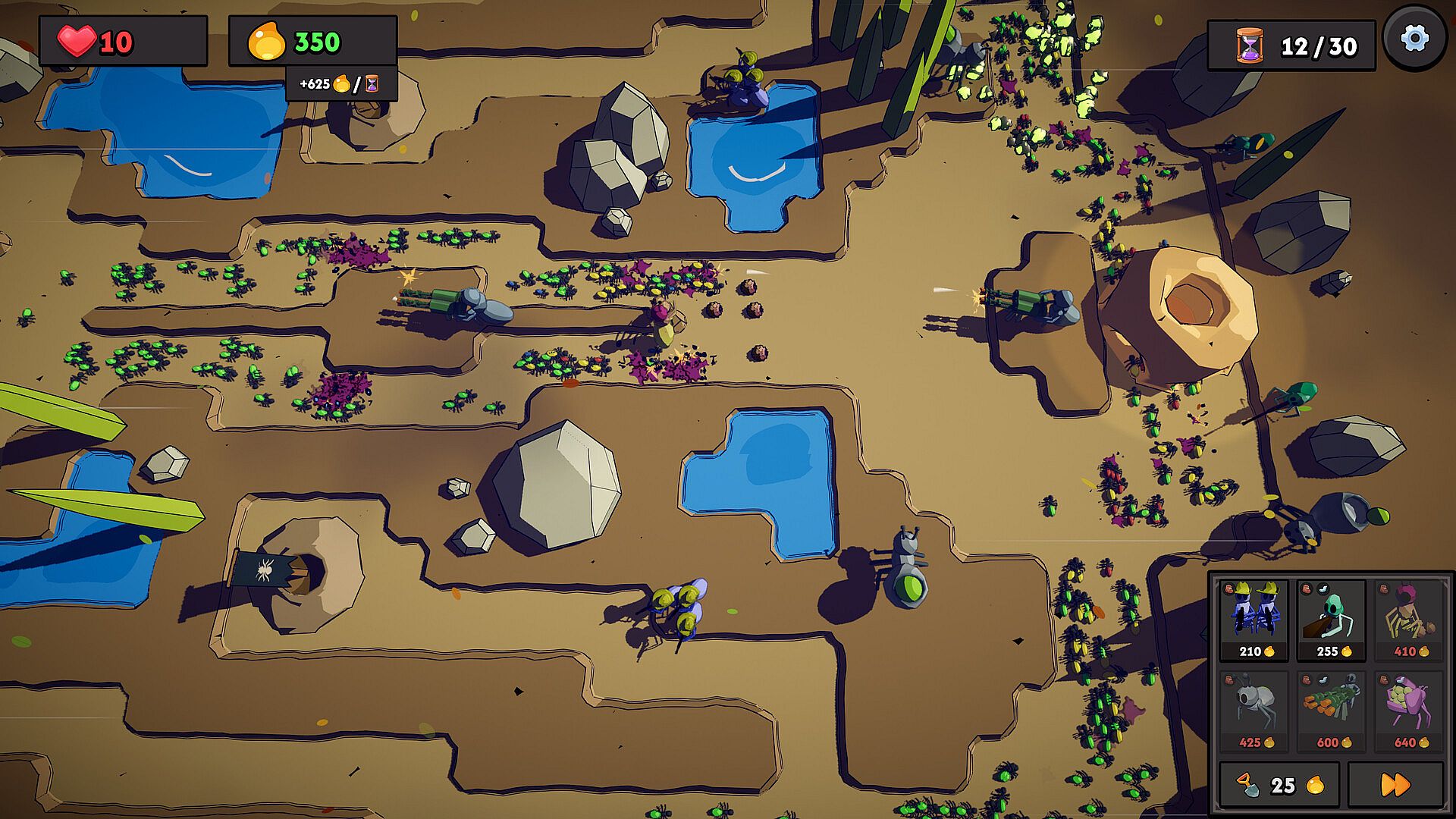
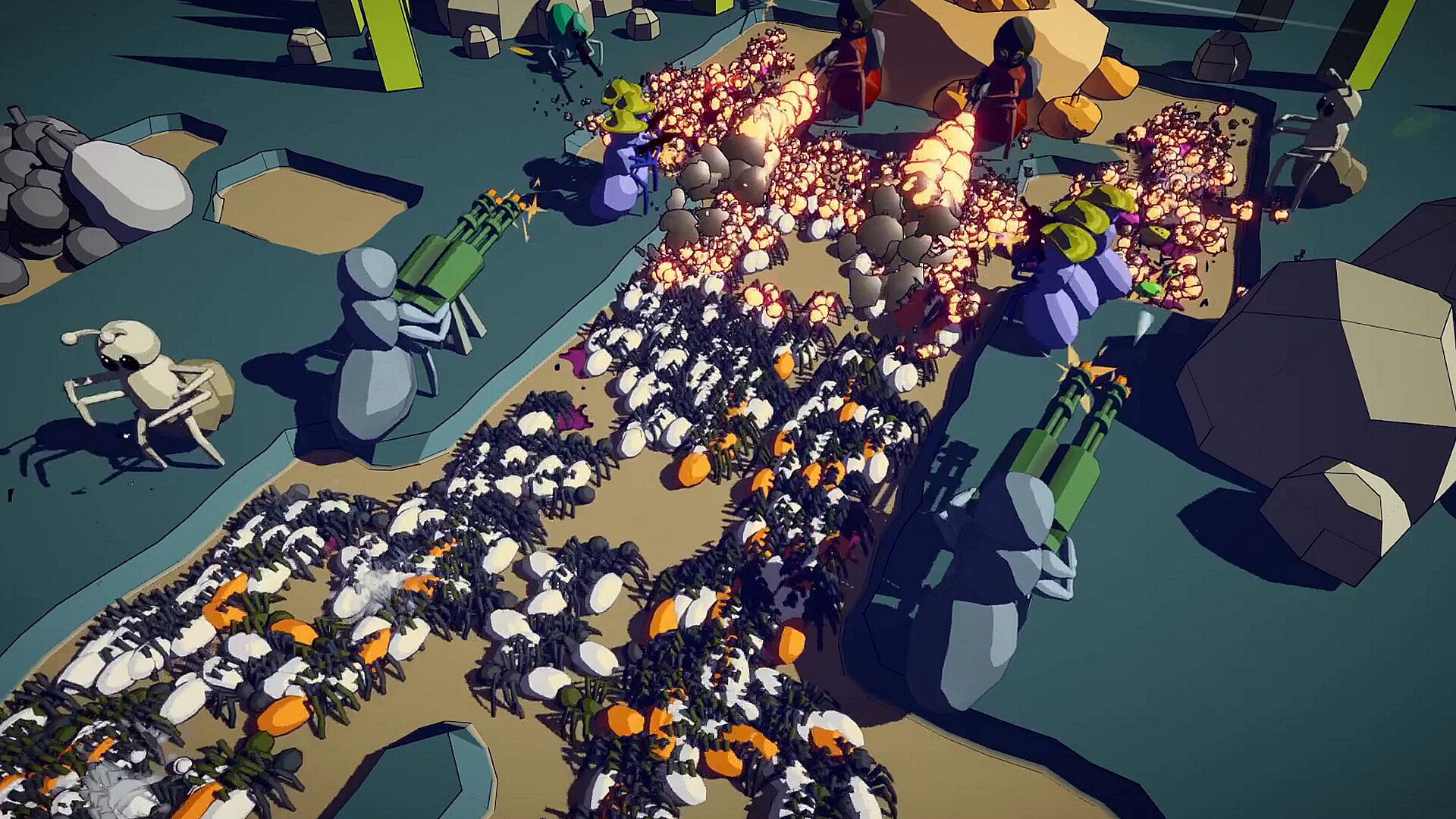
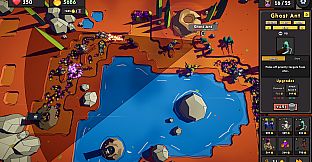
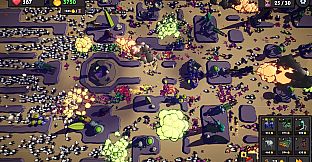
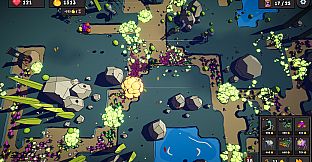
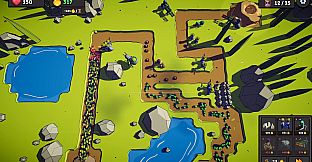
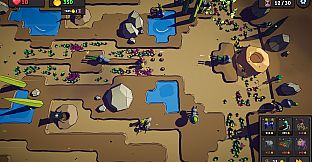
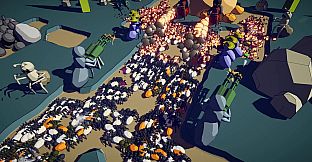
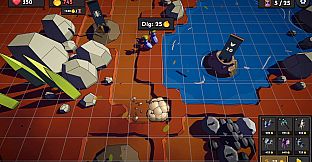
Ants TD is a tower defense game that puts players in charge of protecting a nest from massive swarms of ants on PC. The core experience blends action and strategy elements in a chaotic setup where thousands of ants push toward the nest at once, requiring constant adaptation through building, path manipulation, and targeted attacks.
Gameplay
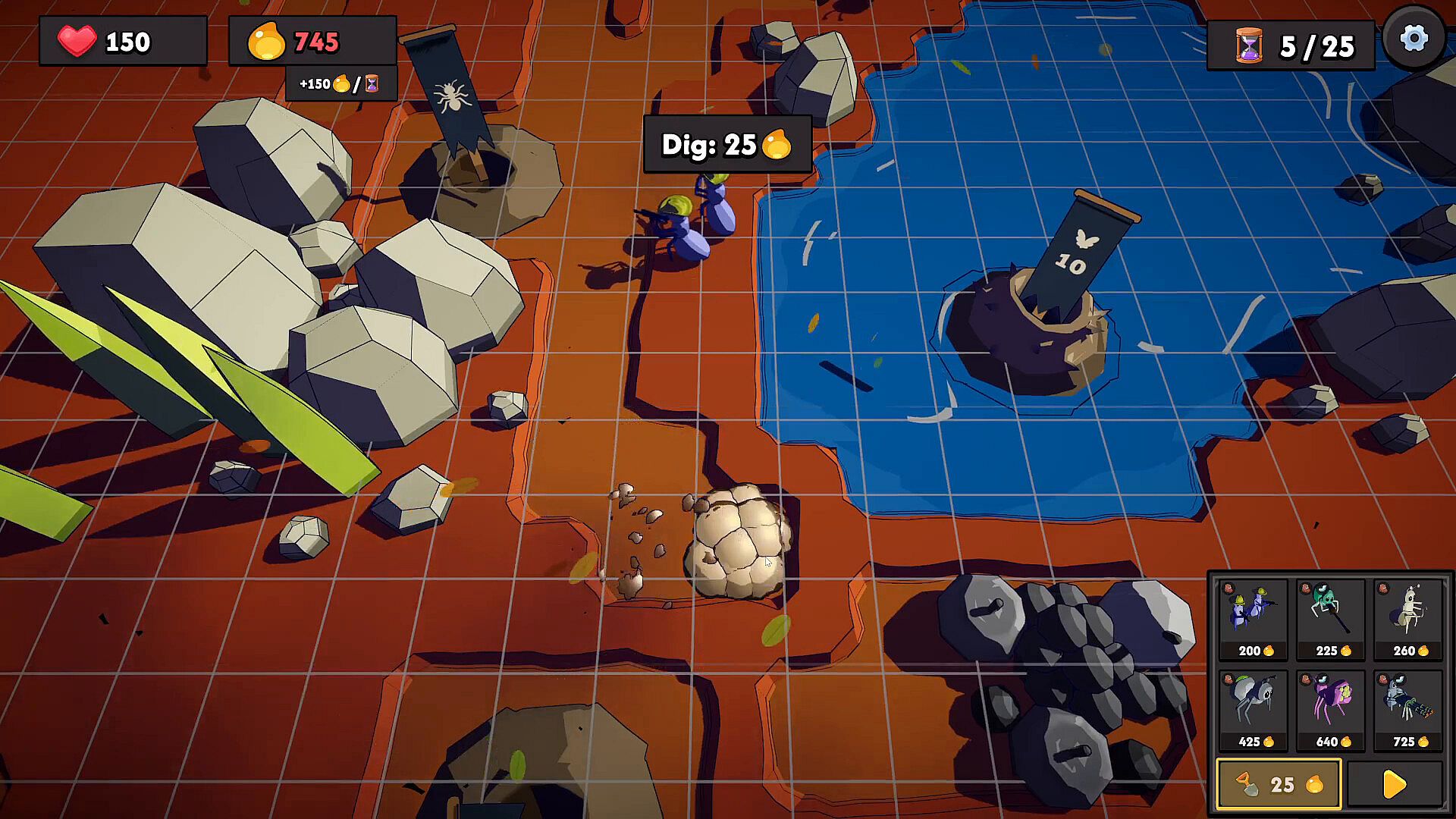
The gameplay centers on steering and thinning out relentless ant swarms. Ants always follow the shortest available route to the nest, so the player shapes that path by digging new tunnels to force longer routes past defenses, placing barricades to block shortcuts, and dropping fruit piles to lure groups into dead ends or kill zones. This control system turns the map into a dynamic puzzle that changes as the match progresses.
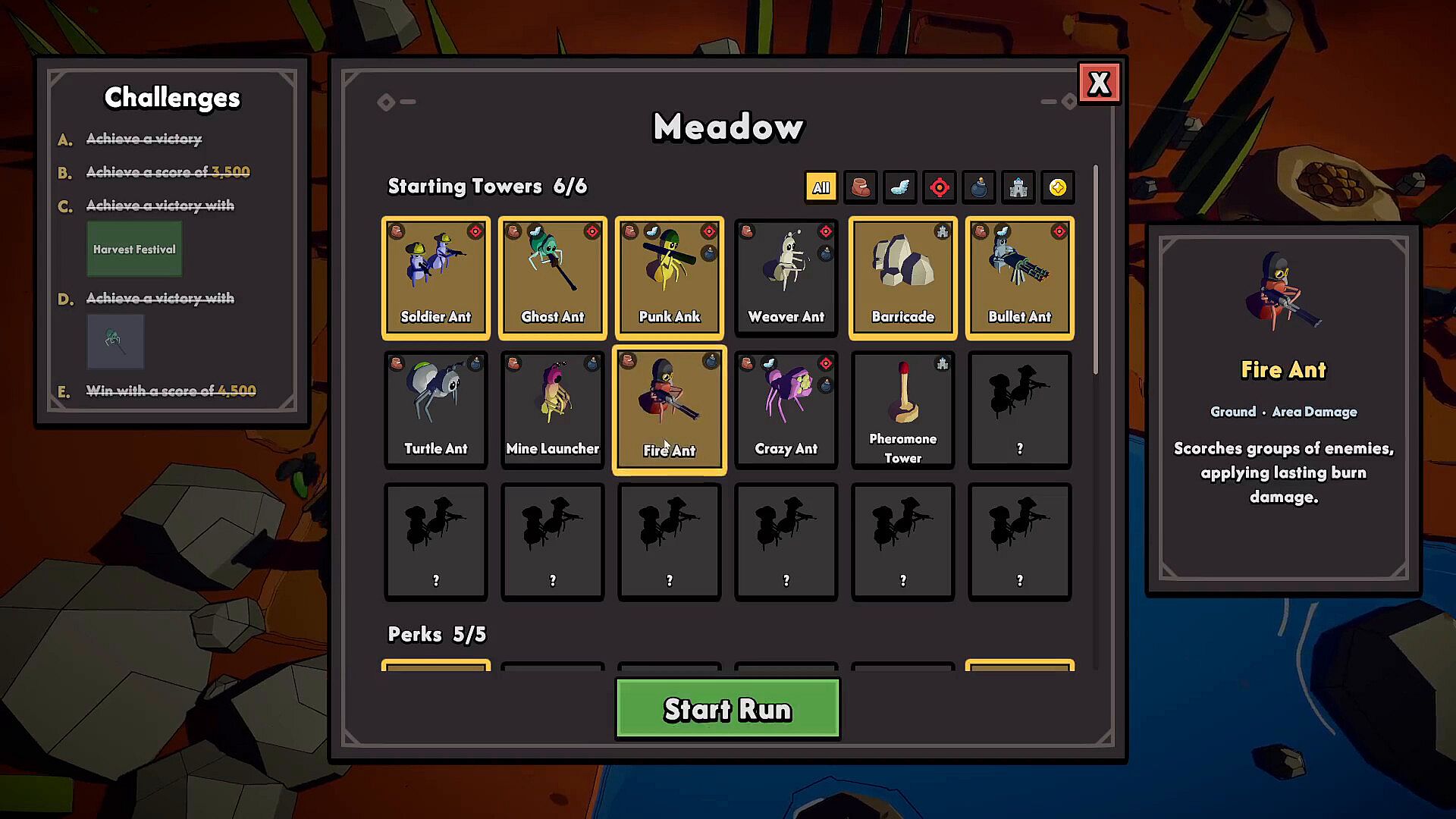
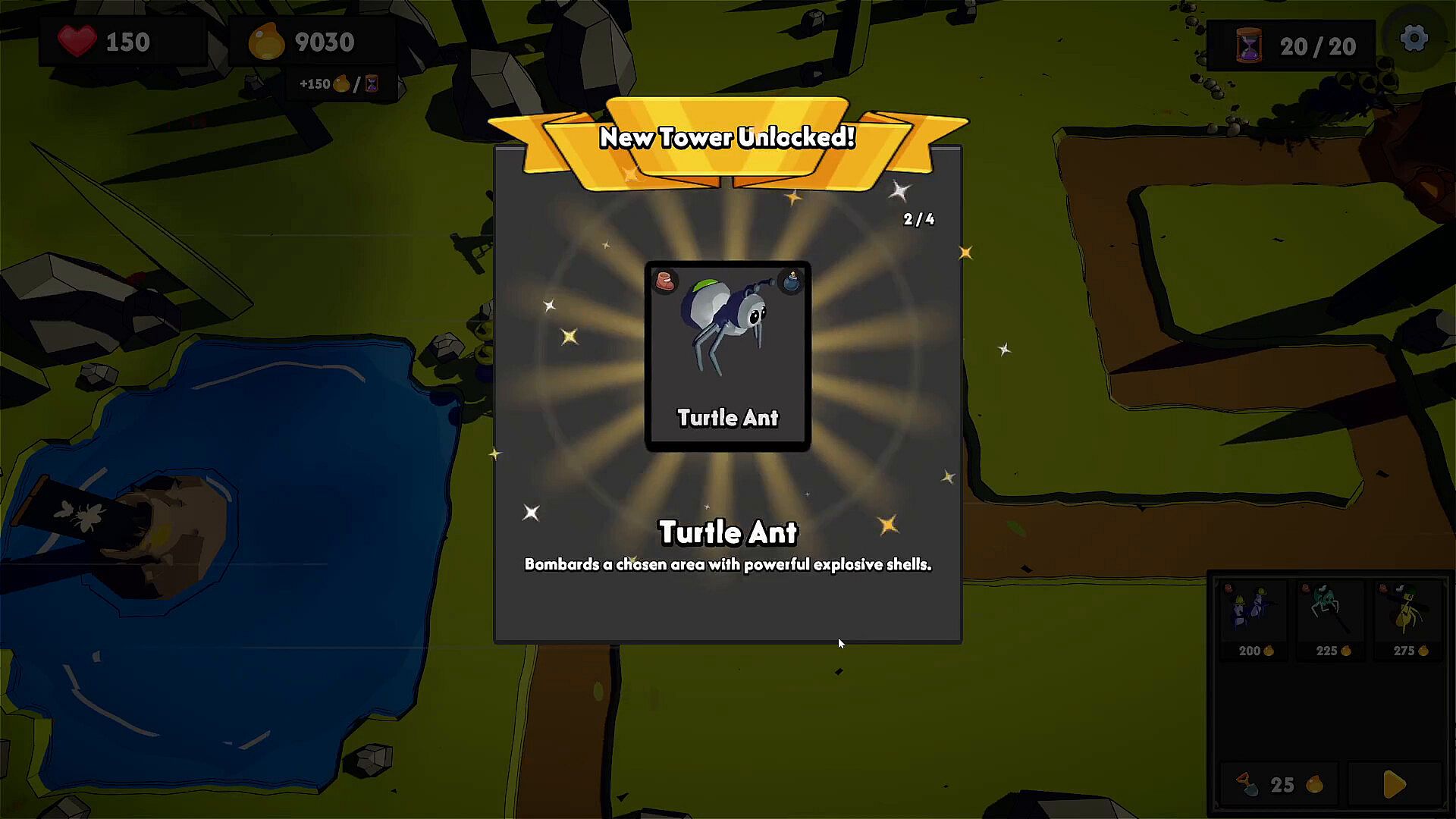
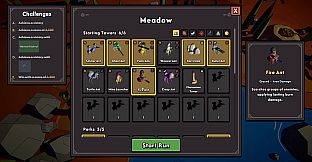
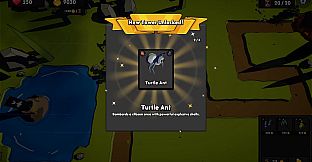
Defenses include a selection of units and buildings chosen from a pool of 18 options, with only six brought into each run. These handle shooting, exploding, and burning ants in large numbers. Mid-game shifts add pressure when new enemy nests open and carve fresh paths across the map, demanding quick repositioning and new defensive layouts. Special enemies include exploding ants that can disable structures on contact, flying ants that bypass ground routes entirely, and the Ant Queen as a late-stage threat.
Progression comes through over 50 unlockable perks and mutations, with up to five equipped per run to create tailored advantages or intentional challenges. Abilities unlocked during play help clear dense clusters, while the overall loop rewards precise path engineering and efficient use of limited defensive slots against overwhelming numbers.
Game Modes
Ants TD focuses on a single-player tower defense experience built around escalating swarm defense. Matches emphasize survival against waves that grow in size and complexity, with the evolving nest system introducing new variables partway through each session. The emphasis stays on adapting defenses and routes in real time rather than separate competitive or cooperative formats.
Core sessions involve selecting a limited set of units and perks before facing continuous ant pressure, with success measured by how effectively the swarm is thinned and redirected. The design encourages repeated attempts to refine path layouts and ability timing against the same core threats.
Key Mechanics
Path control forms the standout feature. Digging, barricades, and fruit act as tools to dictate ant movement, turning what could be a standard wave defense into a system where the player actively designs the battlefield. This interacts directly with the unit selection, as different buildings and abilities perform best when ants are funneled through specific chokepoints.
Enemy variety forces varied responses. Exploding ants punish clustered defenses, flyers ignore terrain advantages, and the Queen demands sustained high damage output. The mid-game nest openings keep the map from becoming static, requiring players to maintain flexibility even after initial setups are complete.
Resource management appears through the limited picks of six units from eighteen and five perks from over fifty. This encourages experimentation across runs while keeping each individual session focused on execution under pressure from literal thousands of ants.
Is It Worth Playing?
Ants TD suits players who enjoy tower defense with strong emphasis on spatial strategy and adaptation rather than static tower placement. The path-manipulation tools and mid-game map changes create a distinct loop that rewards planning and quick reactions over simple upgrade spam.
Those drawn to indie strategy titles with casual accessibility but deeper systems will find the unit and perk variety provides replay value through different loadout combinations. The chaotic scale of the swarms and the need to counter specific enemy types add tension without requiring prior knowledge of complex systems.
Overall, the game delivers a focused single-player experience centered on defending a nest through creative defense and route control. It appeals most to fans of the genre looking for a fresh twist on wave survival rather than broad multiplayer features or long-term progression outside individual runs.











