


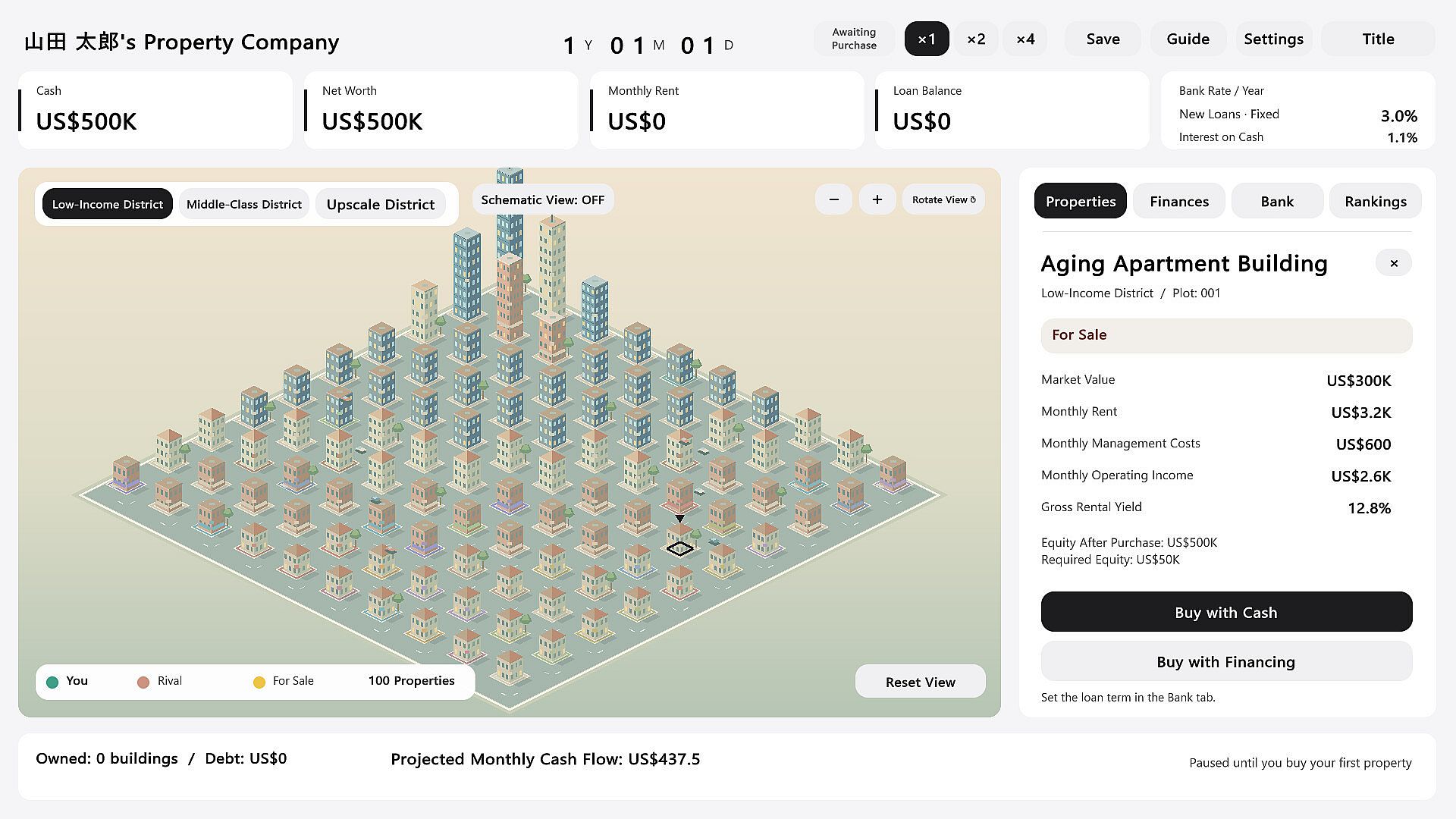
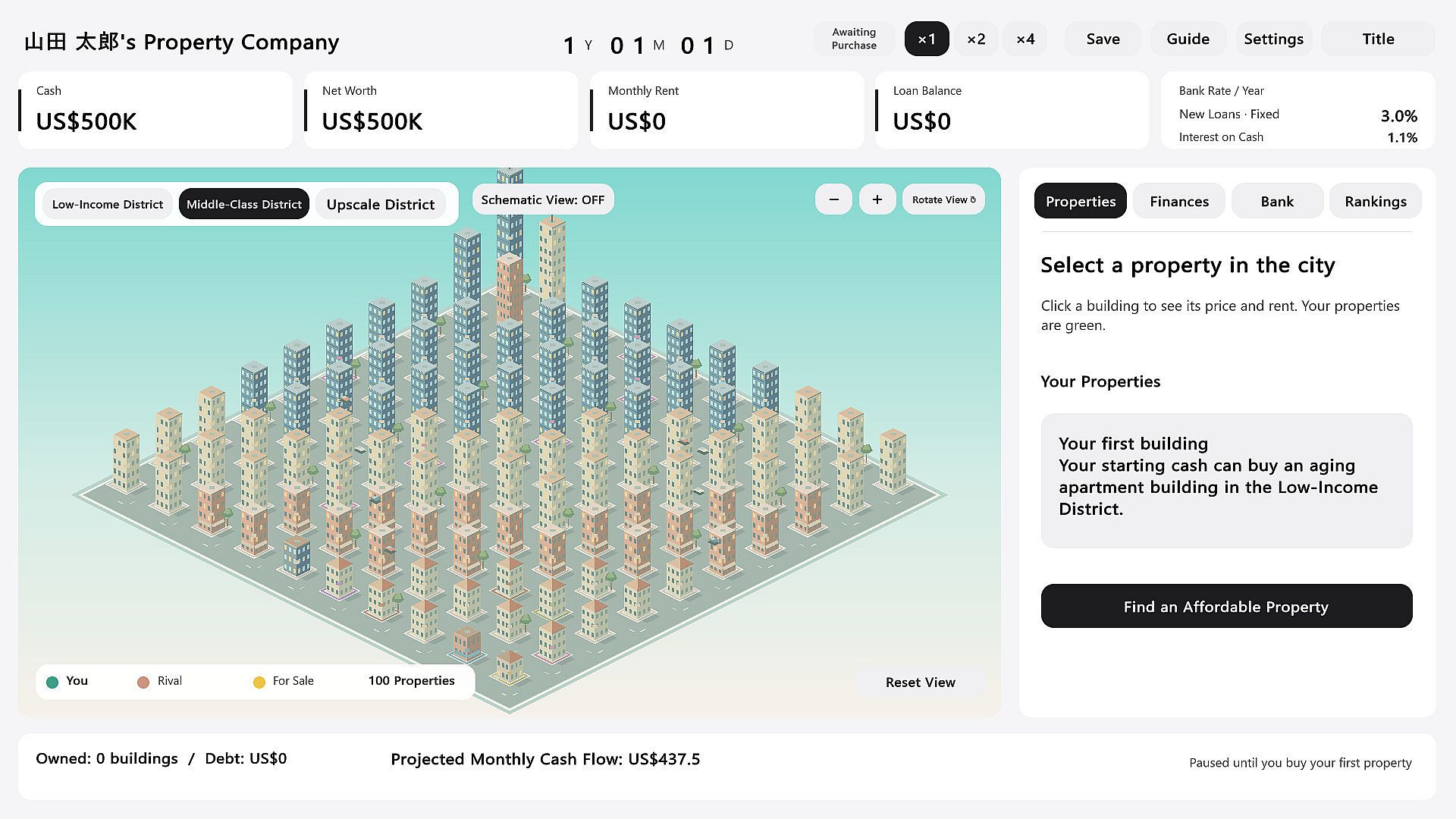
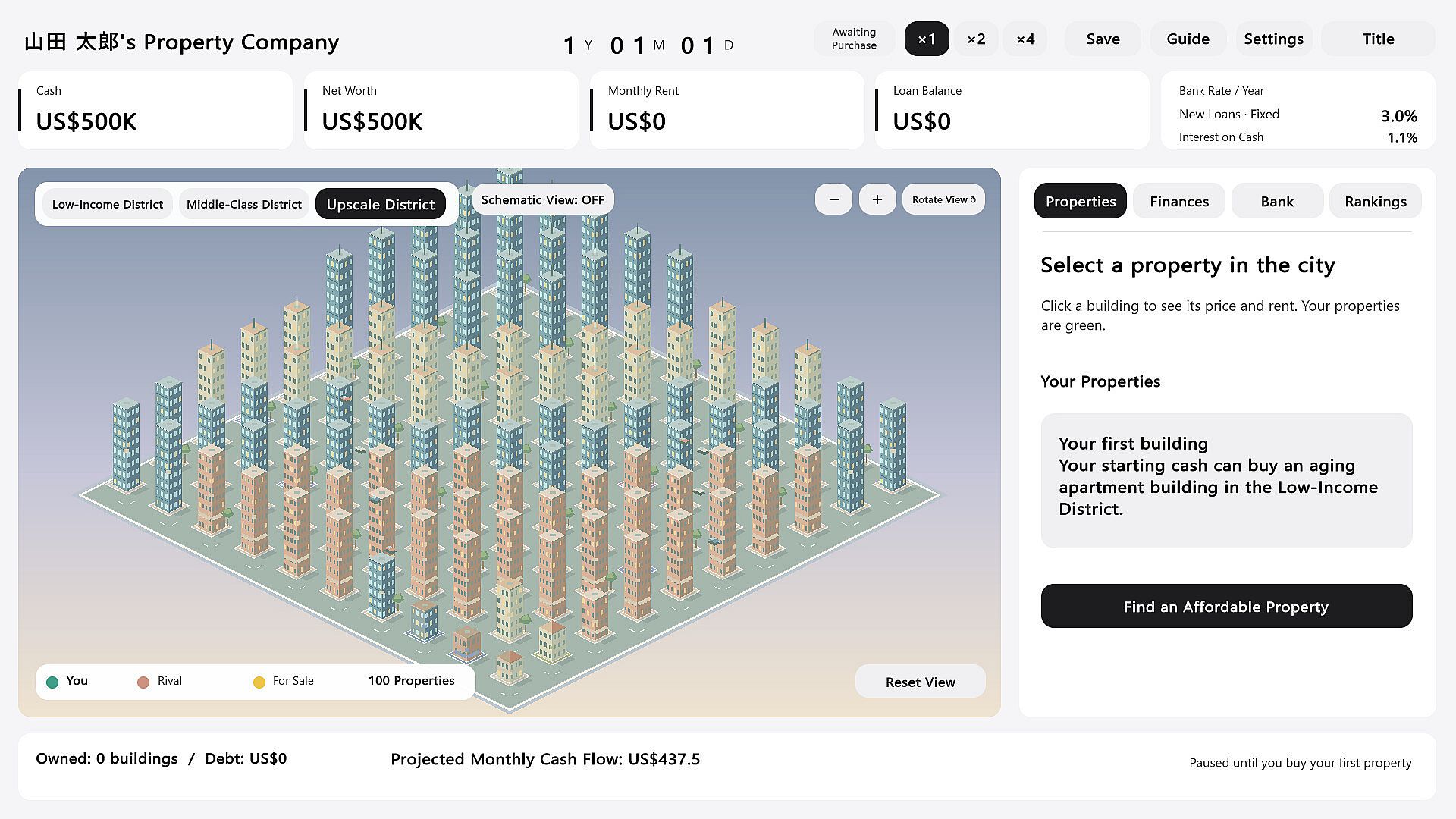
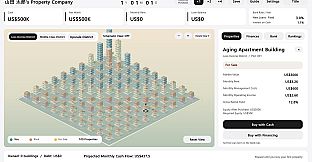
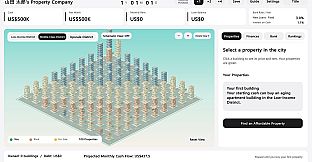
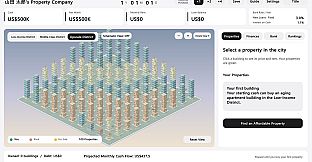


Become a Real Estate Tycoon is a single-player simulation game focused on property management and business growth. Players begin with 500,000 US dollars in cash and no debt, then expand a portfolio by purchasing, renting, and selling real estate across three towns that each contain 100 properties.
Gameplay
The core loop centers on evaluating investment opportunities in a changing market. Property prices update daily, so decisions involve holding assets for ongoing rental income or selling to free capital for new purchases. Three distinct towns offer varied price points, rent levels, and yields that players compare before committing funds.
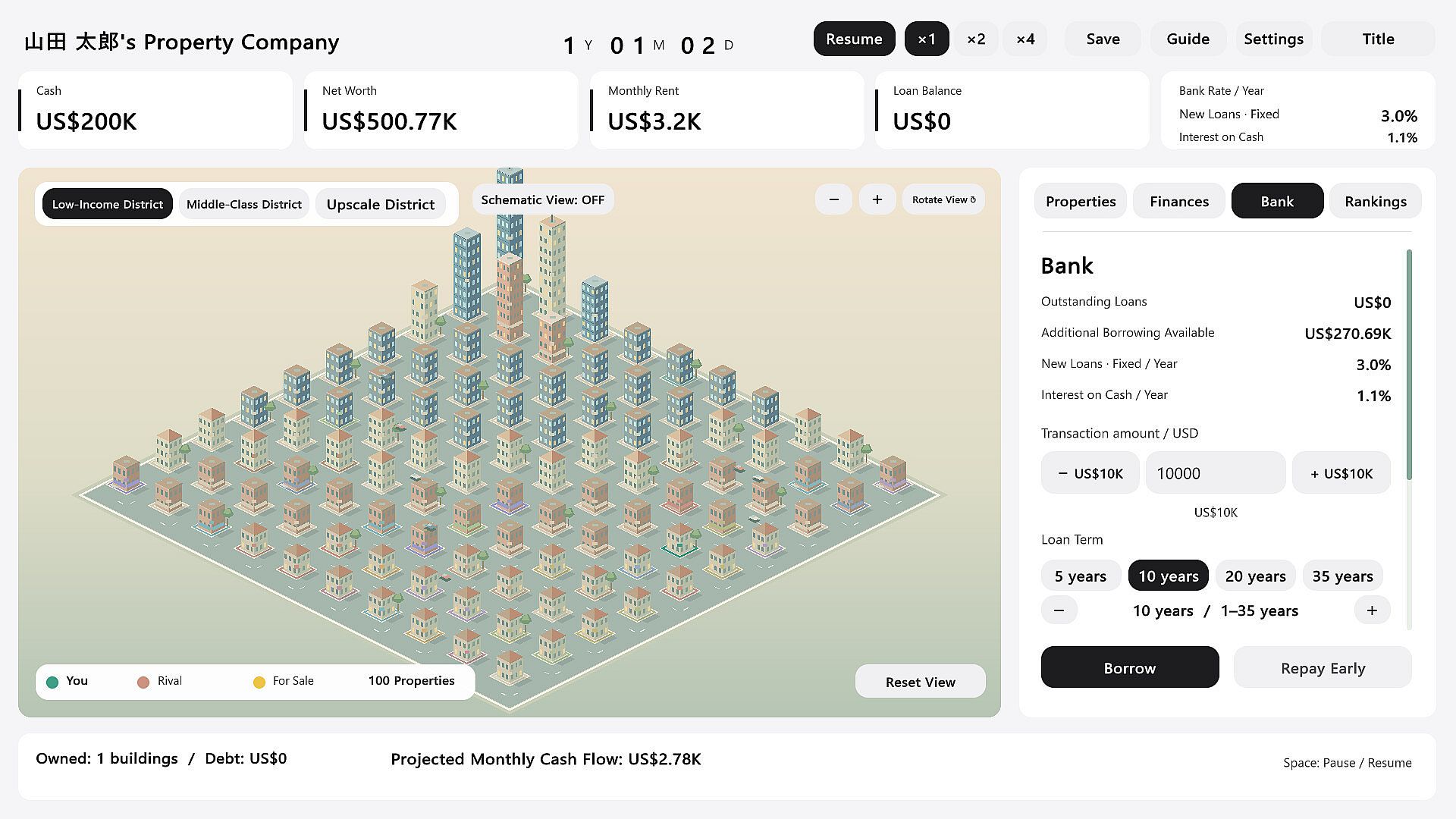
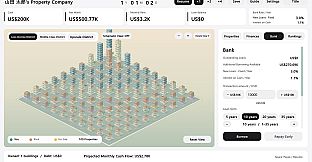
Cash flow management adds depth. Rent payments arrive monthly alongside management costs, loan interest, and principal repayments. Loans carry fixed interest rates set at the time of borrowing and remain constant until repaid in full. Players track monthly income, expenses, and overall debt as the portfolio scales.
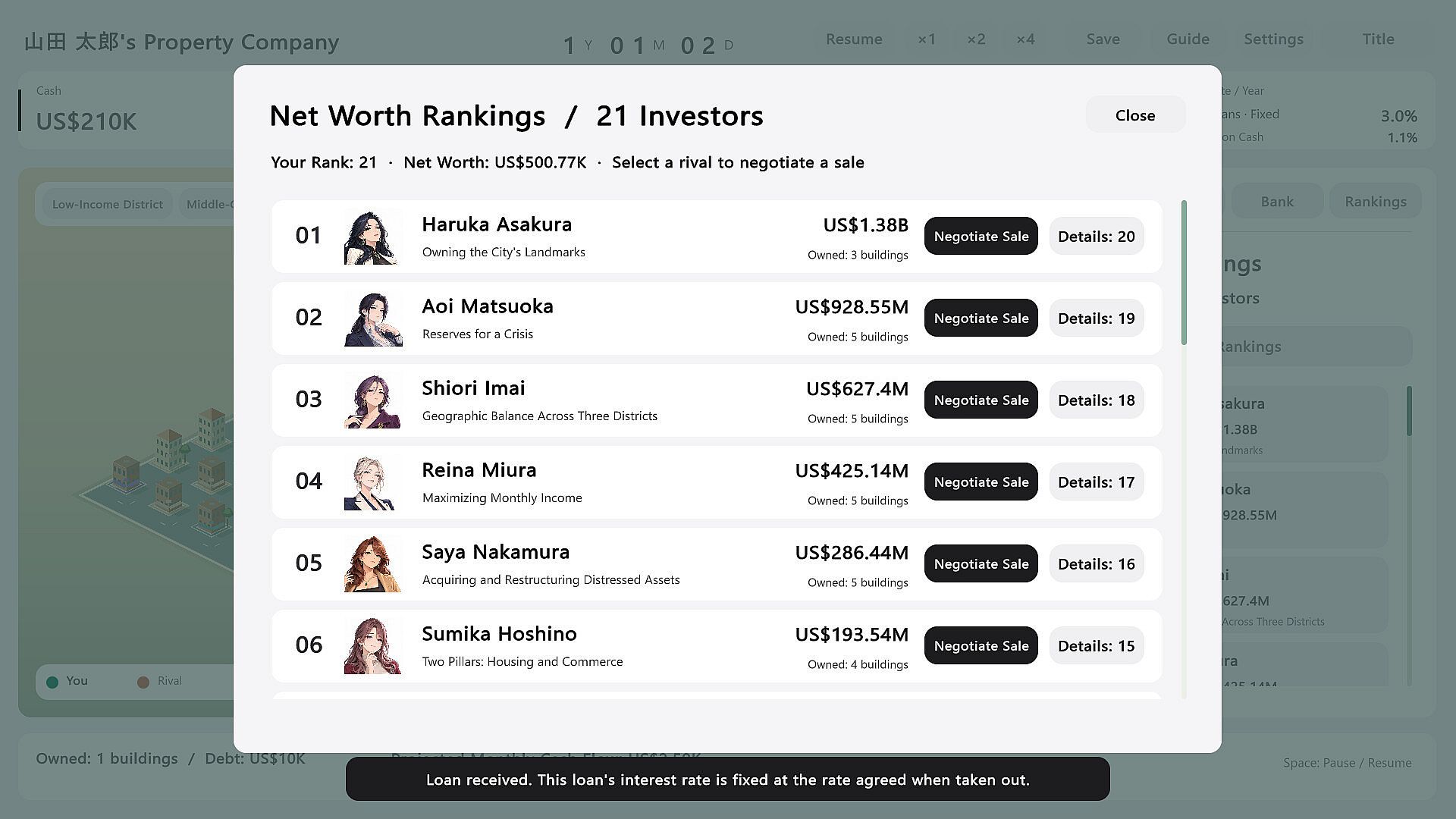
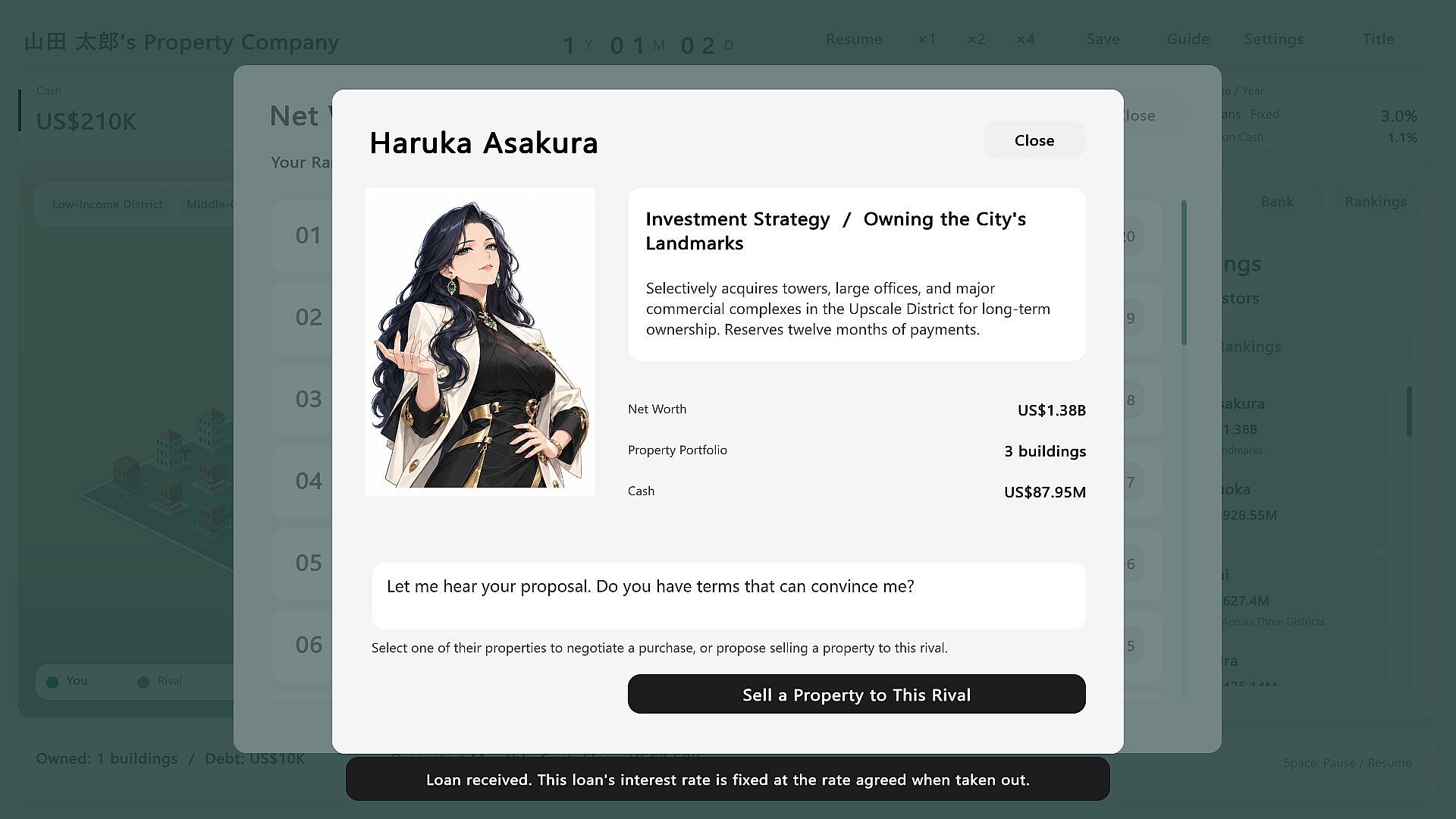
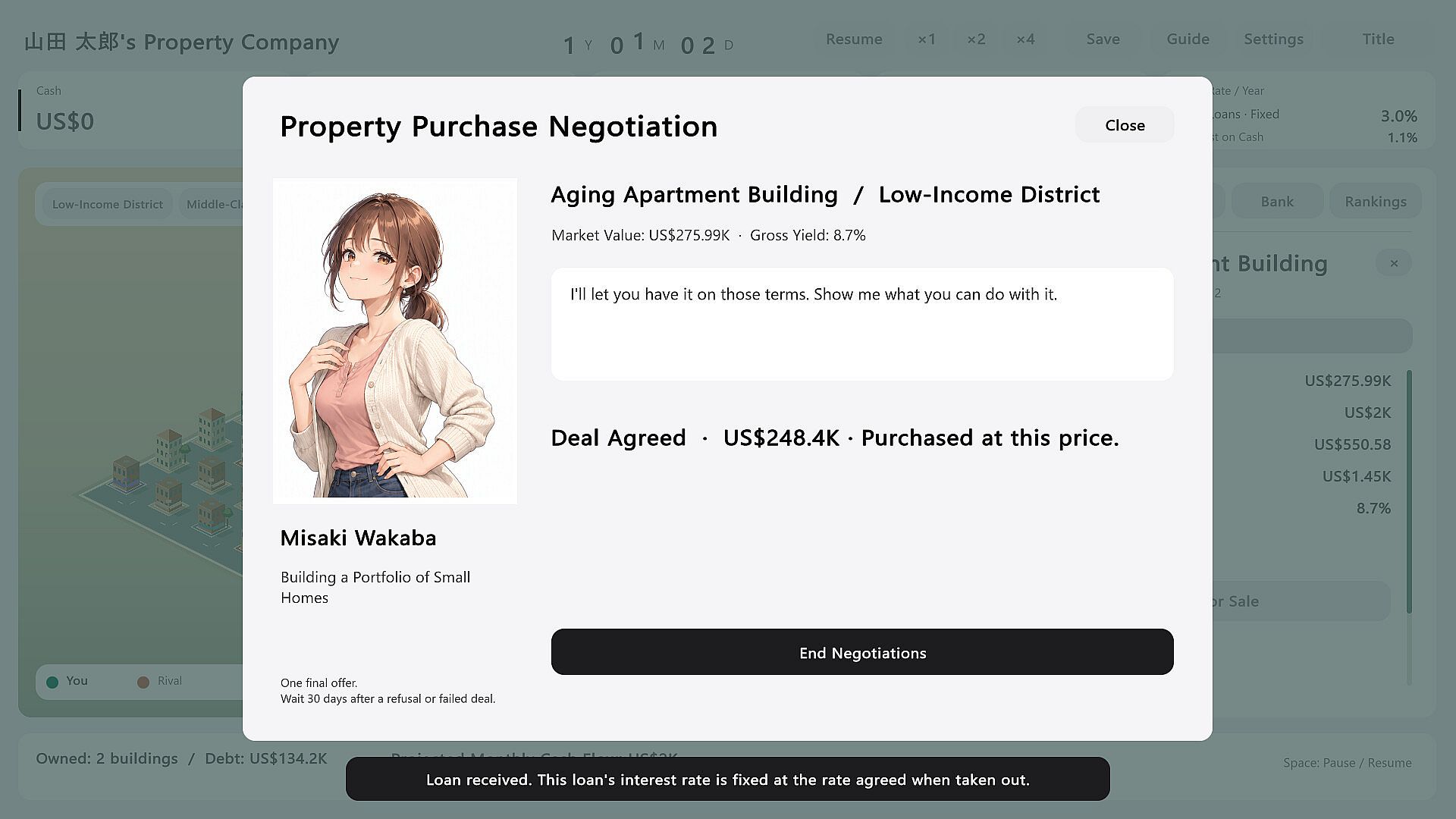
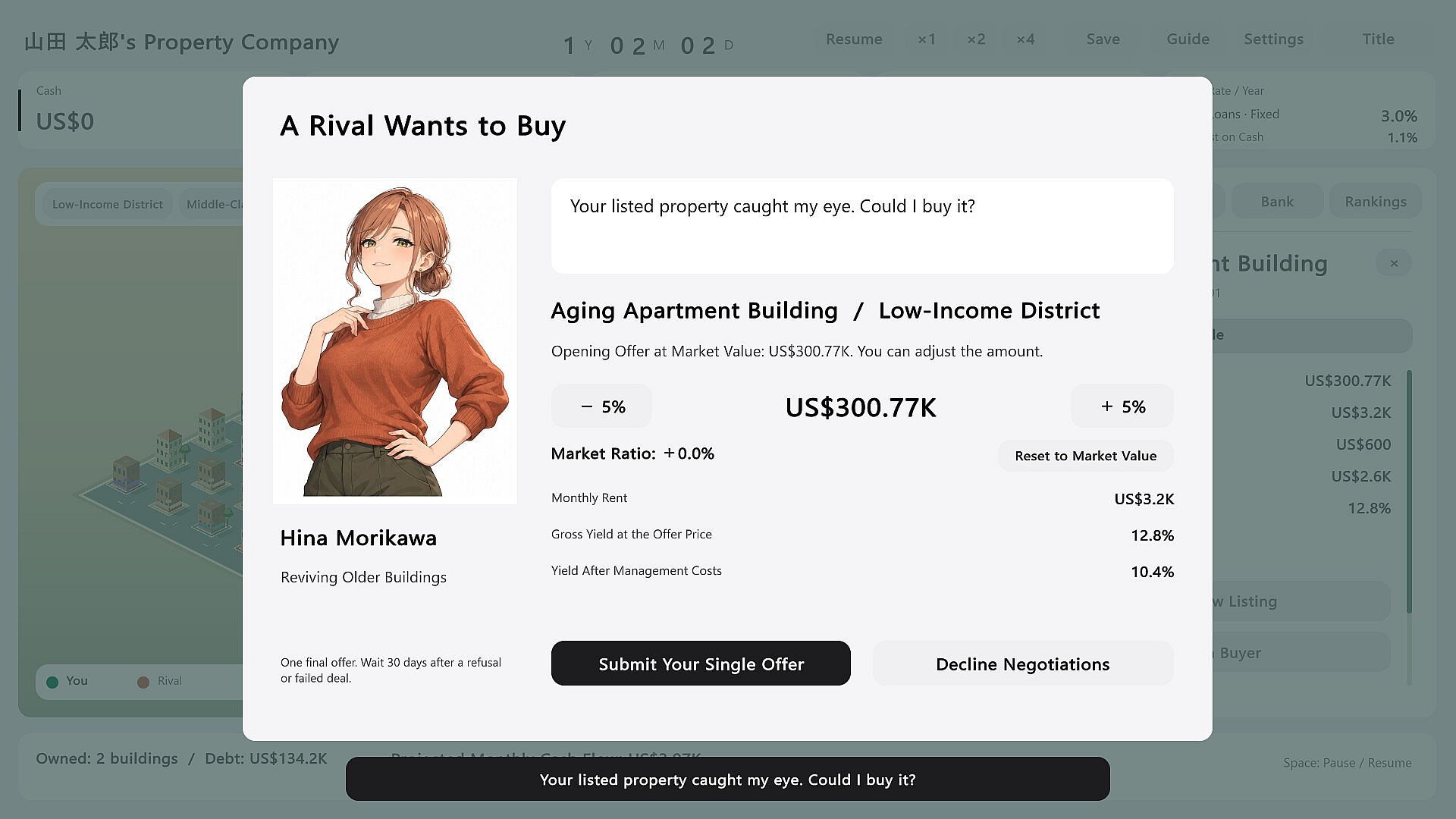
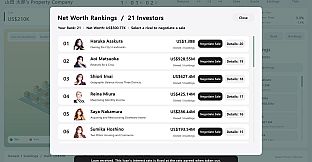
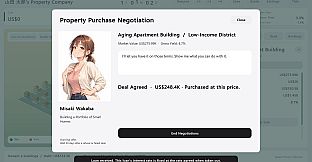
Negotiation forms another key system. Twenty rivals, each depicted in anime style and pursuing independent strategies, propose deals to buy or sell properties. Players assess offers, negotiate terms, and decide whether to accept or decline. Progress appears on a shared net worth ranking that includes all twenty-one participants, with rival attitudes shifting according to position.
Game Modes
The experience unfolds as a single-player simulation without separate multiplayer components. Players advance at their own pace through property acquisitions, rental collection, and occasional sales or negotiations. The structure emphasizes ongoing portfolio decisions rather than timed challenges or structured campaigns.
Core activities include comparing yields across towns, managing monthly cash flows, and engaging rivals in two-way deals. These elements combine into one continuous session where success depends on balancing available cash against asset values and debt levels.
Key Mechanics and Progression
Progression relies on incremental portfolio growth. Starting capital supports an initial purchase, after which rental income funds further expansion. Daily price fluctuations create opportunities to time sales or hold for steady returns. Loan options allow larger acquisitions while requiring careful tracking of fixed repayment schedules.
Rival interactions introduce competitive elements within the single-player framework. Each rival follows distinct investment patterns, leading to varied negotiation scenarios. Rising in the net worth standings alters how these characters respond to proposals, adding a layer of strategic positioning.
Is It Worth Playing?
This simulation suits players who enjoy deliberate, numbers-driven property management without external time pressure. The combination of daily market shifts, monthly cash flow oversight, fixed-rate loans, and direct negotiations with rivals provides a focused loop centered on financial decisions and portfolio strategy.
With a planned release in December 2026 and no user reviews available yet, the game remains untested in practice. Those drawn to real estate simulation titles may find value in its emphasis on yield comparison, debt management, and rival deal-making across three hundred total properties. Availability will depend on final launch performance and any post-release updates from the developer.