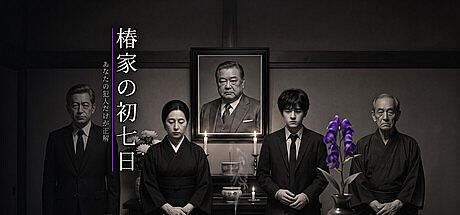


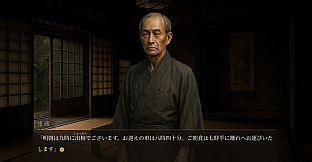
椿家の初七日 - あなたの犯人だけが正解 is an indie adventure game set on PC that centers on a limited-time investigation into a wealthy man's death. Players step into the role of a law clerk handling the will of Tsubaki Soemon, who passed from heart failure, and must navigate the family estate and surrounding areas before the seventh-day memorial service known as Shonanoka. The core premise revolves around gathering evidence from thirteen possible locations and individuals while restricted to just ten free actions, forcing deliberate choices about which paths to pursue and which to leave unexplored.
Gameplay
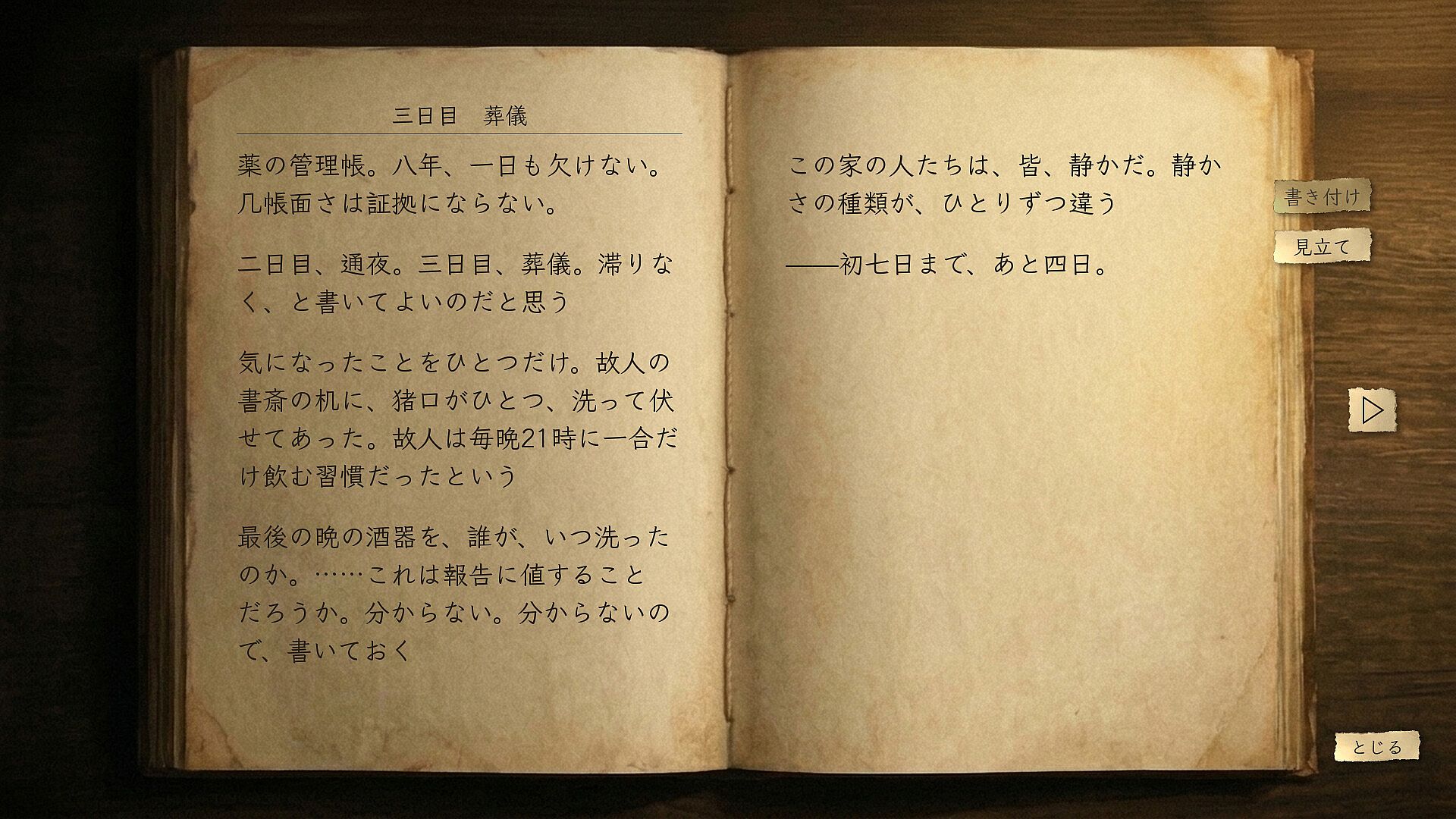
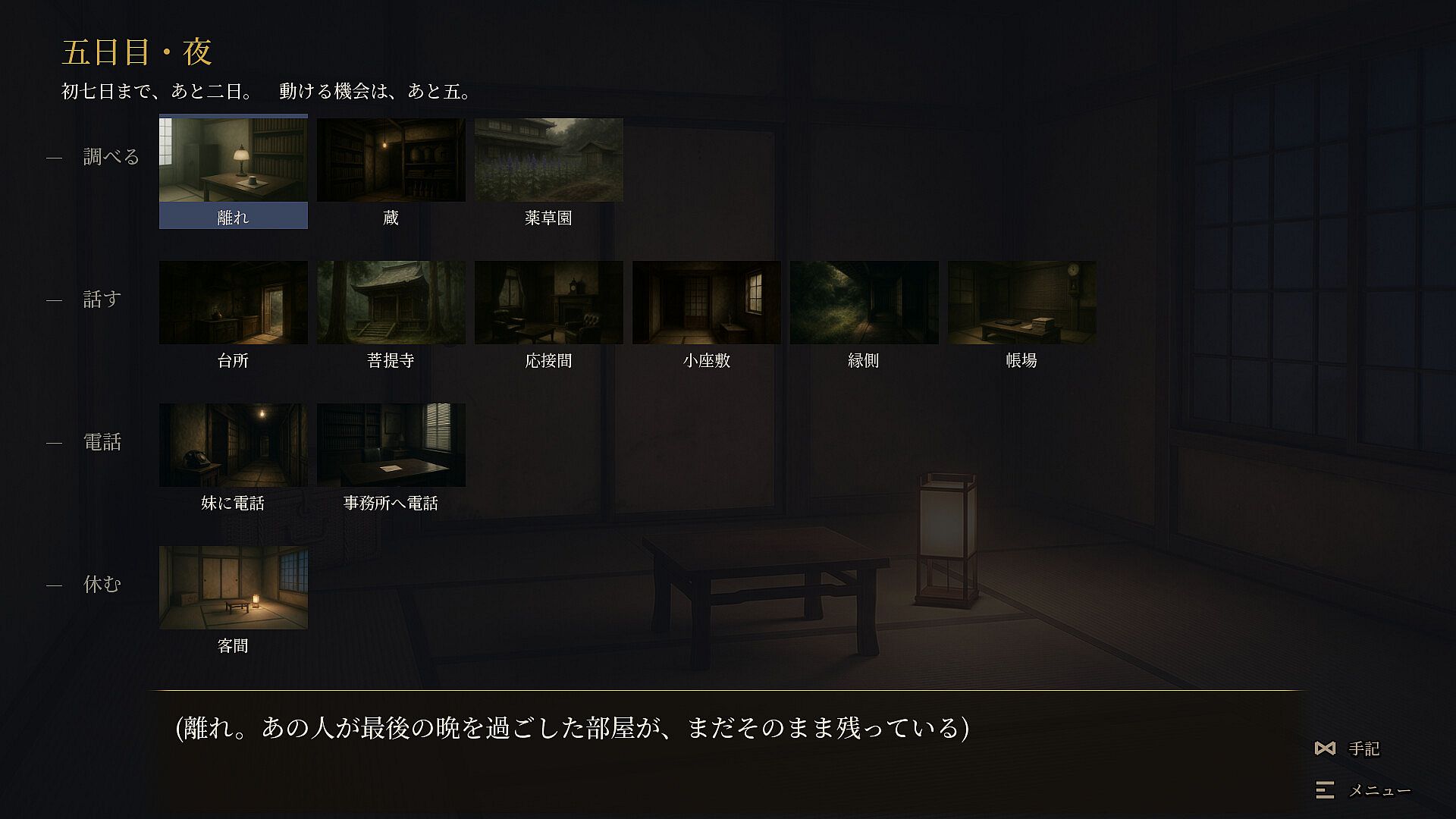
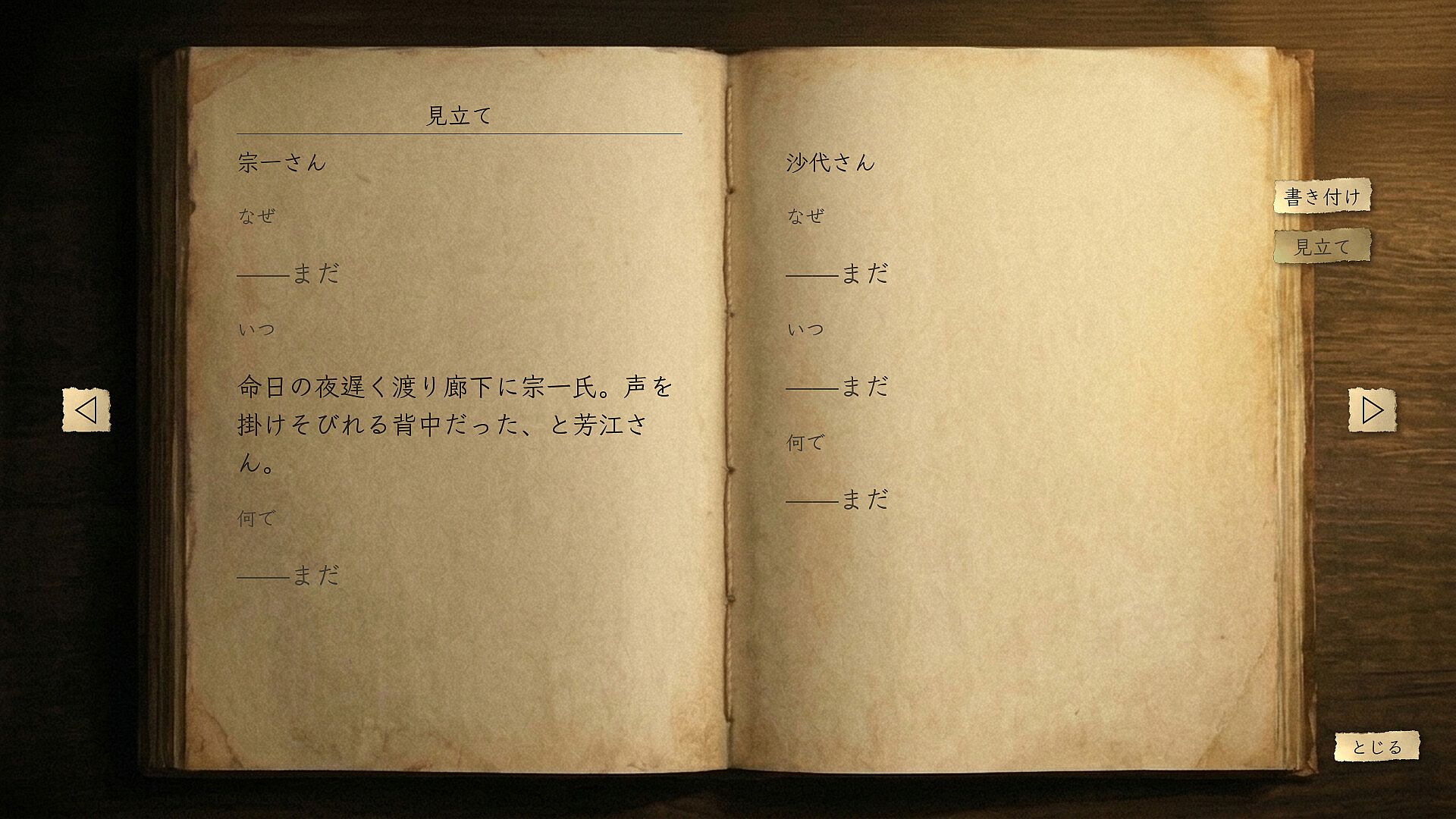
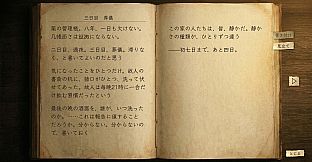
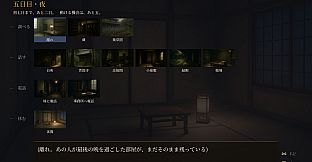
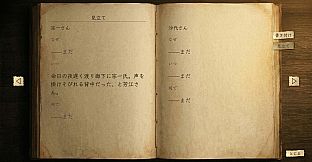
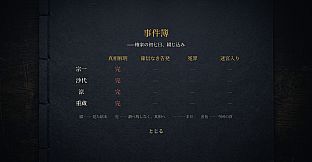
The gameplay loop emphasizes careful resource management and deduction within tight constraints. Each day offers opportunities to visit spots such as the annex, kitchen, storehouse, herb garden, temple, clinic, or teahouse on the pass, along with direct interactions with the four suspects. Evidence collected falls into three distinct columns: motive, opportunity, and proof. These details populate a notebook that automatically composes entries each night based on the player's own observations and phrasing from the day. This system ensures that no two playthroughs generate identical records, as the wording and focus shift according to individual investigative habits.
Accusations occur at the incense offering on the seventh day. A player can name a suspect only if the notebook contains at least one line of information about them. Full certainty requires entries across all three evidence columns for the correct individual, while partial or misplaced details lead to different resolutions. The game tracks progress across multiple runs, with saves available at any point and carryover of unlocked cases.
Game Modes
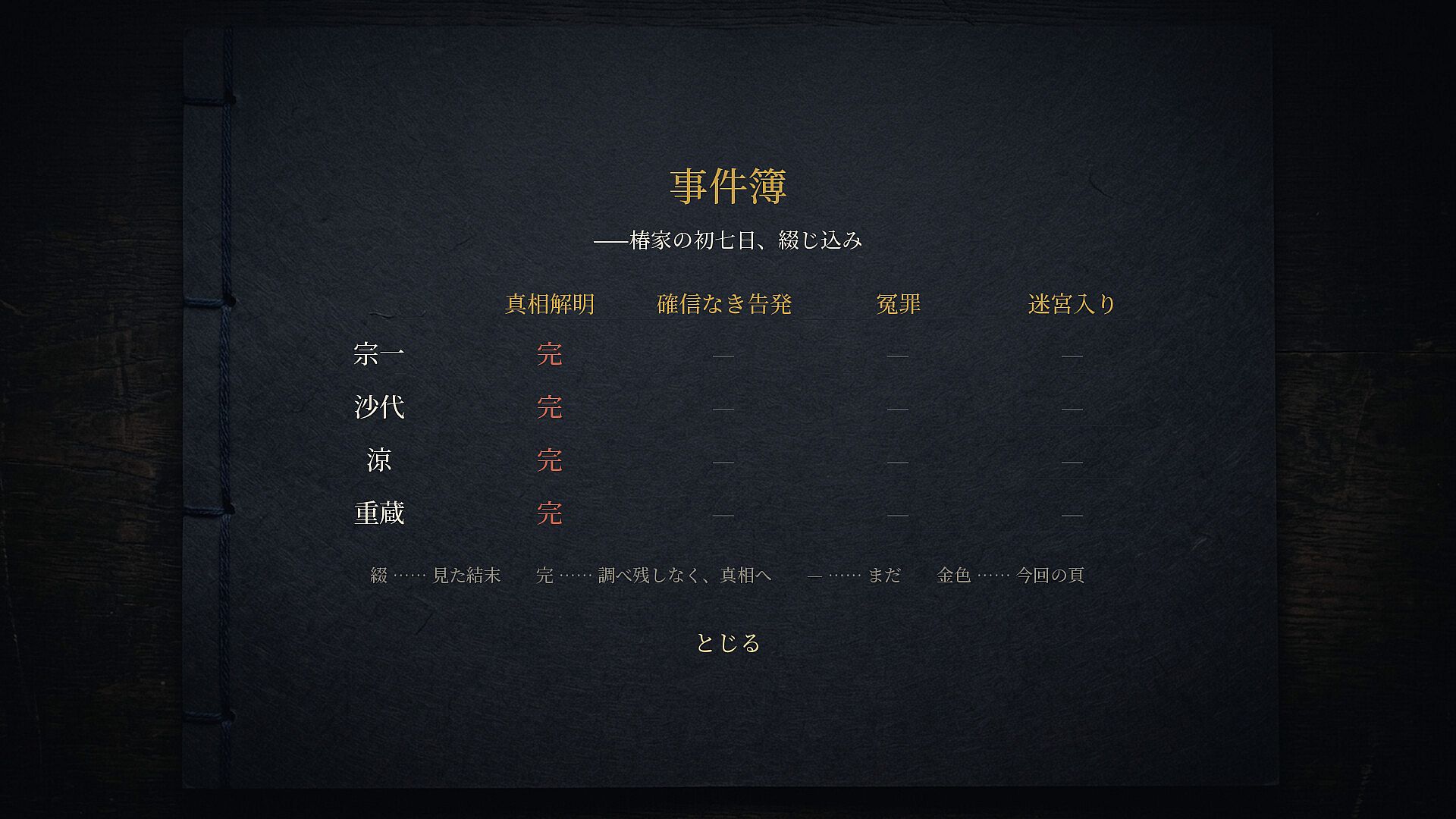
This title operates as a singleplayer experience built around repeated short sessions rather than distinct named modes. Each playthrough lasts roughly sixty to ninety minutes and randomly assigns one of the four suspects as the killer, altering the available evidence and hidden details accordingly. Completing a run with a named culprit locks that case into a personal file, directing subsequent plays toward unseen killers until all four have been encountered. After all cases are opened, players can return to prior runs specifically to locate missed evidence or refine their approach.
The structure encourages replay through these procedural variations in evidence and outcomes. Keyboard and mouse controls handle navigation and selections, with no controller support included. Japanese text forms the entire interface and narrative, without voice acting or additional language options.
Narrative Structure and Endings
Four distinct endings emerge from the accusation phase. The Truth ending demands the right suspect identified with complete evidence in all three columns. An Accusation Without Certainty results from naming the correct person but with insufficient supporting details. A False Charge occurs when the wrong individual is selected, and Unsolved covers the choice to name no one at all. Each resolution reflects the depth of the player's notebook and the paths taken during the ten-action limit.
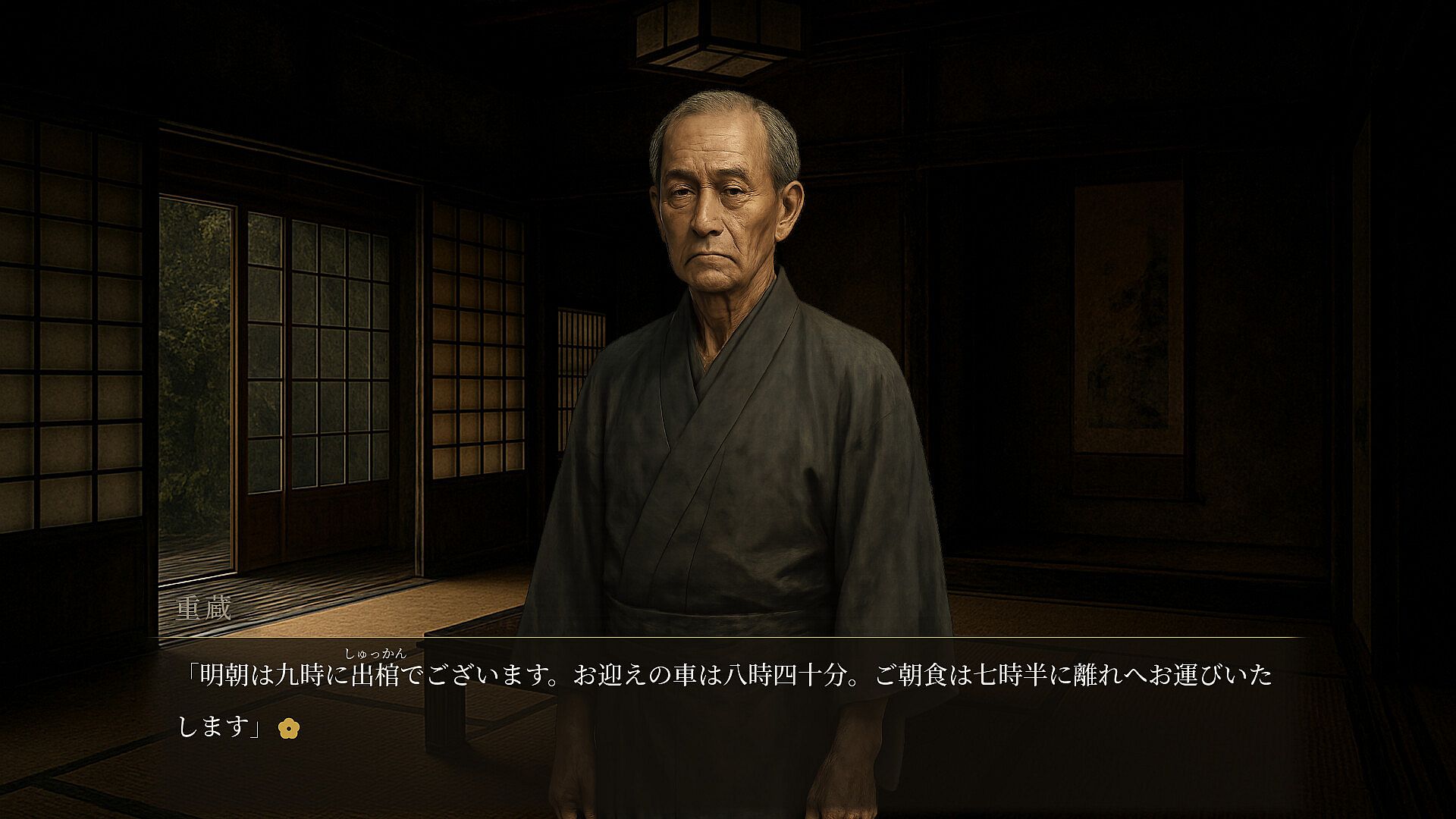
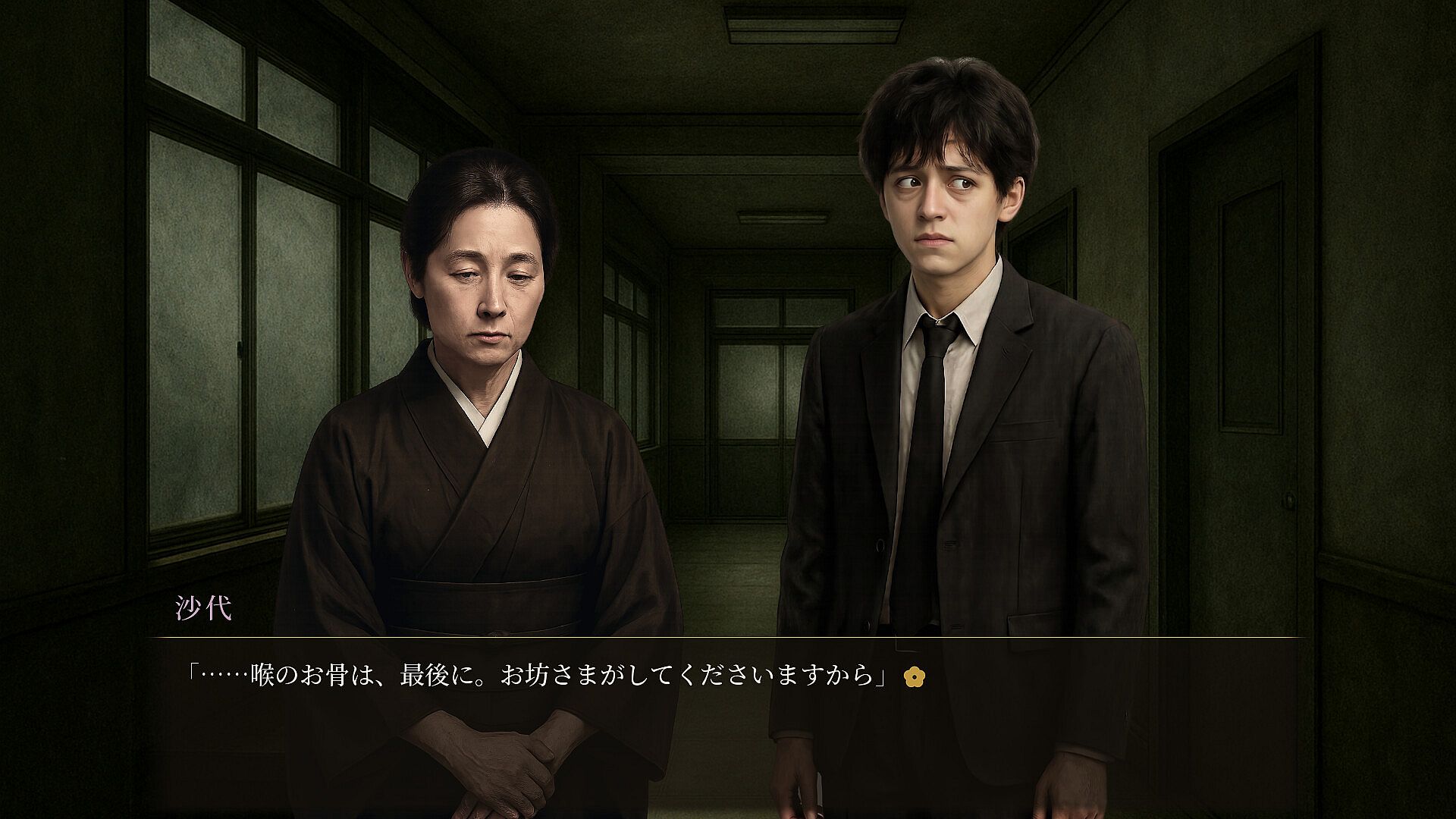
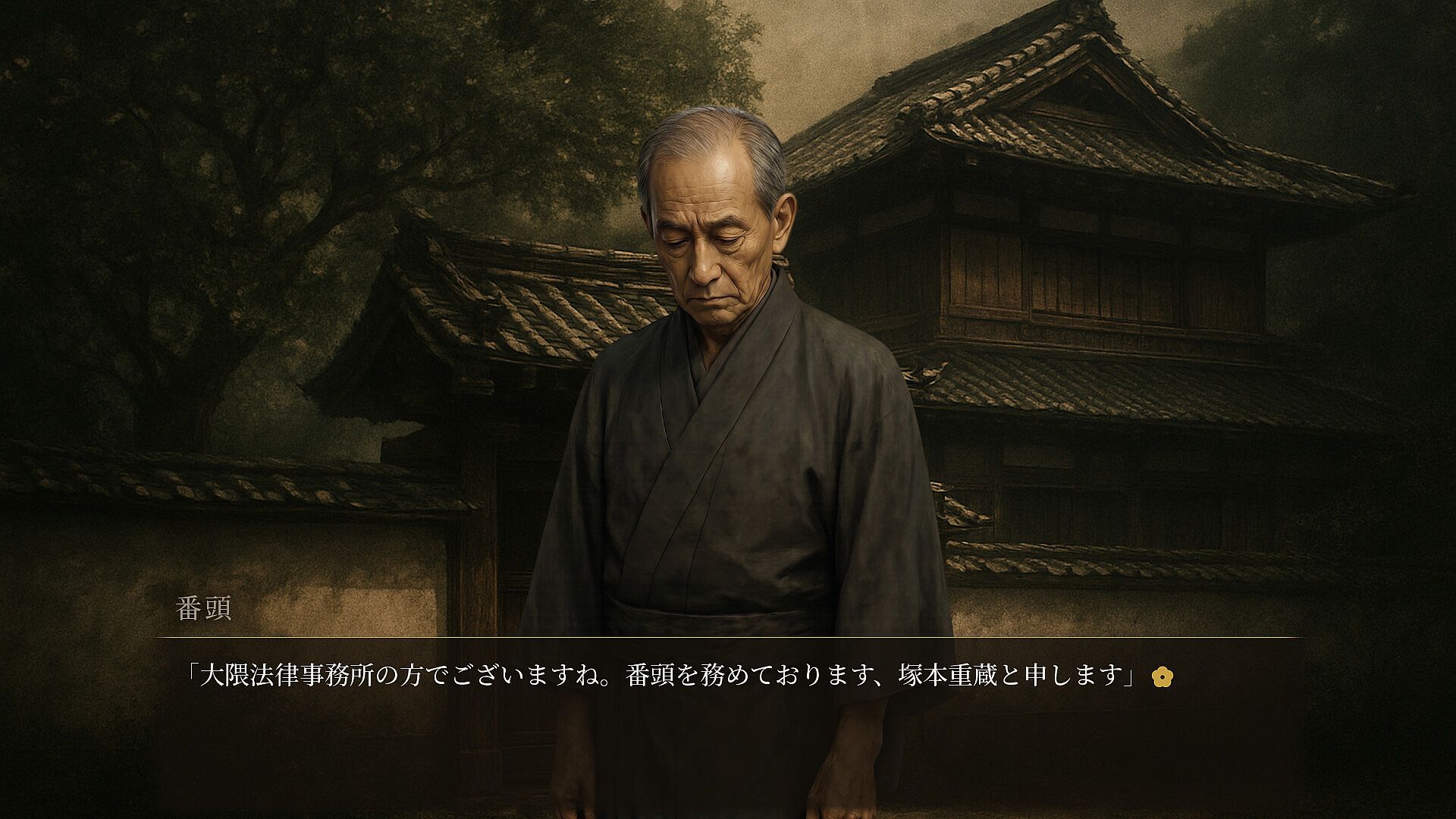
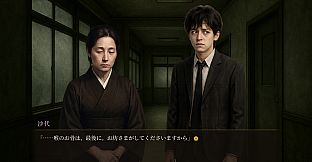
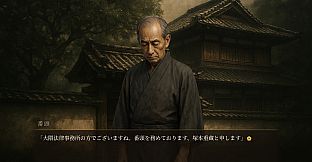
The suspects include the eldest son, the second wife, the illegitimate son, and the old steward, each concealing personal secrets regardless of guilt. Because the killer assignment changes per run, the same locations yield different clues across playthroughs. This setup highlights how incomplete information shapes conclusions, with the notebook serving as both record and mirror of investigative style.
Is It Worth Playing?
The game suits players who enjoy deduction-focused adventures with strict time limits and replay value through variable evidence and endings. Its concise sessions allow full exploration of all four truths in around five hours total, making it accessible for those seeking a focused experience rather than extended campaigns. The automatic notebook composition and action restrictions create a unique rhythm that rewards thoughtful prioritization over exhaustive checking. Availability remains limited to PC with Japanese text, and progress carries across runs without additional unlocks or modes beyond the core loop. Those drawn to mystery narratives centered on family secrets and incomplete knowledge will find the mechanics align closely with that interest, while others preferring open exploration or voice-acted stories may find the constraints and language requirements less appealing.