


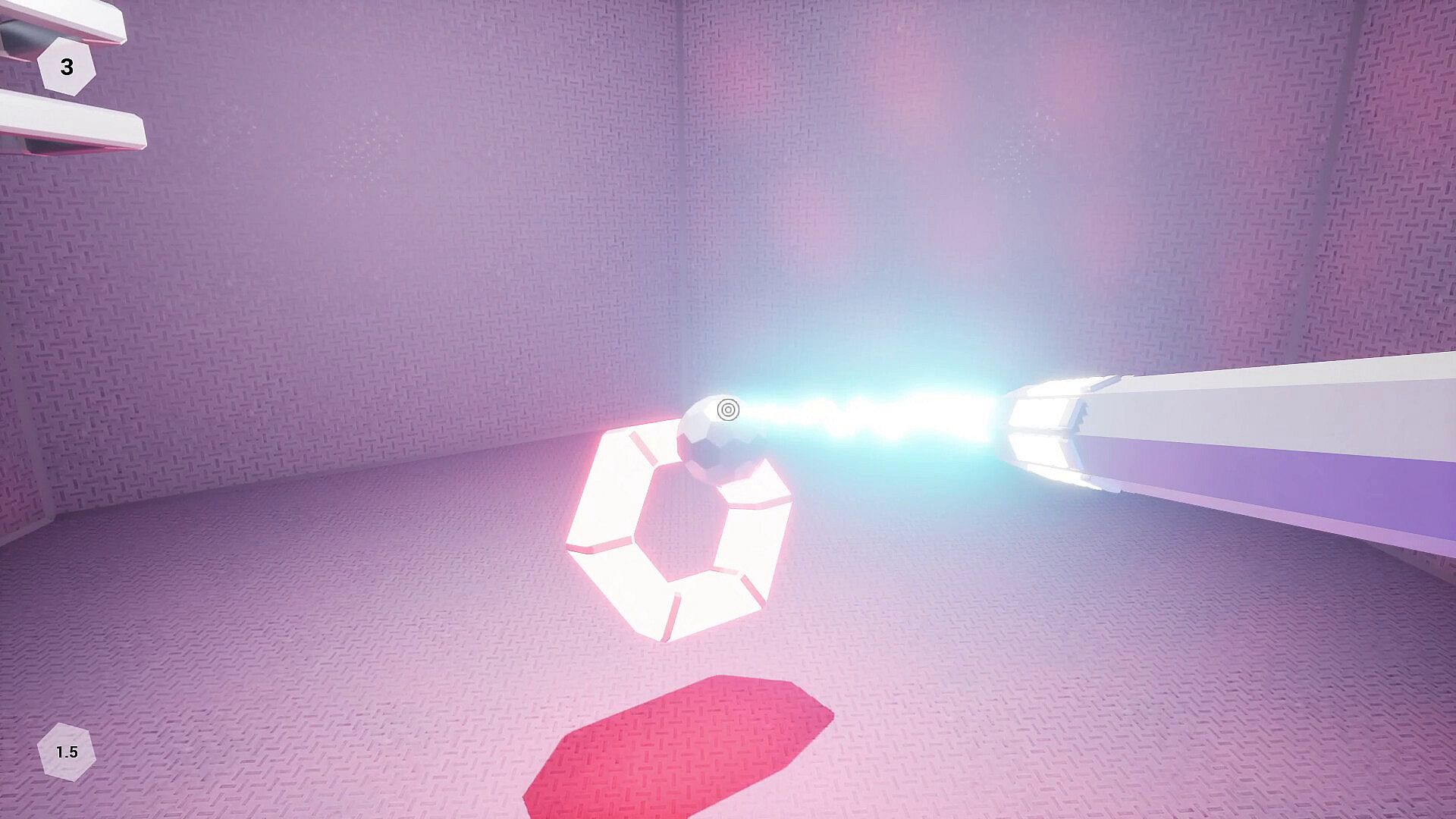

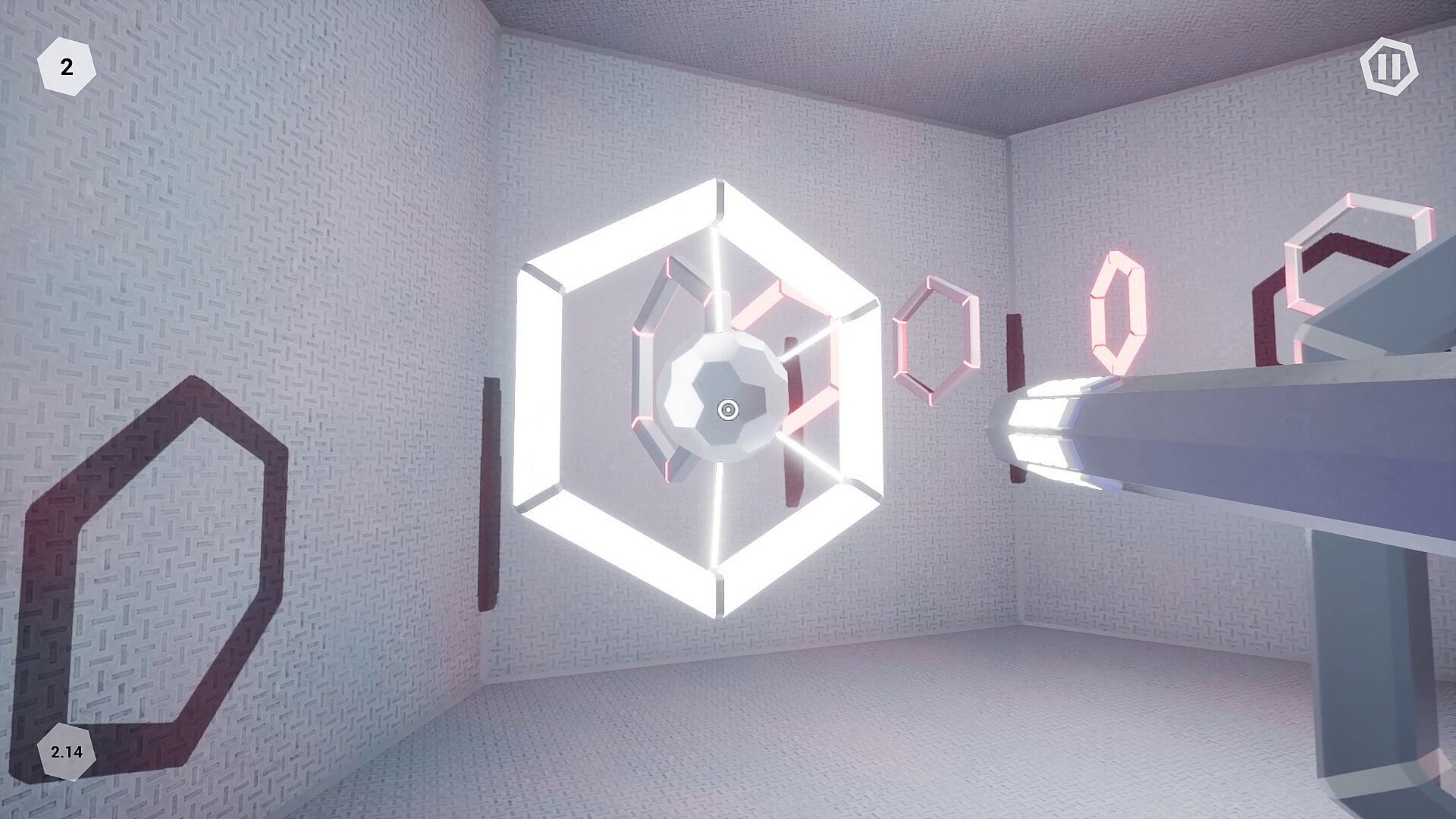
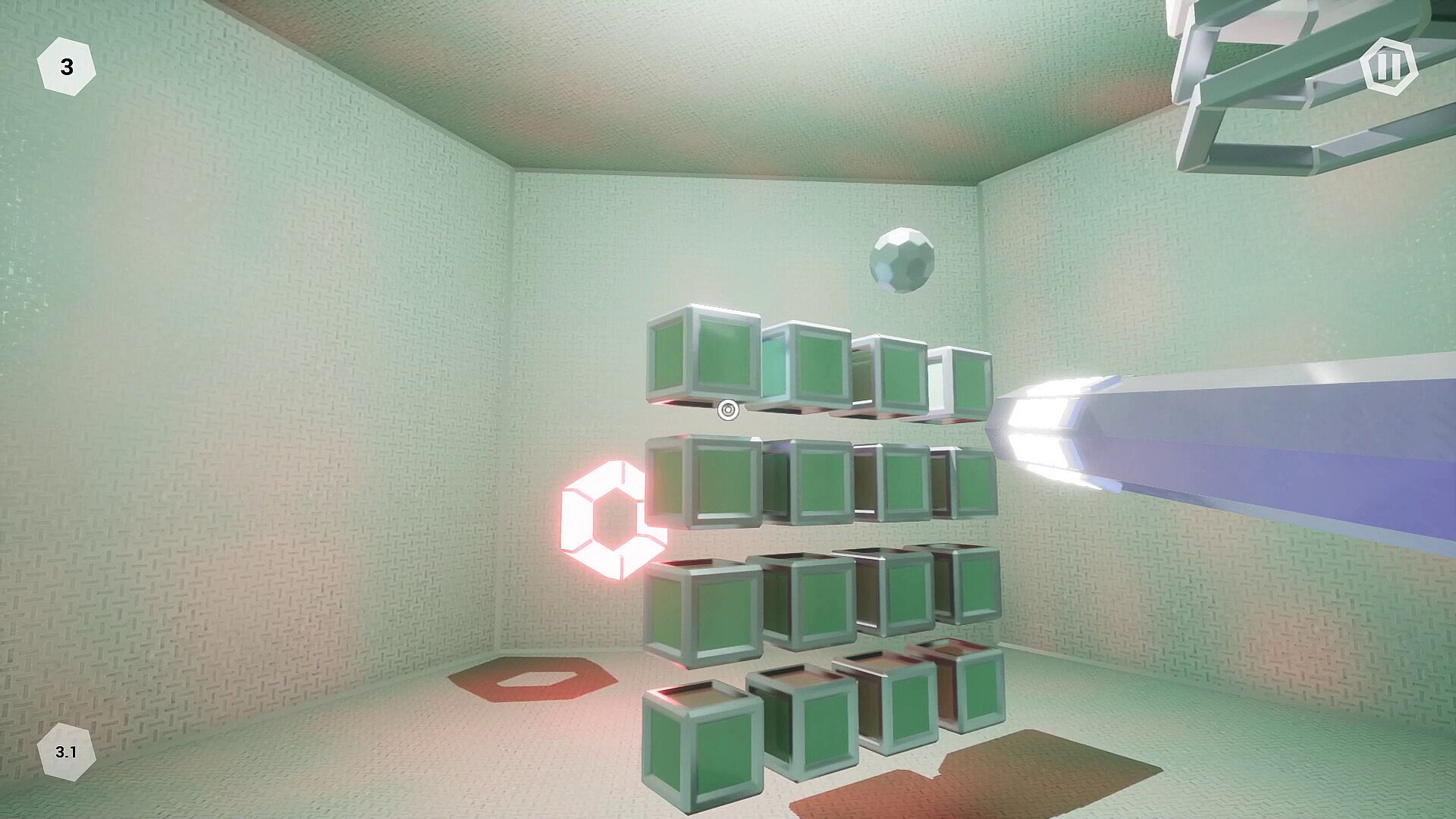
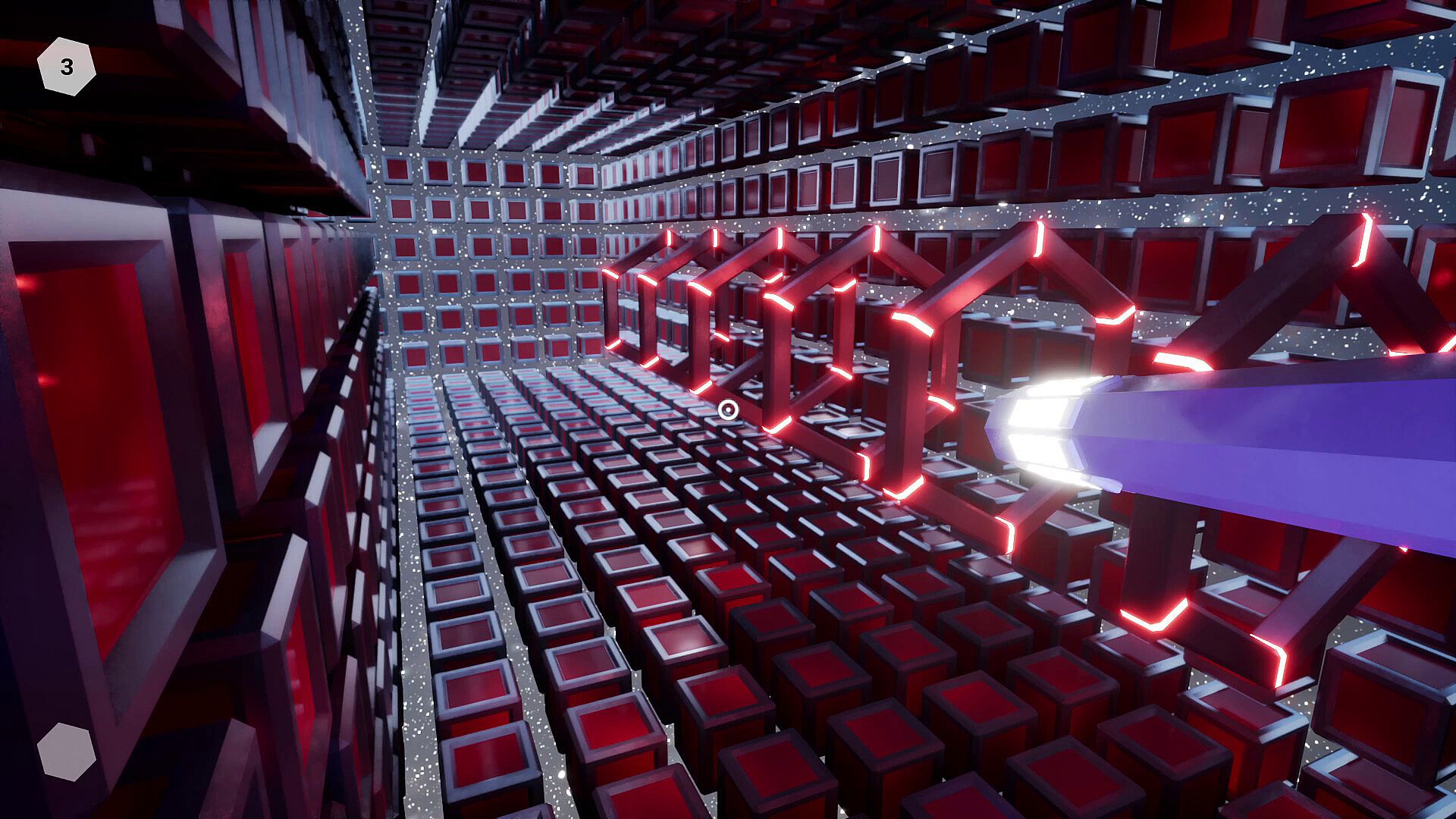


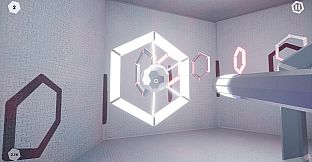
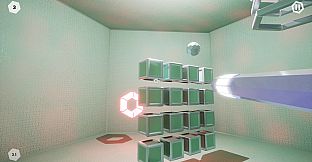

Circle Test Suite is a single-player action, indie, and simulation game built around a series of structured tests in a controlled environment. Players direct a character through chambers where the objective centers on delivering an object to a main target while managing a limited resource of action points. The experience emphasizes careful planning, efficient tool use, and adaptation to physics-based interactions, all within a PC release scheduled for September 2026.
Gameplay
The core loop requires guiding the character to complete each chamber's primary goal without exceeding earned action points. Tool activations consume one point each, and the total spent cannot surpass the points collected up to the moment the main target activates. Points accumulate through chamber discovery and optional target interactions, with any surplus carrying forward to later stages. This system rewards restraint and exploration rather than aggressive spending.
Time flow control allows adjustment of the emulator's speed to align actions with environmental changes. Physics remains active throughout, influencing object movement, collisions, and interactions in ways that demand precise timing. State snapshots provide a safety net for experimentation, though each save deducts one action point from the available pool. The final score reflects remaining points after the last chamber, and players may revisit individual chambers or restart the sequence to refine results. Attempts carry no limit, supporting iterative improvement without penalty.
Game Modes
Progression unfolds through sequential test chambers that function as distinct challenges. Each chamber presents a main target for activation alongside optional targets that yield additional action points. The structure supports switching between available chambers at any time, allowing players to tackle sections in a preferred order once unlocked. No separate competitive or cooperative modes exist; the focus stays on solo optimization of routes and resource use across the suite.
Chamber design incorporates physics simulation as a constant factor, altering how objects respond to character commands and tool effects. This setup creates consistent rules across all tests while varying layouts and target placements to maintain variety within the single-player framework.
Key Mechanics and Features
Action point economy drives decision-making at every step. Earning points through discovery and optional activations offsets the cost of tools and snapshots, creating tension between thorough exploration and efficient completion. Unspent points transfer between chambers, encouraging long-term planning over isolated chamber performance.
Time manipulation and snapshot systems add layers of control. Speed adjustments help synchronize commands with moving elements under physics rules, while snapshots enable safe testing of complex sequences at the cost of one point per use. These tools integrate directly into the resource system rather than serving as unlimited assists.
Keyboard and mouse controls handle character commands on Windows systems meeting the specified hardware requirements. Steam achievements and cloud support track progress and scores across sessions, with family sharing available for broader access.
Is It Worth Playing?
Circle Test Suite targets players who enjoy methodical puzzle-solving combined with resource management and physics experimentation in a single-player setting. The unlimited attempts and ability to refine individual chambers suit those who value optimization and score improvement. As an upcoming title with no user reviews available prior to release, reception remains unconfirmed, though the described systems emphasize thoughtful play over fast reflexes.
The game suits simulation and indie enthusiasts comfortable with trial-and-error approaches in contained test environments. Its focus on action point efficiency and state management provides a clear framework for repeated engagement without external competition or seasonal content. Those seeking straightforward chamber-based challenges with carryover scoring mechanics will find the structure aligned with that preference.