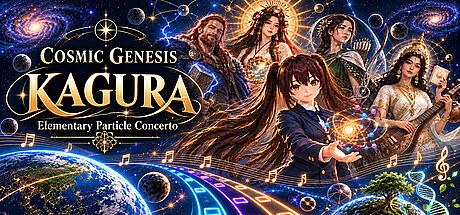


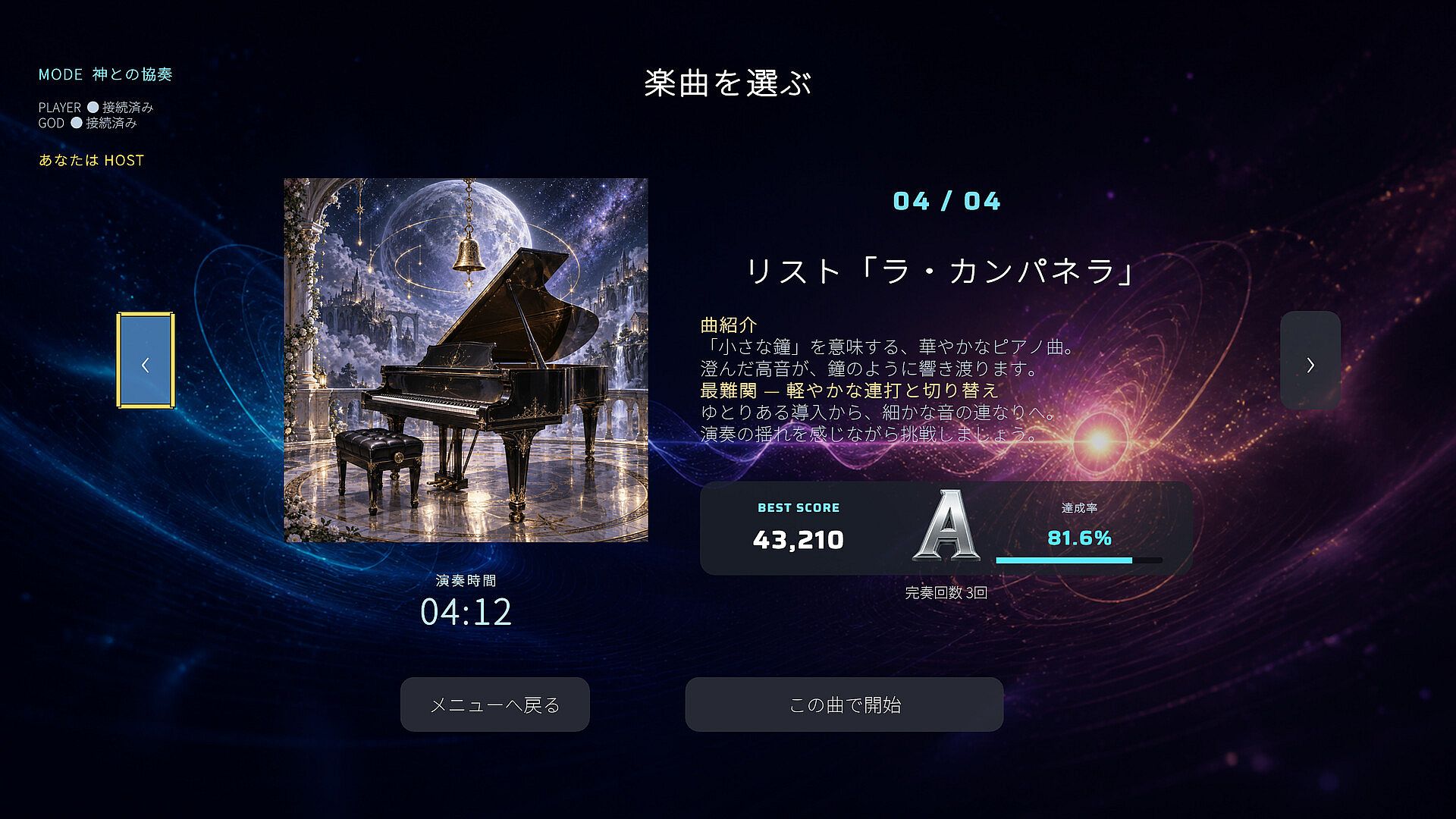
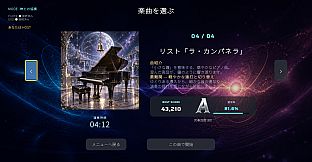

Cosmic Genesis Kagura: Elementary Particle Concerto is a rhythm-action game that blends precise three-button timing with a system of cosmic creation on PC. Players collect elementary particles through music performances and use them to construct atoms, stars, planets, and the building blocks of life in a process that mirrors real scientific progression from the Big Bang onward.
Gameplay
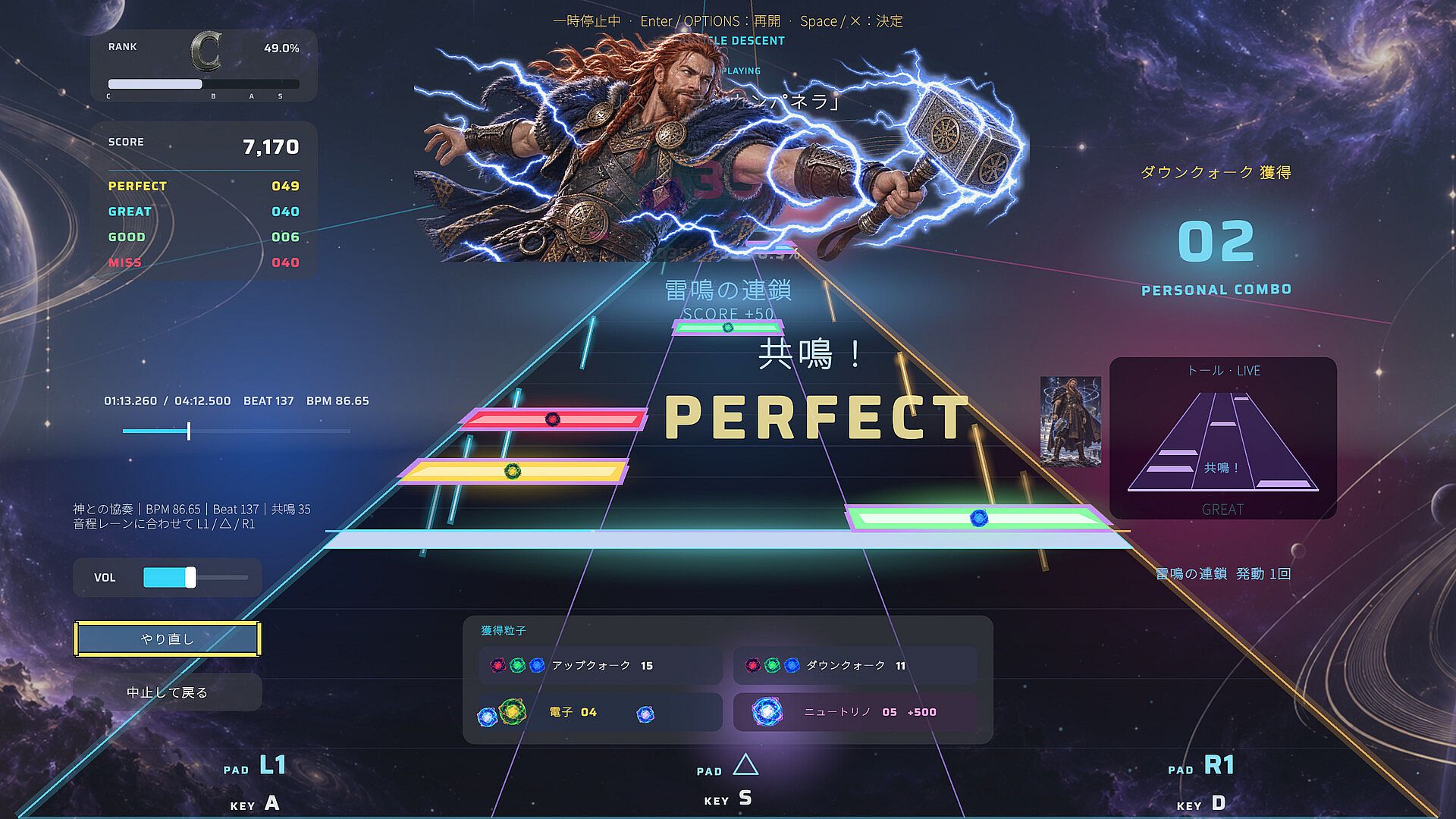
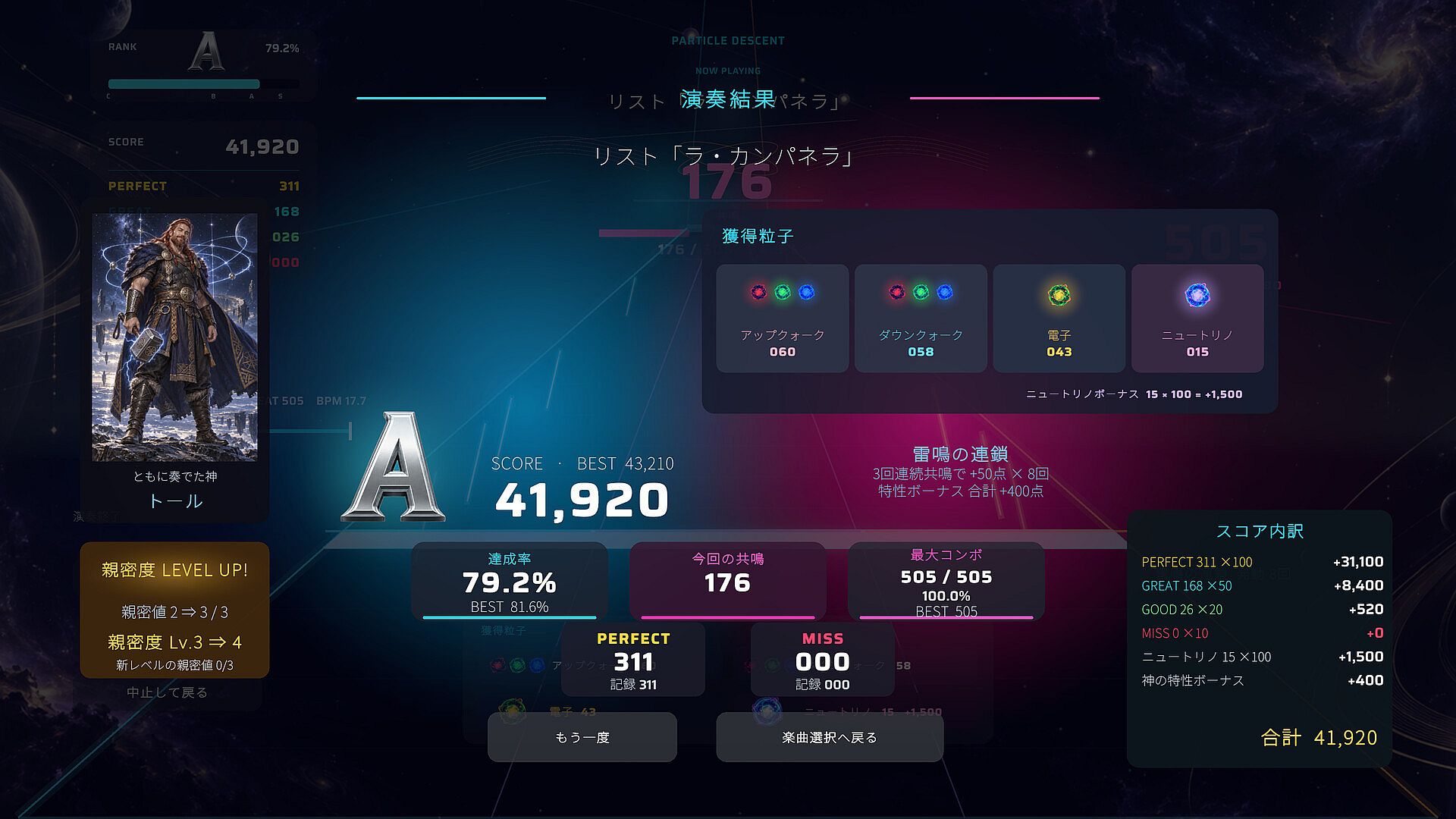
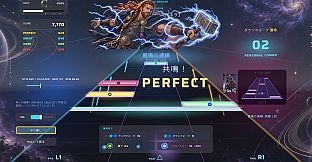
The core loop centers on hitting incoming markers that represent elementary particles across three lanes. Players use keyboard or gamepad inputs to match the rhythm of the music, with visual and audio feedback that reacts directly to timing accuracy. Successful hits earn particles, and when both participants in a performance reach Great or better on the same note, a Resonance effect triggers to multiply the rewards.
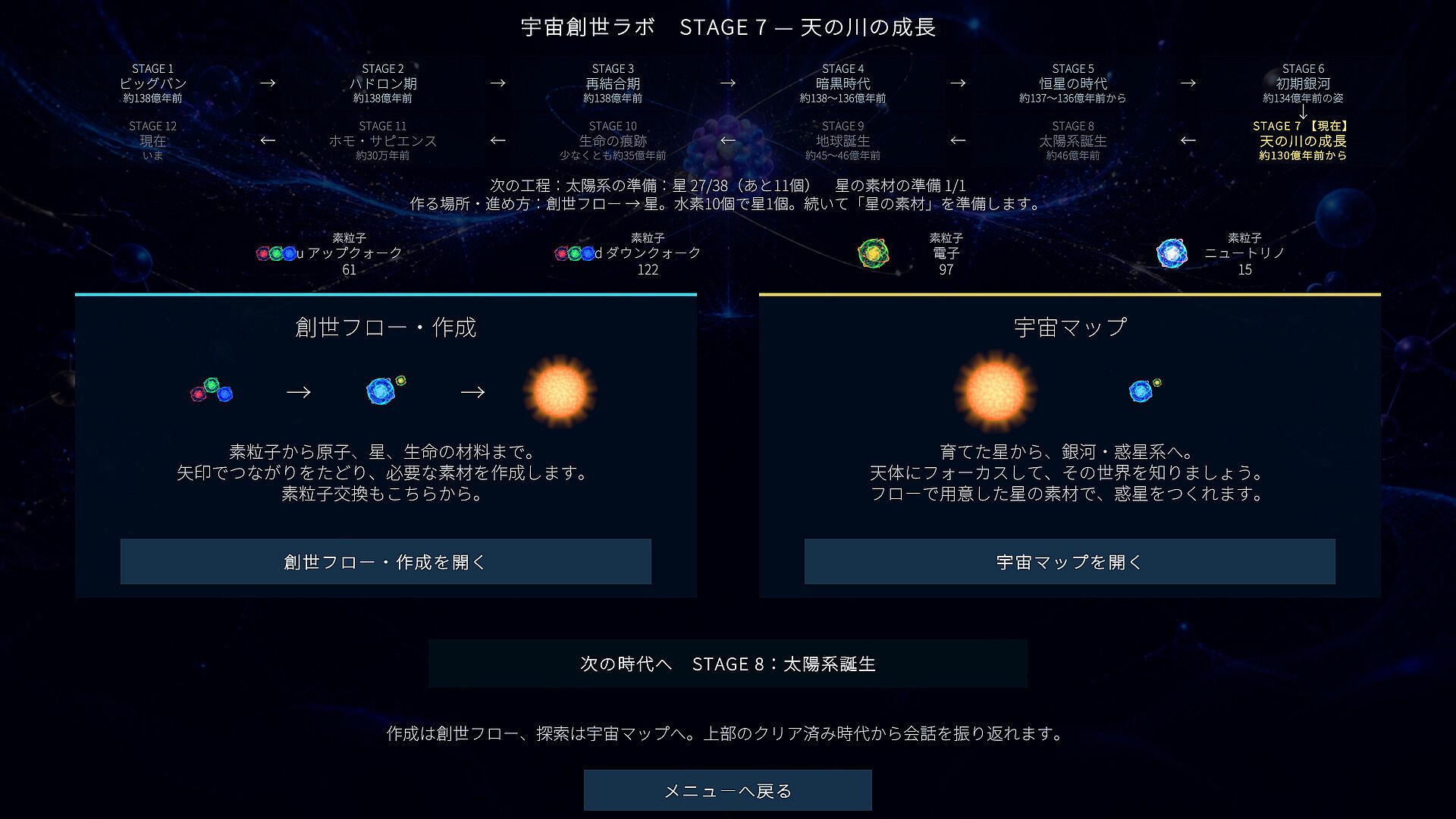
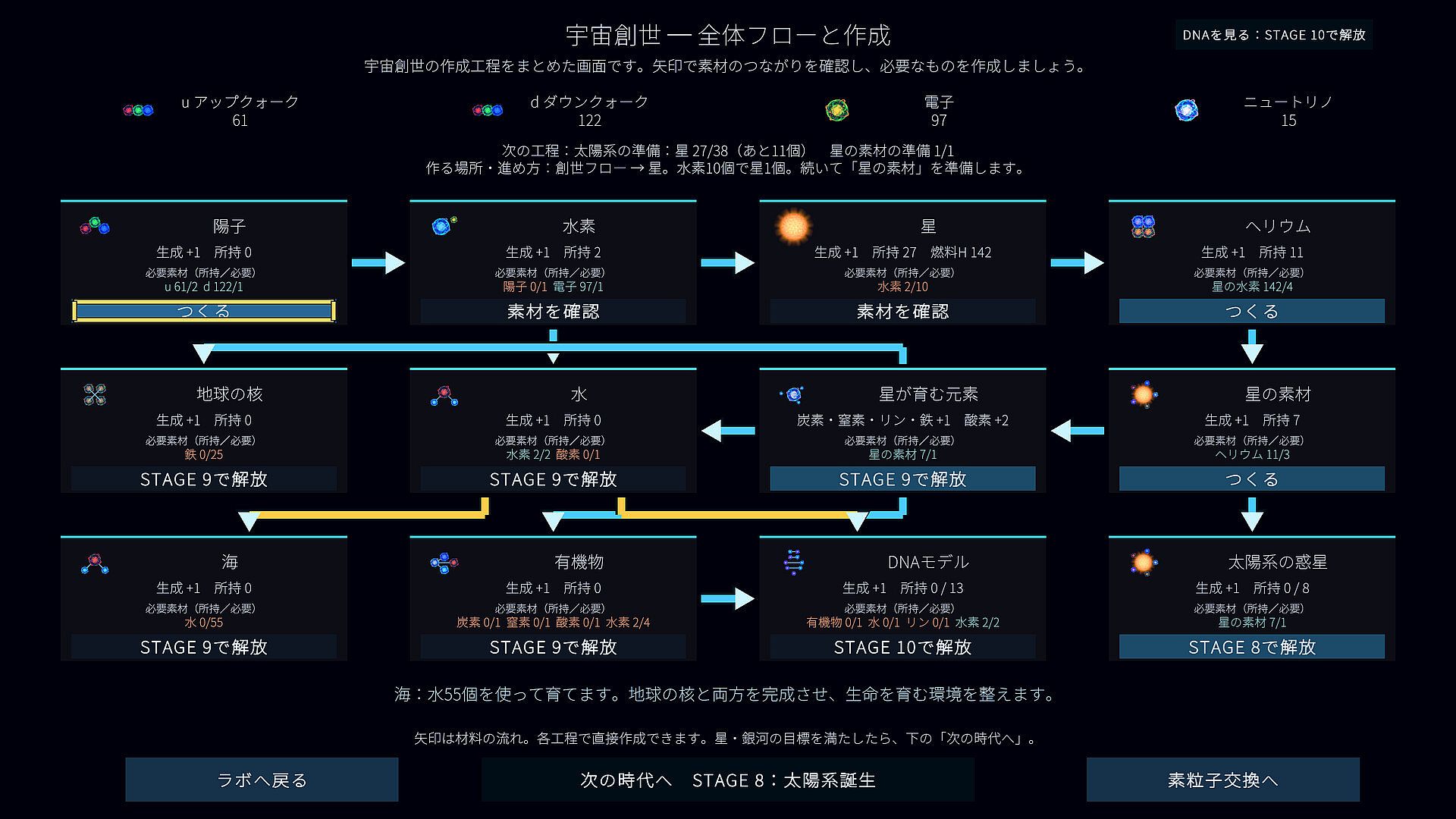
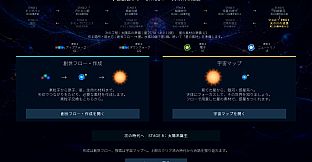
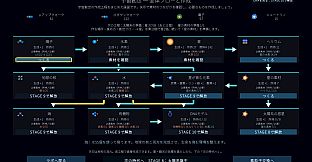
Particles feed into a Creation Flow interface that displays material connections and requirements. Up and down quarks combine into protons, electrons attach to form hydrogen, and accumulated hydrogen fuels star formation along with further nuclear fusion steps that produce heavier elements. Conversations between the character Kagura and her divine partners provide context on cosmic history as players advance through these steps.
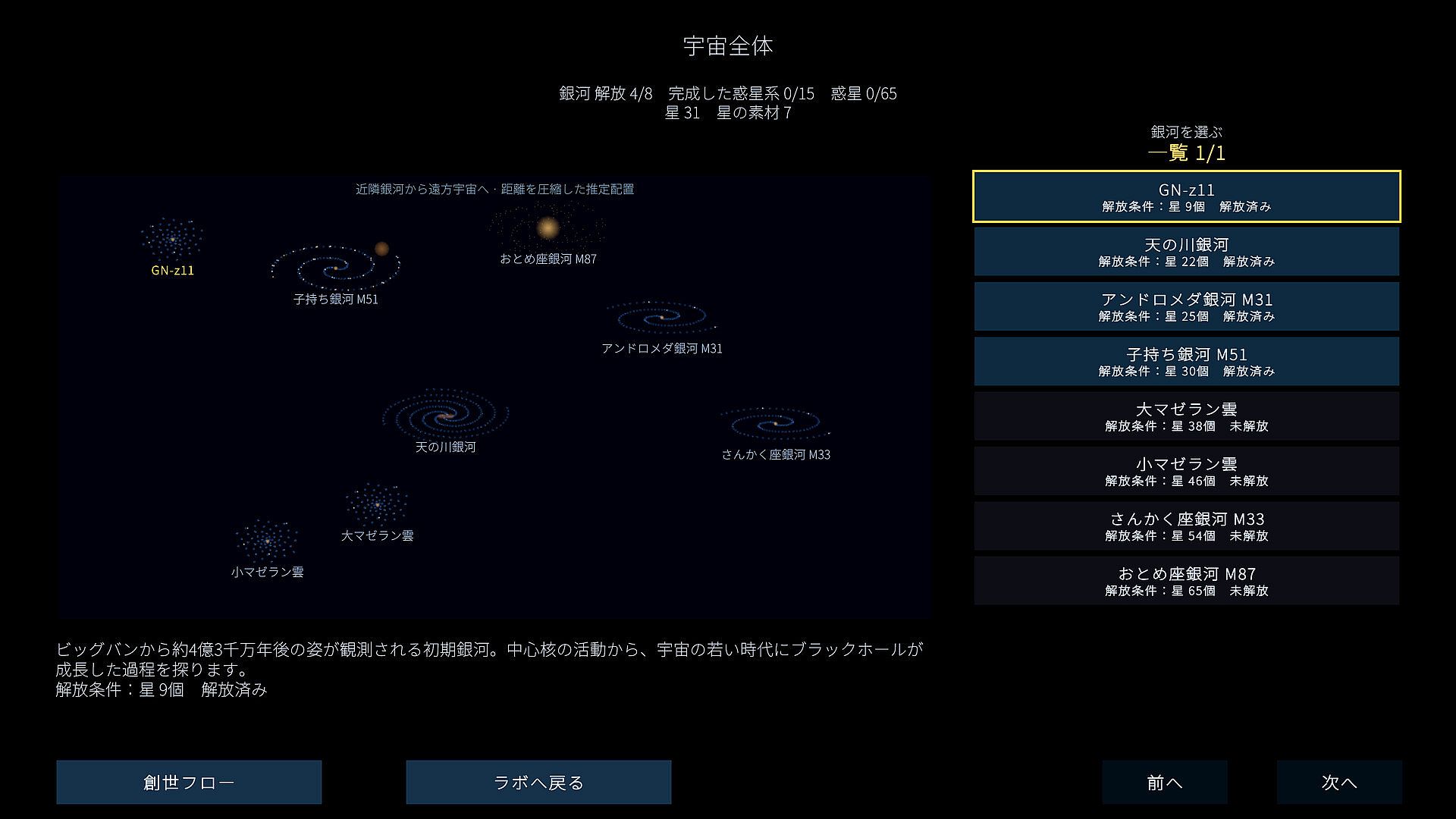
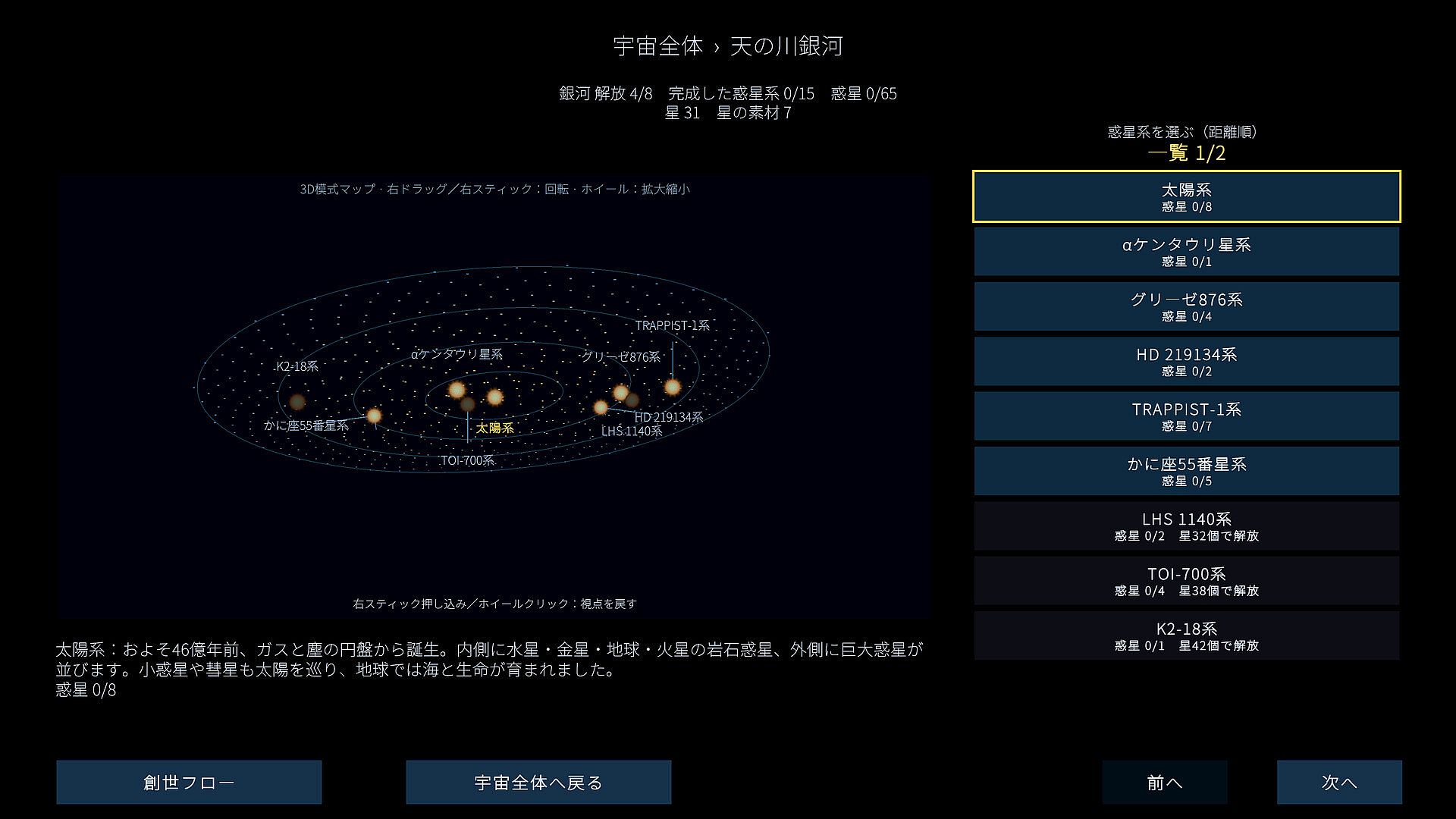
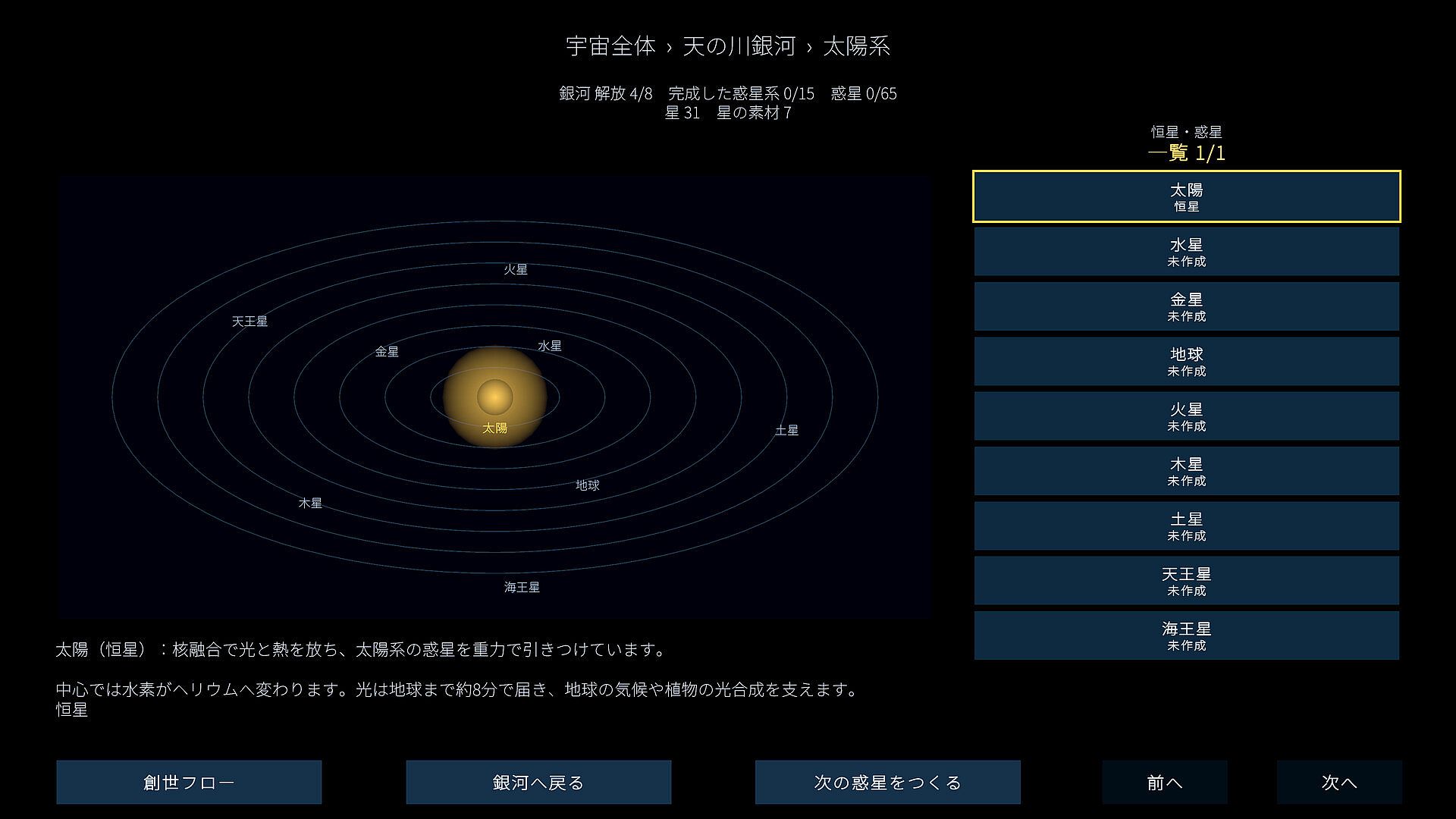
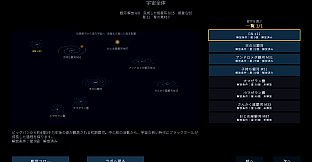
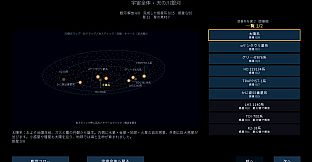
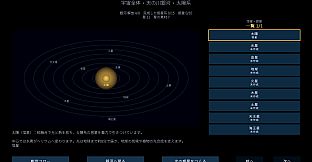
After the main sequence, the system opens additional creation options such as planet building, Seed of Life delivery, and Tree of Life growth. An Universe Map lets players zoom across scales from galaxies to individual celestial bodies and examine models of water, organic compounds, and DNA to understand their roles in the process.
Game Modes
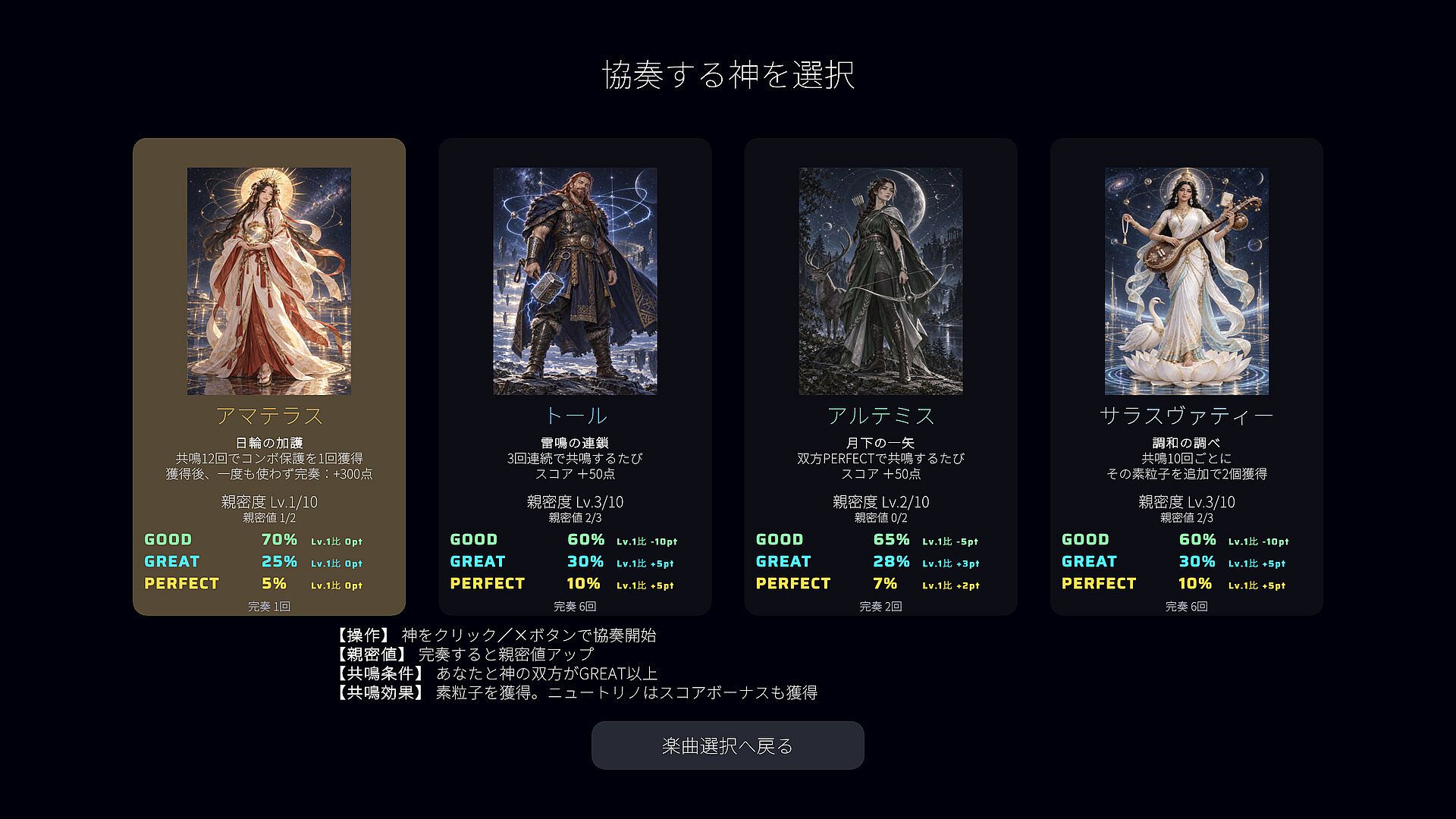
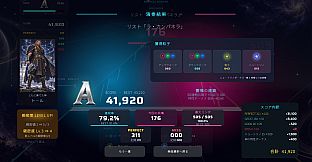
Solo play pairs the player with one of four gods, each offering a unique support ability and corresponding visual effects. The available partners are Amaterasu, Thor, Artemis, and Saraswati. Completing songs together raises affinity levels, which in turn improves the god's performance accuracy on subsequent tracks.
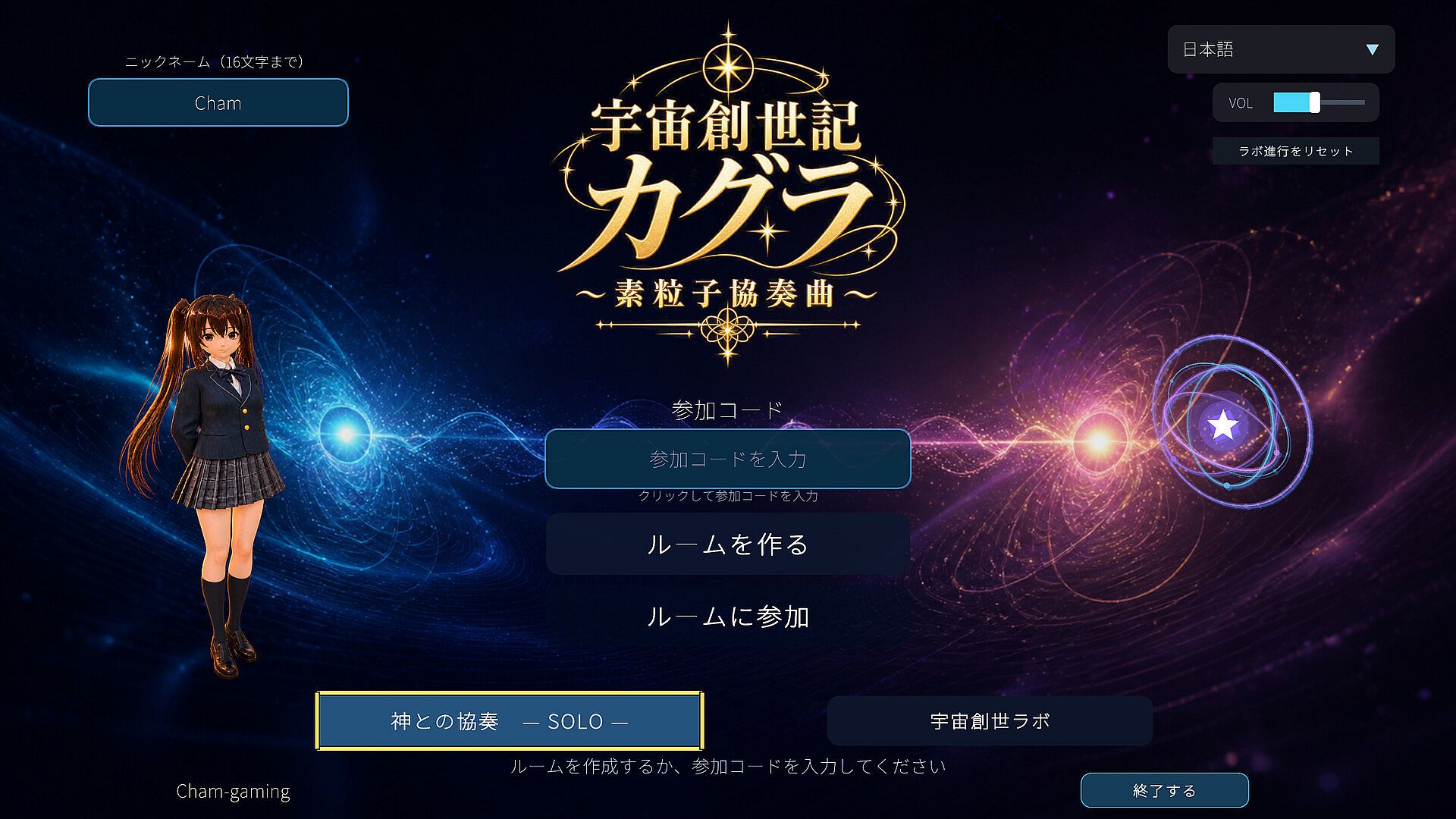
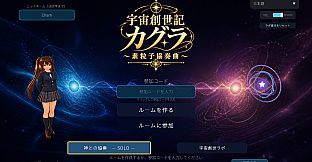
Online duet mode allows creation of a private room that others join via a shared code. The second player's nickname and a compact note lane appear on screen so both participants can track their own inputs alongside their partner's. The focus remains on synchronized timing and shared Resonance moments rather than competitive scoring.
Cosmic Creation and Exploration
Every performance directly contributes resources to a persistent universe-building system. The simplified crafting steps make the progression from quarks to complex structures approachable while still reflecting the underlying connections between particles, stars, and life ingredients. Players expand their creation through the Universe Map, moving from broad galactic views to detailed planetary and molecular models.
Post-story content emphasizes continued planet formation and life-seeding activities. The design accommodates different paces, allowing repeated playthroughs of music tracks to gather more particles without pressure to rush the creation elements.
Is It Worth Playing?
The game targets a wide audience from children to middle-aged and older adults by pairing straightforward rhythm controls with an educational creation layer that players can explore at their own speed. It supports both solo sessions with AI partners and online co-op through simple room sharing, making it suitable for those who enjoy rhythm timing or light collaborative play.
Because the title remains unreleased with a planned launch in January 2027 and currently shows no user reviews, any final judgment depends on personal interest in rhythm mechanics combined with a creation system rooted in particle physics and cosmic history. Those drawn to accessible music gameplay and incremental universe-building will find the verified features align closely with that preference.