



Dub Night Live is an indie casual game for PC that centers on voice dubbing short video clips. Players replace the original audio with their own performances, either alone or in groups, turning familiar scenes into personalized versions through live recording and playback.
Gameplay
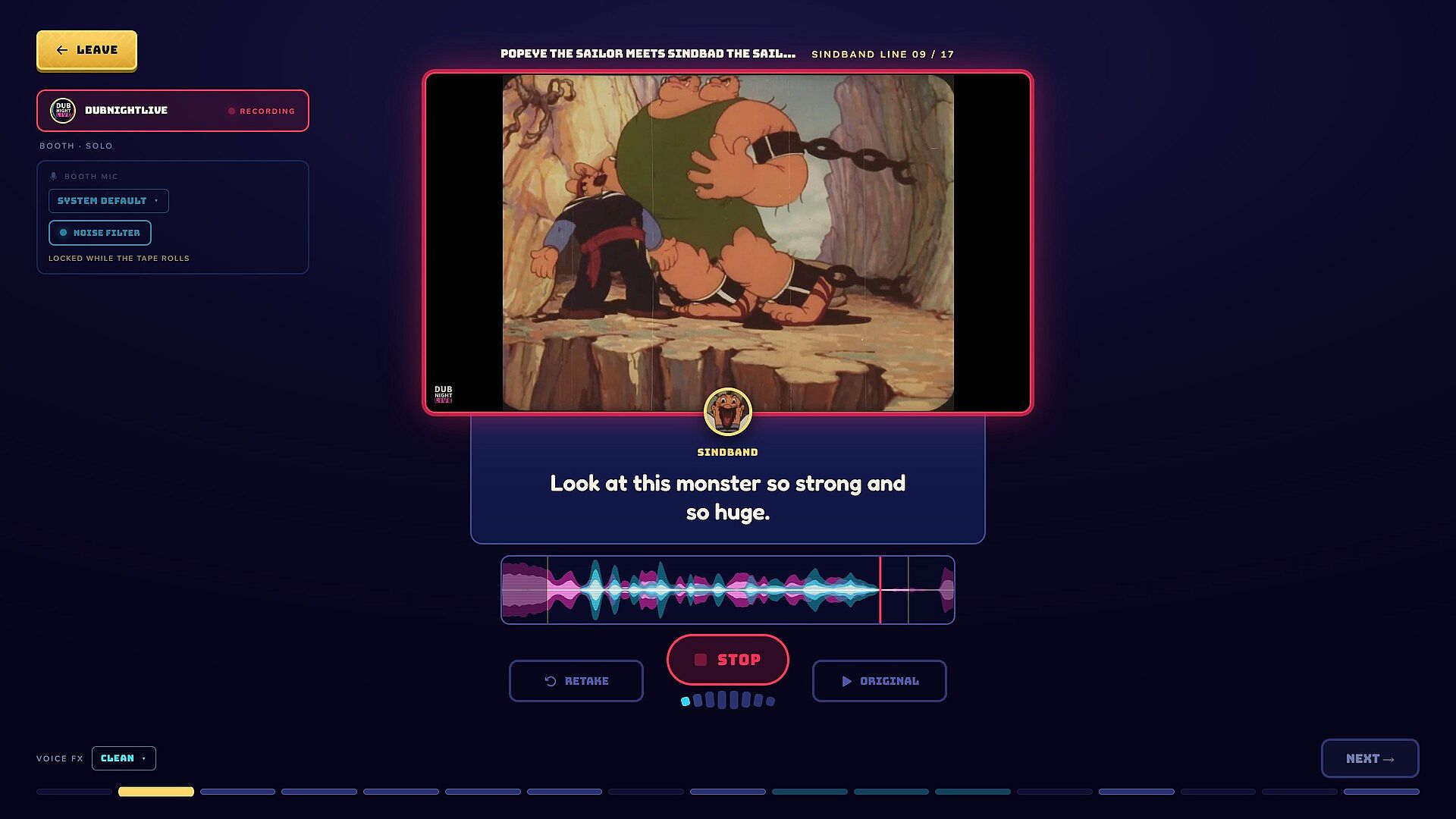
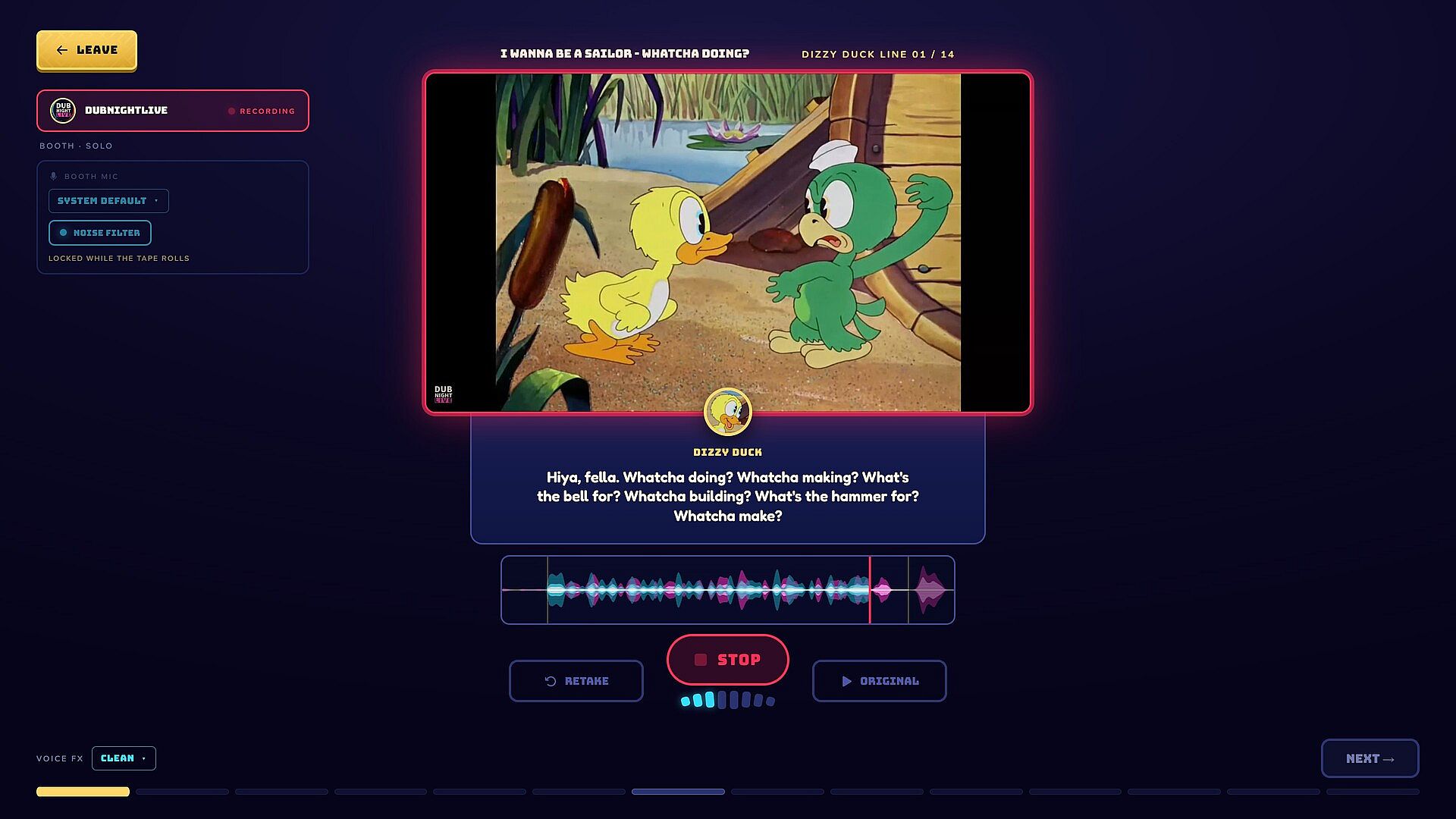
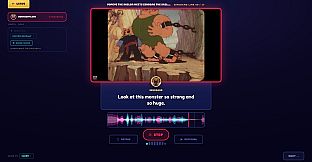
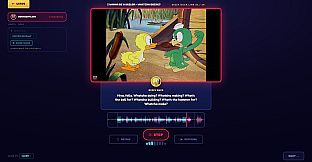
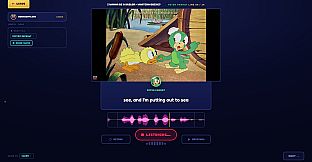
The core loop revolves around selecting a clip, assigning roles, and recording lines in real time with a microphone. The game mutes the original voices while keeping the music and sound effects intact, so performers sync their delivery to the on-screen action and cues. Recording happens simultaneously in multiplayer sessions, with no one hearing others until the full take plays back. This setup creates natural tension and surprise during the reveal.
After finishing lines, players move to a green room area for voice chat and casual conversation while waiting for the group. The session ends with a cinema-style premiere where the complete dub plays, complete with on-screen portraits identifying each performer. Voting follows to select the best performance of the night. A built-in mic check tool measures recording delay to help align takes precisely with the beat.
Solo play follows a line-by-line approach. Users listen to the original, record attempts, review playback, and select their strongest take before moving to the next segment. Multiple clips can form a lineup that advances automatically.
Game Modes
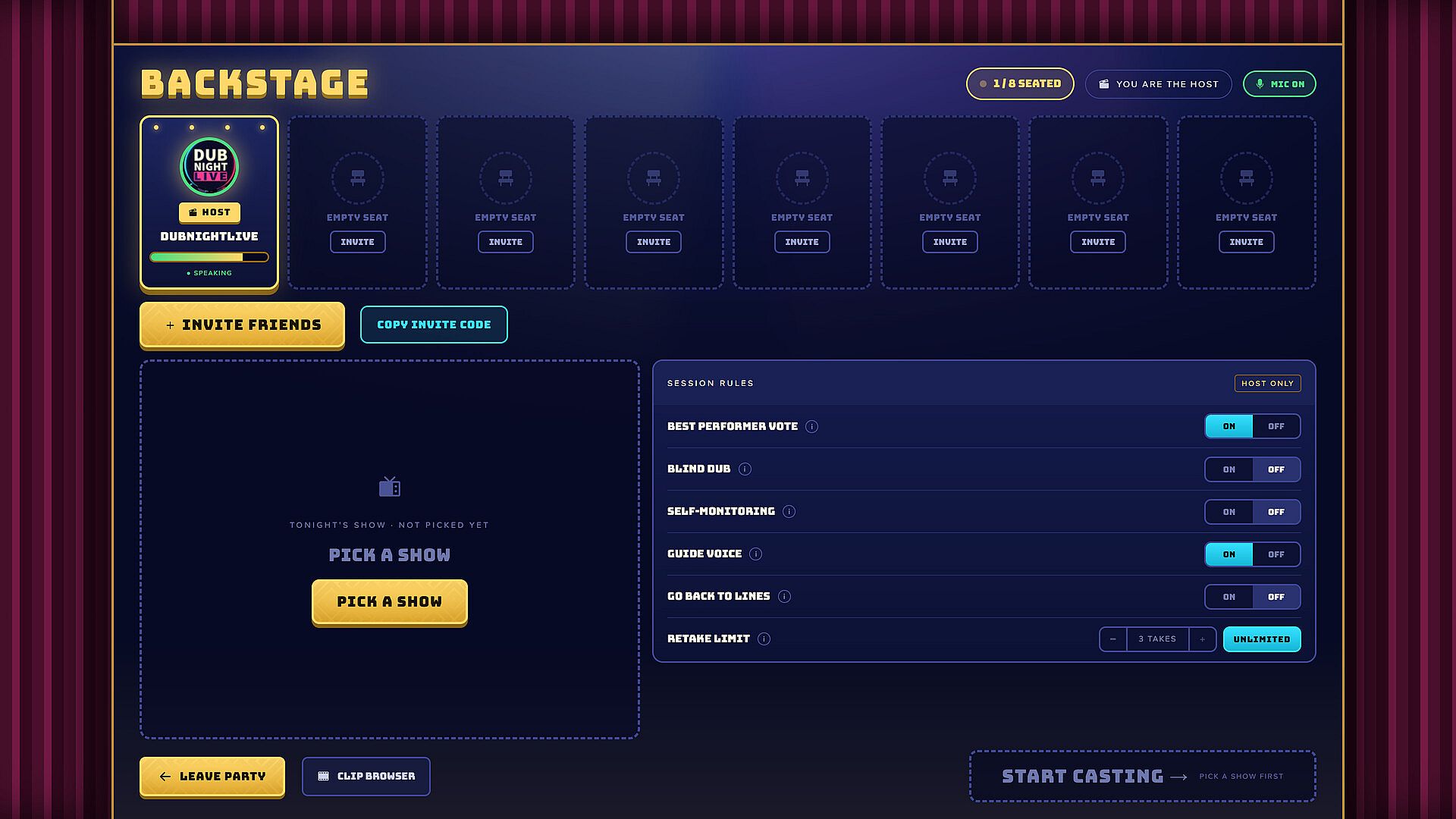
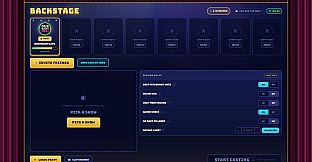
Party sessions support up to eight players with invite codes, allowing spectators and host migration if needed. The host manages casting by dragging players onto characters, and one person can handle multiple roles. Casting options include keeping the previous assignment, auto-casting, or shuffling for variety, along with a countdown timer.
Versus mode lets two players dub the same character, after which the premiere plays both versions back to back for the group to judge. Foley lines expand options beyond spoken dialogue to include sound effects such as door slams or impacts.
Solo mode focuses on personal improvement through repeated takes and starring favorites. The game also includes tools for creating and sharing original content through an integrated editor.
Clip Creation and Community Features
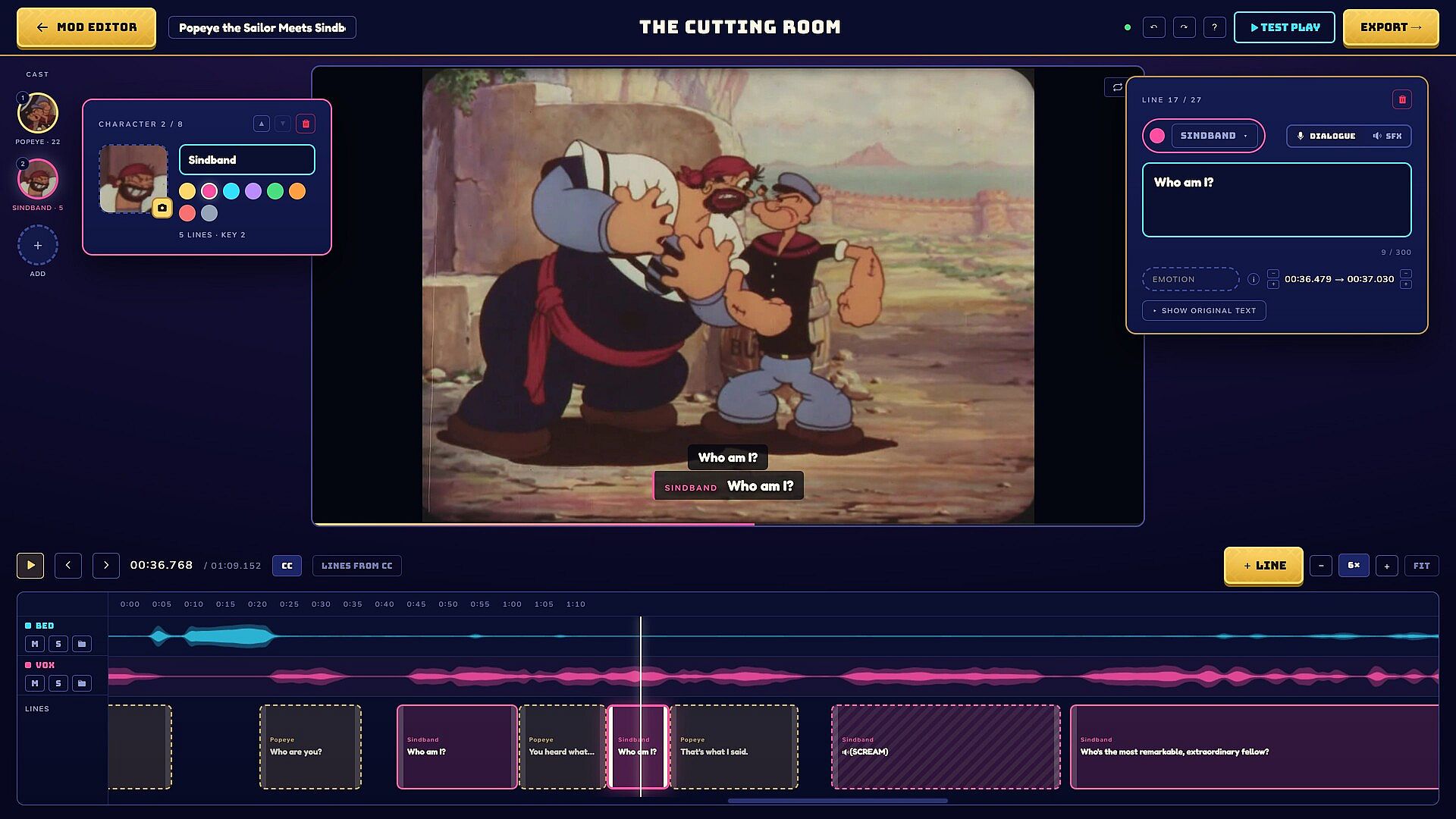
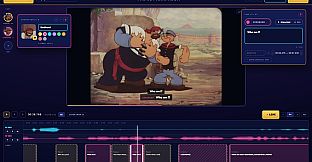
Every clip available comes from player uploads via the in-game editor. Users import video, separate vocals from the soundtrack to preserve music and effects, mark dialogue lines on a timeline, assign characters, and capture portraits from frames. A test play feature lets creators preview their work on the actual stage before publishing to the Workshop.
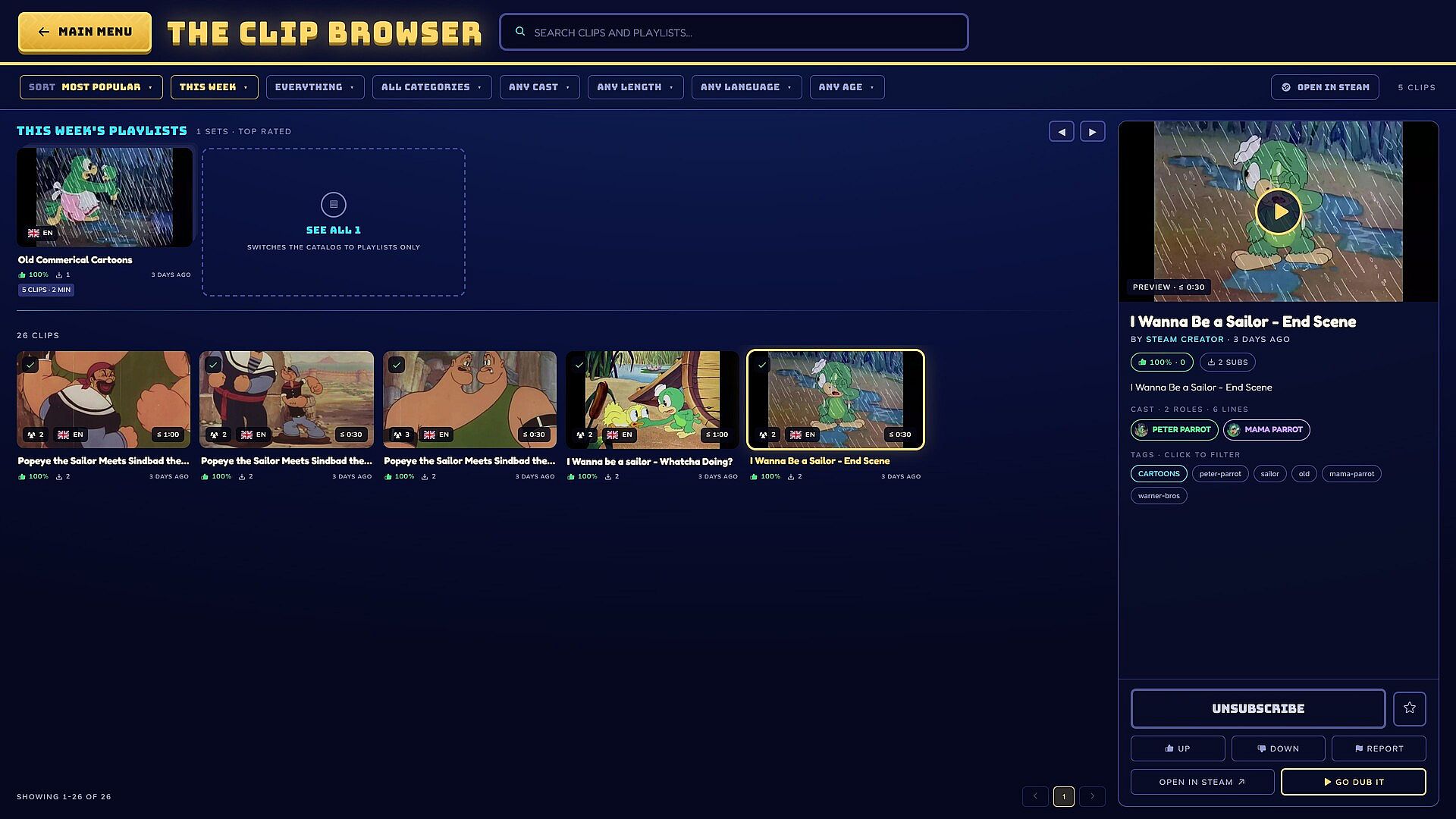
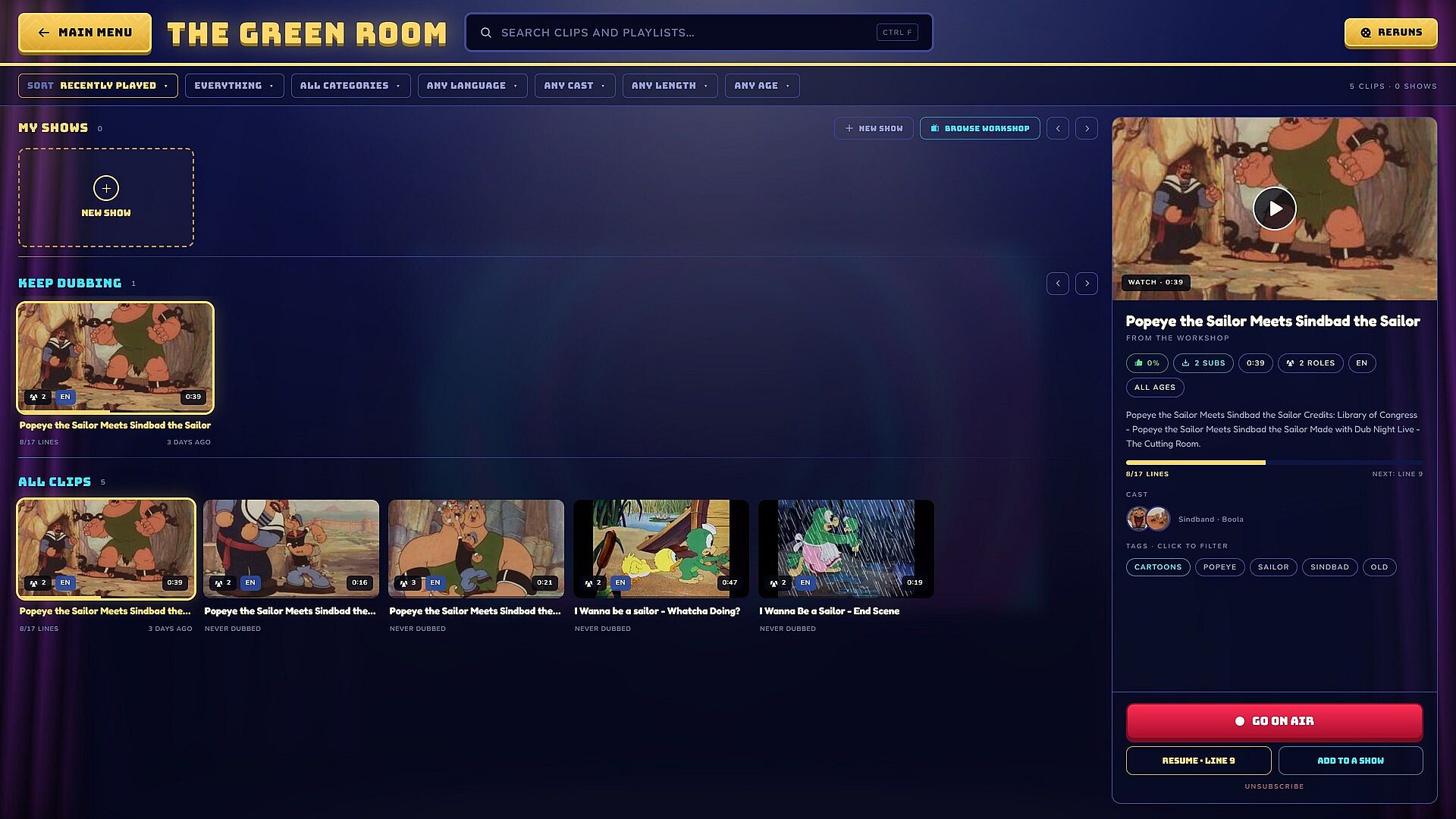
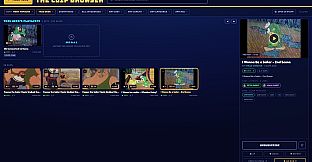
The Clip Browser serves as the central hub for community content. Sorting options cover trending daily or weekly clips, as well as all-time popular ones. Filters narrow results by length, number of cast members, language, or age rating. Subscribing adds clips directly to a personal library for immediate use in sessions or lineups.
Steam Workshop integration handles distribution, with built-in sorting, favorites, and voting systems to highlight standout creations. The editor supports vocal separation models that run locally, and a one-click publish option streamlines sharing.
Is It Worth Playing?
Dub Night Live targets players who enjoy casual party experiences built around voice performance and creative reinterpretation of short clips. Its systems emphasize real-time recording, group casting, and shared viewing without requiring typing or text-to-speech tools. The game requires a microphone and works best with a headset for clean audio capture.
Since the title remains unreleased with a planned launch in Q3 2026, no player reviews or ratings exist yet. Availability will be through standard PC purchase on the platform where it is listed. Those drawn to social dubbing mechanics, Workshop-driven content creation, and simple multiplayer voting will find the verified features align closely with that style of play. Solo users gain repeatable practice tools, while groups benefit from simultaneous recording and post-performance discussion spaces.
The combination of party co-op, versus comparisons, and player-made clip support creates a focused loop around performance and reaction rather than traditional progression or combat. Prospective buyers should consider their access to a suitable microphone and interest in voice-based creativity when evaluating the experience.