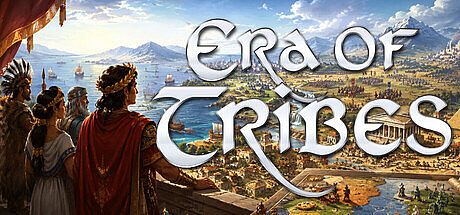


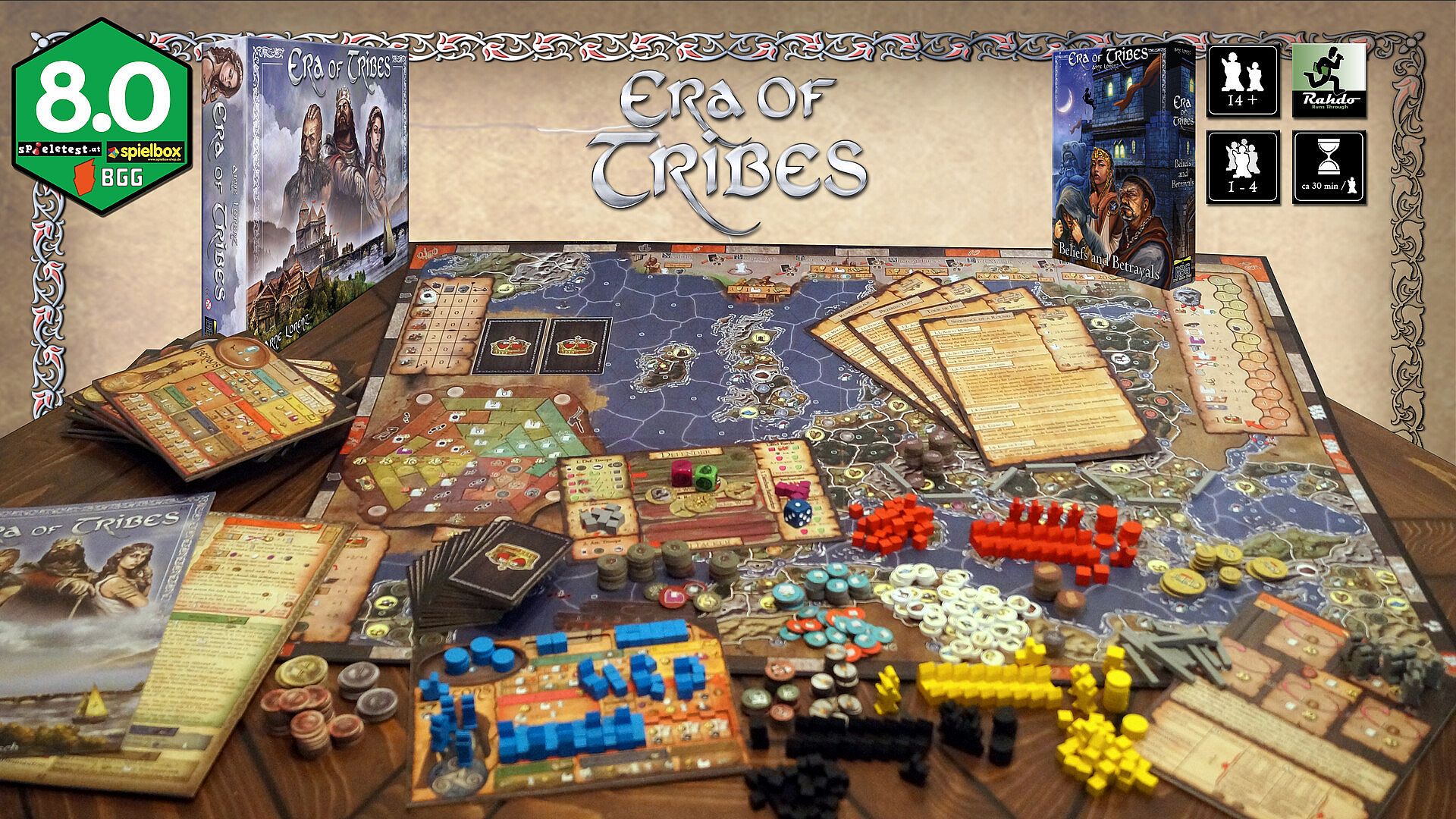
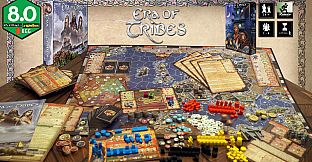


Era of Tribes is a grand strategy civilization board game set across Europe, where players guide one of several tribes from the Neolithic Age through to the High Middle Ages. The core experience centers on building settlements, managing resources and population needs, advancing technologies, and navigating relations with rivals through a combination of expansion, economic decisions, and occasional conflict. Each session unfolds on a large map of the continent divided into regions, with players starting from asymmetric positions that encourage varied approaches to growth and dominance.
Gameplay
Players take turns placing leaders on a personal action board to activate one of several options each round. These actions cover expansion into new territories, founding cities, recruiting forces, trading for wealth and morale benefits, collecting taxes from developed areas, conducting diplomacy, researching technological improvements, holding festivities to maintain population stability, and progressing to the next historical era. Resources such as food, wealth, and influence must be balanced against morale and hunger markers to avoid setbacks. Combat occurs when territories overlap or ambitions clash, resolved through deterministic calculations involving troop numbers, location advantages, and any accumulated upgrades. Progress through eras requires meeting specific thresholds in provinces controlled, cities founded, and technologies unlocked, which in turn unlock new capabilities and scale up the civilization.
Technology follows interconnected tracks that reward focused investment while opening options in economy, military, agriculture, and society. Diplomatic interactions allow temporary agreements or influence plays that can shift alliances and borders without immediate violence. The map supports area control elements, where securing key regions provides access to resources and strategic positioning. Victory hinges on accumulating the most influence points by the end of the game, earned through expansion, economic output, technological leadership, political maneuvers, and military successes, with additional scoring from end-game conditions chosen at setup.
Game Modes
Sessions support one to four players in the base experience, with options to extend to five or six through expansions. Three game lengths alter the end conditions and overall duration: normal games emphasize quicker resolution around thirty minutes per player, while long and epic variants raise the thresholds for victory triggers and extend playtime accordingly. Solo play incorporates an automated opponent system to simulate rival civilizations. Multiplayer emphasizes interaction through shared map competition, where neighboring tribes controlled by others create unpredictable diplomacy and conflict opportunities. Different map portions can be selected to adjust starting conditions and scale.
Key Mechanics and Tribes
Ten asymmetric tribes provide distinct starting locations, abilities, and strategic biases that reward adaptation to neighbors and map layout. No two playthroughs follow identical paths due to the interplay of player choices, random elements in setup, and reactive decisions. Economy management involves gathering resources across Europe, establishing trade routes, and taxing developed cities while monitoring population morale to sustain further actions. Multiple paths to influence accumulation allow emphasis on peaceful development, aggressive conquest, technological superiority, or diplomatic leverage.
Is It Worth Playing?
Era of Tribes delivers a dense, interconnected strategy experience that suits players who enjoy worker placement combined with civilization building and area control. The asymmetric tribes and multiple end conditions create high replayability, particularly in groups that appreciate negotiation and long-term planning. Reviews highlight the depth achieved through years of refinement, noting rewarding complexity once the rules are mastered and strong solo support. The game receives ongoing support through a second edition and the Beliefs and Betrayals expansion, which adds religion and intelligence systems for further layers of interaction. It appeals most to those seeking thoughtful, multi-hour sessions focused on historical progression rather than quick matches or heavy luck dependence. If the described mechanics align with preferences for grand strategy titles, it offers a solid option for repeated play.