

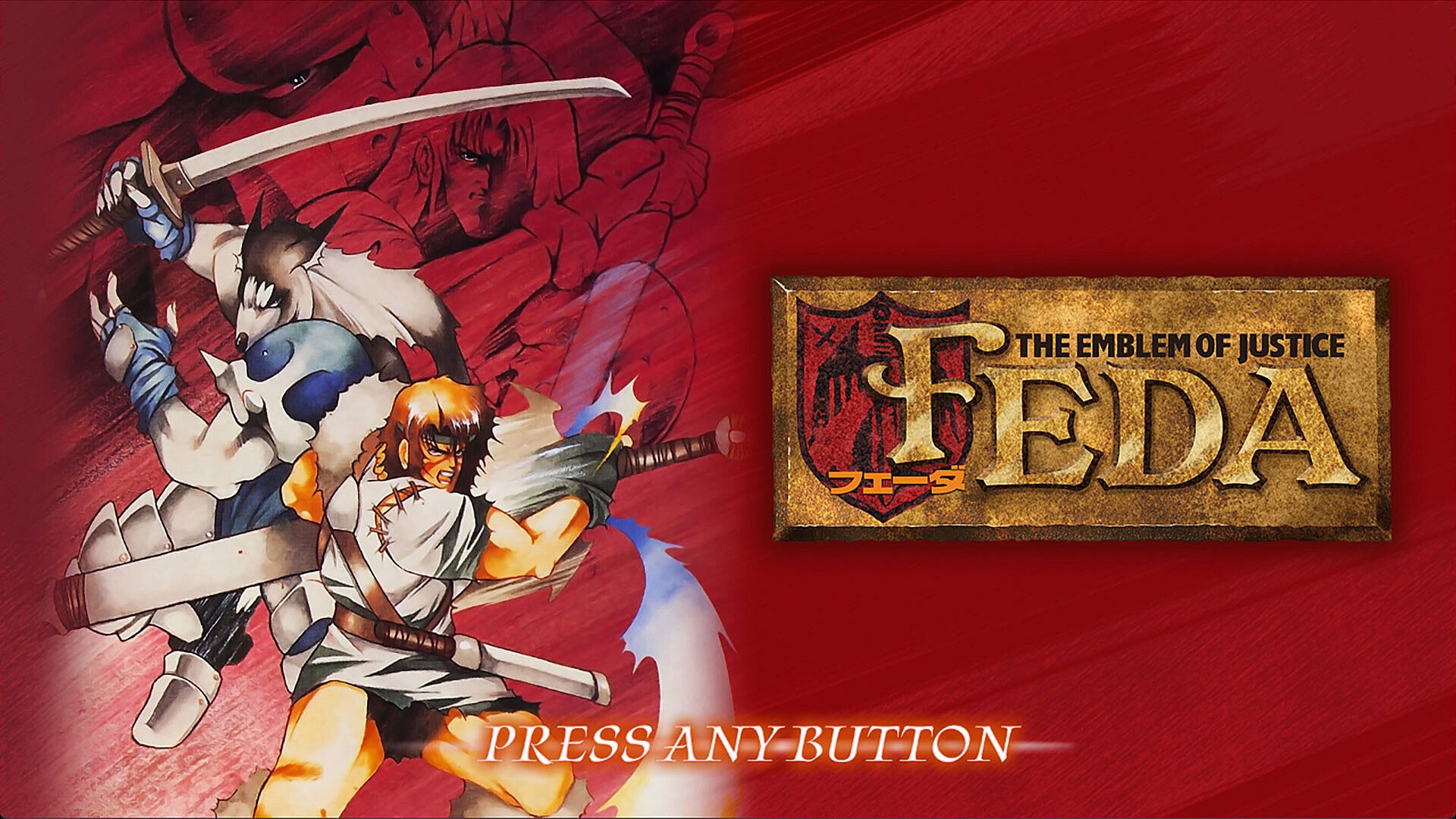
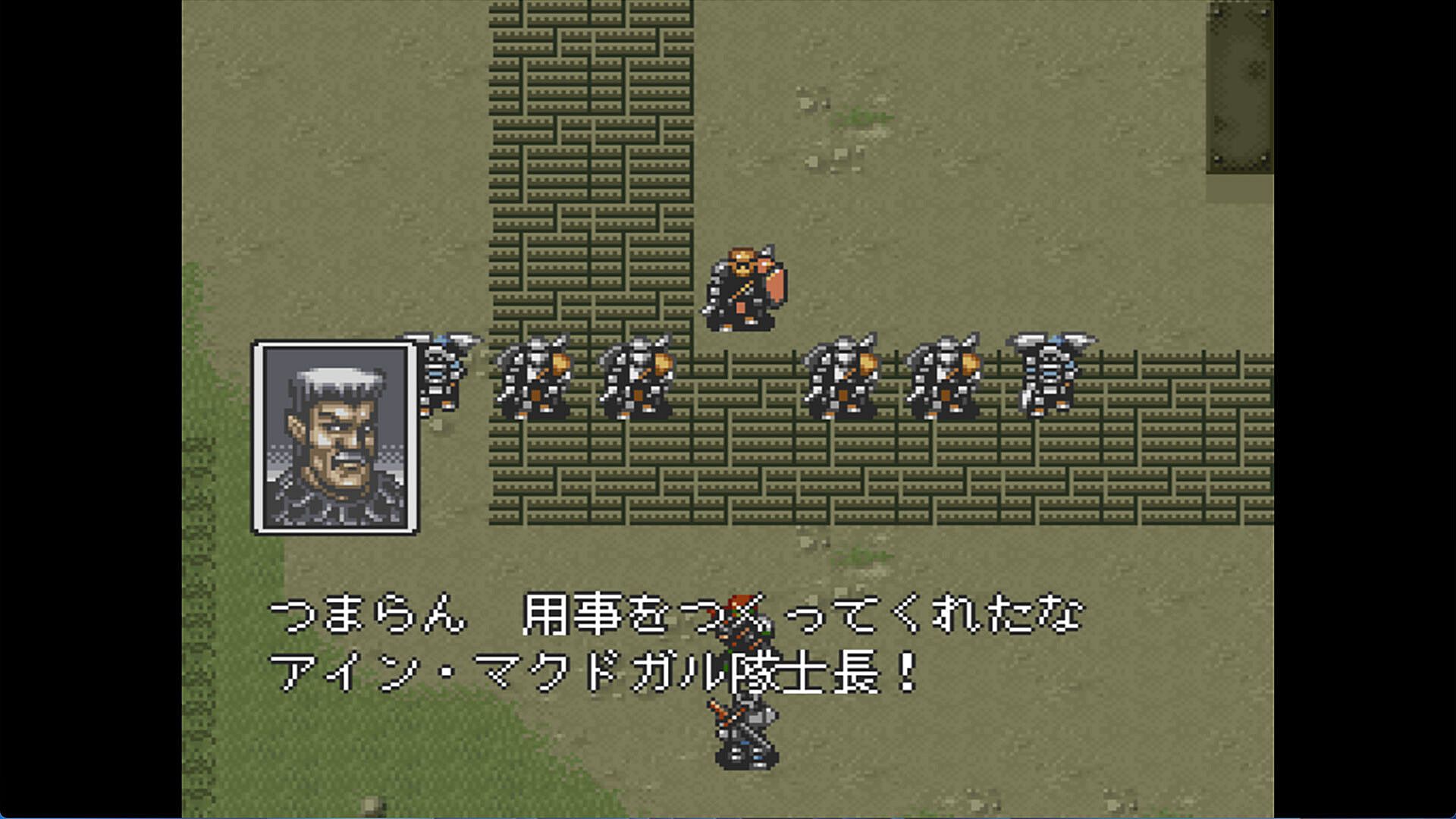
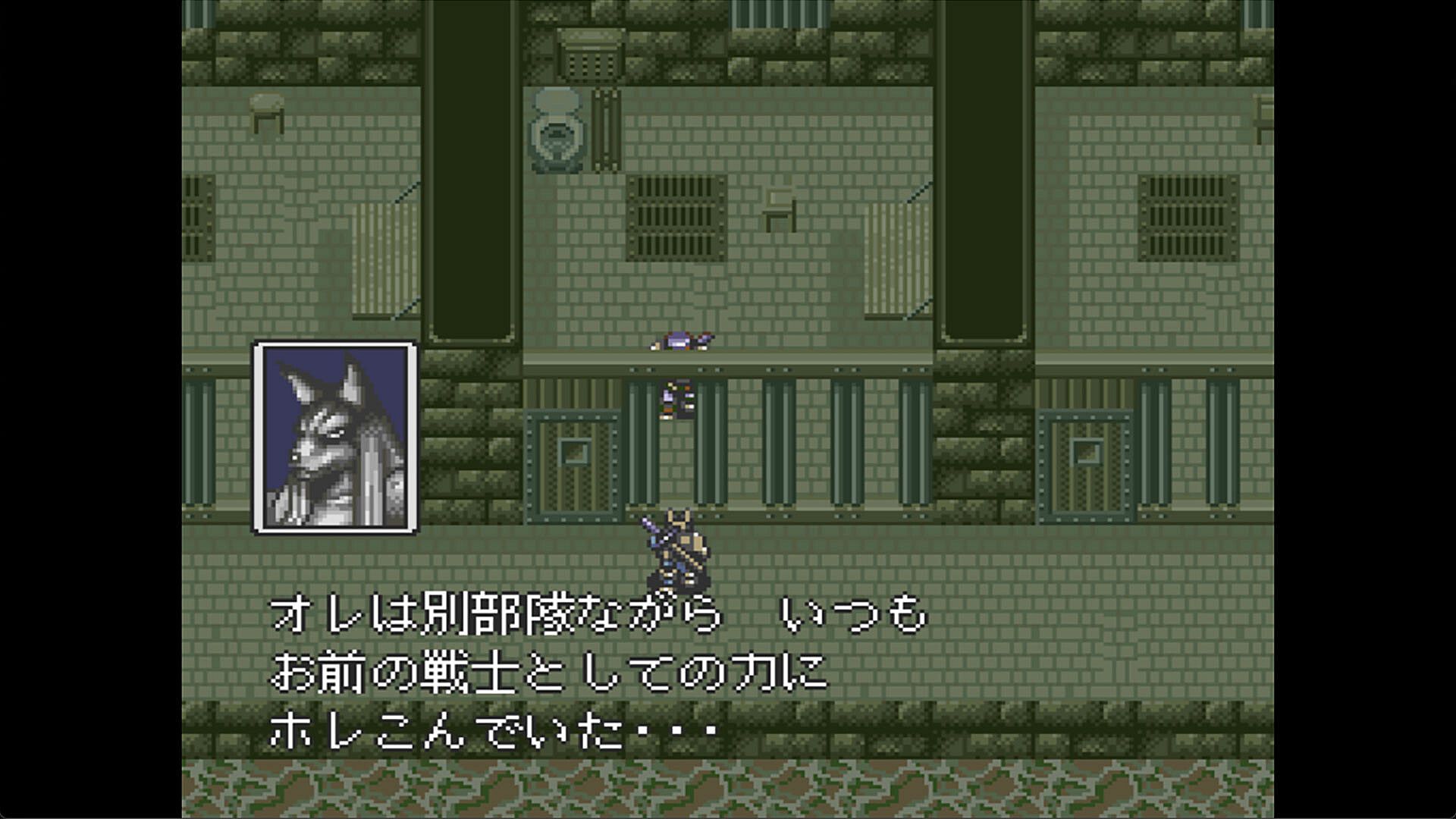
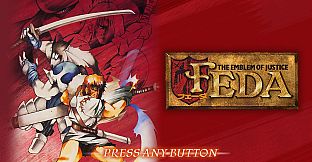
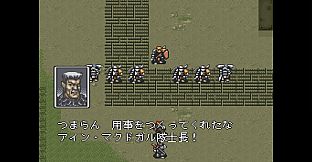
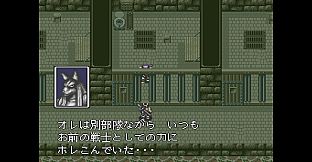
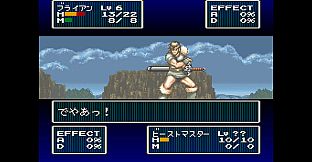
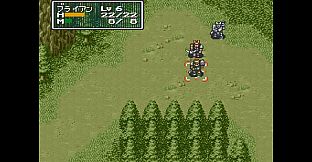
FEDA: The Emblem of Justice is a single-player tactical RPG originally released in 1994 for the Super Famicom. Players take on the role of Brian Stelbart, an imperial soldier who defects from the Balfomoria Empire alongside his comrades Ain and Dora to join the Arcadia Liberation Army in its fight against oppressive rule on the continent of Scuderia.
Gameplay
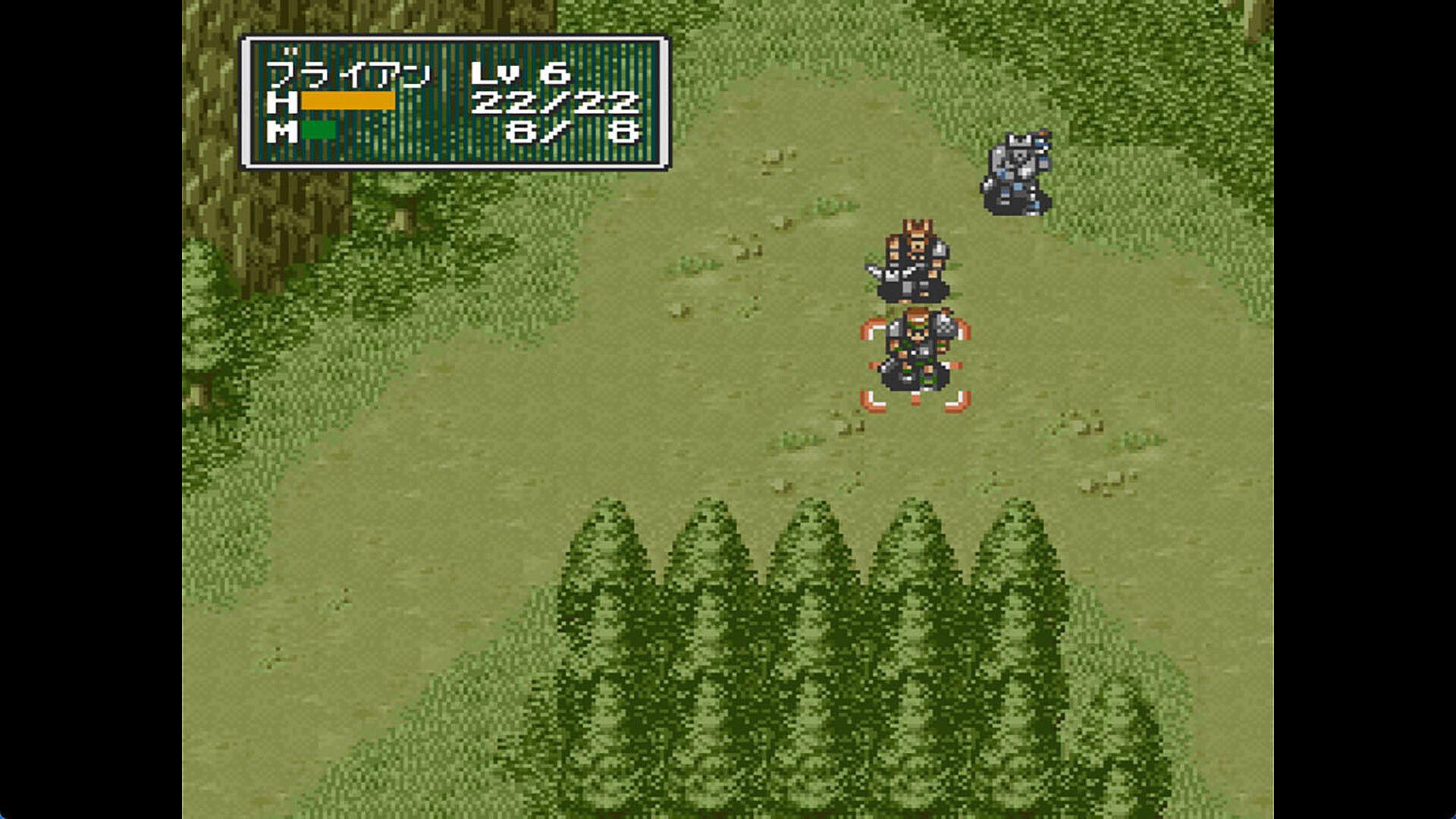
The core loop alternates between exploration phases and grid-based tactical battles. In towns, villages, and other locations, players navigate interiors, visit shops for equipment and items, and speak with residents to advance the narrative or uncover details about the empire's actions. Overworld travel occurs in turns, with encounters or scripted events triggering combat on square grids where each unit occupies one space.
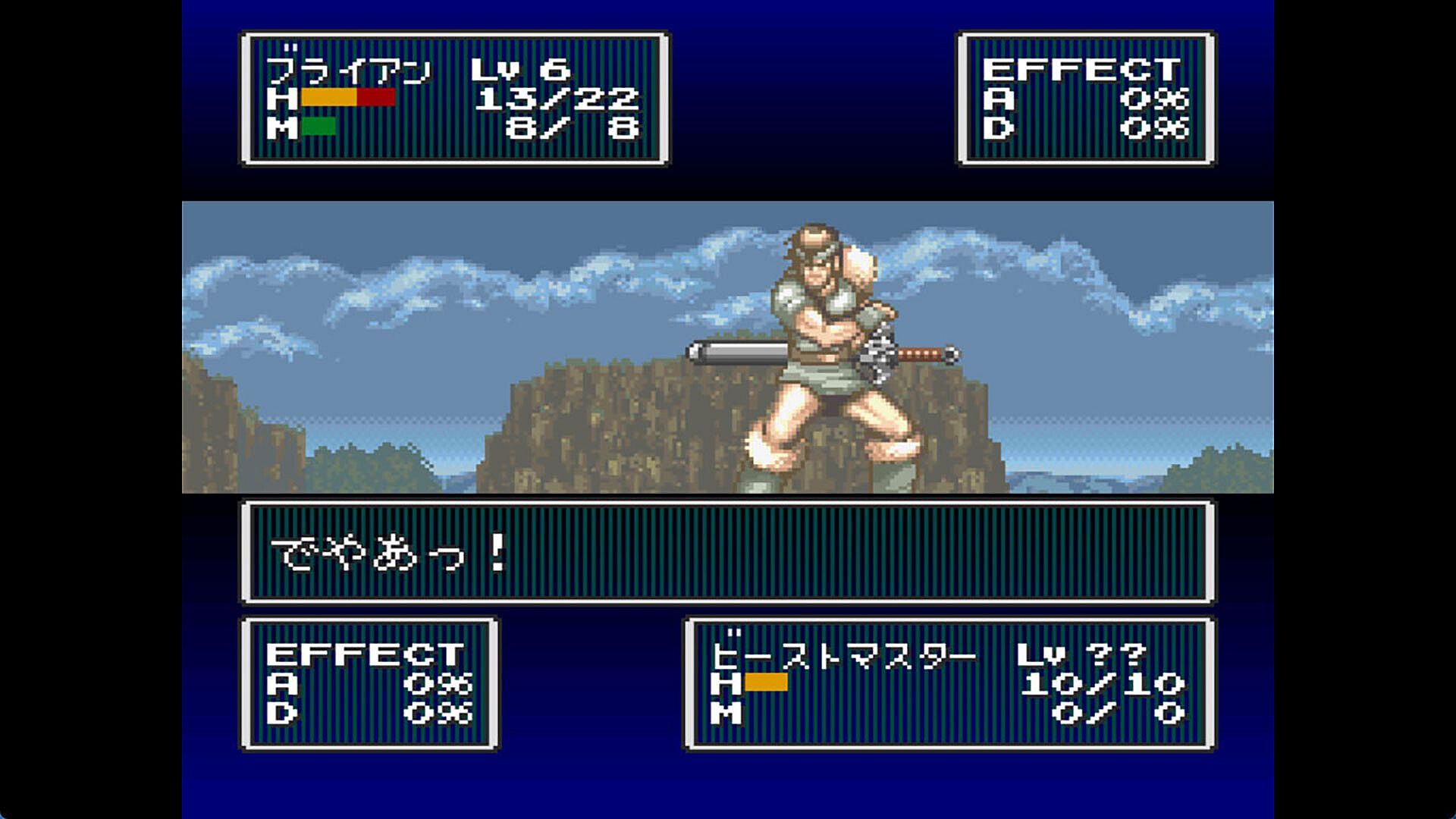
Battles follow a turn-based structure in which players command a party of up to ten units. Each turn allows movement across a set number of tiles followed by one action, such as attacking adjacent or ranged targets, using items like rations for healing, casting spells with varying reach, or adopting a defensive stance. Terrain influences movement costs and combat bonuses, while flying units gain defensive advantages. Certain characters prove essential; losing protagonists like Brian or Ain results in an immediate game over. Experience points accumulate from combat, leading to level-ups that improve statistics such as attack, defense, and magic power.
A standout mechanic is the alignment system tracked through emblems. Performance in each battle, including adherence to mission objectives versus unnecessary eliminations or ally preservation, shifts the party's standing along a scale from law to chaos. Starting at the neutral Viper emblem, choices push toward higher law ranks like the Feda Emblem or chaos ranks like the Genocide Emblem. This directly affects which additional characters join the roster, which existing members depart, and which of multiple endings the player reaches.
Game Modes
The experience centers on a single-player campaign structured around sequential chapters. Exploration segments in settlements and temples provide opportunities to prepare the party at a mobile base or camp, while battles serve as the primary challenge with varied objectives such as defeating key enemies, reaching specific map points, or surviving turns. Alignment decisions made across these encounters create meaningful replay paths without altering the overall linear progression of the main story.
No separate multiplayer or side modes exist. The campaign integrates moral and tactical choices into its structure, encouraging different party compositions and outcomes on subsequent playthroughs through the emblem rankings.
Story and Setting
Following the end of the ancient Millennium War, the continent falls under the control of Cobalt Accelese and the Balfomoria Imperial Senate. Brutal policies spark rebellion among the indigenous population, forming the Arcadia Liberation Army. Brian and his allies, repulsed by the empire's tactics, escape imprisonment and align with the resistance, uncovering further plots as the conflict intensifies. The narrative features anthropomorphic characters across both factions and emphasizes themes of tyranny, defection, and shifting loyalties shaped by player actions in battle.
Modern Enhancements
The PC re-release preserves the original pixel art and sound while adding quality-of-life improvements. Players can quick save or load at any point, rewind a few seconds after errors, and jump to key story checkpoints. Visual options include customizable retro filters such as CRT effects, scanlines, brightness adjustments, and screen noise. A digital manual reproduces the original instruction booklet in high definition, and a sound test allows playback of the soundtrack at any time.
Is It Worth Playing?
This tactical RPG suits fans of classic grid-based strategy titles who appreciate systems that tie combat performance to party composition and story branches. The emblem alignment adds depth through recruitment consequences and multiple endings, while the campaign offers more than twenty hours of content across its chapters. Modern conveniences like rewind and quick saves reduce frustration from older mechanics such as unskippable battle animations. Retrospective player feedback highlights solid tactical combat and character variety, though some note the linear structure and hardware-era limitations. Those seeking a focused single-player experience with meaningful choice in how battles unfold will find the title rewarding, especially within the three-game collection that also includes Trinea and Song Master.