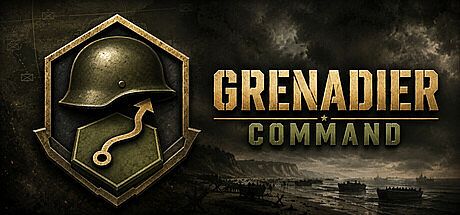



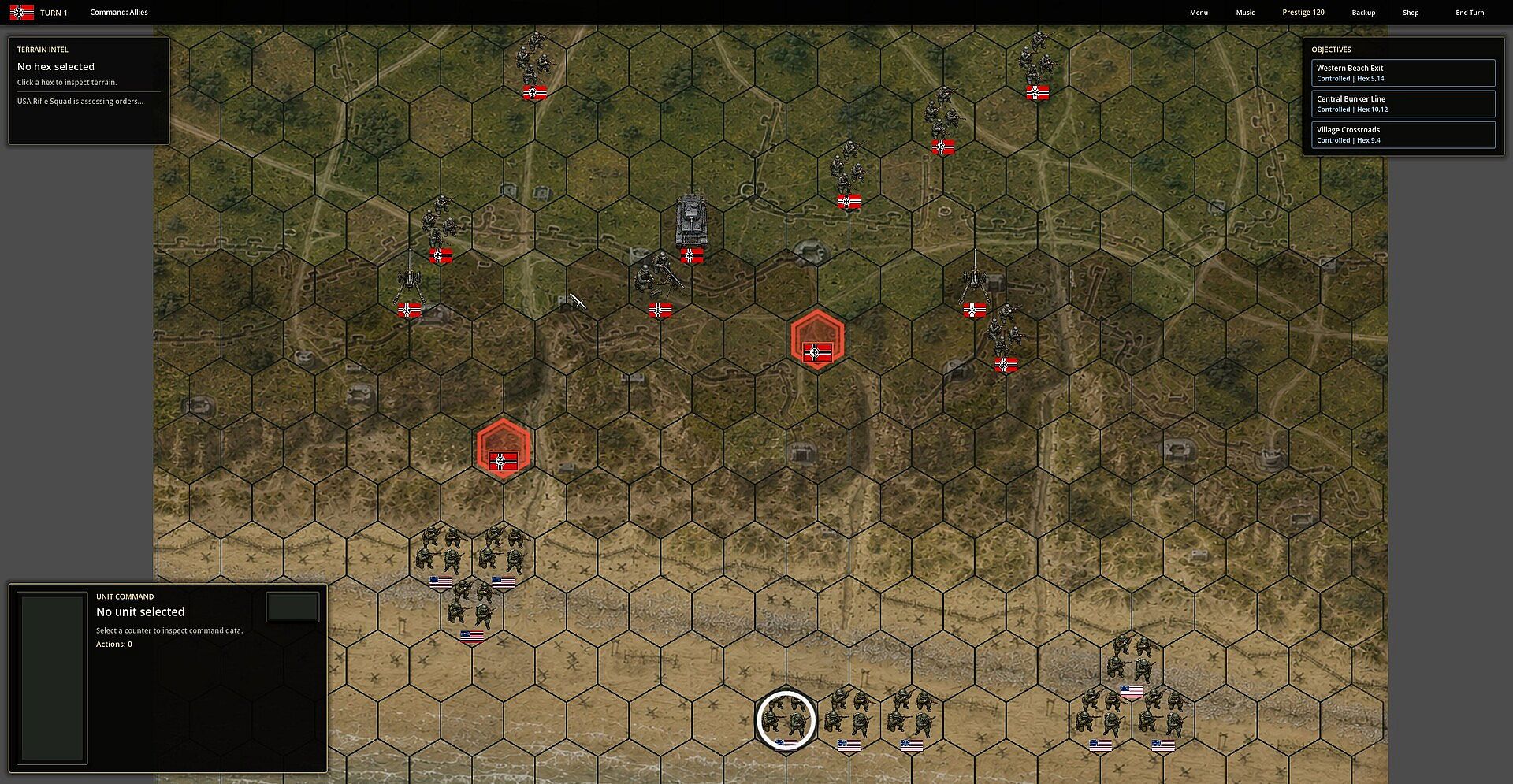
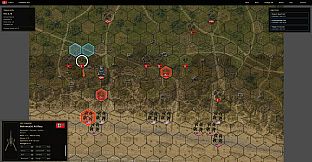
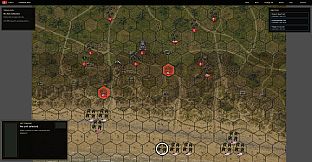
Grenadier Command ist ein rundenbasiertes Taktikspiel auf Hex-Feldern, das im Zweiten Weltkrieg spielt. Mit begrenzten Truppen kämpfen Spieler auf detaillierten Karten und setzen Deckung, Unterdrückungsfeuer sowie koordiniertes Vorgehen ein, um ihre Ziele zu erreichen - statt auf zahlenmäßige Überlegenheit zu setzen.
Gameplay
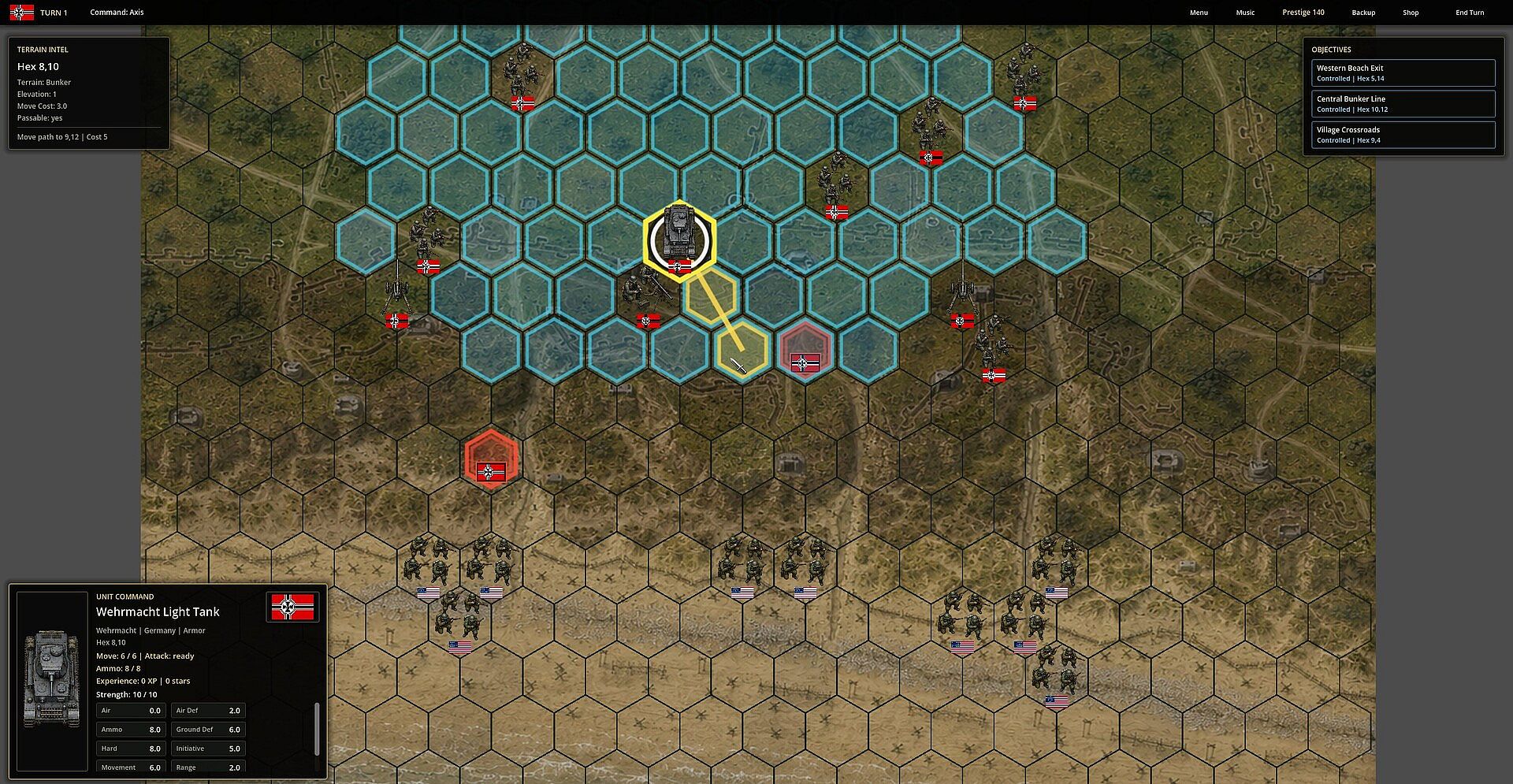
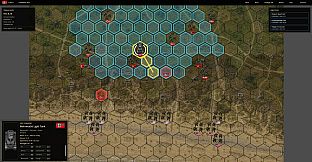
Im Mittelpunkt steht die Planung von Befehlen für Infanteriegruppen, MG-Trupps, leichte Panzer, Artillerie und Unterstützungseinheiten. Bewegung, Schießen und Unterdrückung wirken mit dem Gelände zusammen - ob Strände, Wälder, Hügel, Gräben, Bunker oder zerstörte Straßen. Reichweite und Sichtlinien spielen eine entscheidende Rolle, weshalb die Positionierung hinter natürlicher Deckung oder in befestigten Linien oft über Erfolg oder Misserfolg entscheidet.
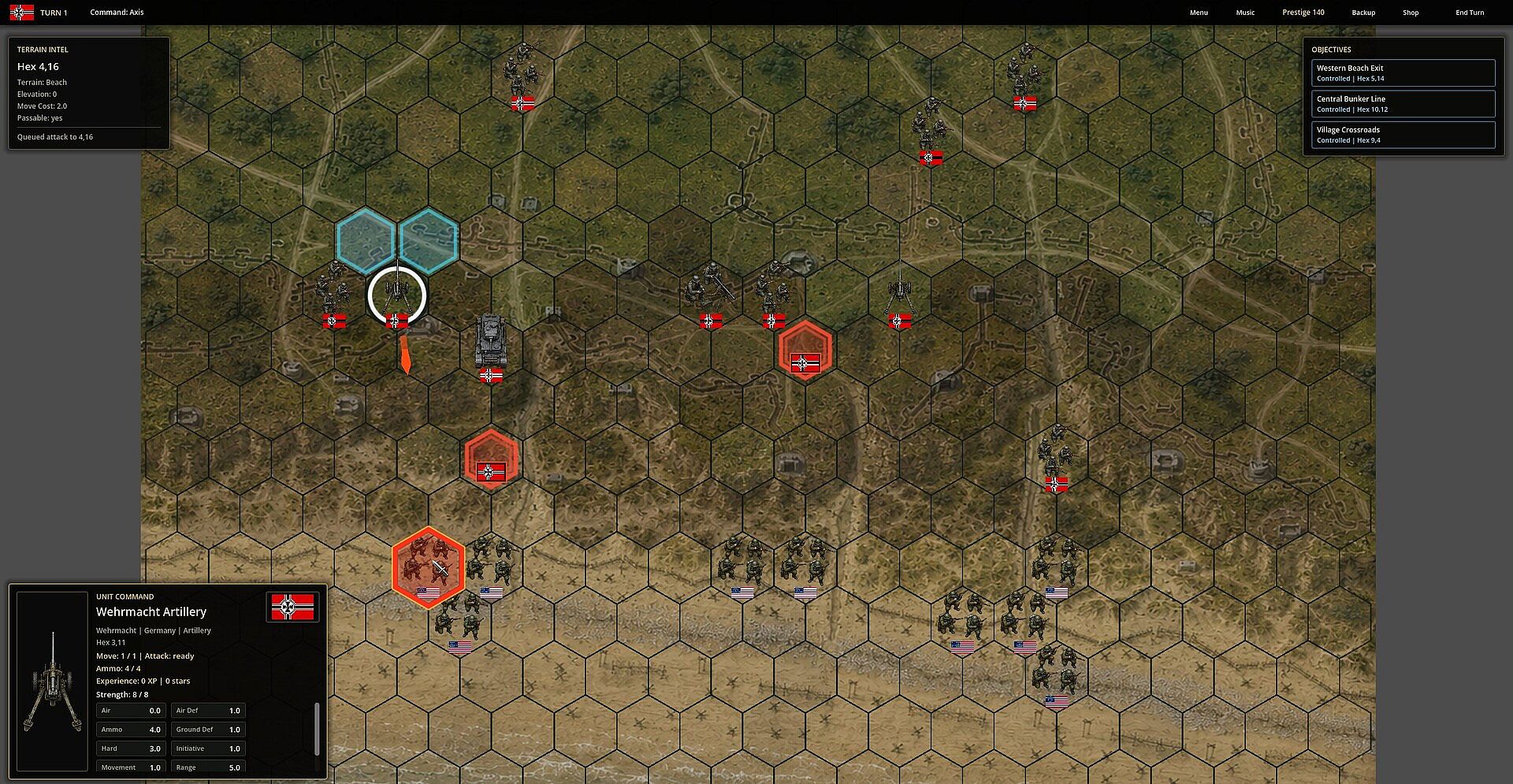
Unterdrückungsfeuer schwächt gegnerische Stellungen vor dem Sturmangriff, während Unterstützungsbefehle Luftschläge oder zusätzliches Feuer ermöglichen, wenn direkte Angriffe ins Stocken geraten. Die Ziele bestehen darin, bestimmte Punkte wie Strandzugänge, Brücken, Straßenkreuzungen oder Bunkeranlagen zu sichern, nicht den Gegner vollständig zu vernichten. Fehler bei der Truppenführung oder der Geländewahl können einen Vormarsch schnell stoppen, da die Kräfte begrenzt sind und jede Aktion Gewicht hat.
Die Szenarien basieren auf historischen Situationen wie amphibischen Landungen, Häuserkämpfen, Brückenverteidigungen, Panzerdurchbrüchen und Waldgefechten. Das Gelände beeinflusst das Verhalten der Einheiten und belohnt den gezielten Einsatz von Höhen, Deckung und Engpässen statt roher Gewalt.
Spielmodi
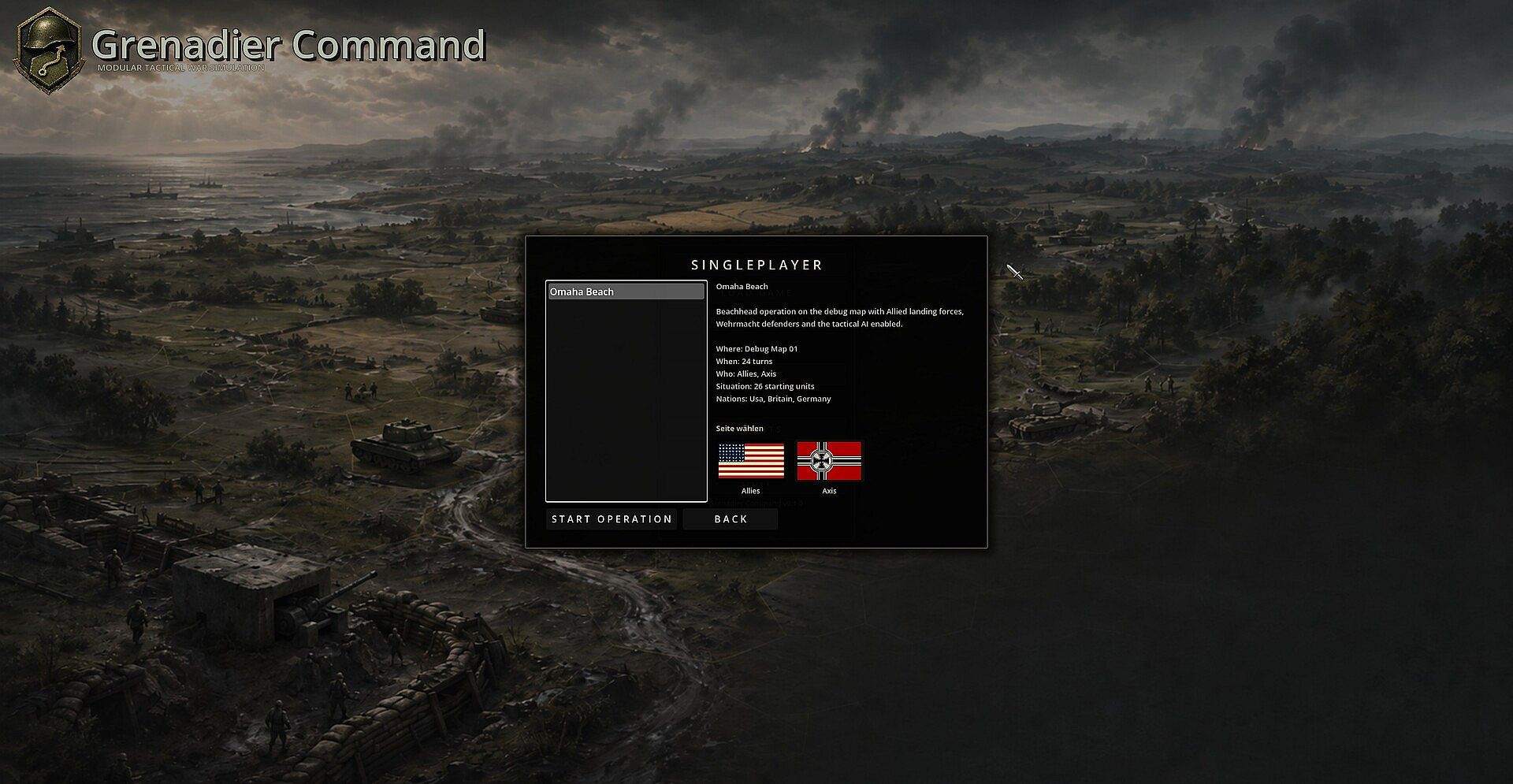
Spieler wählen aus verschiedenen Szenarien mit jeweils eigenen taktischen Herausforderungen. Manche stellen den Spieler als Angreifer vor die Aufgabe, offenes Gelände oder befestigte Linien zu überwinden und Schlüsselziele zu erreichen. In anderen übernimmt man die Verteidigung und muss Stellungen für eine bestimmte Zeit oder bis zum Eintreffen von Verstärkung halten.
Jedes Szenario kombiniert unterschiedliche Geländearten und Einheitentypen. Strandkarten legen den Fokus auf die ersten Landungen und die Unterdrückung von Küstenverteidigungen, während Stadt- und Dorfkarten den Nahkampf und die Kontrolle von Kreuzungen in den Vordergrund stellen. Brücken- und Straßenkreuzungskarten prüfen die Fähigkeit, wichtige Übergänge unter Beschuss zu sichern oder zu erobern. Es gibt keine Kampagne oder dauerhafte Fortschrittsmechanik - jedes Szenario wird für sich gespielt.
Einheitentypen und taktische Optionen
Infanterie bildet das Rückgrat der meisten Truppen, unterstützt von MG-Trupps für anhaltendes Feuer und leichten Panzern für mobile Feuerkraft. Artillerie liefert indirekte Unterstützung, weitere Einheiten übernehmen Spezialaufgaben. Unterstützungsbefehle erweitern die Möglichkeiten in schwierigen Situationen durch externe Hilfe wie Luftschläge.
Das Gleichgewicht zwischen Bewegung und Feuer ist entscheidend. Einheiten, die ohne vorherige Unterdrückung vorrücken, erleiden oft schwere Verluste, während gut abgestimmtes Feuer und geschickte Nutzung von Deckung auch kleineren Gruppen ermöglichen, stärkere Stellungen zu überwinden. Geländemodifikatoren beeinflussen Treffgenauigkeit, Schutz und Bewegungskosten und zwingen zu ständiger Neubewertung der Positionen.
Lohnt sich das Spiel?
Grenadier Command richtet sich an Spieler, die bewusste, entscheidungsstarke Runden-Kämpfe gegenüber schnellem Action-Spiel bevorzugen. Der Fokus auf Geländenutzung, Unterdrückung und objektorientiertes Spiel spricht Fans klassischer Hex-Wargames an, die Planung über zahlenmäßige Überlegenheit stellen.
Das Spiel befindet sich noch in der Entwicklung und soll im August 2026 in den Early Access starten. Die Kernsysteme für Einheitenbewegung, Geländeinteraktion und Szenarioziele gelten als funktionsfähig, während weitere Inhalte wie zusätzliche Karten, mehr Einheitenvielfalt und KI-Verbesserungen für spätere Updates vorgesehen sind. Es gibt noch keine Spielerbewertungen, da der Titel noch nicht veröffentlicht wurde.
Wer sich für taktische Einzelspieler-Herausforderungen auf Schauplätzen des Zweiten Weltkriegs interessiert, wird die beschriebenen Mechaniken als passend empfinden. Spieler, die nach Mehrspielermodi, groß angelegten Kampagnen oder einem sofortigen Release suchen, sollten die weitere Entwicklung abwarten, bevor sie zuschlagen.