


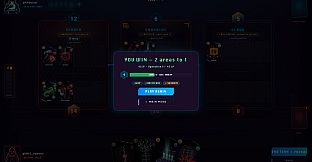
Hackagon: Cyber Card Battler ist ein kostenloses Strategiespiel für den PC, in dem sich zwei Spieler gleichzeitig in einem Cyber-Sicherheits-Szenario gegenüberstehen. Wer als Red Team angreift oder als Blue Team verteidigt, baut sich ein Deck auf, bei dem Vorhersage und Timing wichtiger sind als abwechselnde Züge.
Gameplay
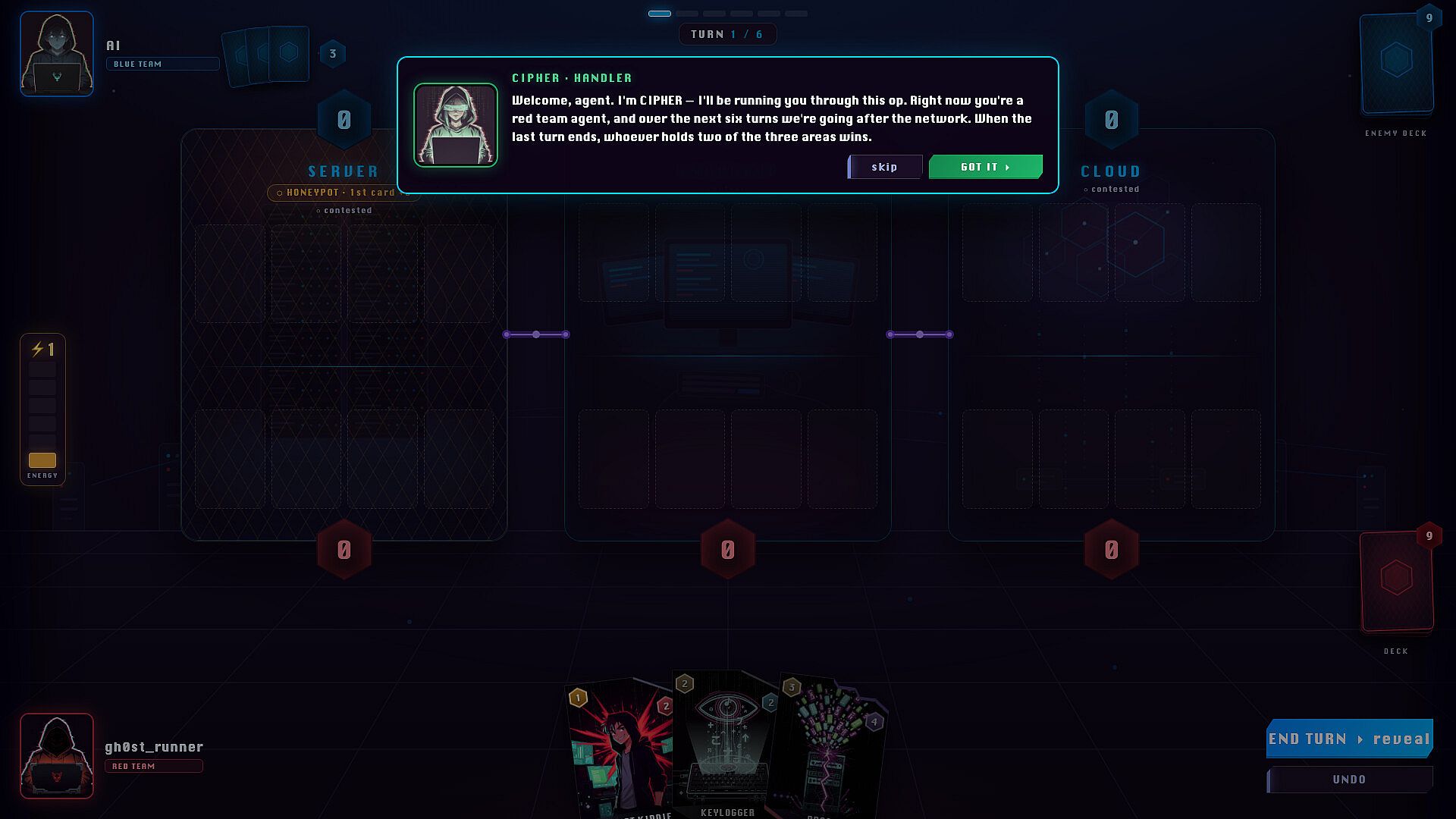
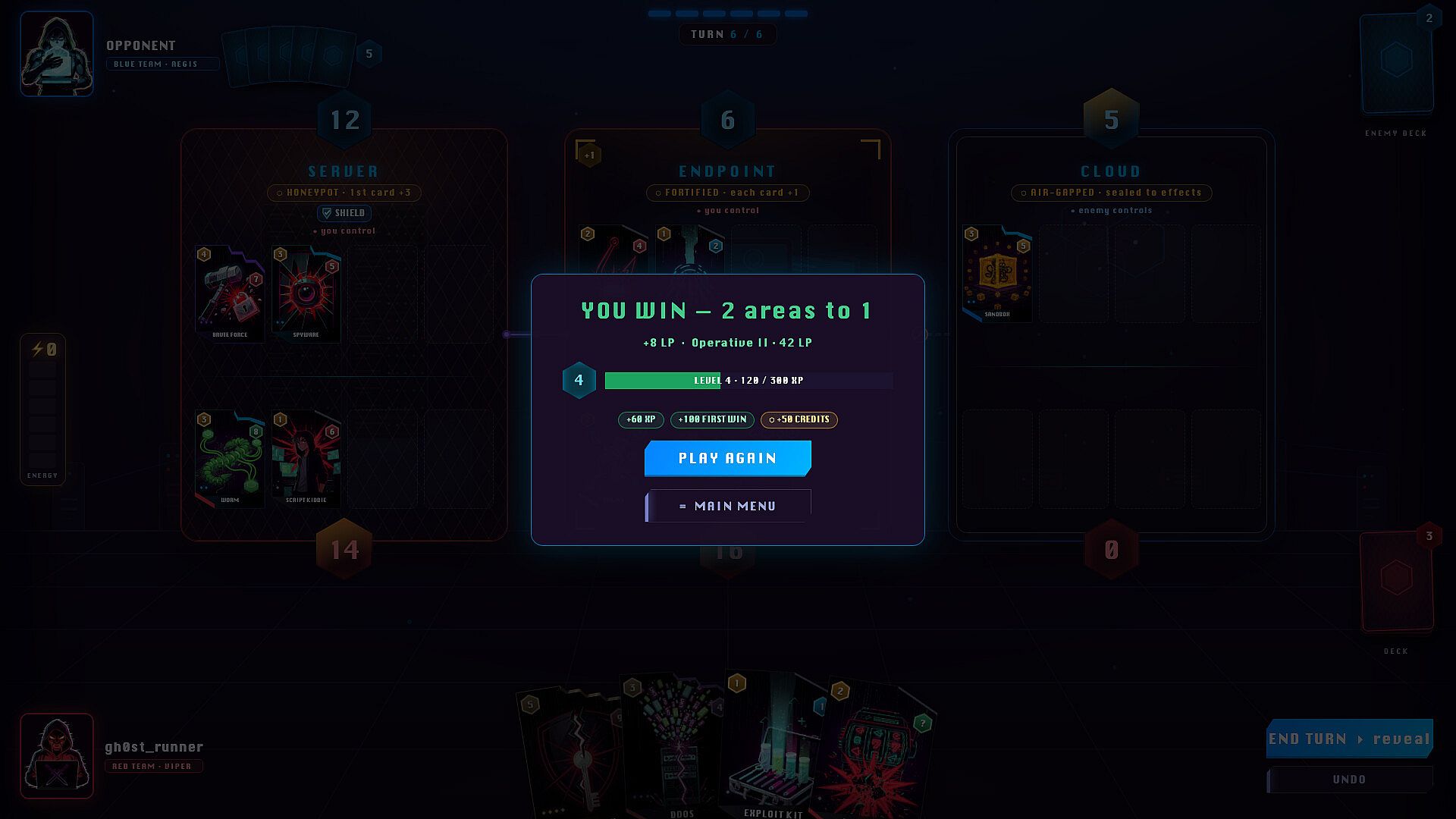
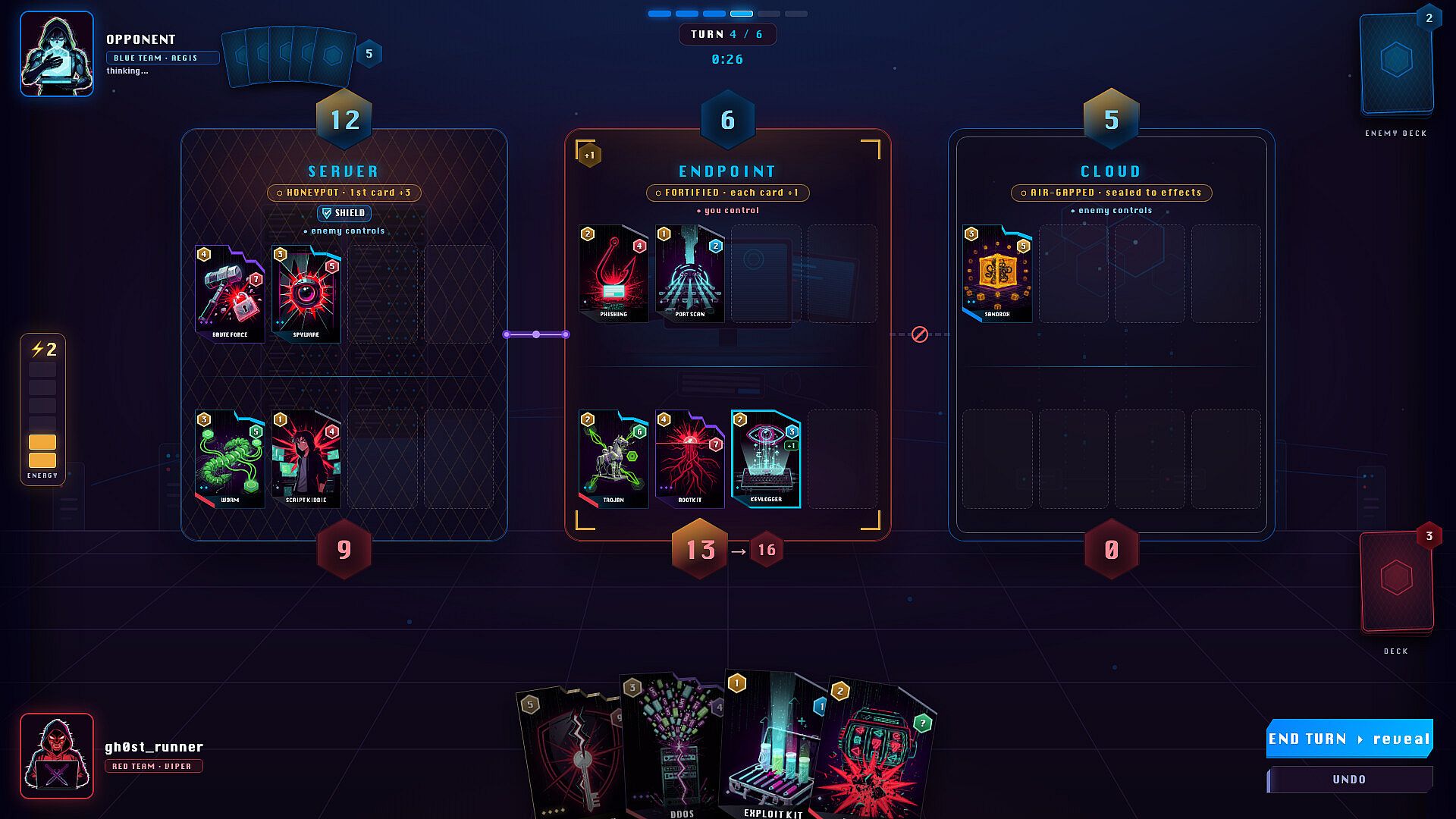
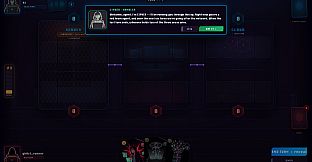
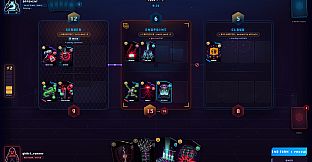
Jede Partie startet damit, dass beide Spieler Energie erhalten, die mit jedem Zug wächst. Mit dieser Ressource legen sie Karten verdeckt auf verschiedene Bereiche des Netzwerk-Boards. Am Ende des Zuges werden alle Karten gleichzeitig aufgedeckt und ihre Effekte treten auf einmal in Kraft. Kein Spieler profitiert davon, zuerst zu handeln oder auf den Gegner zu reagieren. Wer am Ende die Mehrheit der Bereiche kontrolliert, gewinnt.
Gebietsmodifikatoren und wechselnde Board-Layouts zwingen die Spieler, ihre Strategie ständig anzupassen. Ein starker Zug in einer Zone kann das Gleichgewicht kippen, während eine schwache Position dem Gegner Raum lässt, die Kontrolle zu übernehmen. Im Kern belohnt das Spiel, wer die Energieausgaben und Kartenplatzierungen des anderen lesen kann, statt sich allein auf rohe Stärke zu verlassen.
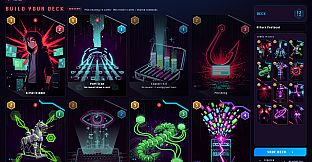
Die Karten basieren auf realen Konzepten der Cyber-Sicherheit wie Exploits, Phishing-Angriffen, Firewalls und Honeypots. Diese interagieren so miteinander, dass sorgfältige Deck-Synergien und das richtige Timing der Aufdeckungen belohnt werden. Da es keine Reaktionsfenster gibt, bleibt jede Entscheidung von der ersten Platzierung an hoch riskant.
Spielmodi
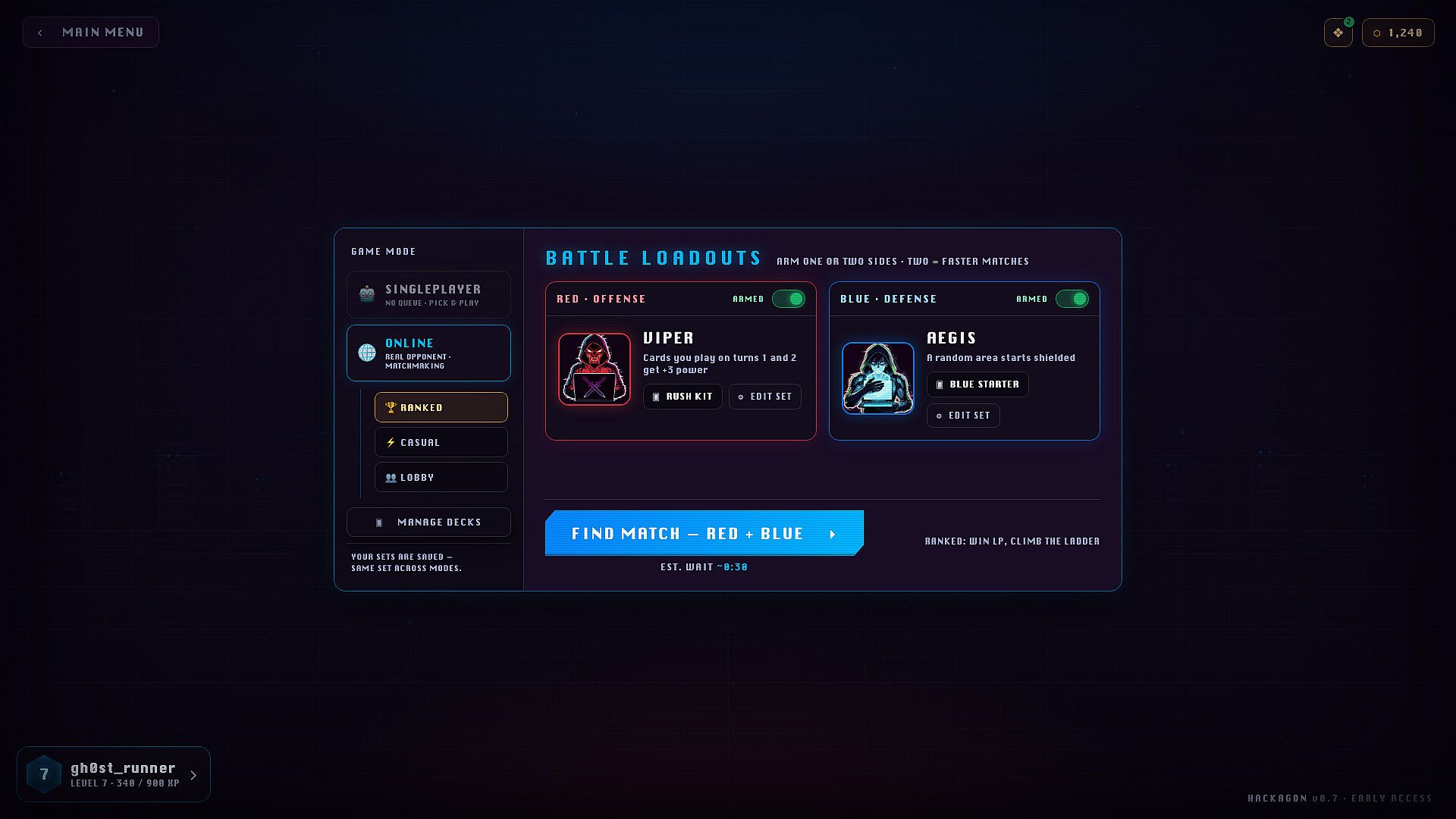
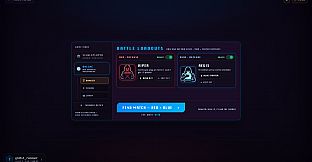
Über Quick Matchmaking finden Spieler schnell 1v1-Partien ohne Vorbereitung. Private Lobbys ermöglichen es Freunden, über einen Einladungslink beizutreten und kontrollierte Runden zu spielen. Eine Solo-Ladder bietet die Möglichkeit, gegen KI-Gegner zu trainieren, wenn keine echten Gegner verfügbar sind oder gezieltes Üben im Vordergrund steht.
Die Matches sind bewusst kurz gehalten, damit sie in kurze Spielzeiten passen und dennoch vollständige strategische Begegnungen bieten. Die drei Optionen decken kompetitives Ranked-Play, lockere Freundschaftsspiele und Offline-Training gegen computergesteuerte Angreifer oder Verteidiger ab.
Deckaufbau und Fortschritt
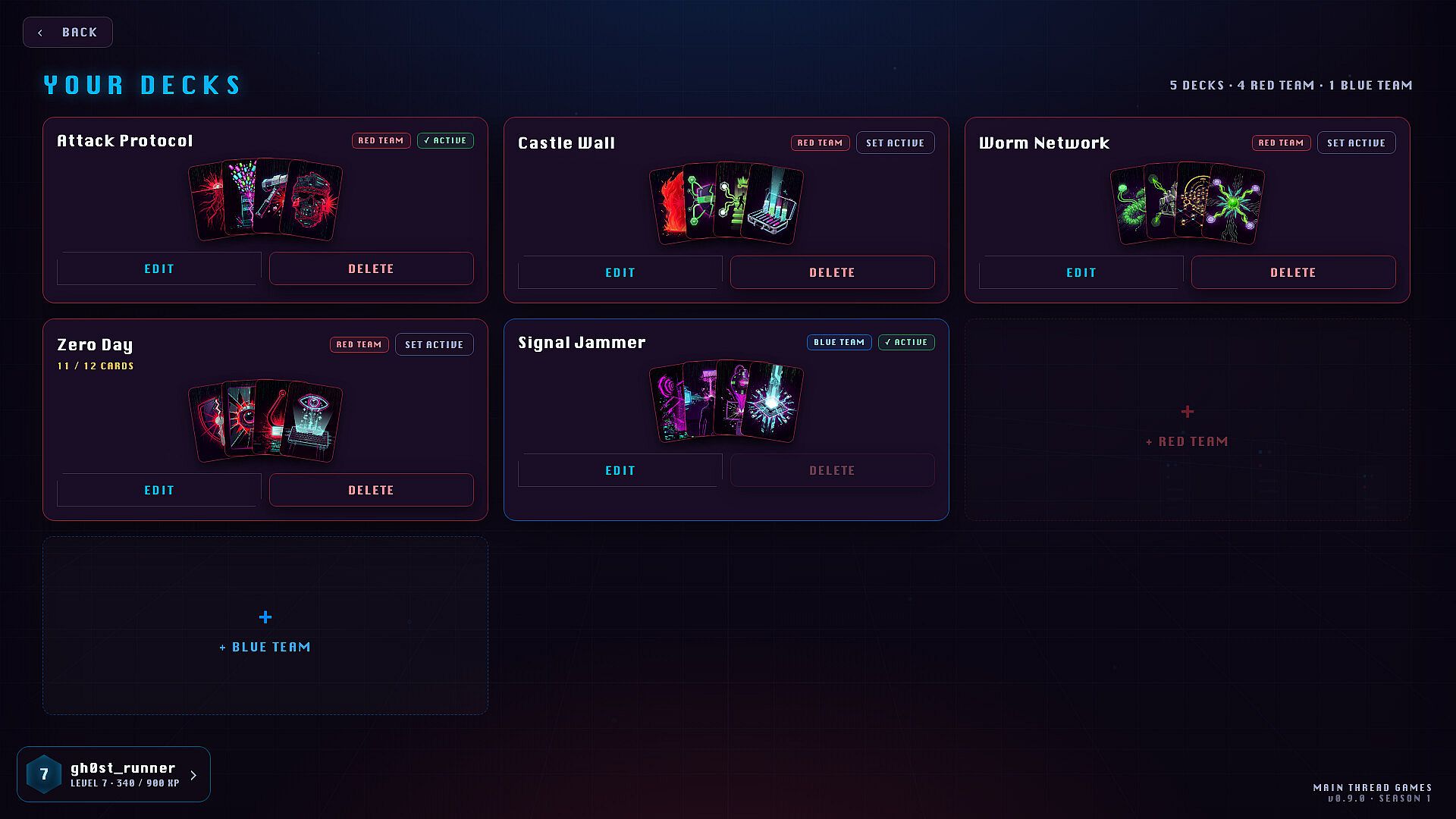
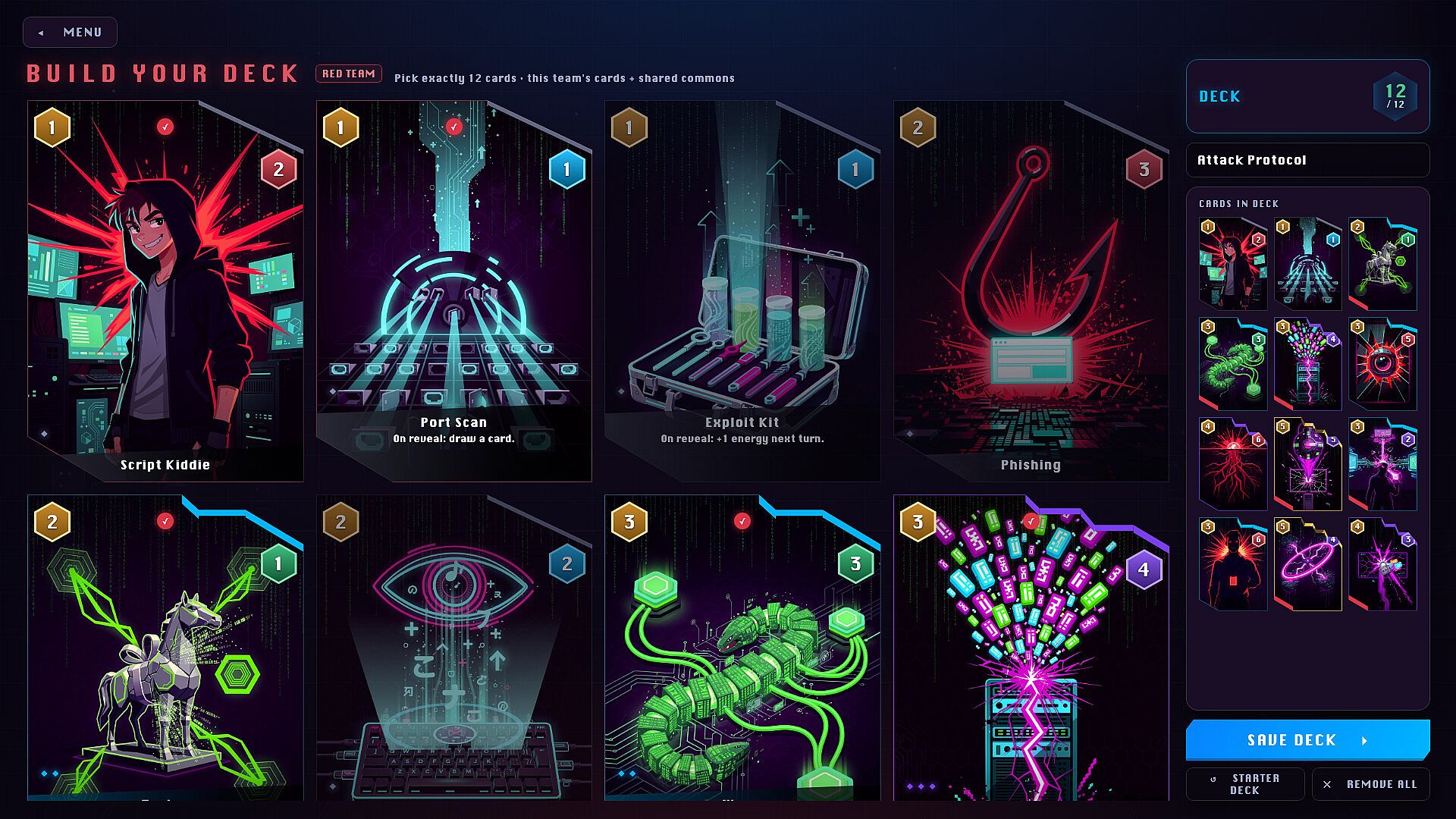
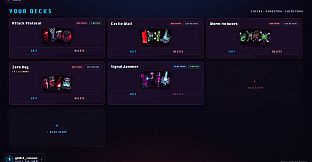
Jedes Deck besteht aus genau zwölf Karten und einem Agenten. Der Agent verleiht eine passive Fähigkeit, die die gesamte Deckstrategie beeinflusst und Spieler dazu anregt, um seine Stärken herum zu bauen. Neue Karten und Agenten werden durch normales Spielen freigeschaltet, während Daily Quests zusätzliche Anreize bieten, zurückzukehren und neue Kombinationen auszuprobieren.
Der Fortschritt hängt allein von der Teilnahme an Matches ab, nicht von Käufen. So können Spieler im Laufe der Zeit verschiedene Agenten und Kartensets testen, ohne weitere Hürden als die investierte Spielzeit.
Lohnt sich Hackagon?
Hackagon richtet sich an Spieler, die reine strategische Kartenduell mögen, bei denen simultane Aufdeckungen Vorteile durch Zugreihenfolge ausschließen und stattdessen Antizipation in den Mittelpunkt stellen. Das Free-to-Play-Modell und die kurzen Matches machen es ideal für schnelle Runden oder längere Trainingseinheiten gegen KI.
Wer Spiele schätzt, die Mustererkennung und anpassungsfähige Planung belohnen, wird die asymmetrische Red-versus-Blue-Dynamik und die Area-Control-Ziele spannend finden. Der Indie-Early-Access-Status bedeutet, dass das Erlebnis auf den Kern des 1v1-Loops konzentriert bleibt, ohne zusätzliche Schichten - passend für Fans fokussierter Strategiespiele statt umfangreicher Live-Service-Features.
- Simultane Kartenaufdeckungen verhindern Reaktionsmöglichkeiten
- Energiebasierte Platzierung über Netzwerkbereiche
- Zwölf-Karten-Decks, geformt durch Agenten-Passive
- Matchmaking, private Lobbys und KI-Ladder verfügbar