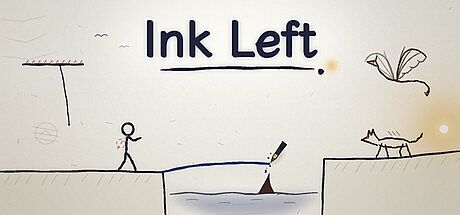


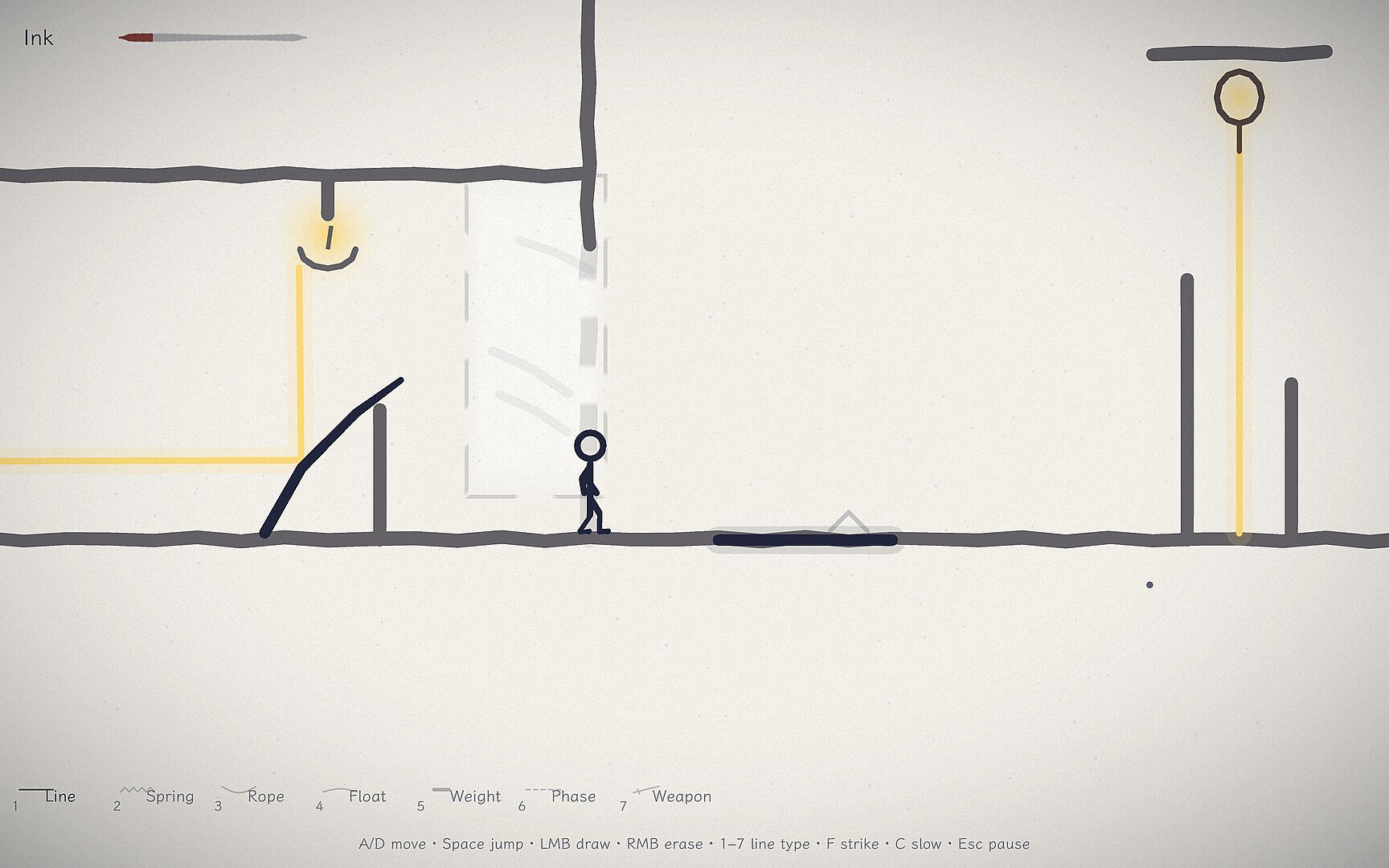
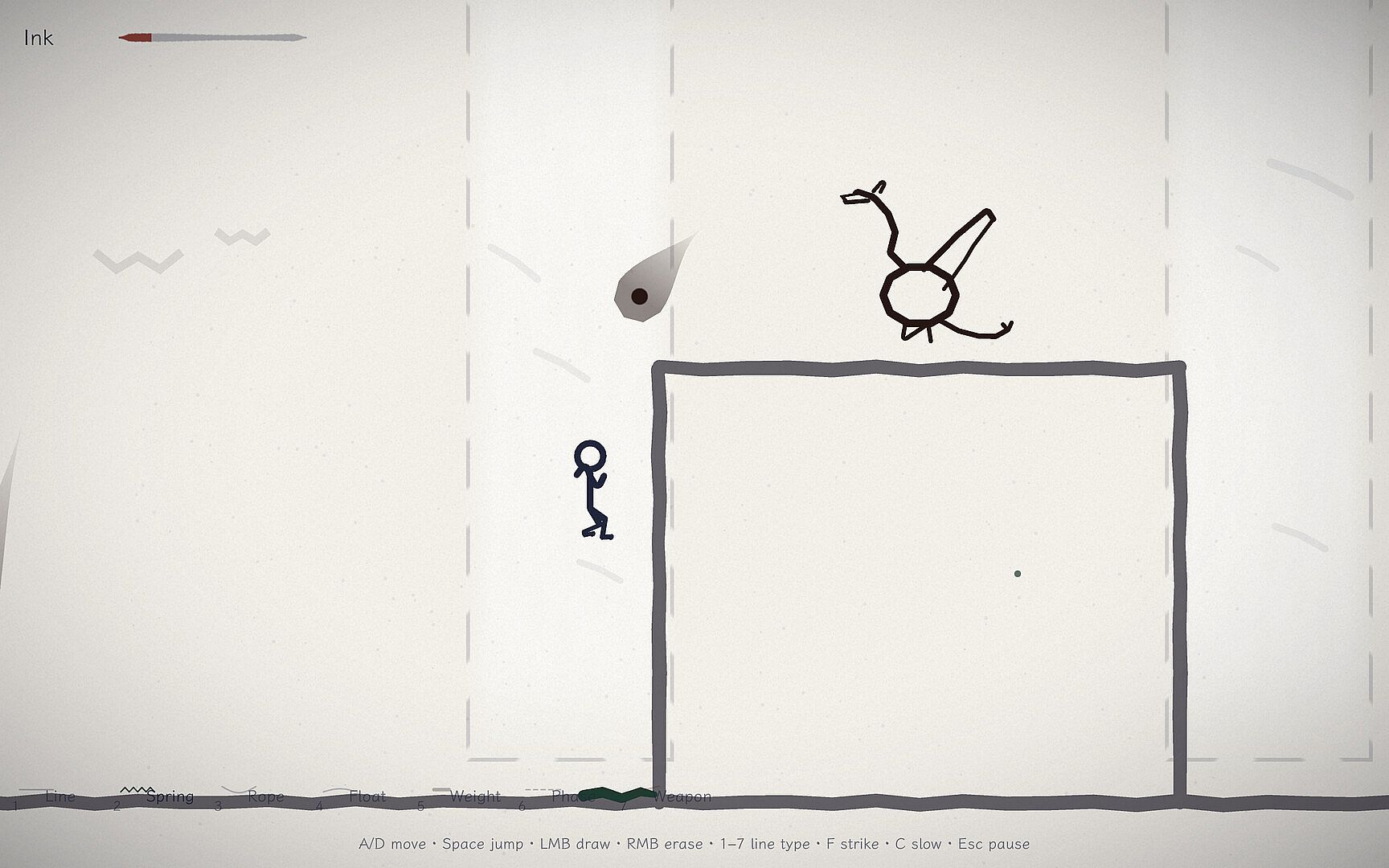
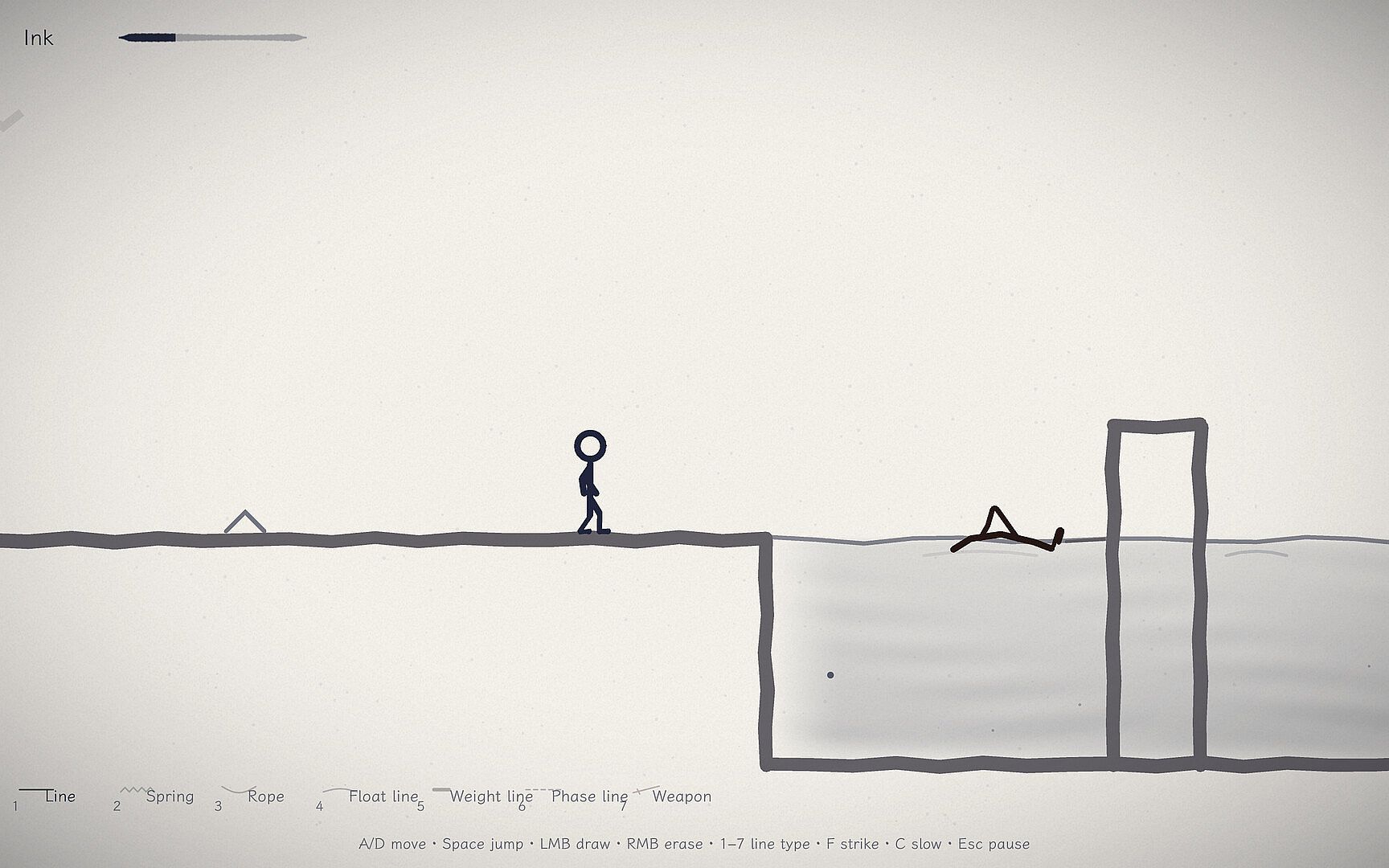
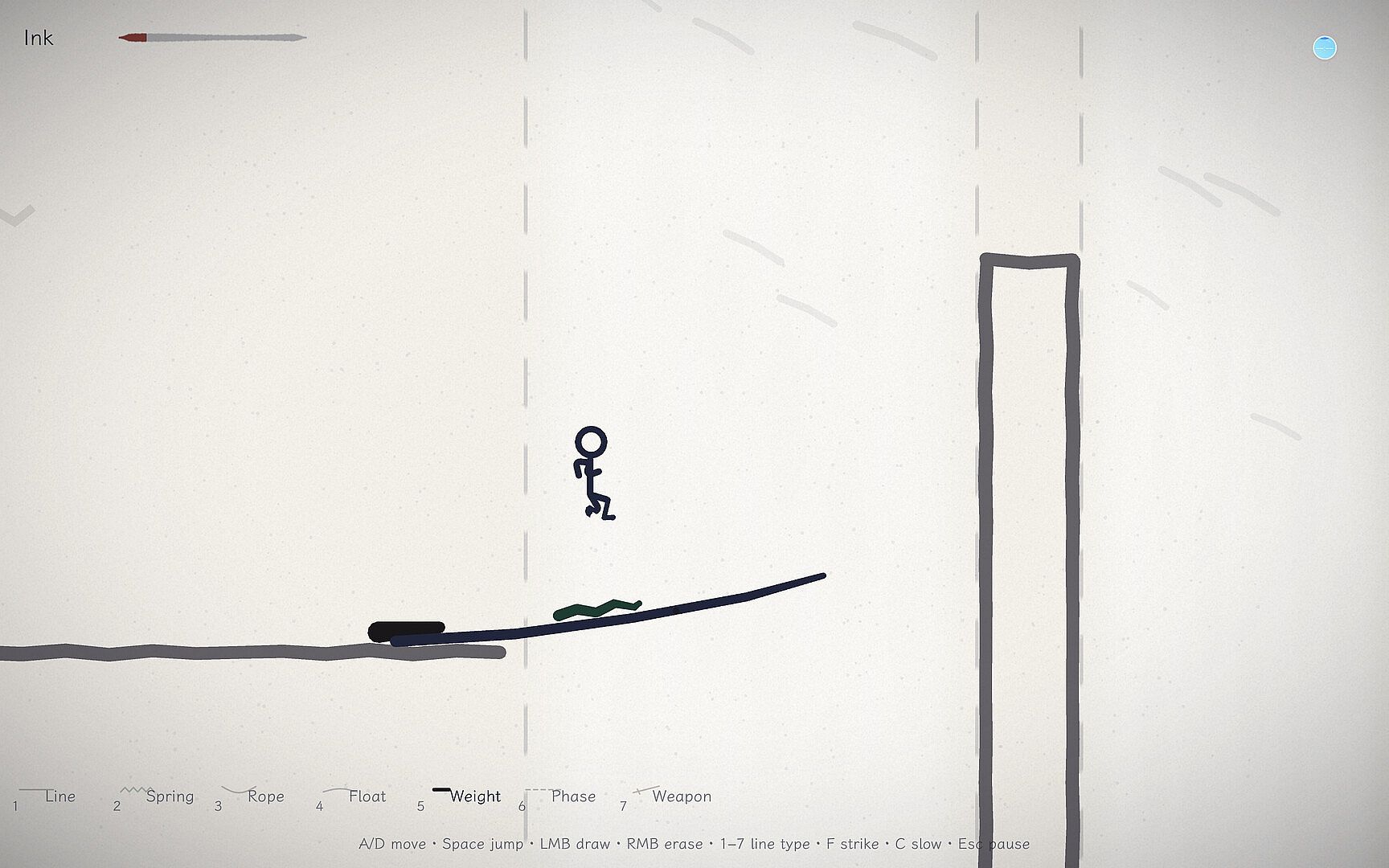
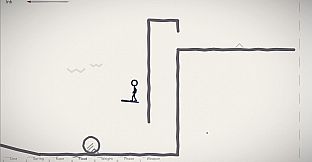
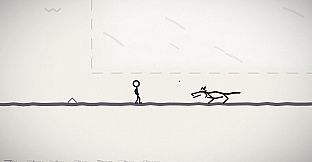
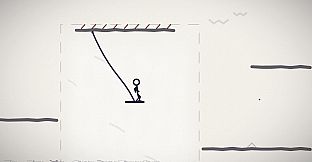
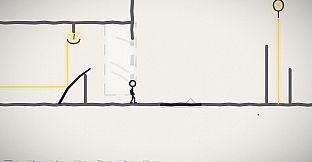
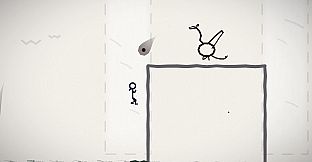
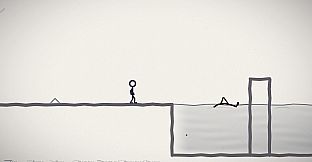
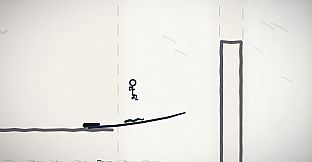
Ink Left is a minimalist black-and-white physics puzzle game in the indie casual adventure genre. Players control an unfinished stick figure on a sketchbook page, using a mouse to draw lines that interact with real-world physics to navigate gaps, avoid threats, and reach a distant light. The experience emphasizes careful line placement, ink conservation, and creative problem solving across a series of hand-crafted pages.
Gameplay
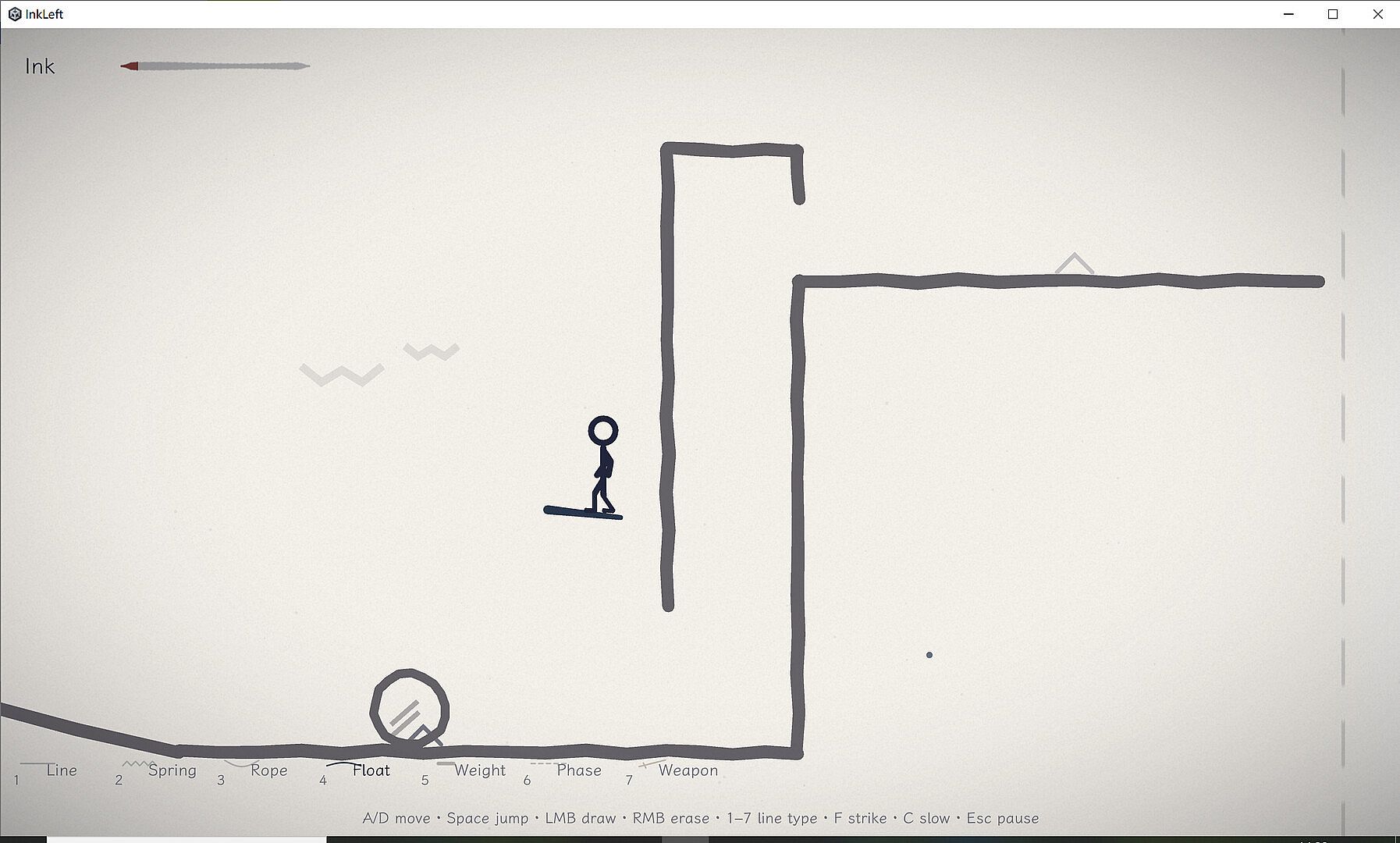
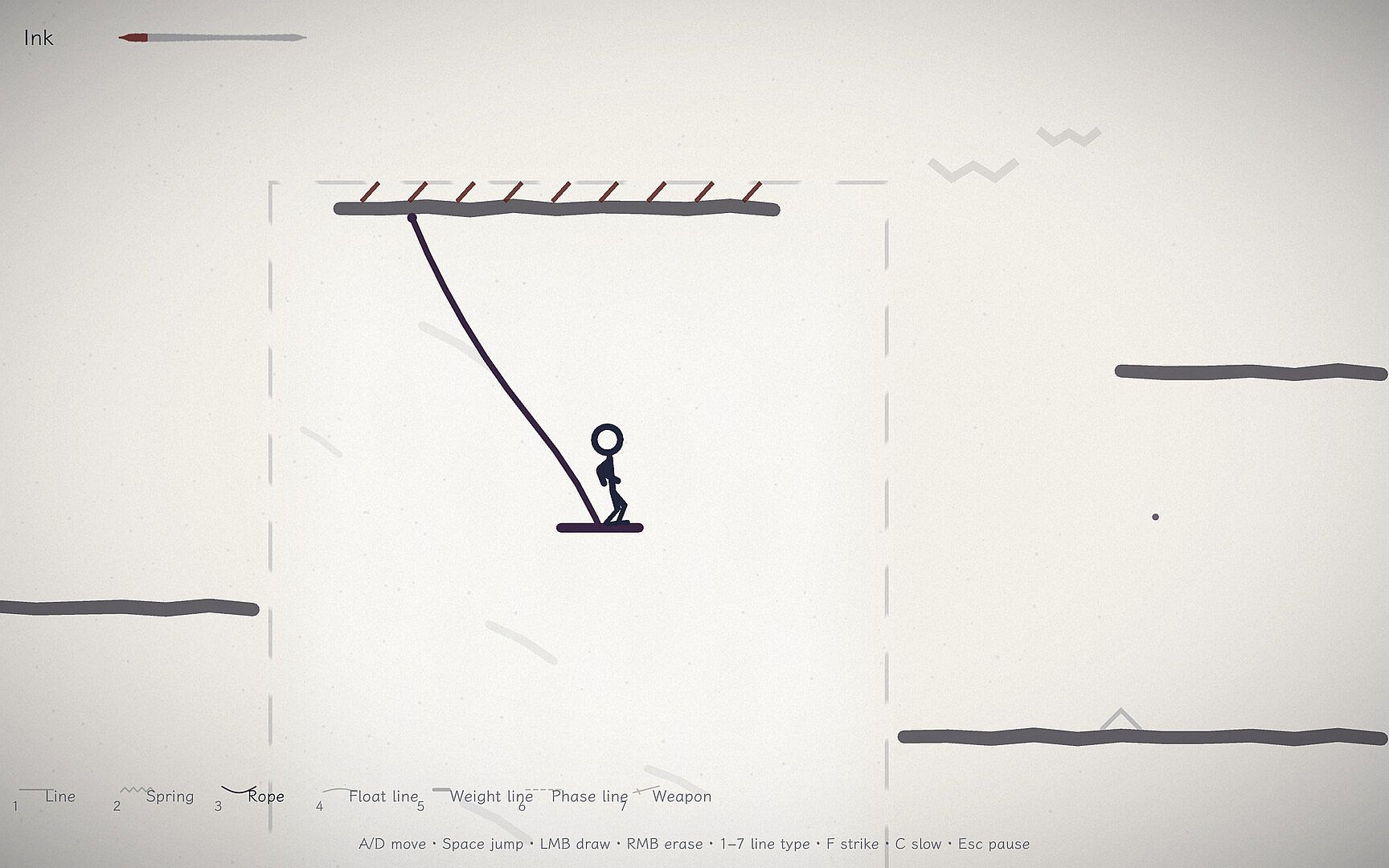
The core loop centers on drawing seven distinct line types, each with unique physical properties that players must combine to solve environmental challenges. A standard line serves as a bridge or lever when anchored at one or both ends. Springs provide increasing bounce height with each impact. Ropes allow swinging and timed releases. Floats rise until they contact a surface, creating temporary platforms on solid paper but failing on faded sections. Weights add mass for pinning mechanisms or launching the player. Phase lines permit the player to pass upward through them while providing downward support, and they remain invisible to certain enemies. Weapons require sustained drawing to maintain a blade for combat.
Ink functions as both resource and medium. Players recover ink by erasing drawn lines, though permanent loss occurs when leaving lines behind, encountering thorns, facing beasts, or entering water. Wet ink pools can be collected, while printed grey ink cannot. The player can also sacrifice limbs by erasing parts of their own figure to reclaim ink, trading mobility or reach for additional drawing capacity. Checkpoints appear as dog-eared page corners, and progress saves automatically upon reaching one, sacrificing a limb, or defeating a beast.
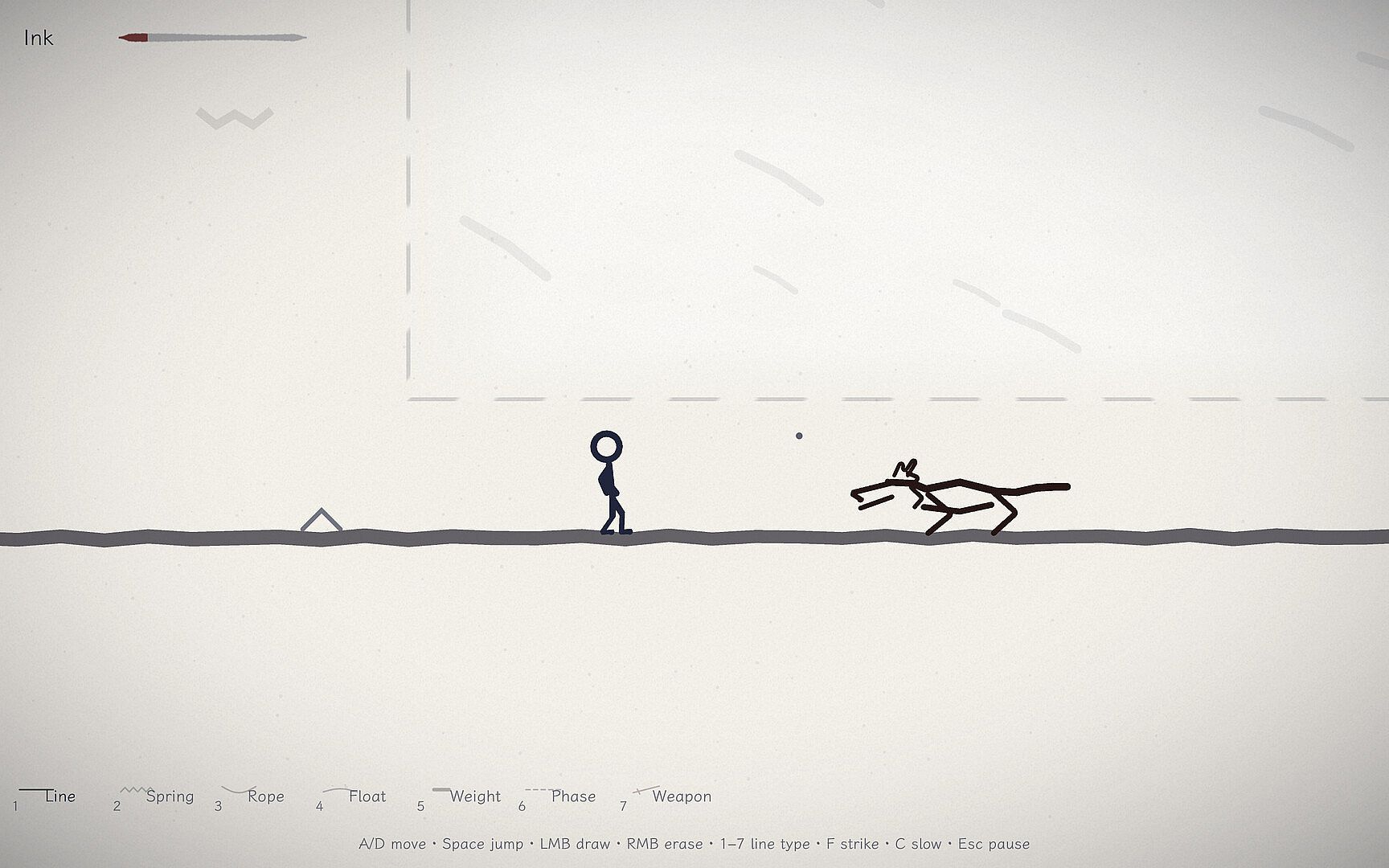
Three types of ink beasts populate later pages. Ink wolves charge and destroy drawn lines in their territory. Ink dragons fire projectiles that burn through obstacles and can harm other beasts. Ink sharks consume bridges over water. Each can be defeated, and dragon fire offers tactical opportunities against wolves. Sound and visuals remain strictly black and white, with procedural generation handling line textures, particle effects, and a pentatonic glockenspiel soundtrack that shifts in pitch and density according to page mood and stroke speed.
Game Modes
Ink Left offers a single-player campaign structured around four sketchbooks containing a total of twenty-two pages. The first sketchbook introduces each line type individually through focused tutorials on bouncing, swinging, lever mechanics, rising and sinking platforms, and phase interactions. Subsequent sketchbooks increase complexity by introducing beasts one at a time, then in combinations, while restricting available drawing surfaces on faded paper.
Later sections emphasize environmental themes such as the Faded Realm and Beast Corridor, where fewer surfaces accept new lines. The final sketchbook requires bending light with mirrors and reaching elevated sky paths. Each page presents a unique core idea that discourages repeated use of the same solution, with no direct hints beyond basic control reminders. A mouse is required for drawing, while gamepad support covers movement and menus.
Progression and Challenges
Players advance page by page, learning to layer line types for multi-step solutions. Early pages focus on basic traversal and timing. Mid-game pages introduce enemy interactions and ink scarcity. Final pages combine light manipulation, vertical exploration, and self-modification. The design ensures that terrain changes and enemy behaviors close off single-tool approaches, encouraging experimentation with different line combinations on each attempt.
Ink management adds tension without punishing failure. Erasing returns resources immediately, allowing free iteration until a line is left behind or consumed by the environment. Self-erasure provides an emergency option when ink runs low, though reduced reach or jump height demands adjusted strategies on subsequent pages.
Is It Worth Playing?
Ink Left targets players who enjoy deliberate, physics-driven puzzle solving in a quiet, visually restrained setting. The game rewards observation of line behavior and creative adaptation rather than speed or reflexes. Its single-player structure and checkpoint system support flexible session lengths. With a planned release in March 2027 and no reviews available yet, prospective players should monitor developer updates for confirmation of the final feature set and any adjustments to the drawing mechanics or page count. Those drawn to minimalist indie puzzle experiences with strong thematic cohesion around an unfinished sketchbook will find the described systems align closely with that preference.