





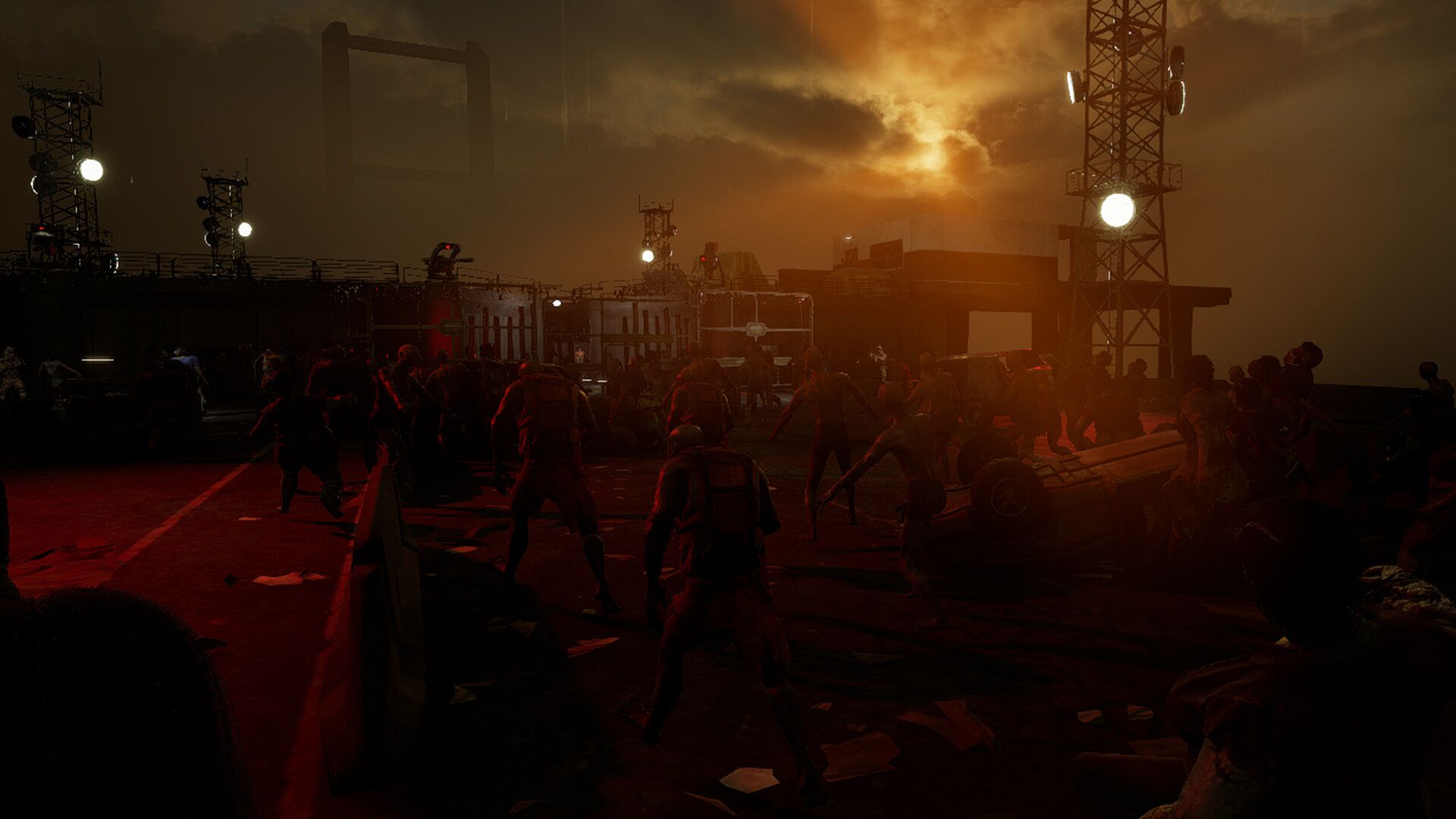





Not Alive Enough is an action simulation game set at a border checkpoint during a zombie outbreak. Players examine incoming refugees, identify signs of infection, and make split-second decisions on who passes through and who is turned away. The core experience blends careful observation with high-stakes choices and sudden combat encounters when infected individuals transform.
Gameplay
The central loop revolves around processing a steady flow of survivors at the checkpoint. Each arrival requires close inspection for visible symptoms or subtle behavioral cues that might indicate infection. Obvious signs stand out immediately, while others demand sustained attention to avoid missing critical details. Decisions carry permanent weight because allowing an infected person through risks spreading the outbreak, yet denying passage to someone who is not infected carries its own moral and practical cost.
Inspection gives way to direct action when an individual turns without warning. Players then switch to combat, selecting from available firearms to neutralize the threat before it overwhelms the position. Different weapons support varied approaches to close-range defense, encouraging players to experiment with loadouts that match their preferred style of engagement. Shifts grow progressively more demanding as new arrivals increase in number and the infected become more aggressive, requiring constant vigilance and quick reactions to maintain control.
Game Modes
The game operates entirely in a single-player format focused on successive checkpoint shifts. Each shift functions as a self-contained session that builds tension through escalating refugee volume and threat level. There are no separate competitive or cooperative modes; progression comes from surviving longer sequences of inspections and combat events while managing the consequences of earlier choices. The structure emphasizes endurance and consistency rather than branching campaigns or multiplayer lobbies.
Key Mechanics
Decision-making forms the backbone of the experience. Players must weigh visible evidence against the risk of false positives or negatives, knowing that every call affects the safety of the area beyond the checkpoint. Combat integrates directly into the simulation when inspections fail to catch an infection in time, turning routine screening into immediate survival challenges. Weapon selection adds a layer of customization, allowing different tools to handle turning threats with varying degrees of effectiveness at close range. The overall system rewards patience during inspection phases and decisive action during outbreaks.
Is It Worth Playing?
Not Alive Enough suits players who enjoy simulation games that incorporate tension and occasional action sequences. The emphasis on observation, judgment calls, and reactive combat creates a focused loop that rewards careful play without relying on large-scale exploration or complex progression trees. Because the title remains unreleased with no player reviews available, its appeal rests on the described mechanics of checkpoint management and sudden combat. Those drawn to single-player experiences centered on moral ambiguity and quick reflexes may find the premise engaging once it launches. Availability will be limited to PC through standard digital storefronts at the planned release window.