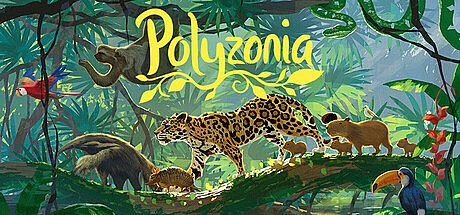


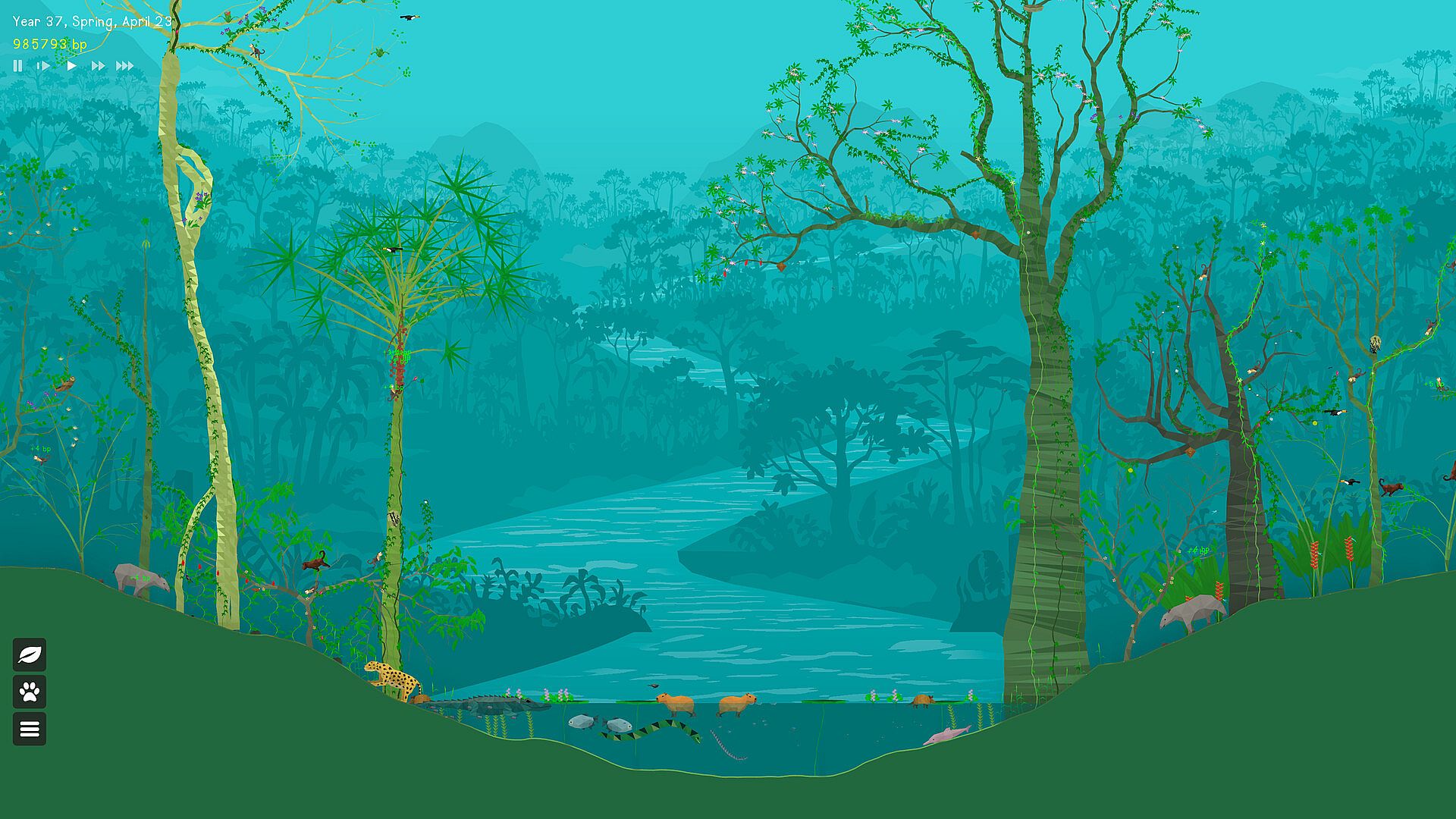
Polyzonia is a simulation game centered on building and sustaining an Amazon rainforest ecosystem from the ground up. Players begin with a simple patch of land and gradually introduce plants, animals, and ecological processes that interact in realistic ways. The experience emphasizes patient observation and direct intervention as the environment transforms over time.
Gameplay
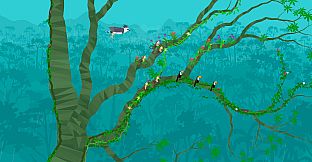
The core loop revolves around nurturing growth through targeted actions. Players plant vegetation, establish habitats, and introduce wildlife once conditions support them. Time advances naturally, allowing seedlings to mature into trees, flowers to open, and fruit to develop. Interactions extend beyond setup, as plants and animals respond to the world and to player input.
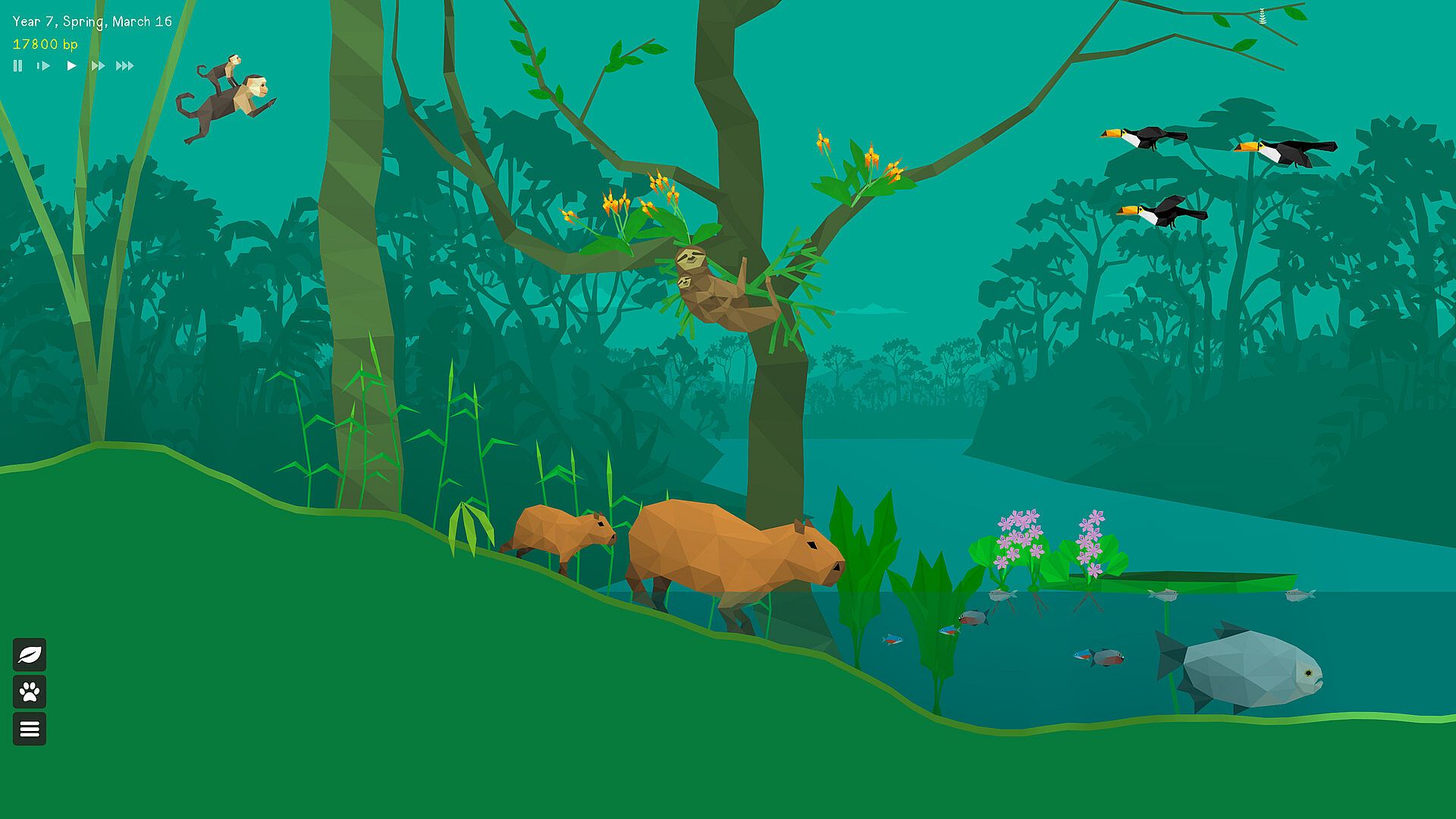
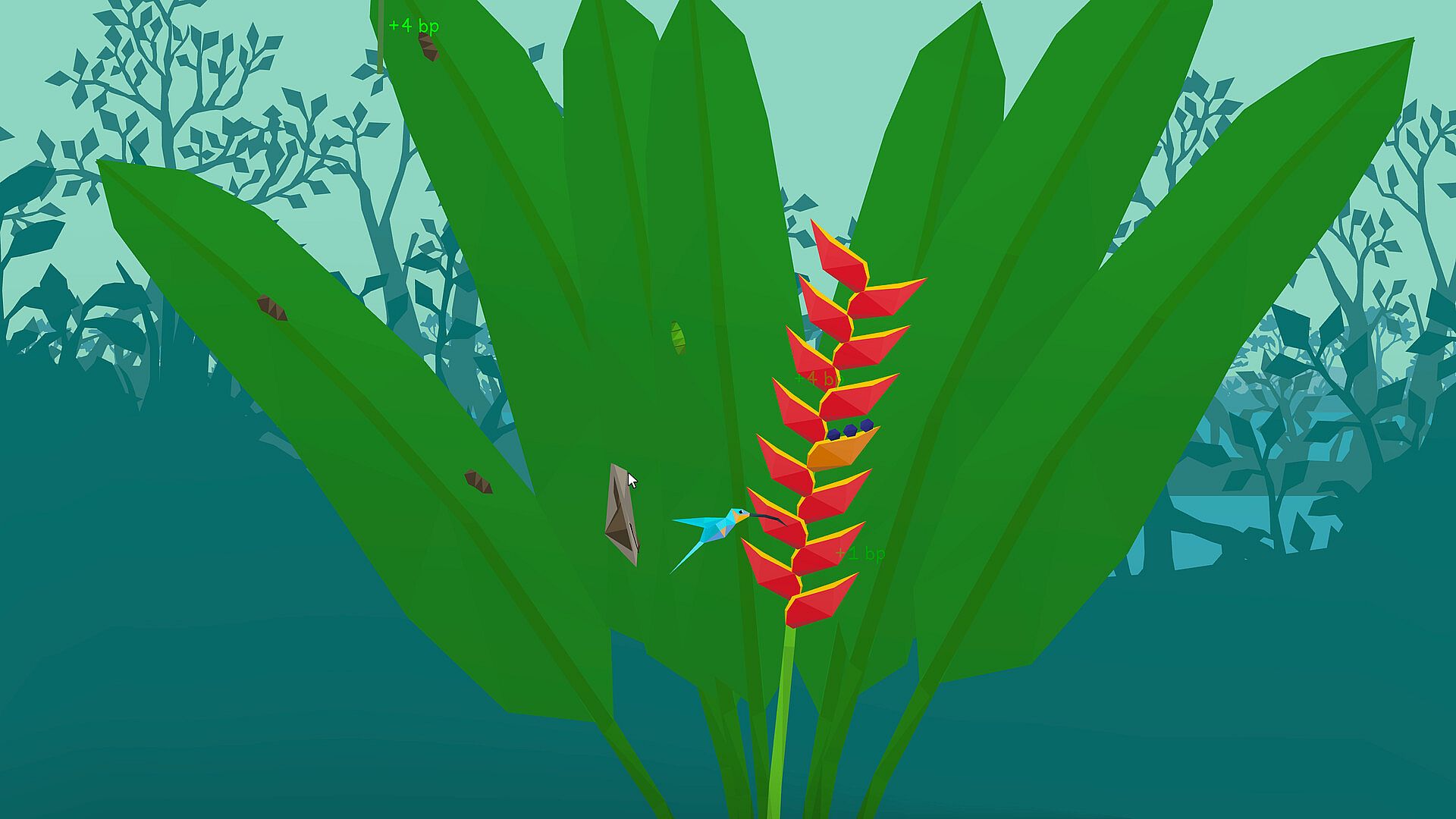
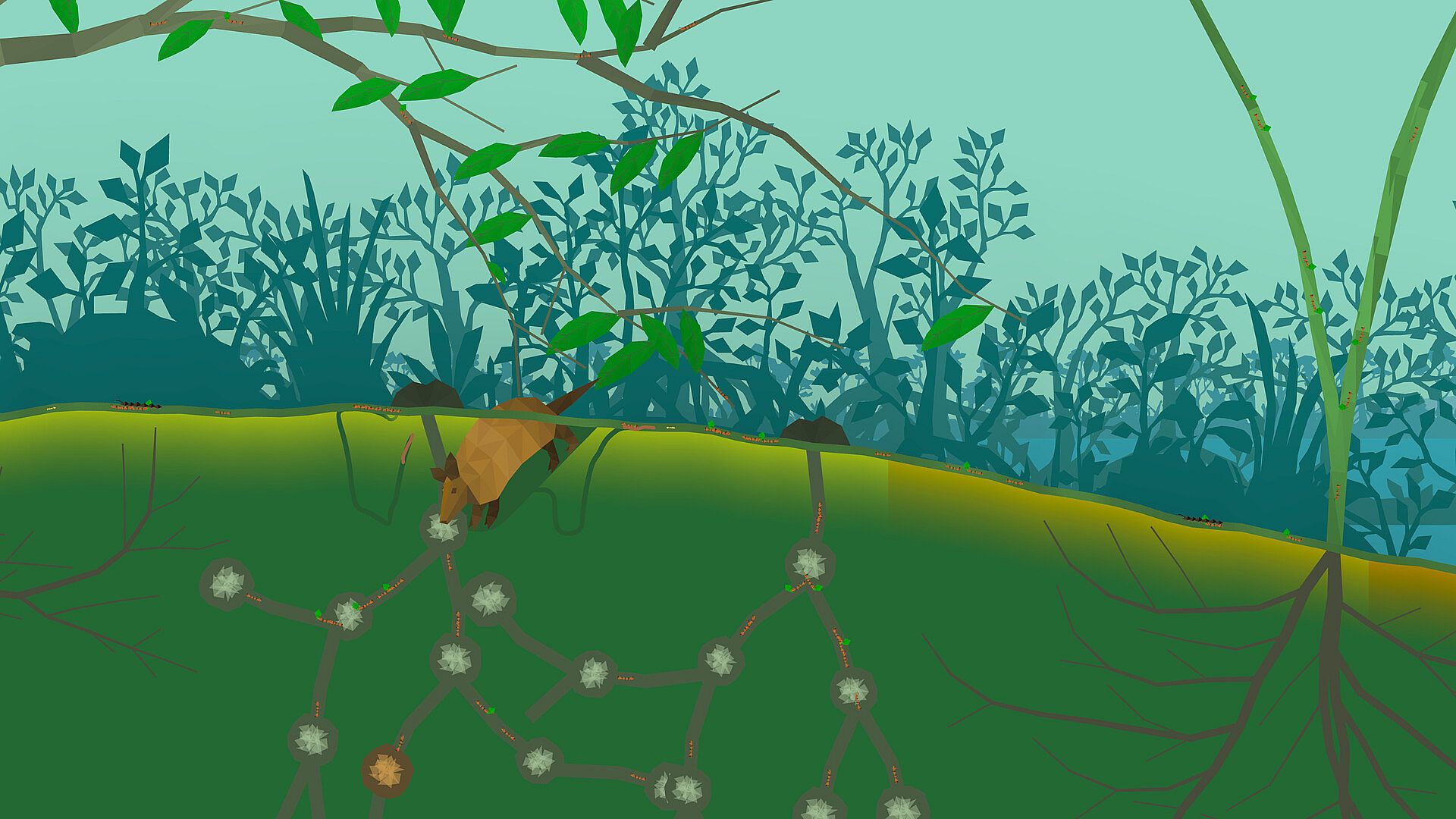
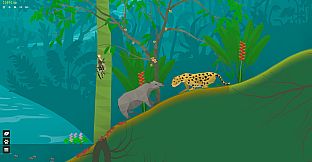
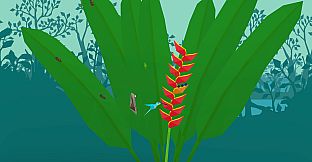
Direct clicks drive progress in the early stages. Selecting flowers triggers pollination, fruit drops to feed creatures, animals hunt or create shelters, and seeds spread through various means such as animal movement or insect activity. Additional actions include releasing insect swarms, guiding butterfly development, and using waste to fertilize new growth. These steps create chains of cause and effect that strengthen the overall system.
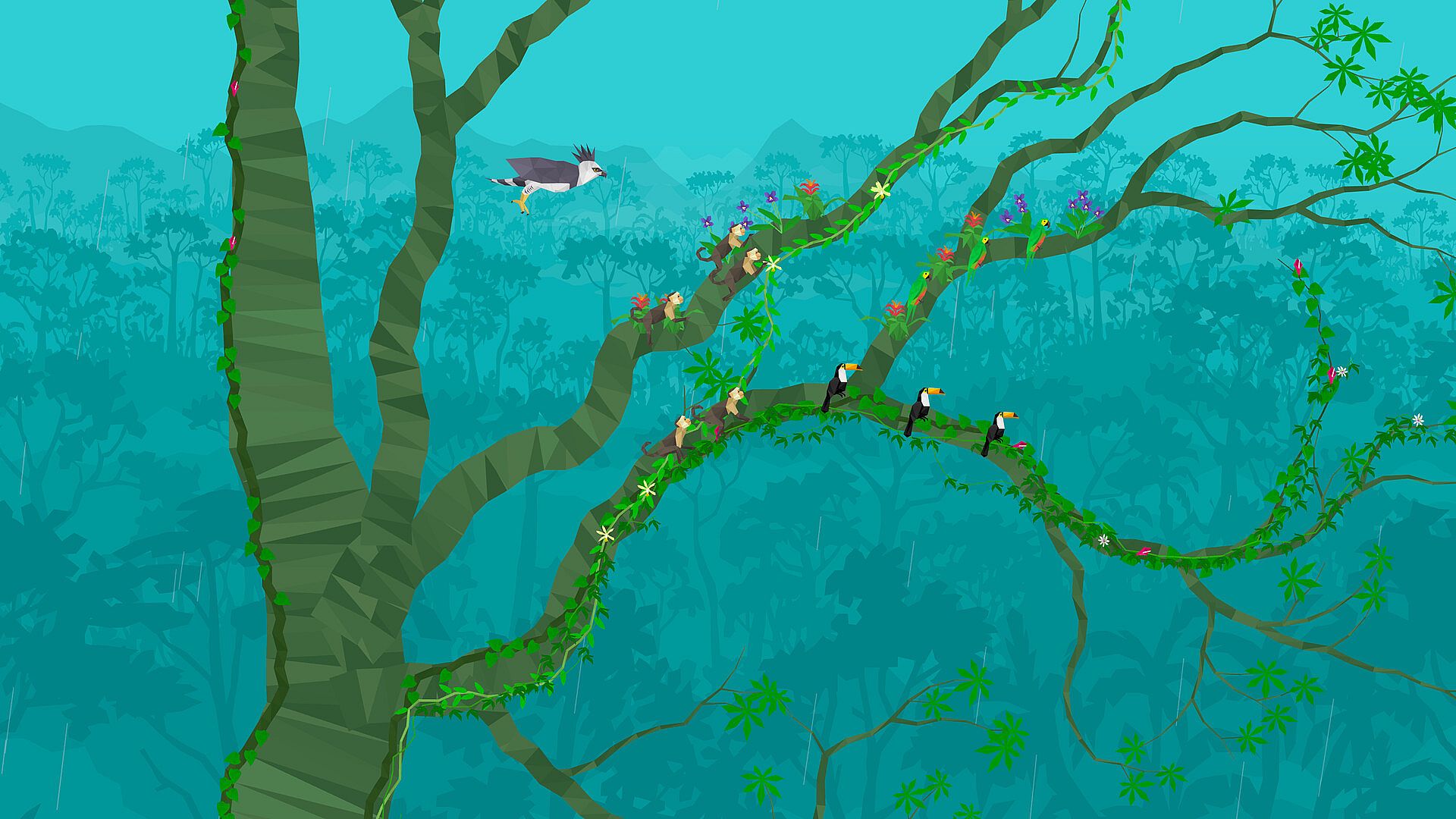
Automation becomes available as the rainforest matures. Once unlocked, natural processes handle many tasks independently, with pollinators visiting blooms, predators pursuing prey, and seeds dispersing without constant oversight. This shift allows the simulation to run with less manual effort while still requiring occasional guidance to maintain balance across different areas.
Game Modes
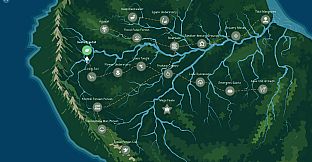
Polyzonia operates as a single-player simulation without separate competitive or cooperative modes. Progression occurs through a continuous campaign of ecosystem development, where success depends on expanding across varied terrain and achieving self-sustaining cycles. No distinct multiplayer options or alternate scenarios appear in the current version.
Ecosystem Interactions
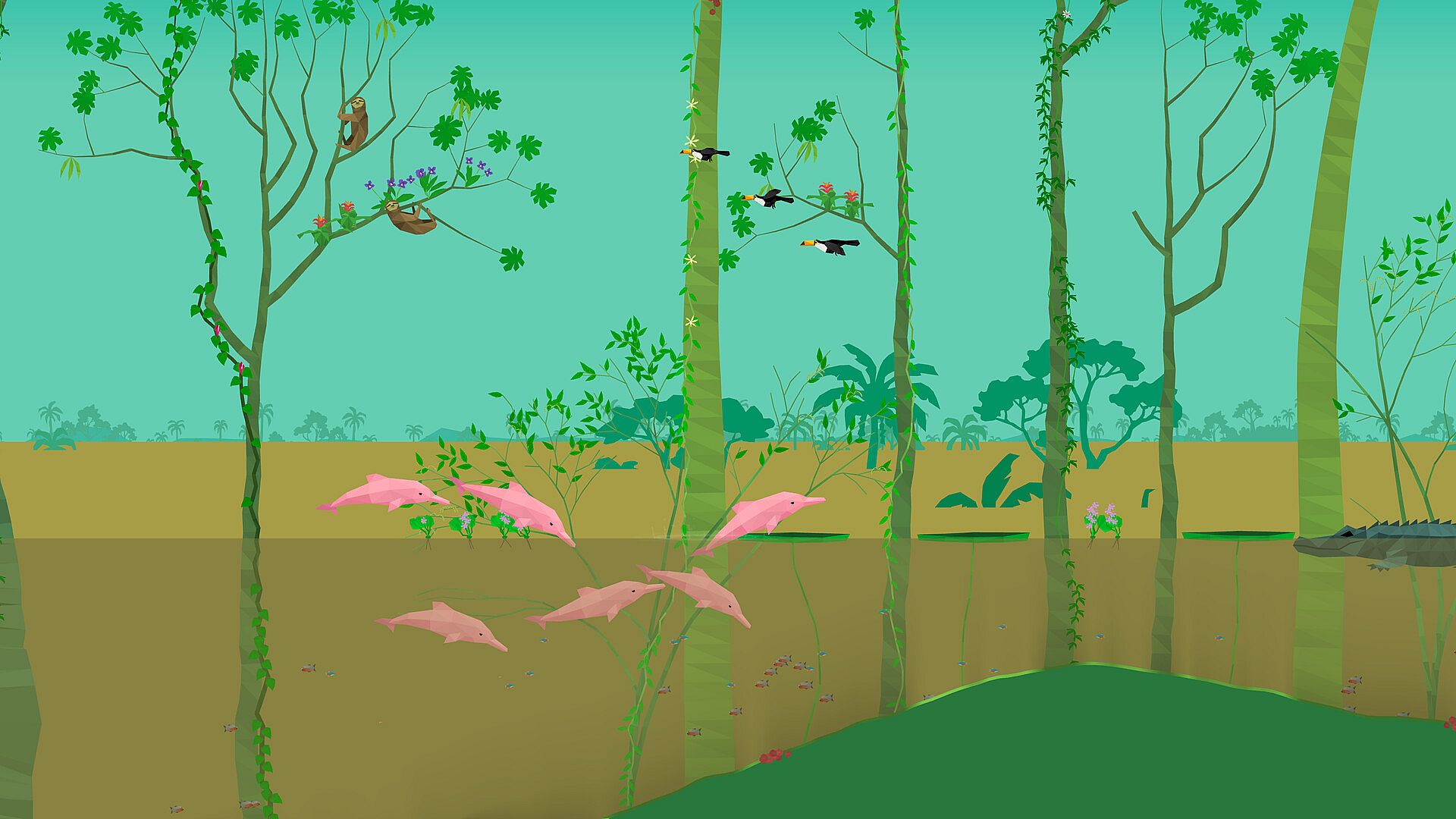
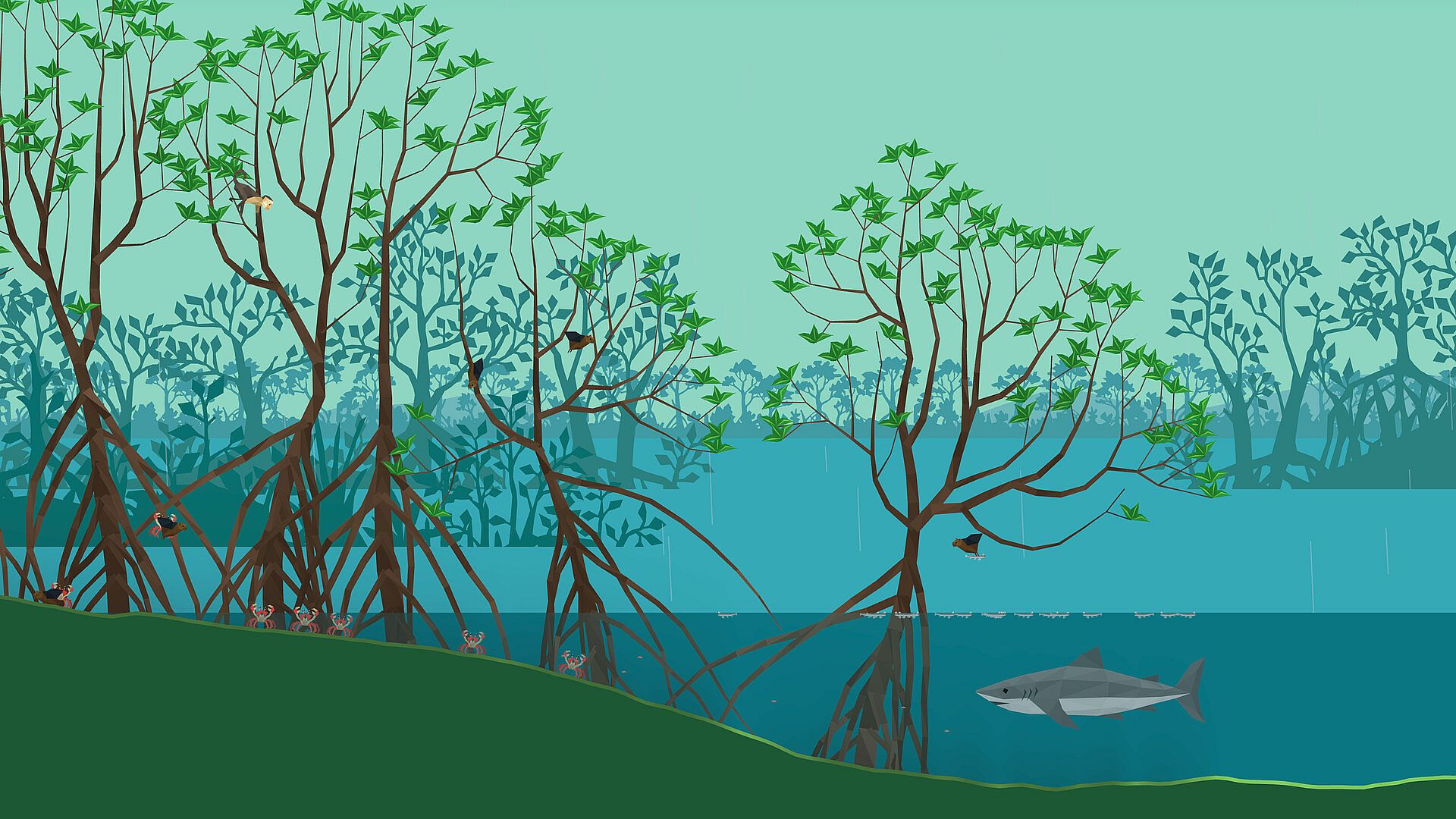
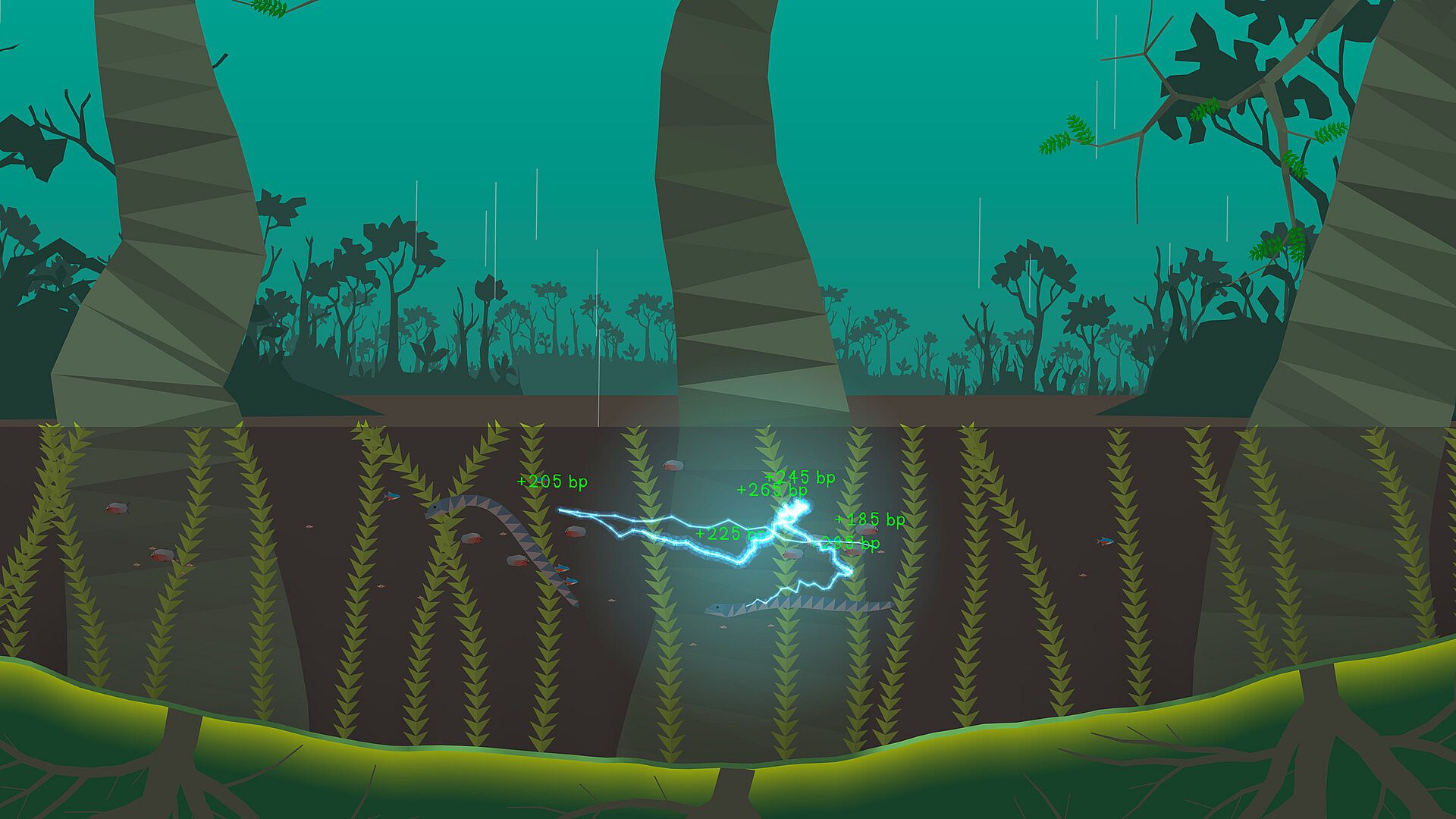
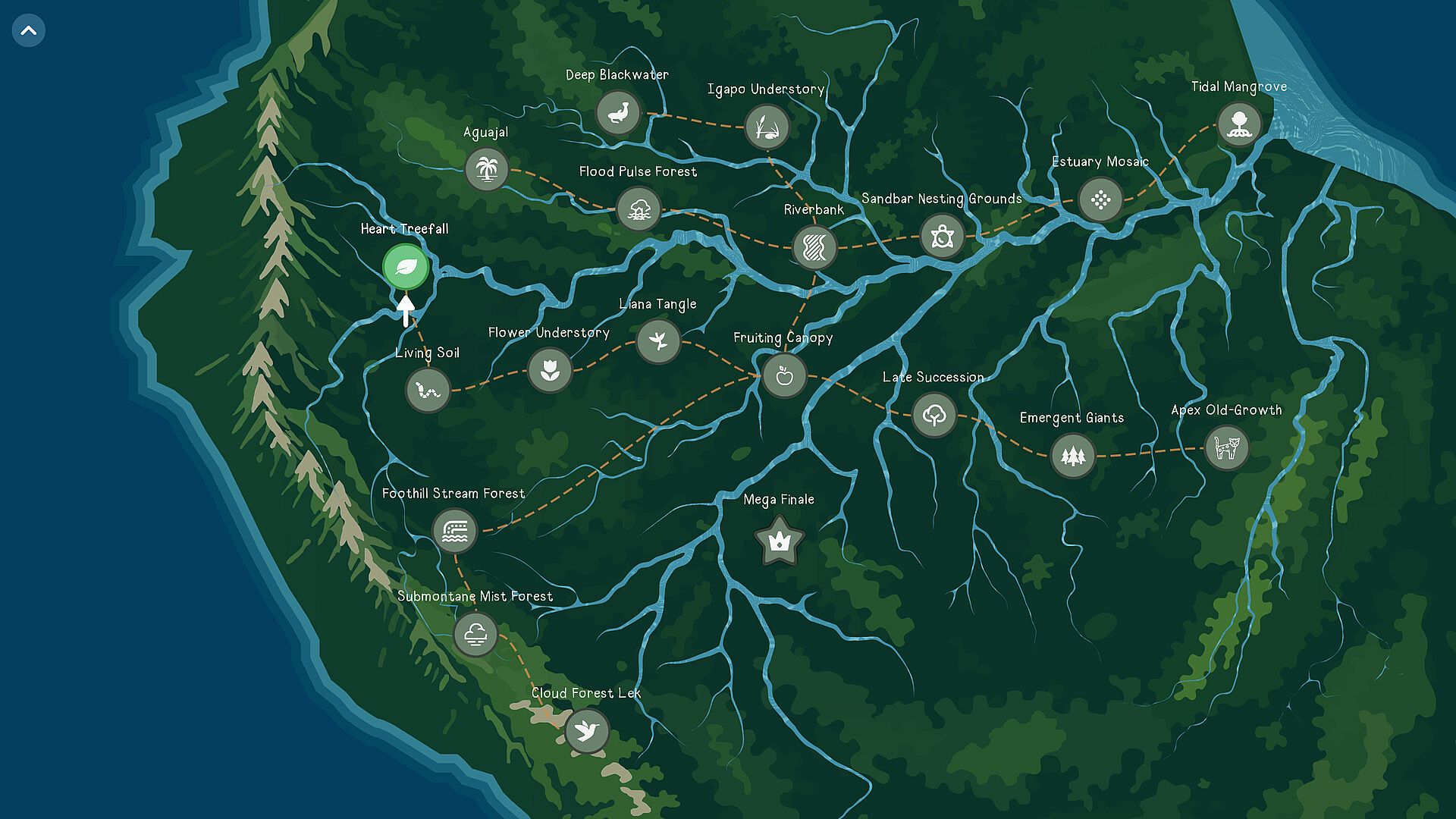
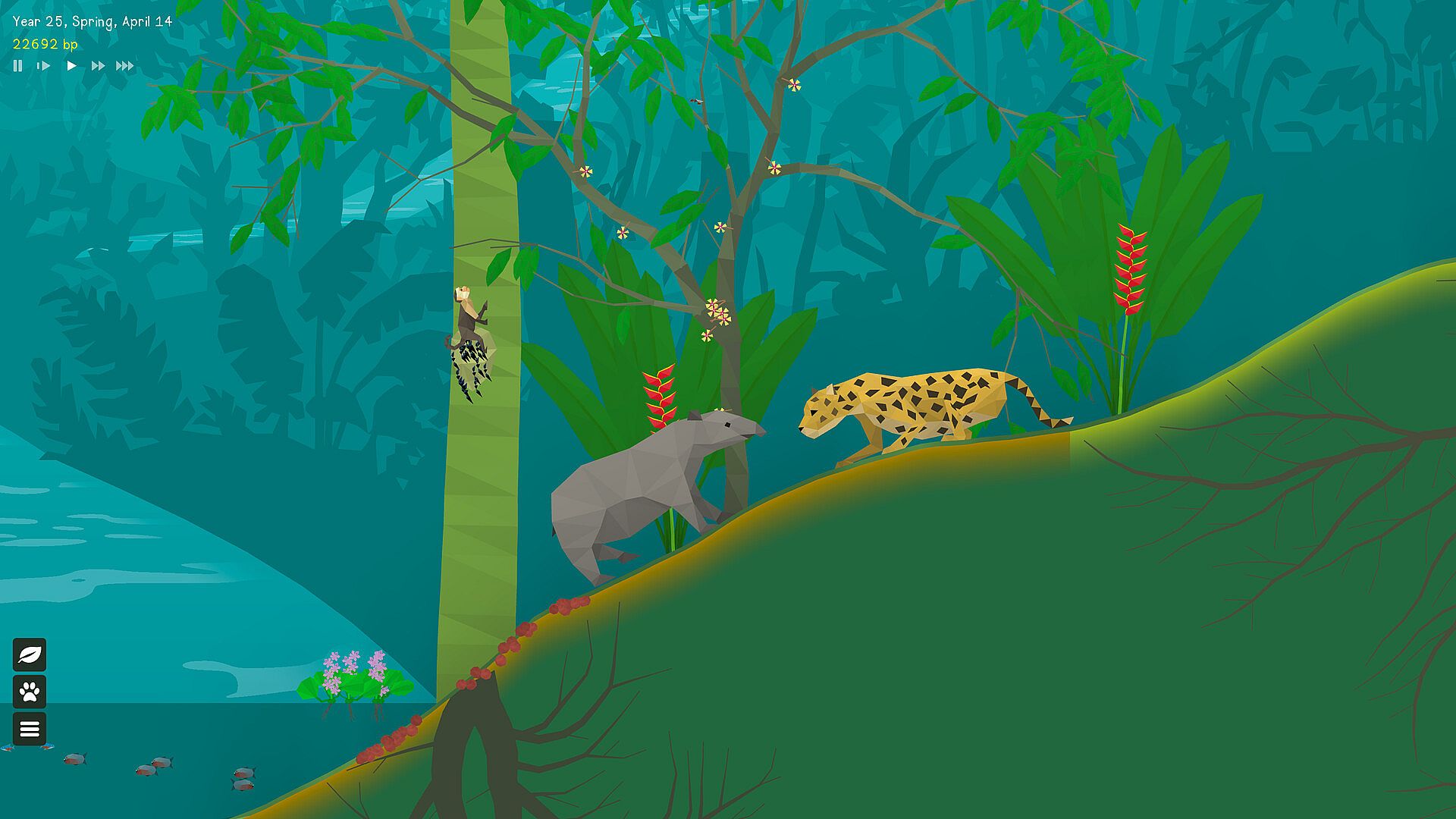
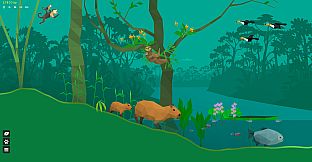
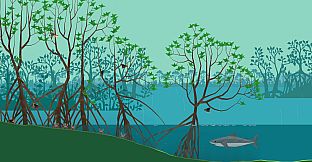
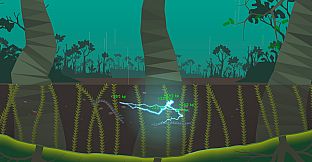
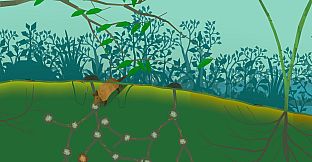
Every element in the simulation connects to others. Fruit falling into water attracts fish, roots in coastal areas provide shelter for smaller animals, and dark waterways support specialized predators. These relationships encourage players to consider placement and timing when expanding into new sections of the map.
Seed dispersal, hunting, and burrowing all contribute to long-term changes. Over repeated cycles, the land shifts from sparse to dense, with layers of activity supporting one another. The result is a living system that rewards consistent attention to detail rather than rapid expansion.
Is It Worth Playing?
Polyzonia suits players who enjoy methodical simulation experiences focused on natural systems and gradual development. Those drawn to titles that reward observation and incremental management will find the click-driven mechanics and automation progression engaging. The game remains in active development following its recent Steam listing, with the core features centered on rainforest growth and biome variety. Individuals seeking fast-paced action or structured challenges may prefer other genres, while fans of ecosystem building can explore the available mechanics at their own pace.