

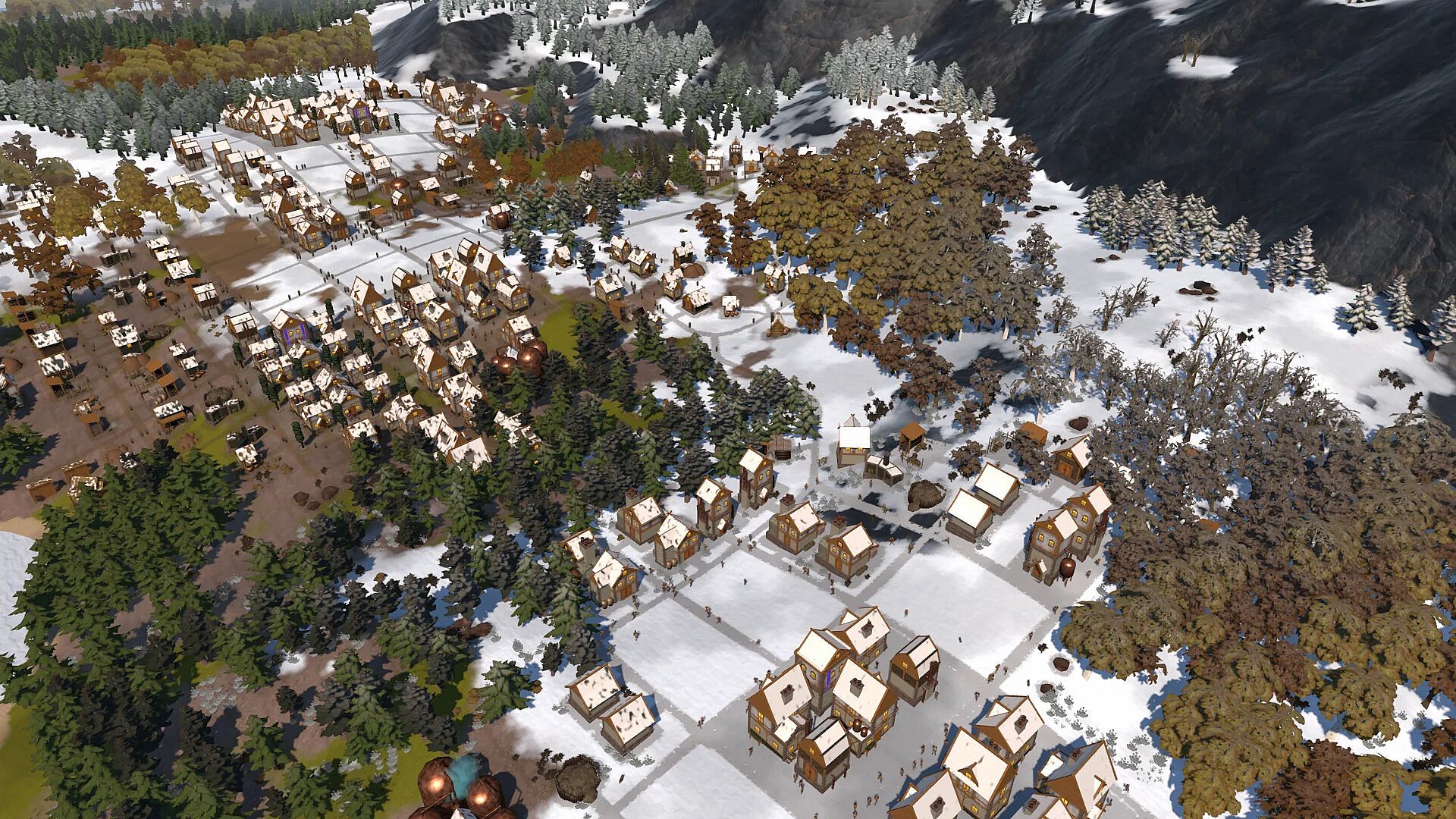
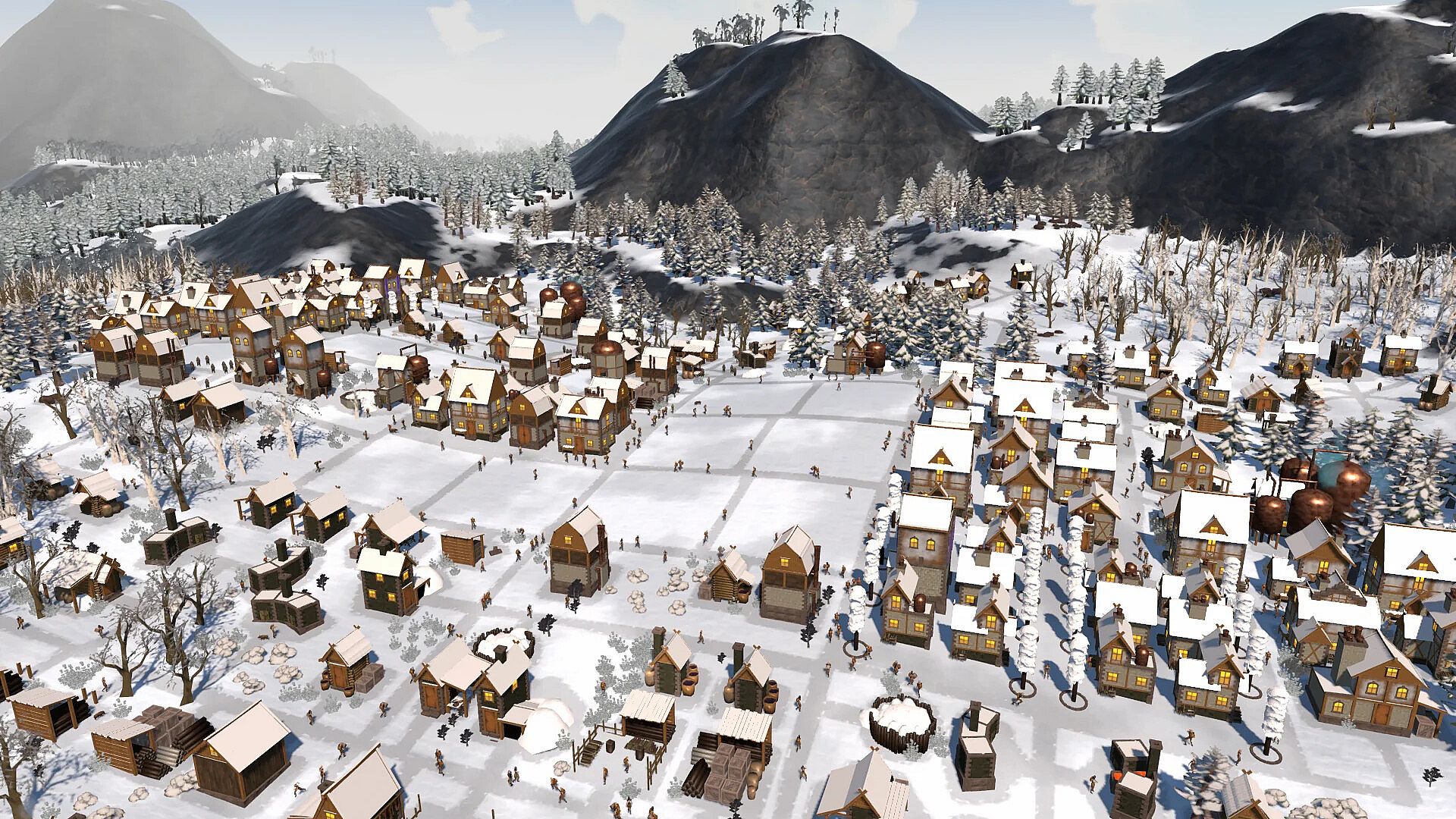
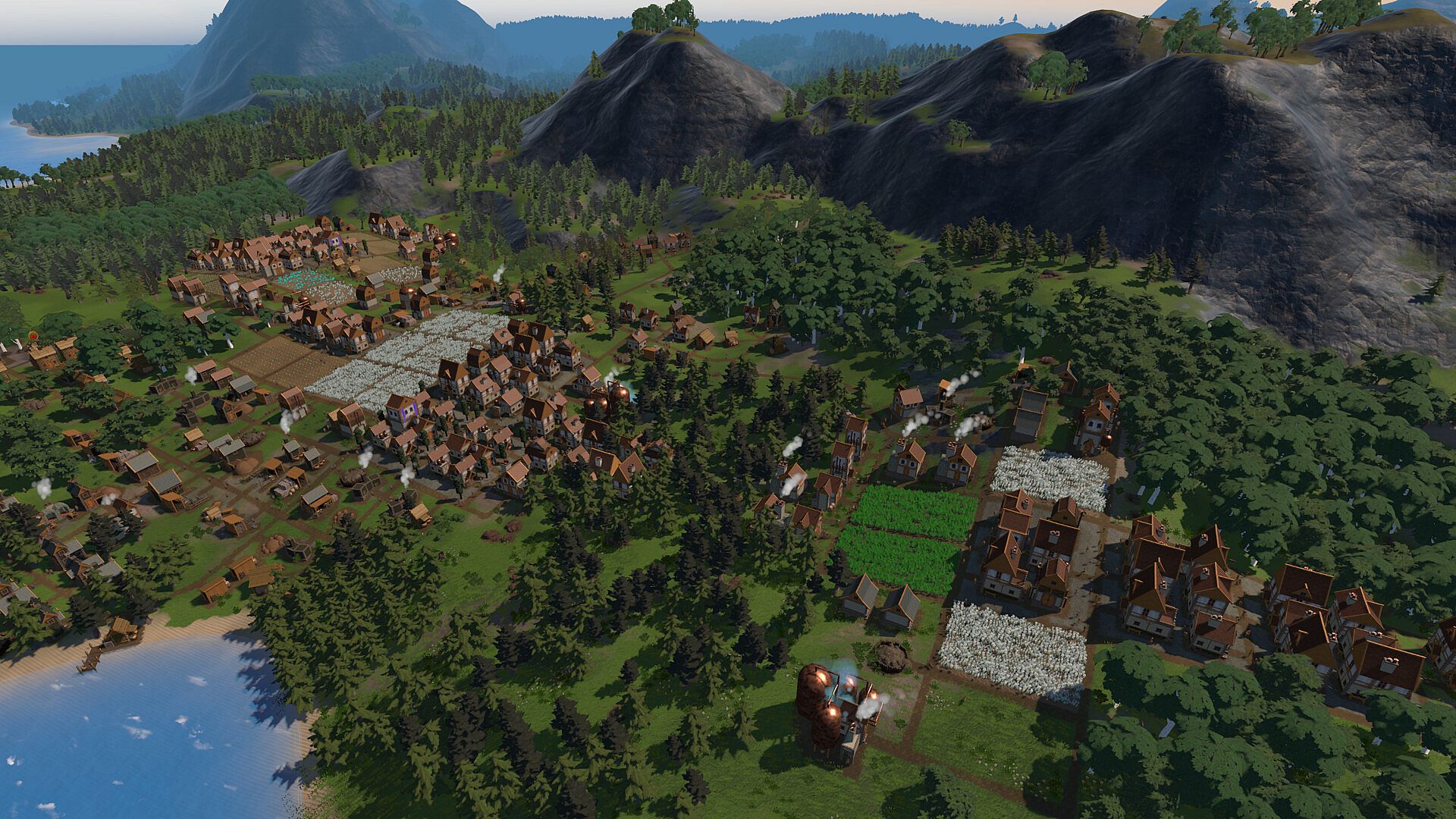
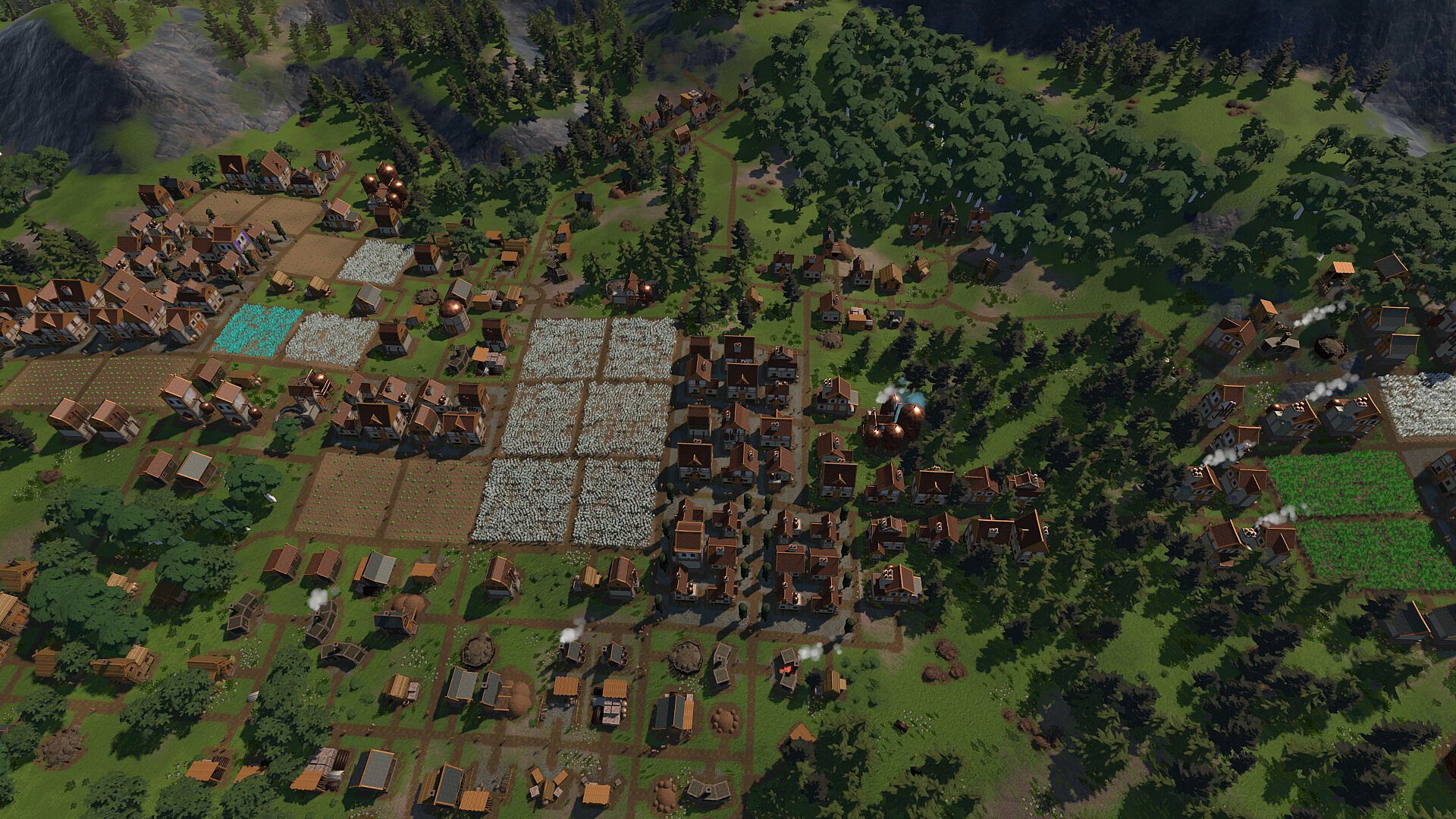
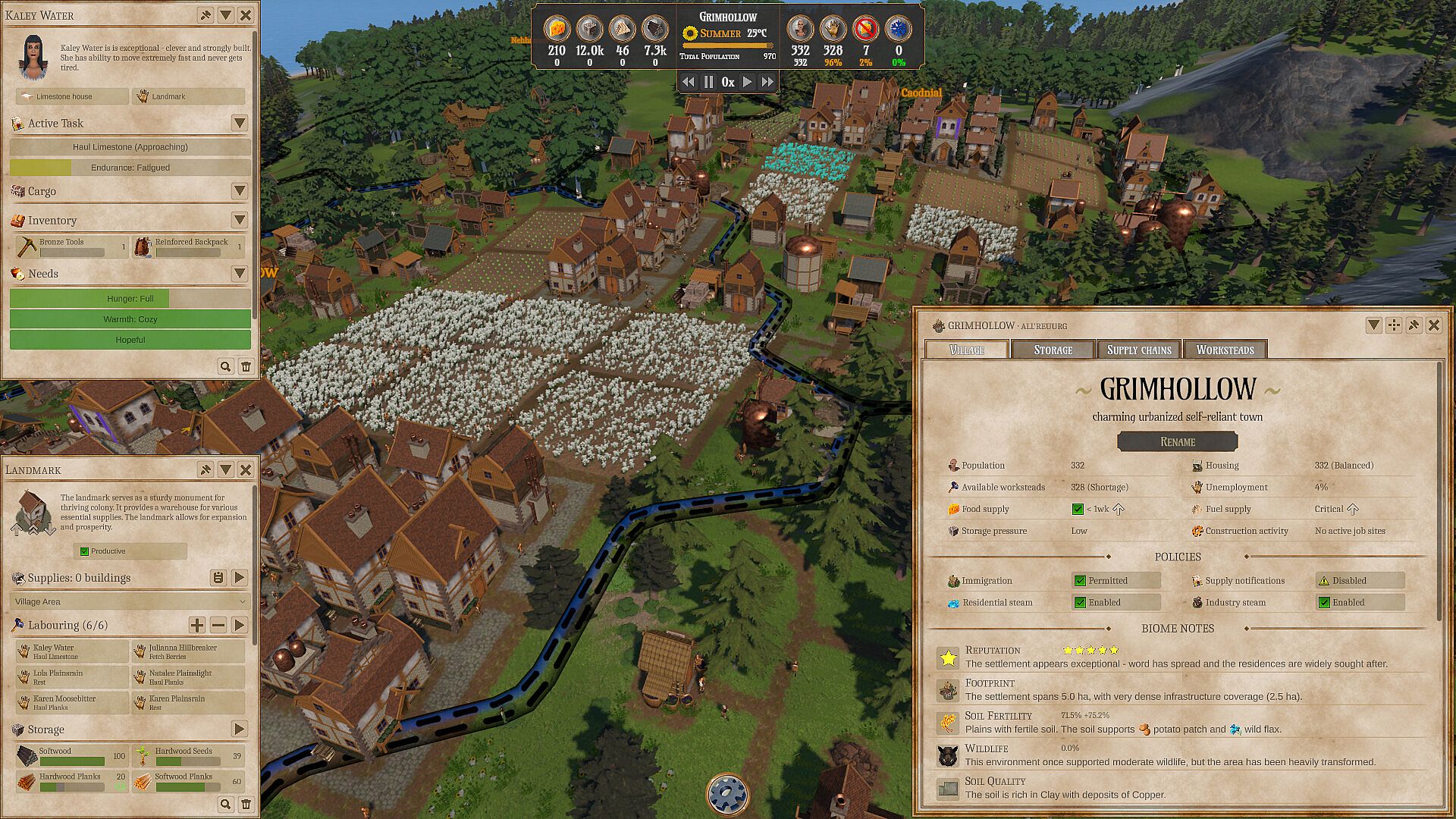
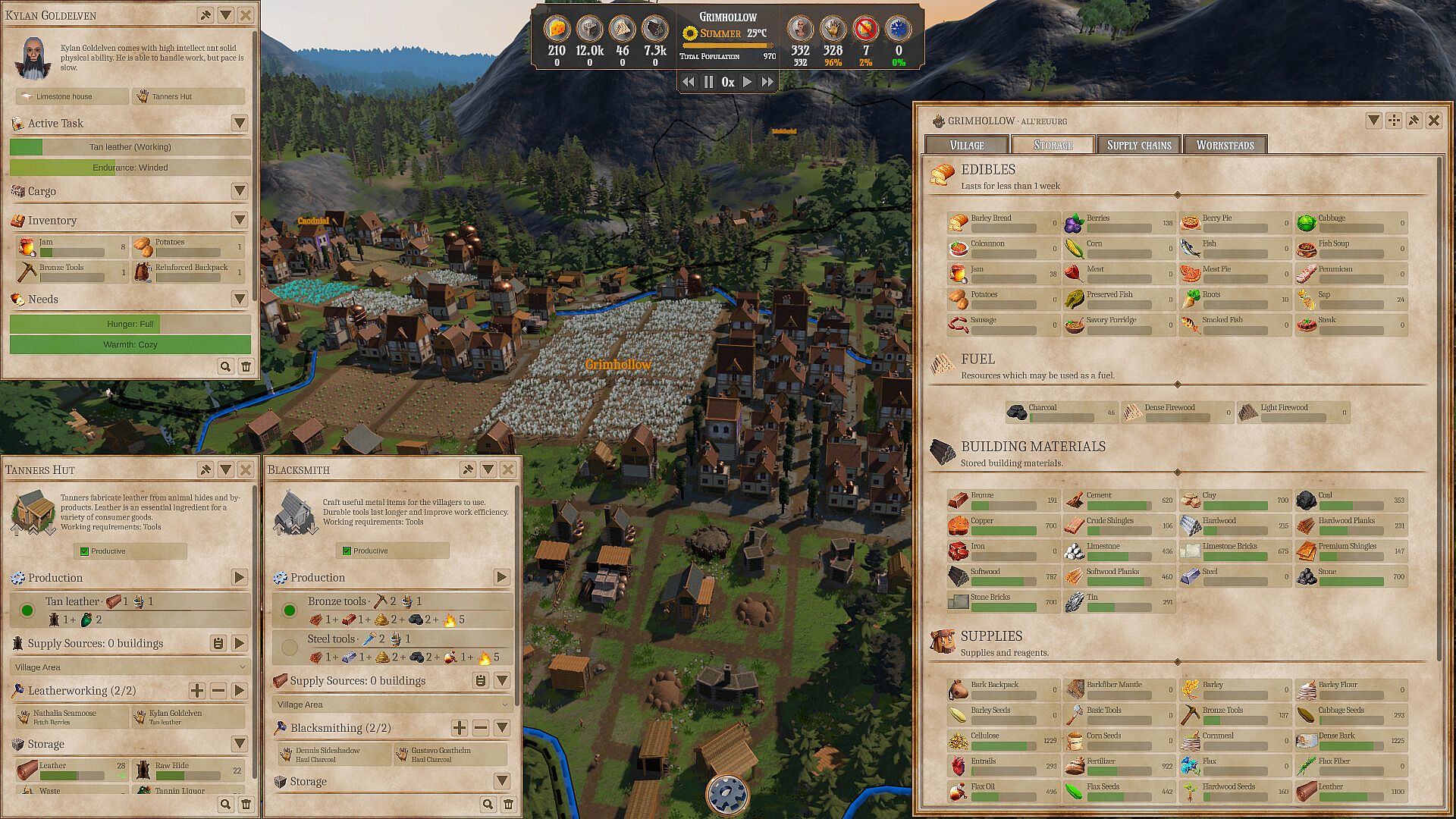
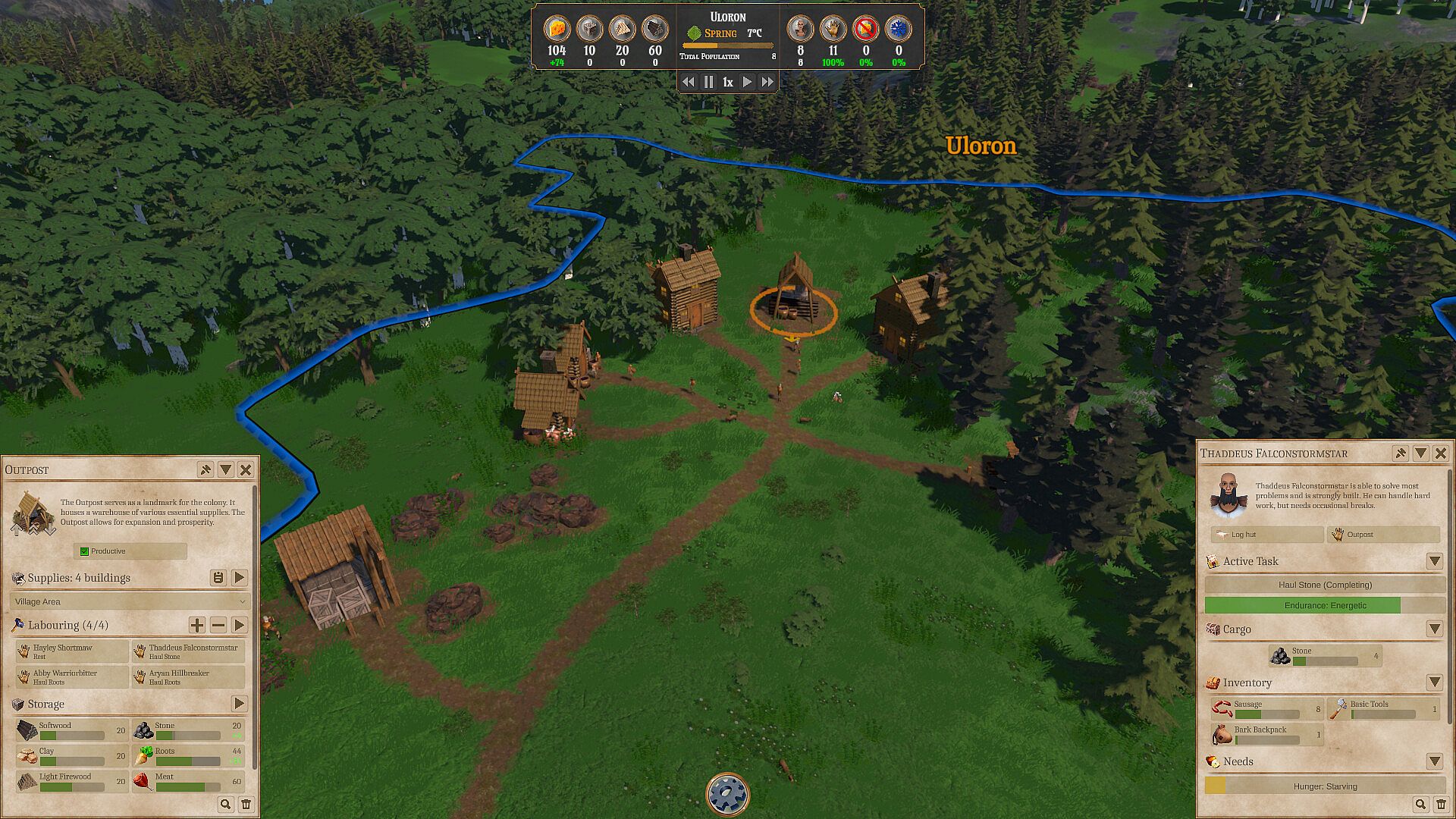
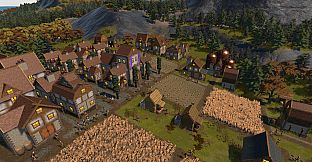
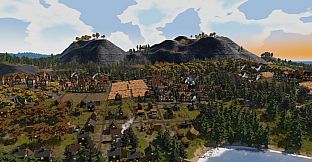
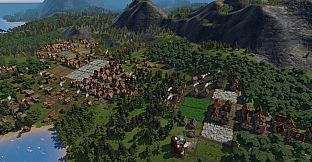
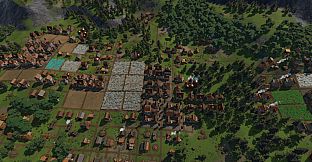
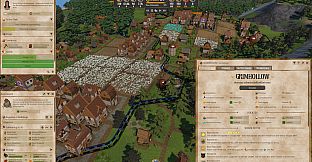
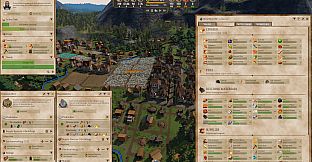
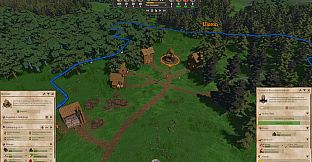
Restikon Foundry is a colony simulation game centered on building and sustaining settlements through the actions of individual villagers. Players manage a growing network of villages where every resource movement, storage decision, and production task depends on the independent behavior of simulated inhabitants rather than abstract numbers or automated systems.
Gameplay
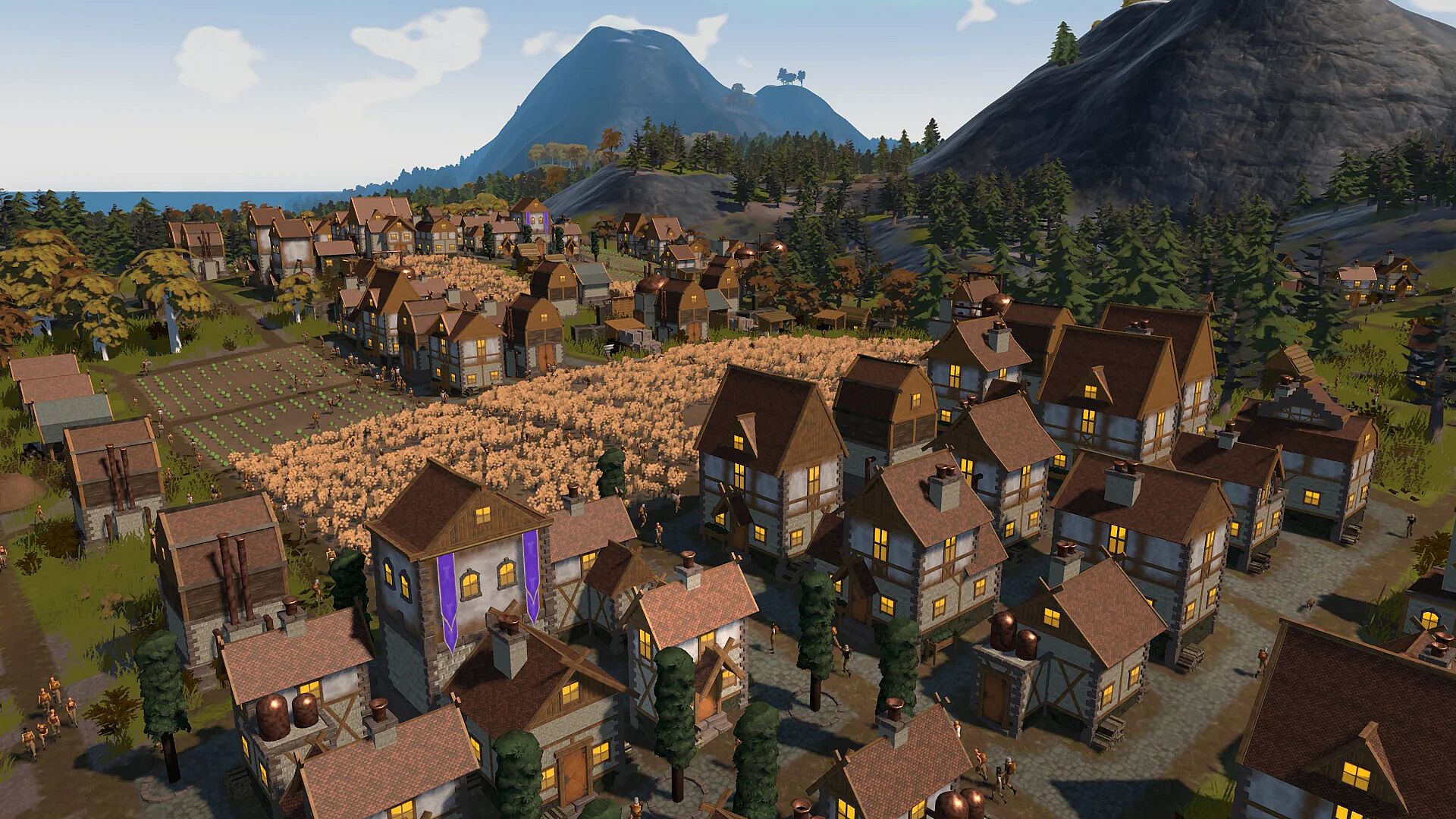
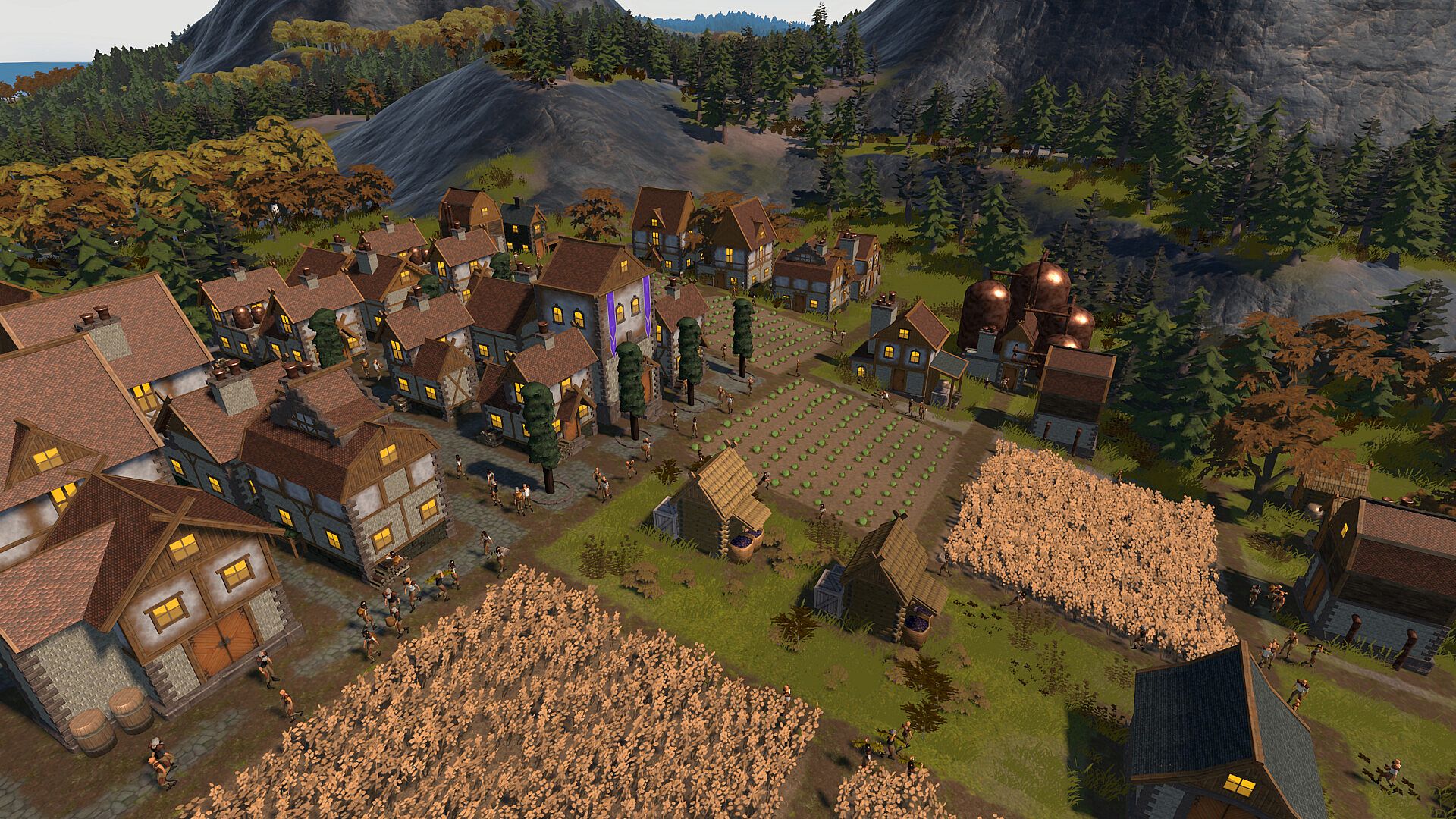
The core loop revolves around organizing villagers as autonomous agents who gather, transport, store, and consume physical goods across the world. Food must reach tables before hunger affects behavior, firewood must reach homes before cold sets in, and warehouses must stay accessible or production halts. Each villager responds to these pressures directly, so a blocked path or overloaded storage can cascade into settlement-wide problems.
Logistics form the backbone of progress. Players position production buildings and warehouses to minimize travel distances while accounting for terrain and seasonal shifts in resource availability. Early outposts focus on basic supplies such as tools, clothing, and backpacks that enable further work. As population grows, the settlement expands into specialized hubs, each suited to local biomes that may favor farming, mining, or other activities.
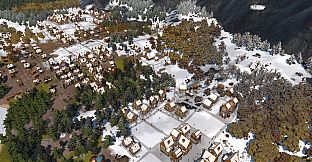
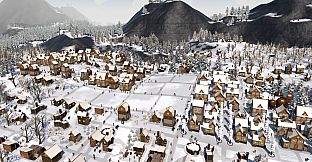
Seasons alter movement speeds, crop yields, and survival demands, requiring players to adapt storage and transport plans ahead of time. Expansion brings new challenges: longer supply lines increase the risk of shortages, while labor shortages in one area can stall output elsewhere. The player maintains the entire system by planning layouts that keep goods flowing efficiently between territories.
Game Modes
Restikon Foundry supports single-player sessions where the focus remains entirely on one colony network. No separate competitive or cooperative modes appear in the current description, keeping the emphasis on careful management and organic growth within a single persistent world.
Expansion and Logistics
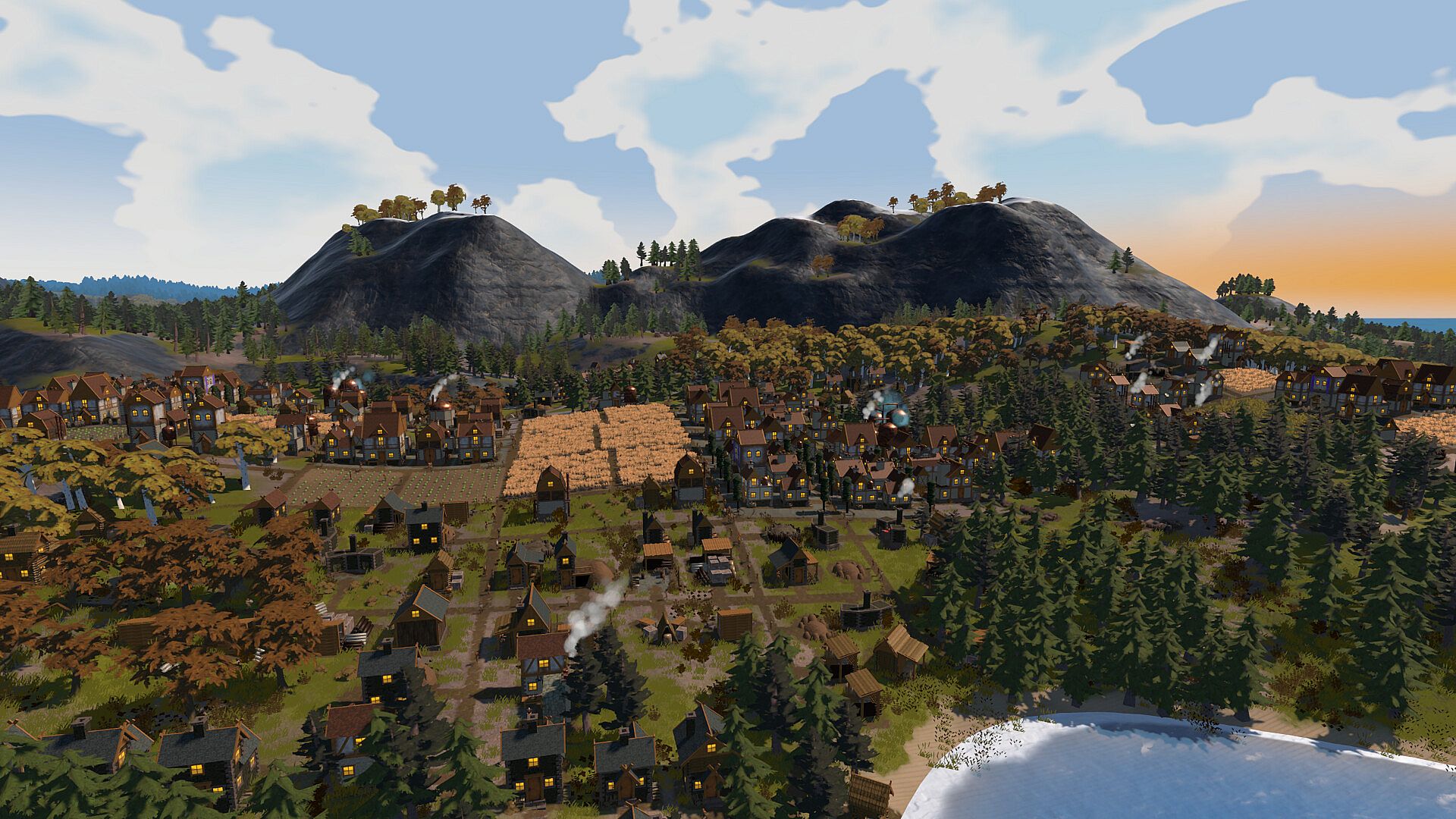
Territories differ in resources and climate, so players must decide which locations suit food production, mineral extraction, or manufacturing. Connecting these sites through reliable transport networks becomes essential once the colony spans multiple biomes. Storage capacity and worker distribution directly influence whether a new outpost strengthens the overall settlement or strains existing supply chains.
Development follows environmental constraints rather than fixed milestones. Villages start simple and add complexity only as needs arise, with each new building or route affecting the efficiency of the larger system. Players refine layouts over time to handle increased demand while preparing for seasonal changes that can disrupt even stable operations.
Is It Worth Playing?
Restikon Foundry appeals to players who enjoy detailed settlement simulations where individual agents drive every outcome. The emphasis on physical resource movement, need-based villager behavior, and interconnected logistics offers a hands-on approach to colony management that rewards careful planning and adaptation. Those interested in watching a remote outpost evolve into a multi-territory network through organic expansion will find the described systems align with that style of play. Because the game remains unreleased with no player reviews available, the final experience will depend on how well the simulation holds up once it launches. Fans of management titles that prioritize realistic constraints over streamlined automation may find the concept compelling once it becomes available.