







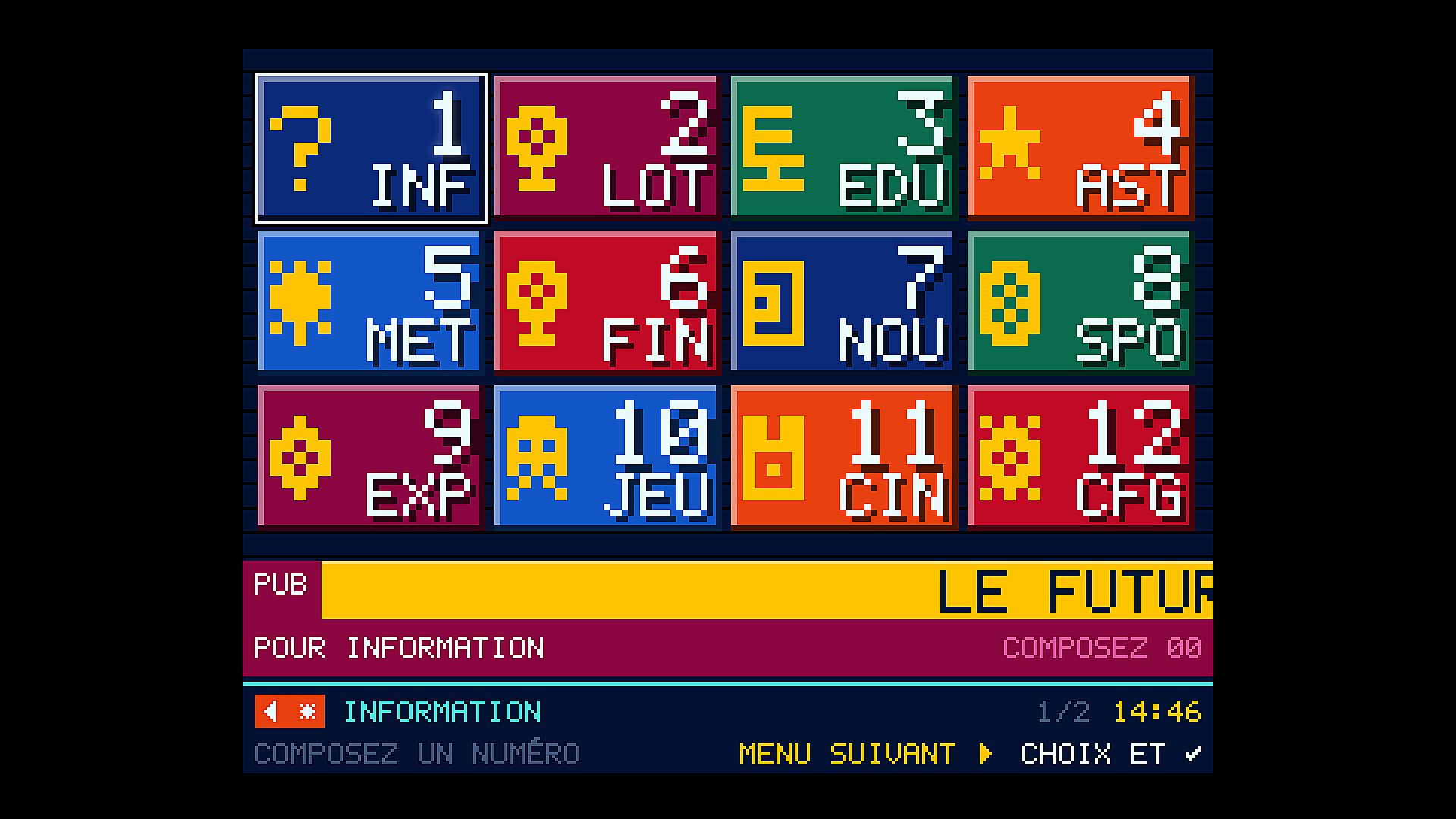
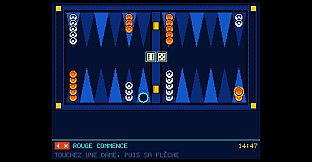
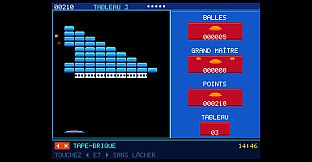
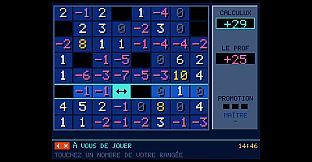
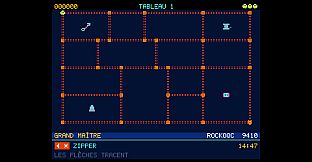
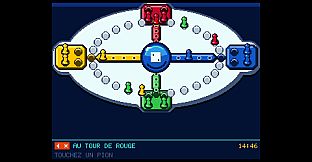
RetroHub is a casual indie game for PC that recreates the experience of an early 1990s interactive television terminal. Players boot up the simulated set, watch it hunt for a signal, and then navigate a grid of numbered tiles to select services. The entire interface uses pixel-perfect rendering at 320 by 240 resolution with a strict 16-color palette and a hand-traced font that includes French accents. Visual effects mimic cathode-ray tube displays through scan lines, darkened edges, and rounded corners, while the image refreshes at the slower rate typical of the era. The display always maintains whole-number scaling in any window size so pixels remain crisp without any smoothing.
Gameplay
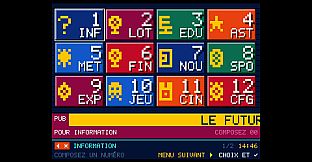
The core loop centers on selecting tiles from the mosaic menu to access short information pages or enter the games section. Each page follows the layout style of old terminals with large, readable text designed for viewing from across a room. All artwork stays within the limited palette and receives the same CRT-style treatment. Navigation feels deliberate because of the slow refresh and the need to dial specific numbers for each service. The optional account system lets players use an existing service login to carry their name, scores, and recent activity across devices without creating a new password or sharing location, contacts, or files.
Game Modes
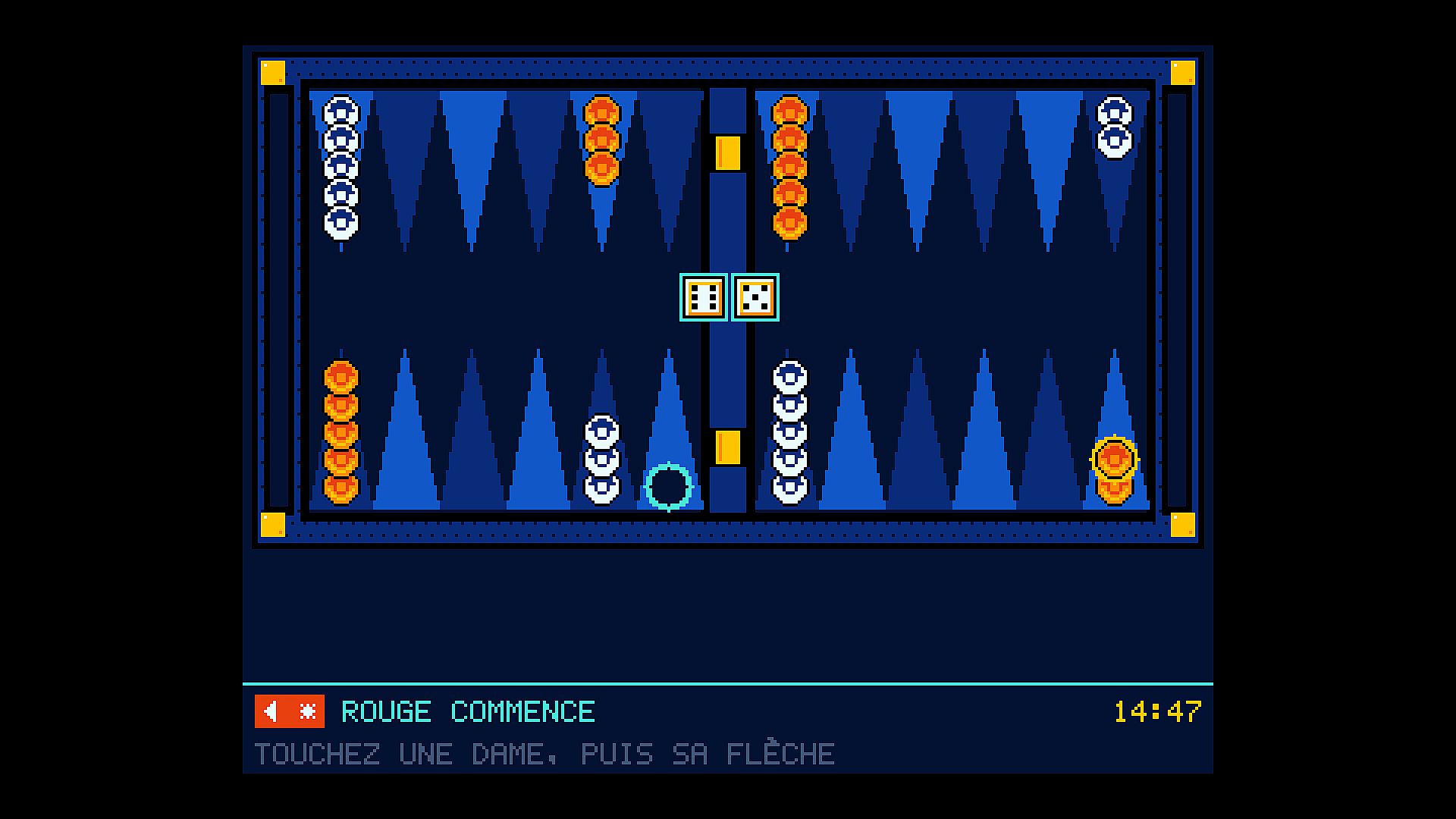
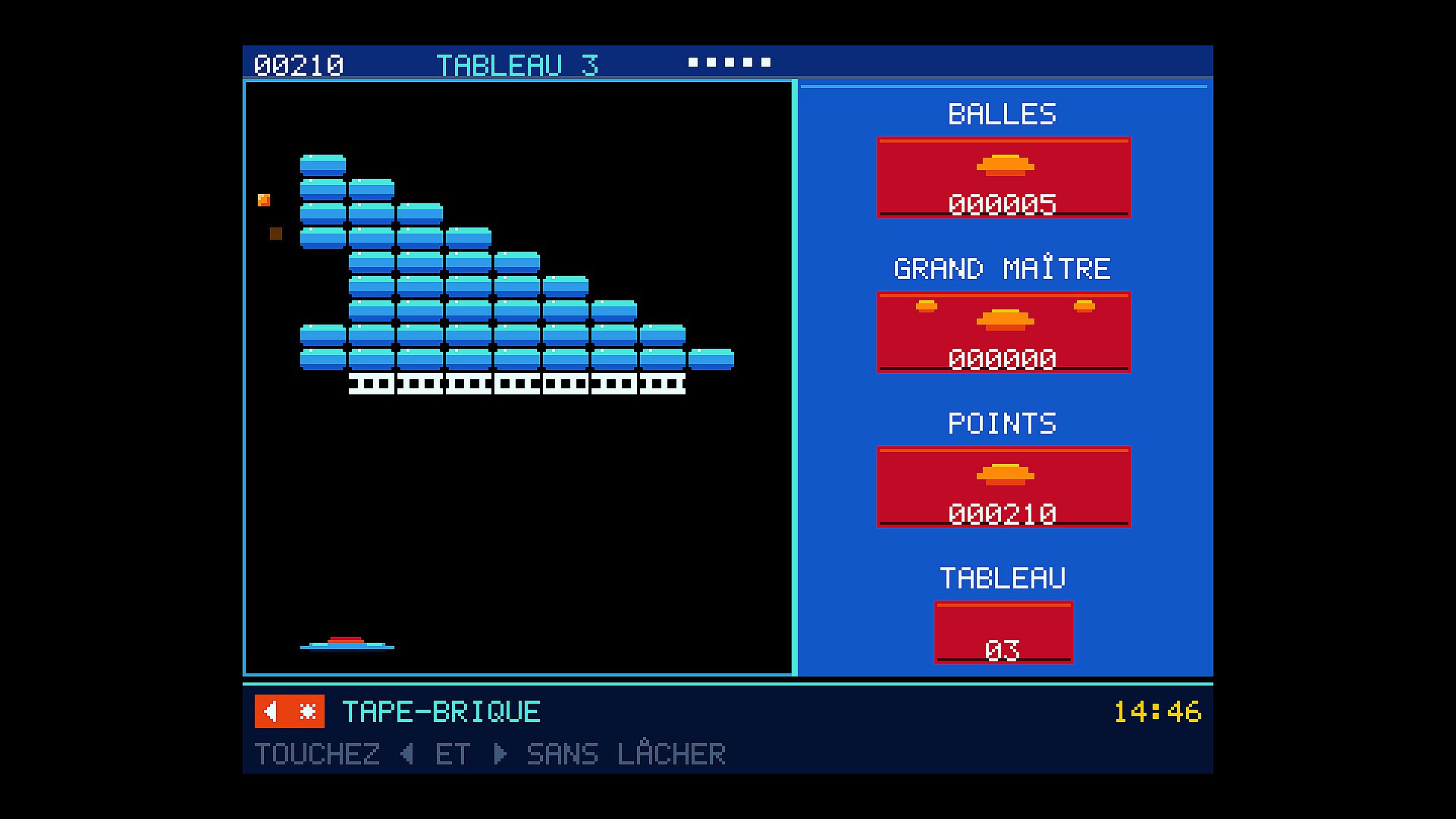
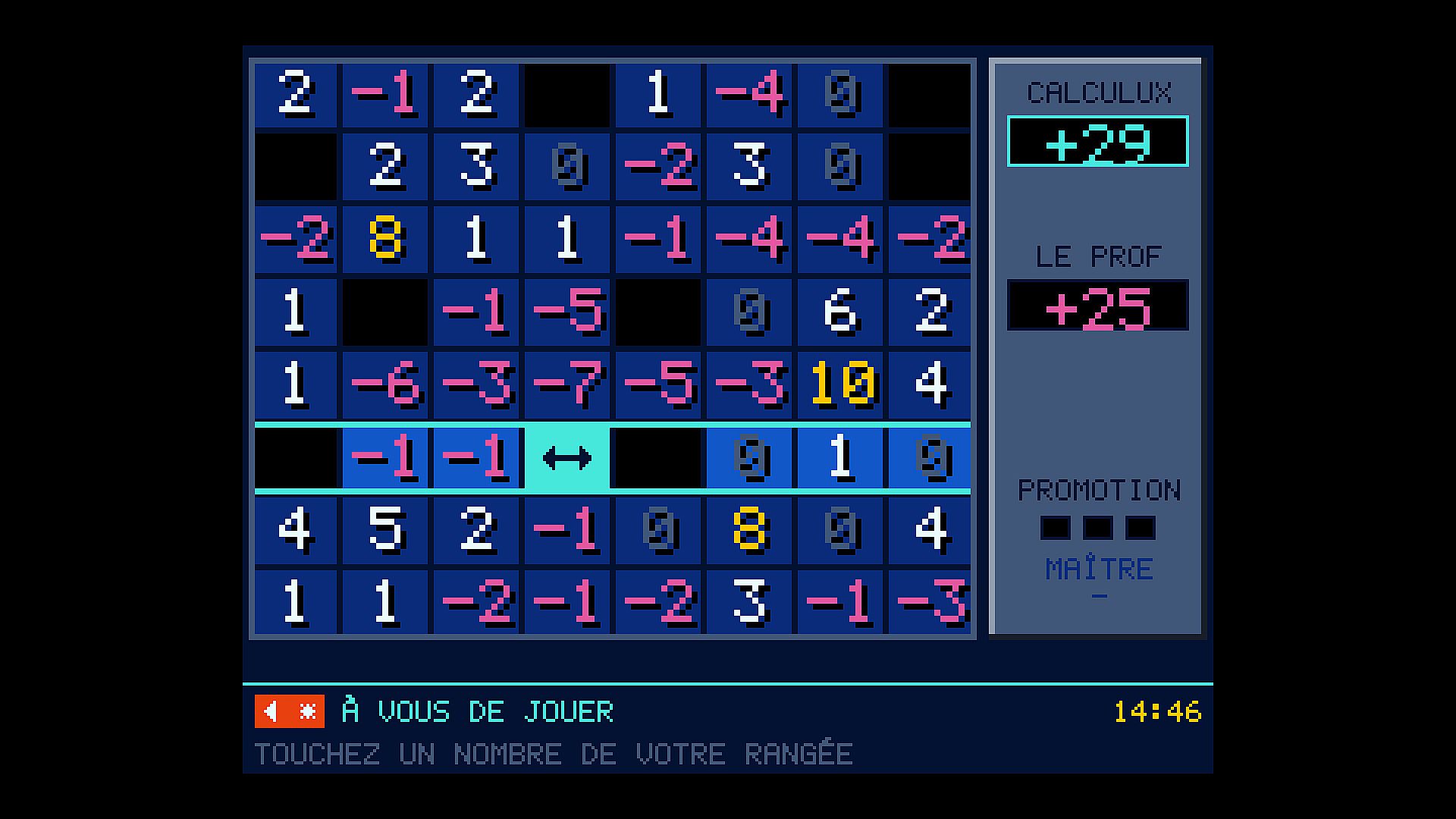
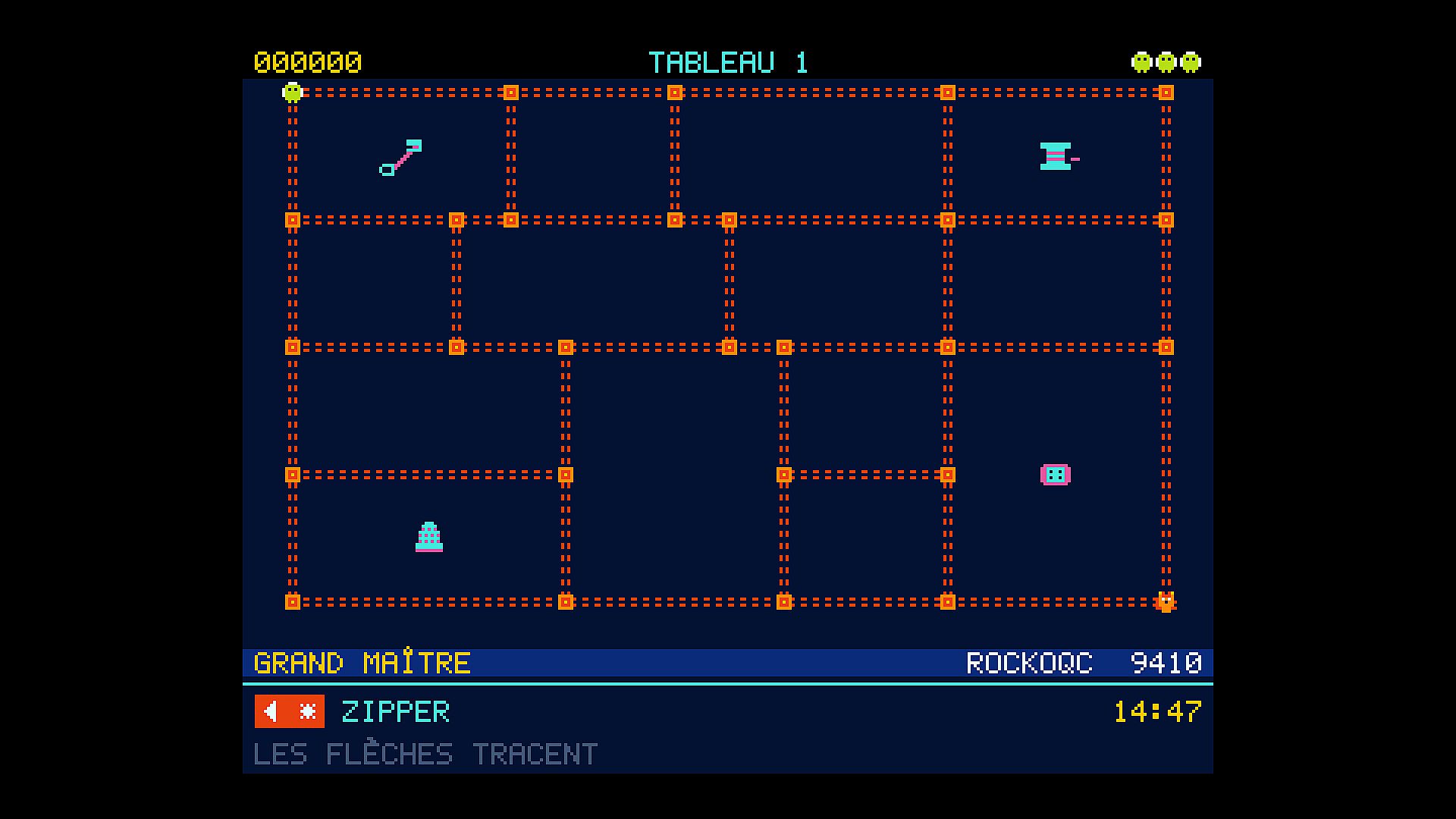
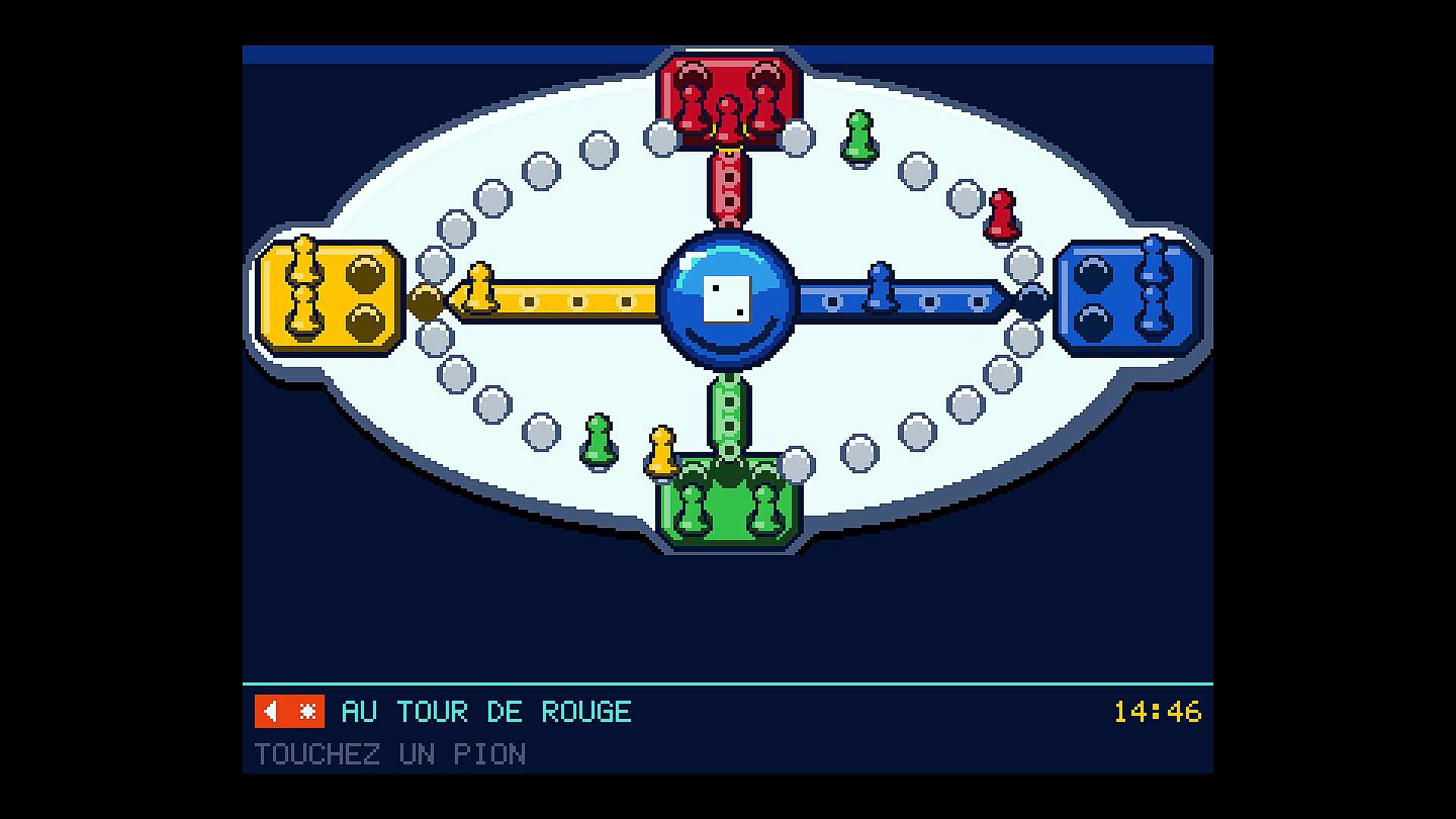
Games appear behind one of the tiles and consist of word games, dice games, card games, and games of skill, all drawn by hand in the same 16-color style. Sessions support solo play, local multiplayer with several people sharing one screen, and online head-to-head matches where participants connect via a shared code or automatic matching. The online lobby ignores platform differences so opponents may be using entirely different devices. High scores are tracked per game and remain viewable without any account, with the top position labeled grand master rather than a numeric rank.
Visual and Technical Presentation
Every element stays true to the terminal aesthetic. The fixed resolution and palette create a consistent look across menus and games alike. Scan lines and edge darkening reinforce the cathode-ray tube illusion, while the slow refresh rate adds to the period authenticity. Pixel scaling remains integer-only regardless of window size, preserving sharp edges at any display resolution. Information pages use large characters for easy reading at a distance, matching the practical design of the original hardware.
Accessibility and Privacy
The game requires no account to play or view high scores. When an account is used it simply stores a real name rather than a nickname and syncs progress across devices through an existing service login. No prompts request location data, contact lists, or file access. This approach keeps the focus on the retro terminal experience without additional barriers or data collection.
Is It Worth Playing?
RetroHub suits players who enjoy short casual sessions built around classic game types such as word, dice, card, and skill challenges. The authentic terminal interface and CRT effects provide a distinctive presentation that stands out from modern casual titles. Local multiplayer works well for groups around one screen, while the online head-to-head option supports remote play without platform restrictions. High scores remain accessible to anyone, and the optional account adds convenience for multi-device use without mandatory registration. Those seeking a privacy-conscious, low-commitment experience with retro visual charm will find the game aligns closely with that preference.












