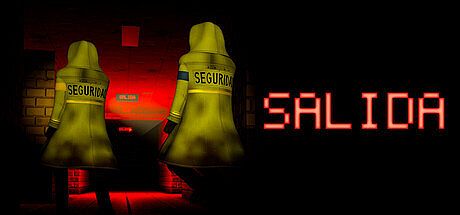


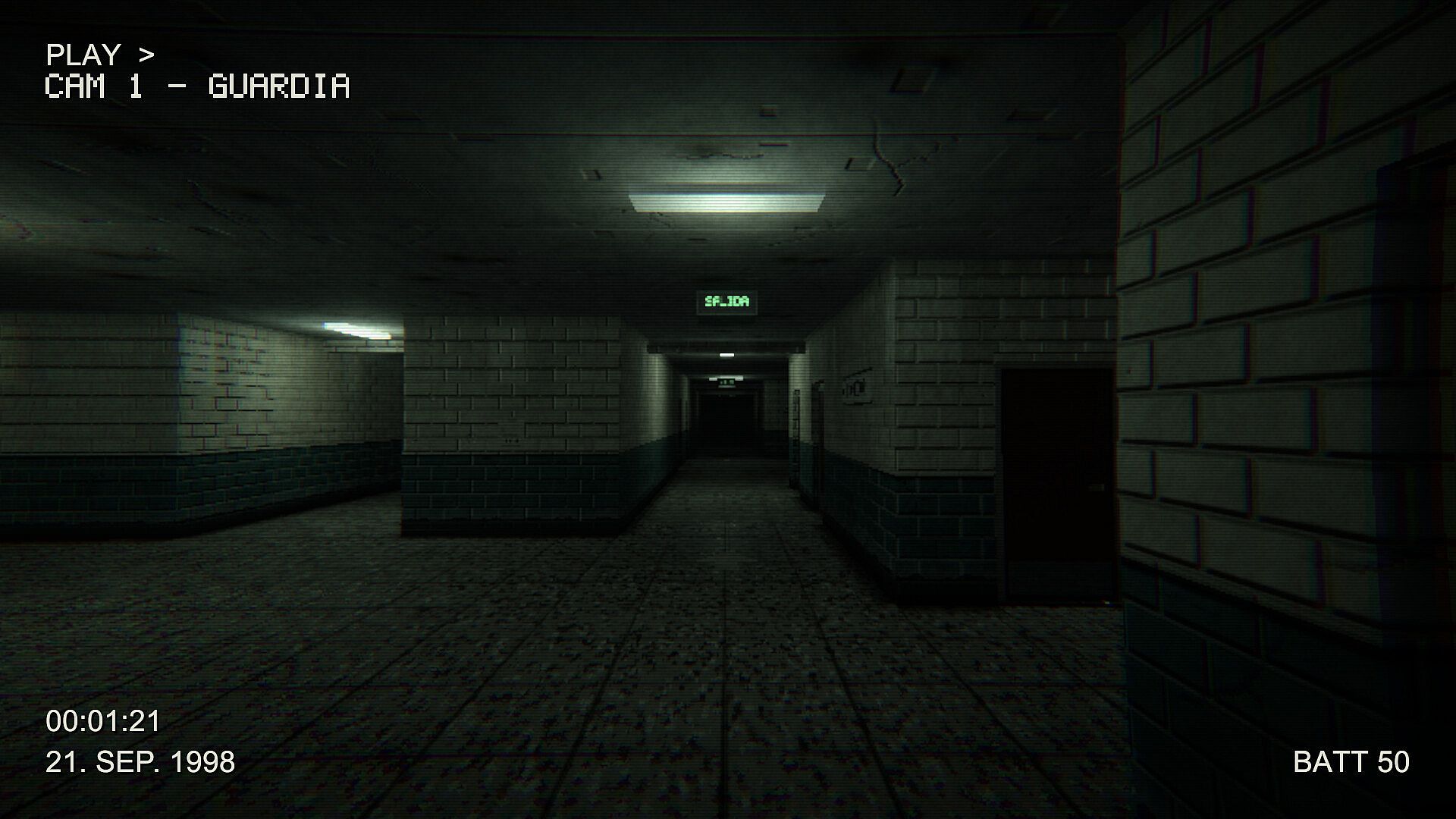
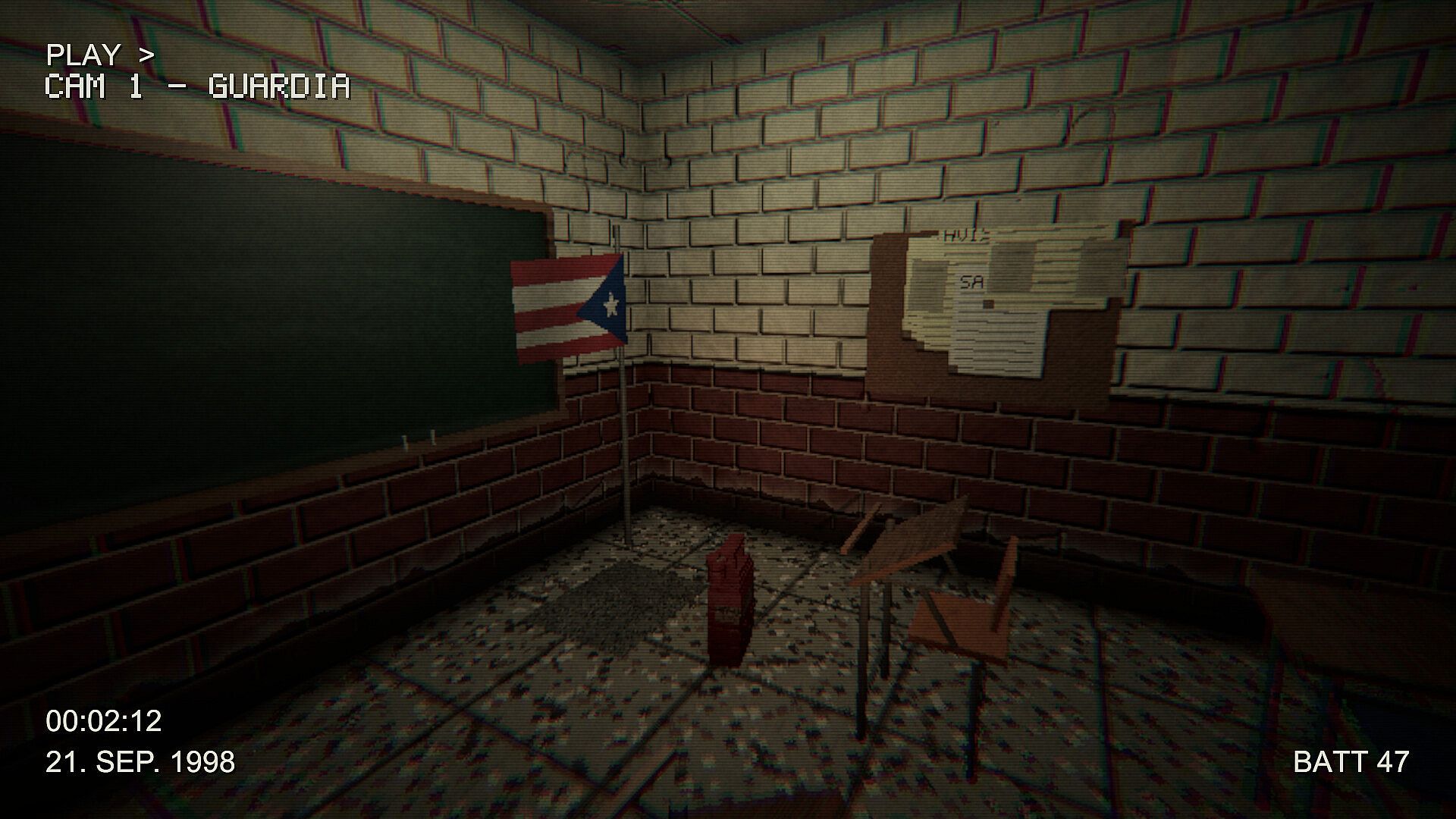
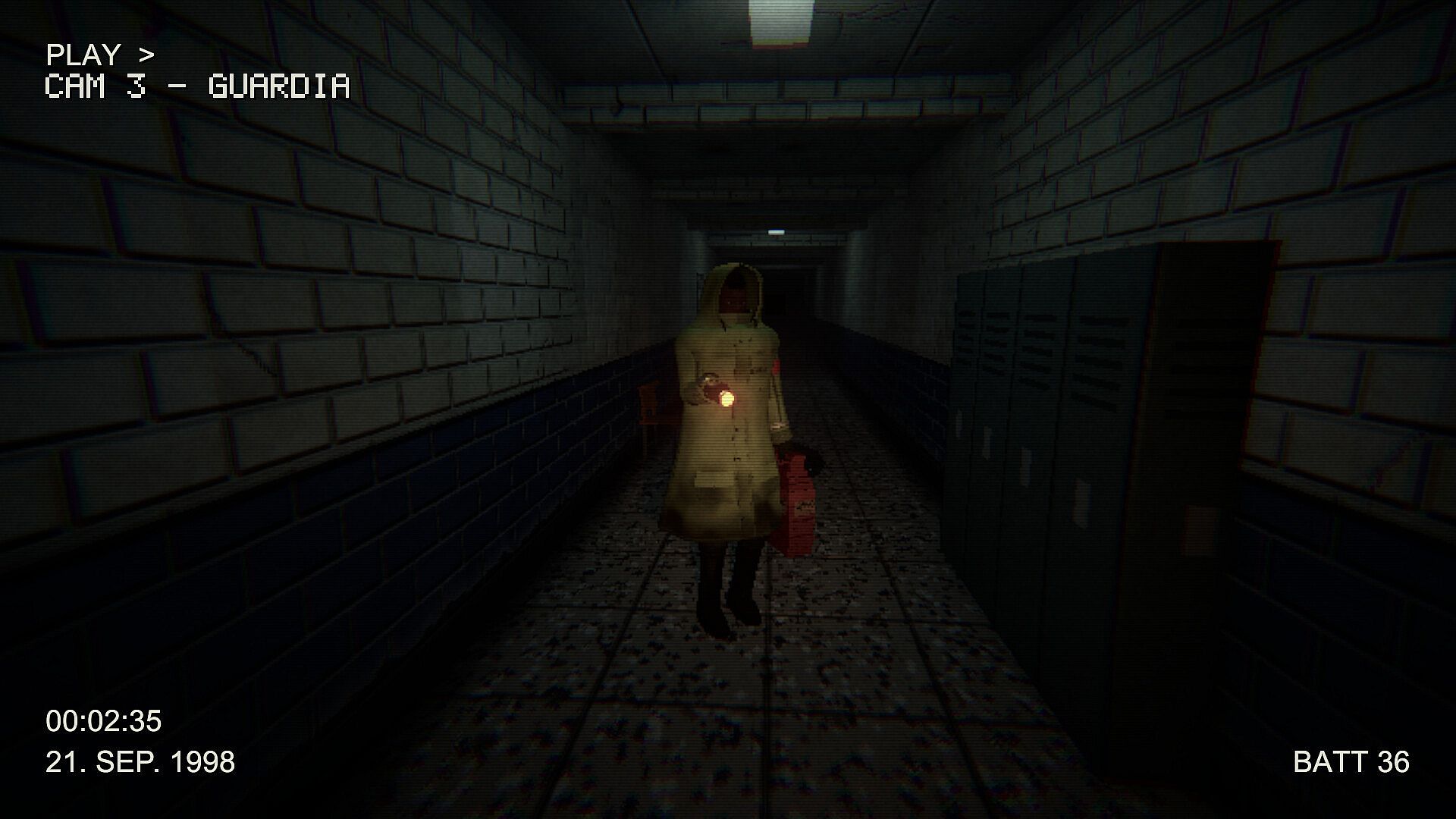
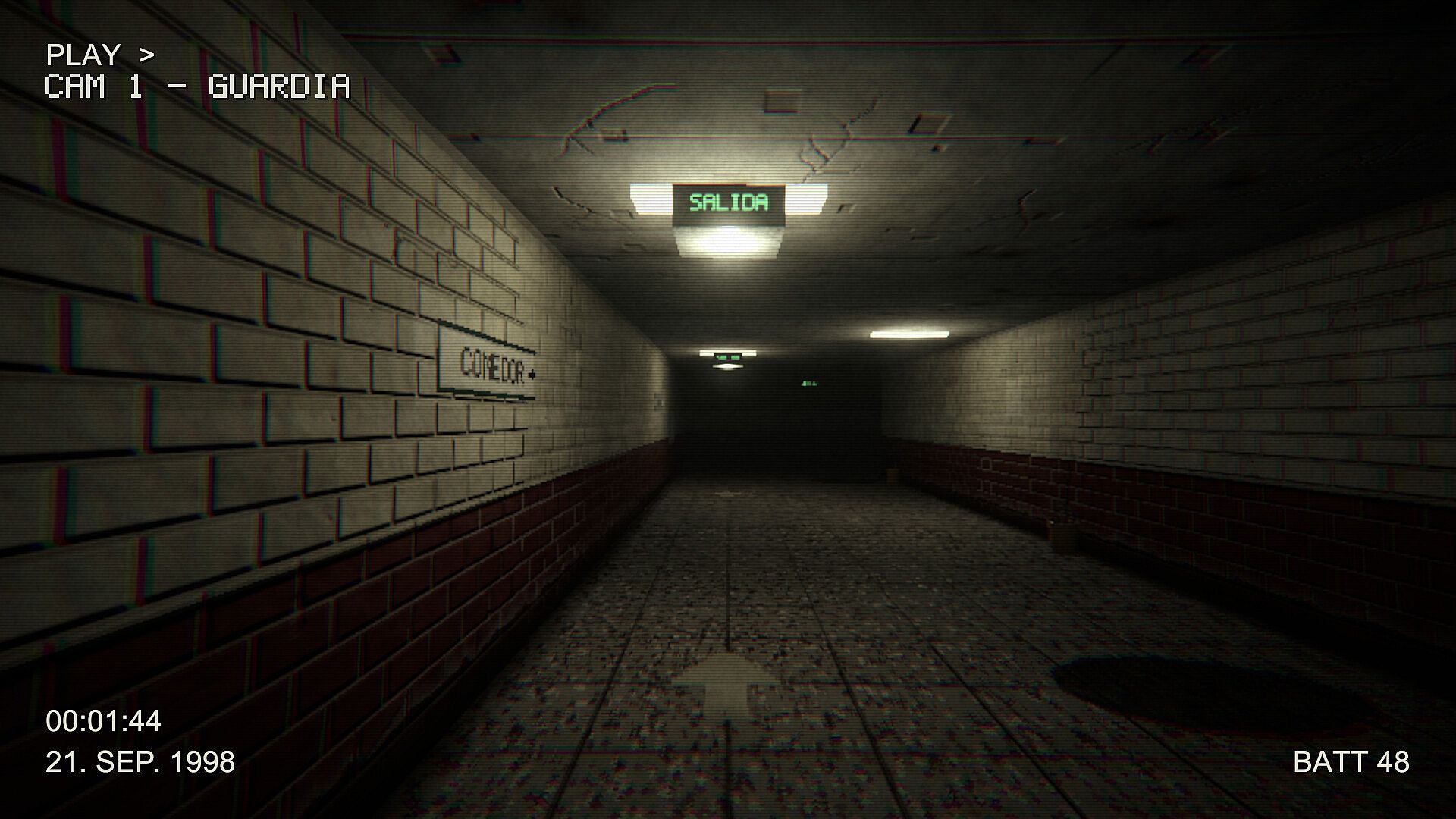
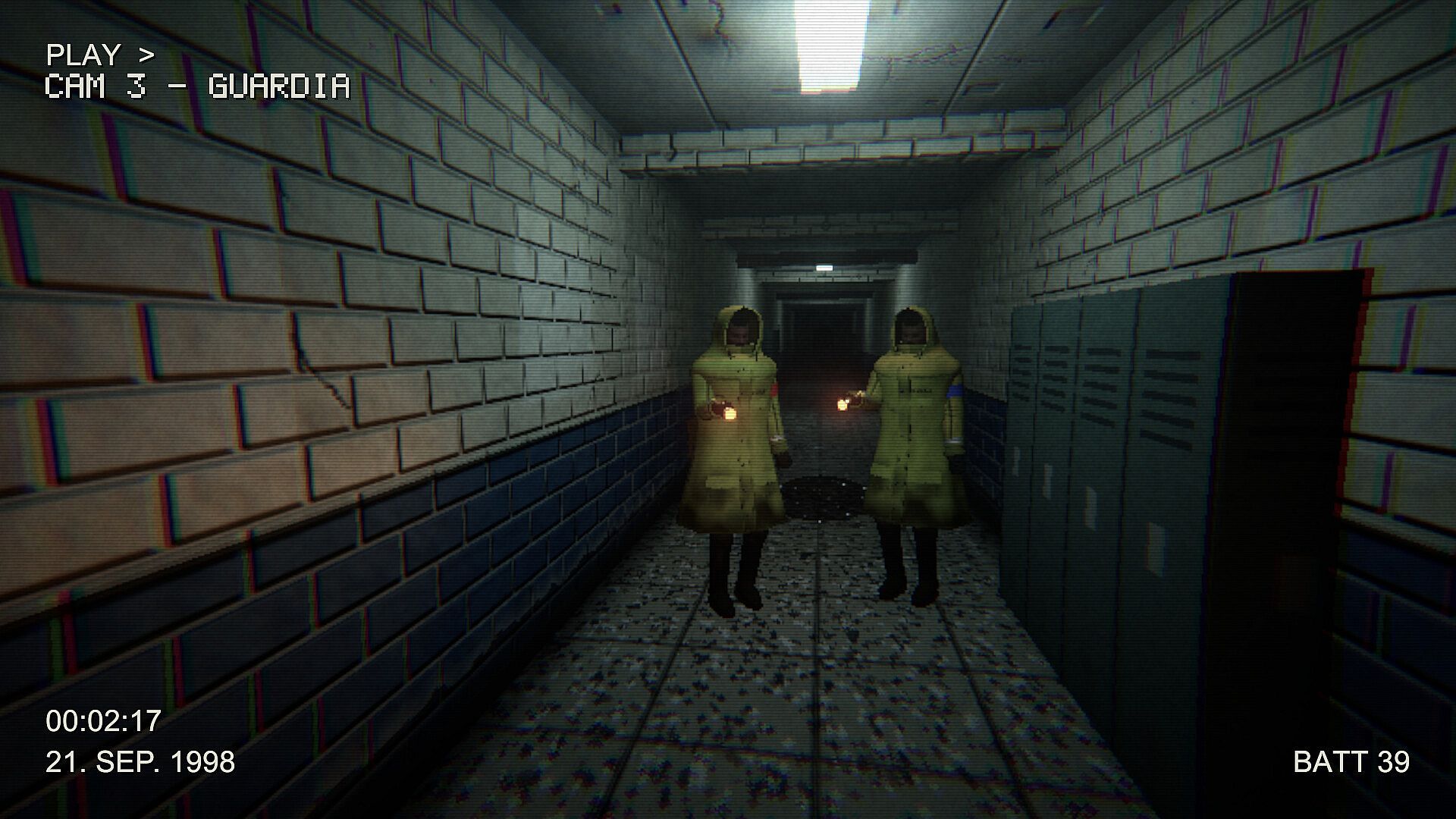
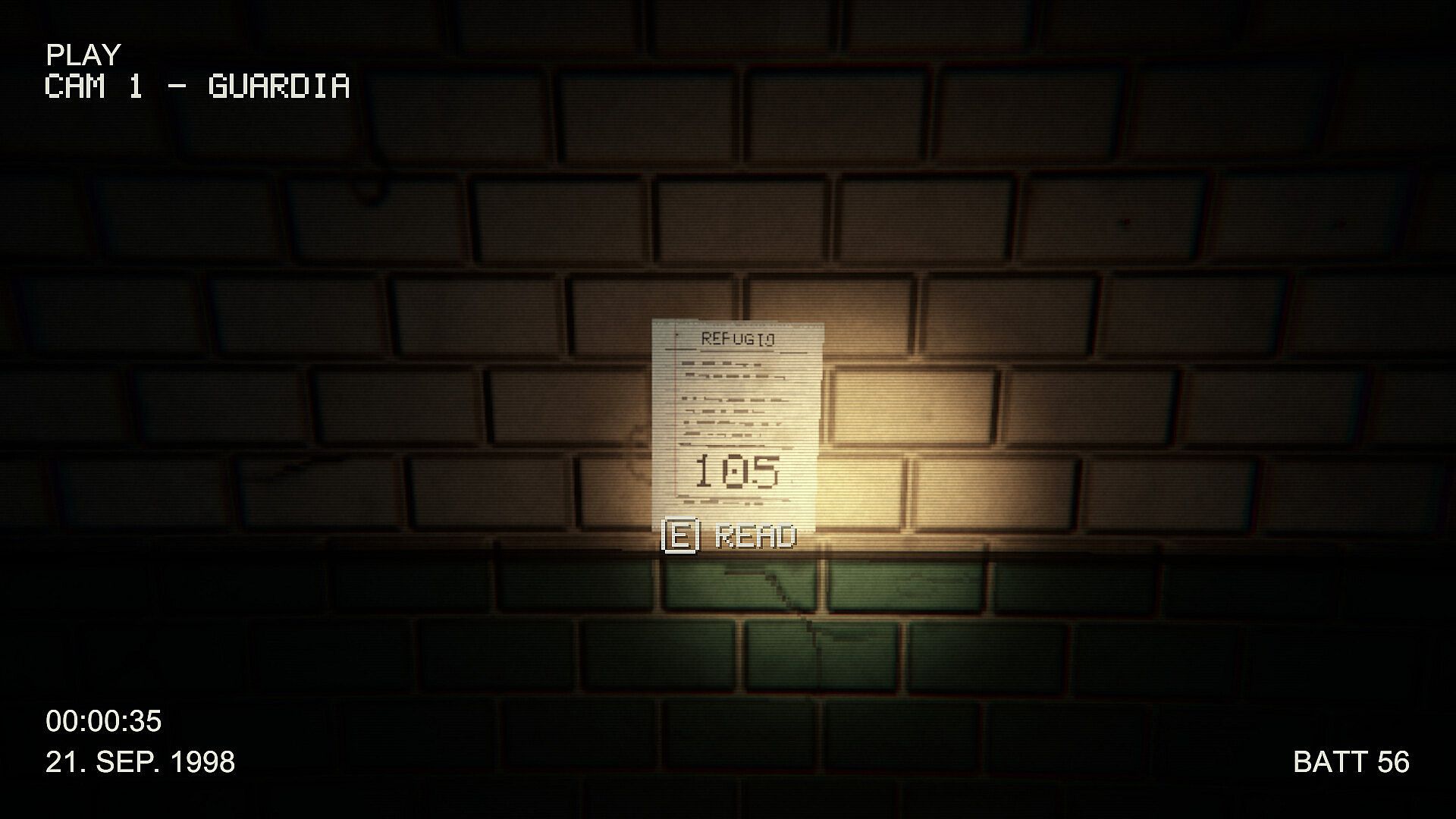
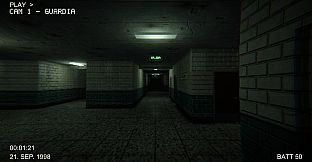
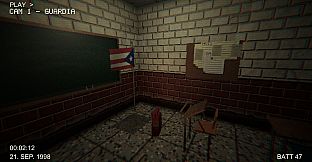
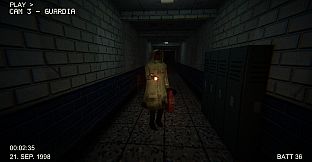
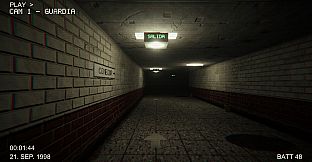
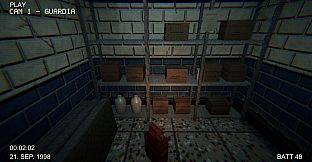
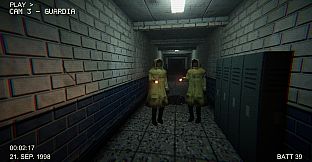
SALIDA is an indie atmospheric survival horror game set in a darkened Puerto Rican public school during Hurricane Georges in September 1998. Players experience the events through the lens of a consumer camcorder recording on VHS tape, complete with grain, tracking noise, and a date stamp in the corner. The core loop involves navigating the block-and-terrazzo hallways of the building while managing limited resources and avoiding an unseen presence that stalks the corridors.
Gameplay
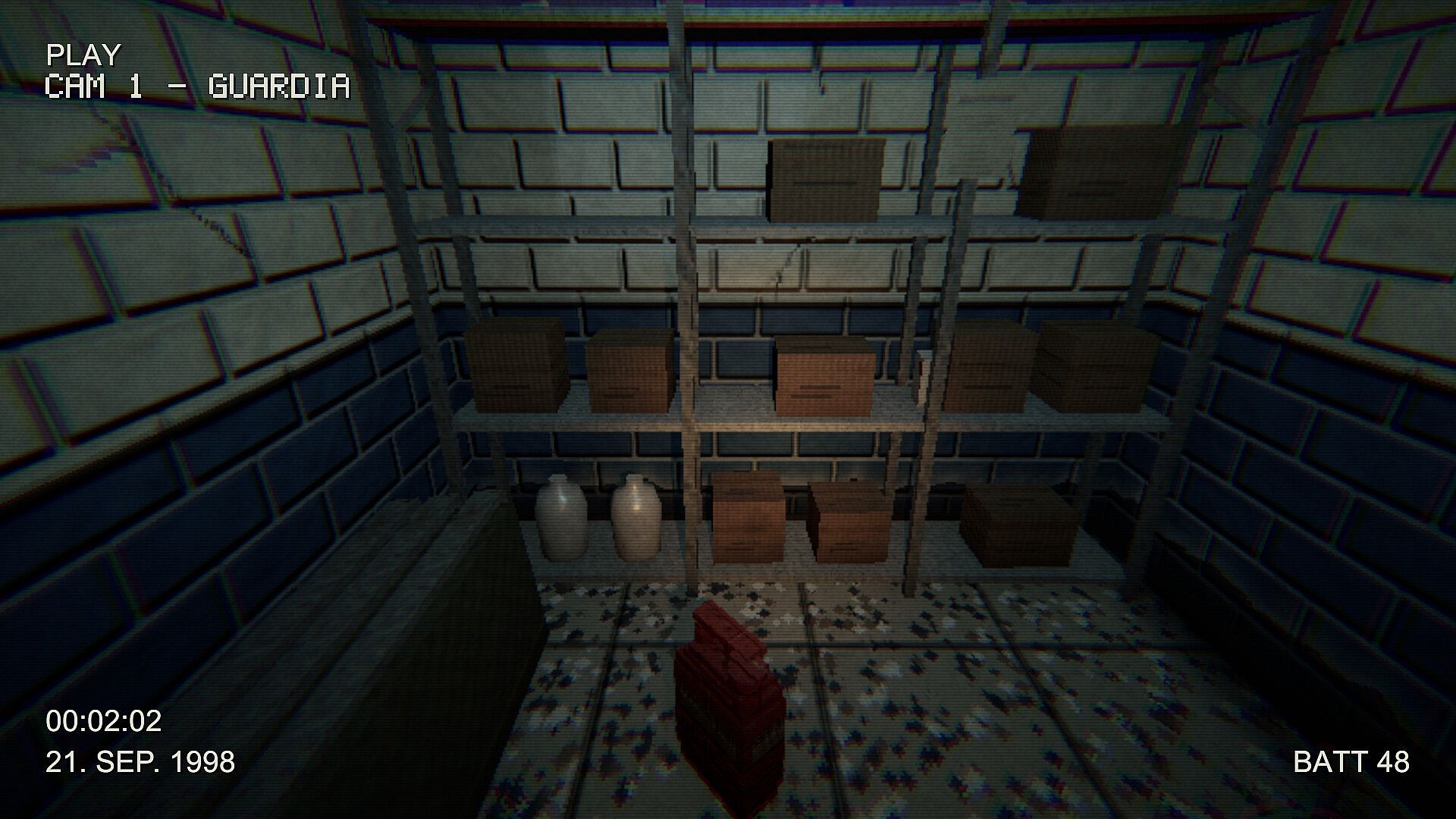
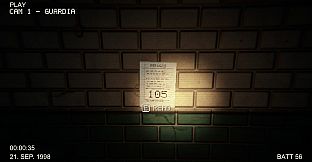
The experience centers on exploration and resource management in a school that feels abandoned yet alive with small details. Fluorescent lights hum and flicker before dying out, rain and thunder provide constant background noise, and coquí frogs chirp in wet corners with eyes that reflect the flashlight beam. When the frogs fall silent, the threat draws near. Players must locate handwritten notes scattered throughout the building to unlock specific doors, as only the correct room numbers allow entry. Gas cans must be found and carried to generators, which are started by pulling a cord. Once all generators activate, the red SALIDA exit signs switch to green and the main gate opens.
Flashlight management adds tension, as the device stutters, dims, or requires physical taps to function, with batteries in short supply. Running drains stamina, forcing careful pacing. The environment changes every session through procedural placement of corridors, doors, notes, gas cans, generators, and other props from a new seed each night, while maintaining the same overall architectural style. This prevents rote memorization of paths. The game runs on keyboard and mouse controls and emphasizes positional audio through headphones to help orient players in the dark.
Game Modes
Single-player sessions form the base experience, with each night lasting roughly ten to fifteen minutes. Completing one night returns the player to the starting point for the next, progressively more difficult shift. Co-op supports two to four players through online play with proximity voice chat, meaning teammates can only hear one another when close by. Splitting up speeds coverage of the school but removes the safety of a second flashlight and audible warnings from others. When a player dies, they remain as a spectator through a teammate's camera view while still able to communicate with surviving or fallen players via voice.
Procedural Structure and Progression
Each run generates a fresh layout, ensuring no fixed routes exist despite recurring visual elements in the school. A global leaderboard tracks progress by the number of nights survived rather than points. The nights continue indefinitely with increasing challenges, and no final ending exists because the school never fully releases its hold. This structure creates a roguelike loop focused on endurance and adaptation rather than completion.
Story and Atmosphere
Narrative unfolds through seven pages of a janitor's logbook found in different locations each night, presented in the original Spanish with on-screen English translations when needed. The pages appear in fixed order across sessions, revealing small, personal details about events at the school without cutscenes or voiceover. An eighth page appears at the end of every night. The bilingual presentation keeps found documents authentic to the 1998 setting. The overall tone avoids jump scares in favor of sustained tension from darkness, isolation, and the slow realization of what happened in the building.
Is It Worth Playing?
SALIDA stands out for players who enjoy deliberate, resource-constrained exploration in a confined space with co-op options that heighten both cooperation and risk. Its single-developer origin at Yucayeque Games in Puerto Rico brings a focused vision centered on atmosphere and subtle storytelling. The game is scheduled to release on PC with support for single-player and online co-op, plus features like Steam achievements and cloud saves. Those drawn to tense survival horror without combat or gore will find the emphasis on navigation, light management, and procedural variety rewarding, especially in group play where proximity voice adds immediacy to every decision. A second map set in the tunnels of a colonial fort is planned for future updates.