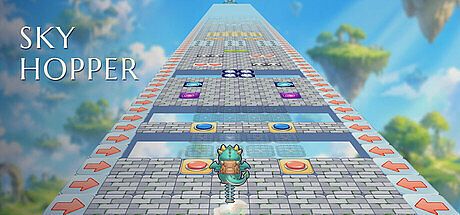


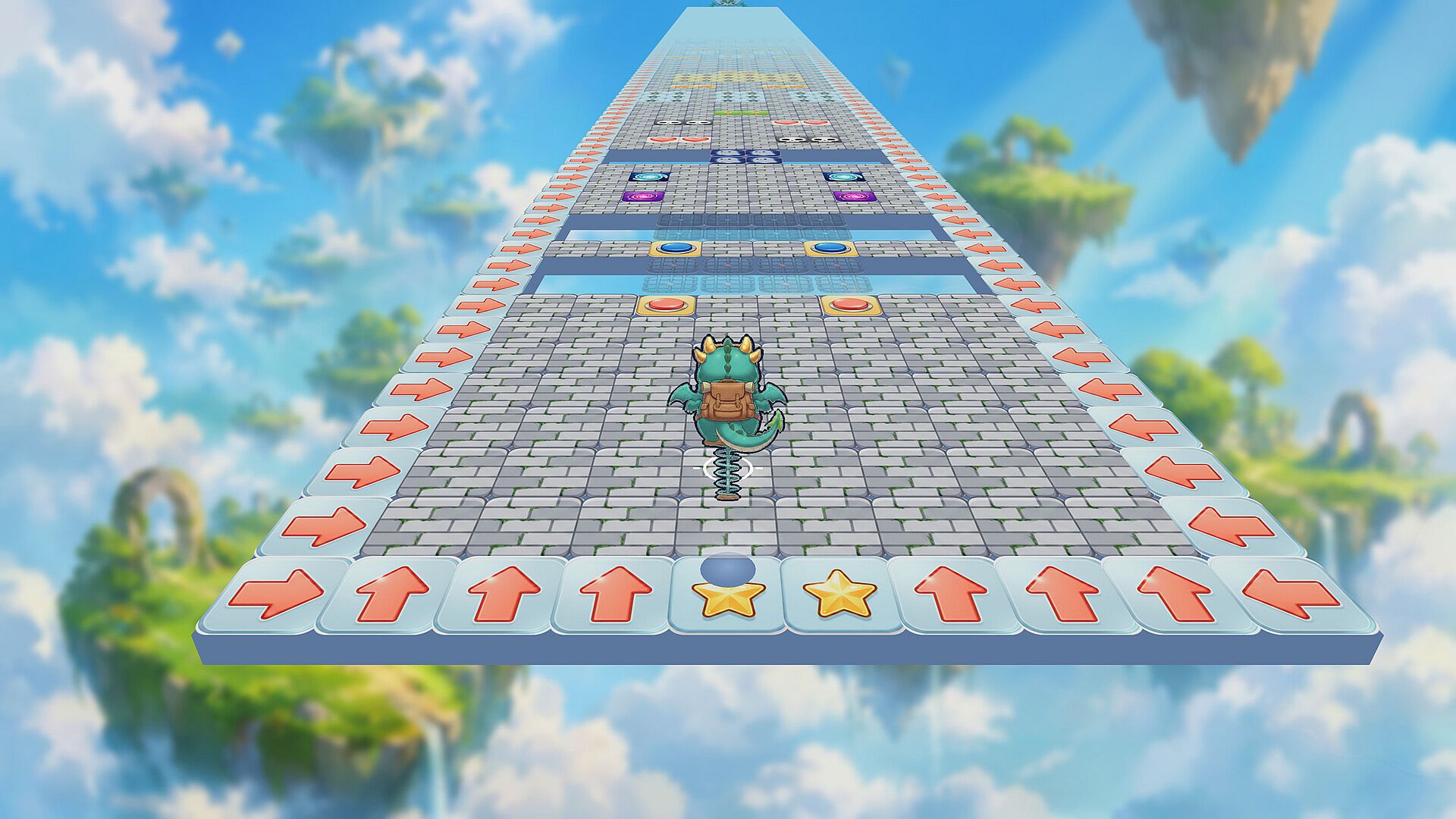
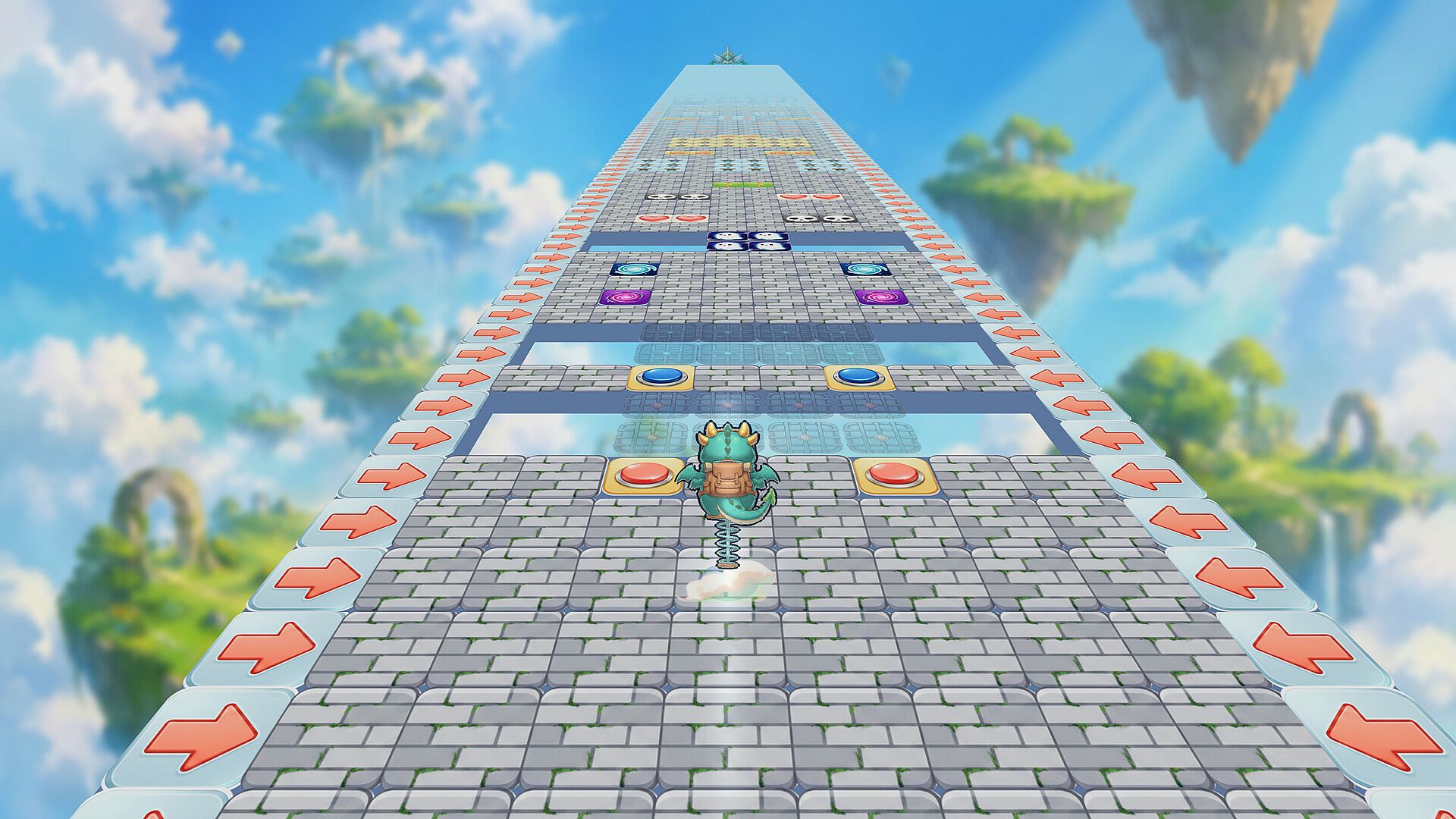
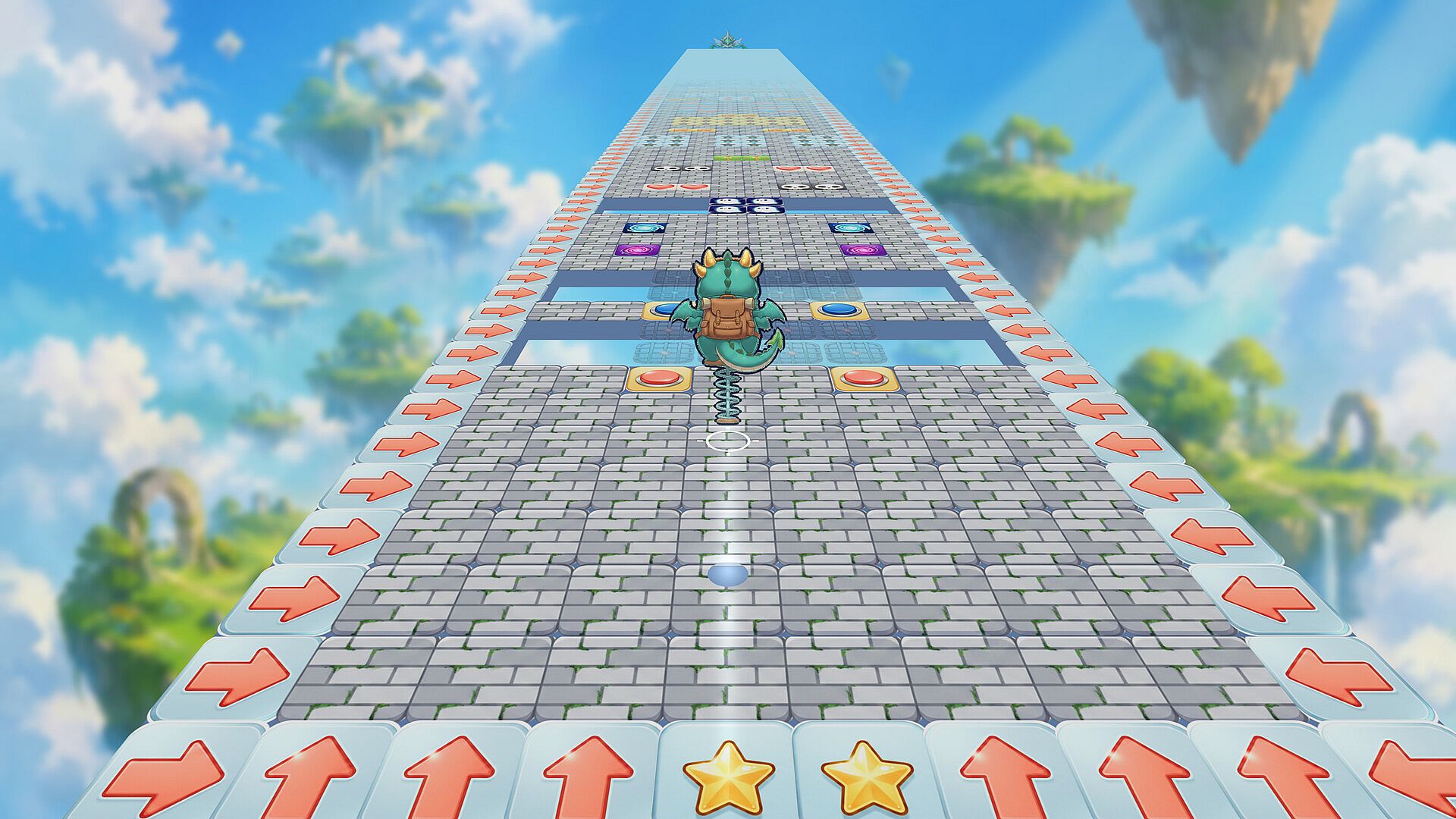
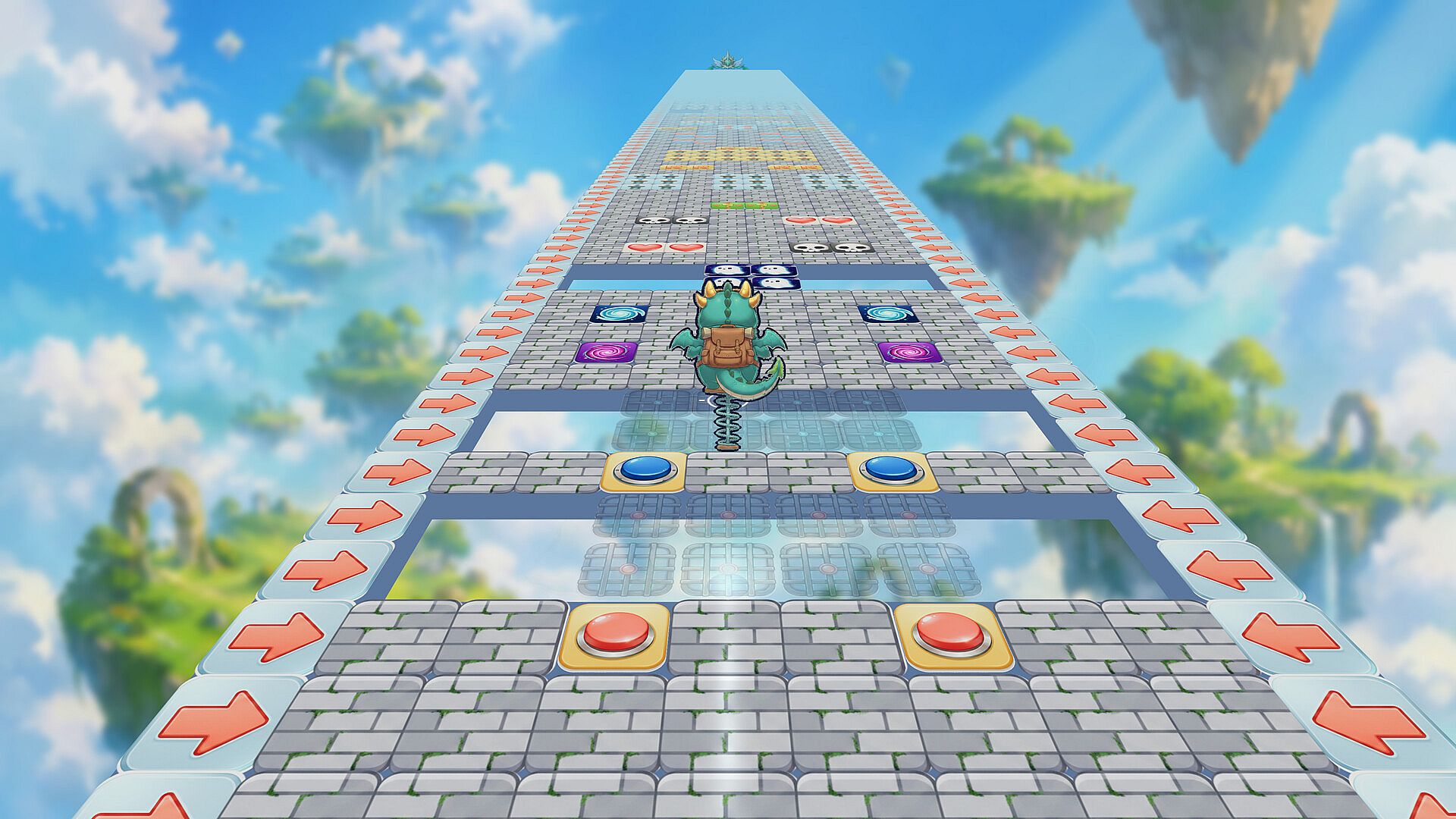
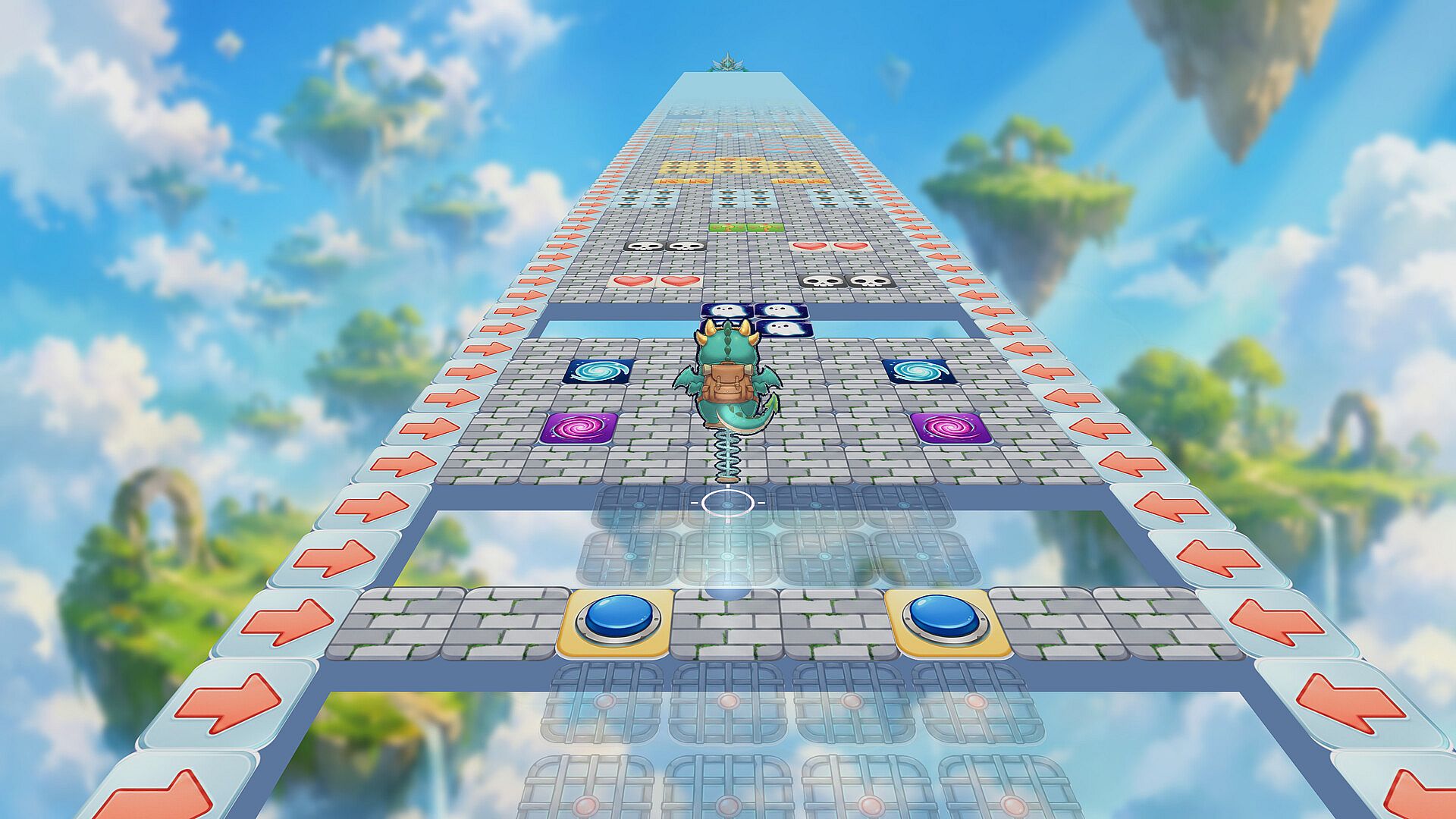
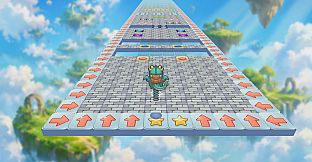
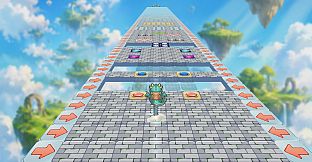
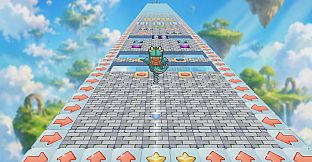
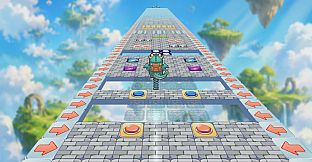
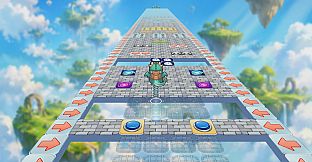
Sky Hopper is an indie casual arcade hop-racer built around continuous pogo-style movement across floating sky-island courses. The core loop centers on a hopper whose spring never stops bouncing, turning every level into a series of committed directional choices rather than free-form platforming. Players steer mid-air, align landings on helpful tiles, avoid harmful ones, and push toward the finish line before the timer expires.
Gameplay
The movement system stays deterministic, meaning identical inputs always produce the same outcome. This removes randomness and places full responsibility on the player for missed lines or mistimed bounces. When a run ends short of the goal, an instant retry lets players refine their path without loading delays or menu navigation.
Course design revolves around reading the layout in advance. Boost pads accelerate momentum, springs alter bounce height, switches activate gates or warps, ghost tiles appear or disappear on timing, and crumbling platforms demand quick exits. Each element forces route decisions that compound across a full level. Shorter paths often carry higher risk through tighter gaps or unstable surfaces, while safer routes trade time for stability.
Four distinct hoppers offer different handling feels while clearing identical courses. Players select one at the start of a session and adapt to its bounce timing and steering response. The visual style keeps focus on the floating islands and tile interactions rather than elaborate character models.
Game Modes
The primary experience comes from a 50-level campaign spread across five themed worlds. Early worlds feature gentler green islands that introduce basic tile types and forgiving timing windows. Later worlds escalate with storm-wracked peaks that layer new hazards and demand tighter execution. Each level supports up to three stars based on completion time, encouraging repeated attempts for perfect runs that thread narrow shortcuts.
A built-in stage editor serves as the second major mode. Users place tiles one by one to construct custom courses, then run them through an automated rulebook that flags broken designs such as unreachable goals or invalid tile combinations. Instant test-play follows validation, allowing rapid iteration before sharing finished stages with other players.
Level Design and Progression
World themes progress from calm floating meadows to increasingly turbulent environments. New tile mechanics appear gradually, giving players time to internalize each addition before combinations test multiple systems at once. The handcrafted nature of the 50 levels ensures consistent pacing, with difficulty spikes tied to specific combinations of speed, precision, and foresight rather than arbitrary increases in enemy count or complexity.
Star collection rewards tight routing and brave shortcuts. A three-star run typically requires near-optimal bounce chains and minimal wasted air time. The deterministic physics make these targets objective benchmarks that players can chase across multiple sessions without external variables interfering.
Is It Worth Playing?
Sky Hopper suits players who enjoy precise, skill-focused platforming where failure stems directly from input choices. The instant retry loop supports rapid improvement, and the campaign structure provides clear goals through its star system and world progression. Those who appreciate building and sharing custom content will find additional longevity in the editor and its validation tools. The game remains a focused single-player experience centered on personal mastery rather than competitive leaderboards or live-service elements. If the combination of continuous bouncing movement, tile-based routing, and level creation appeals, the title delivers a coherent package on PC without extraneous features.