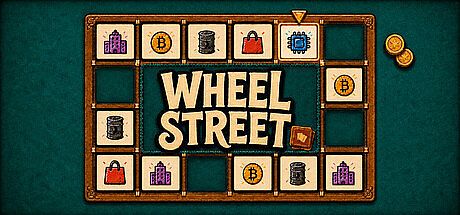


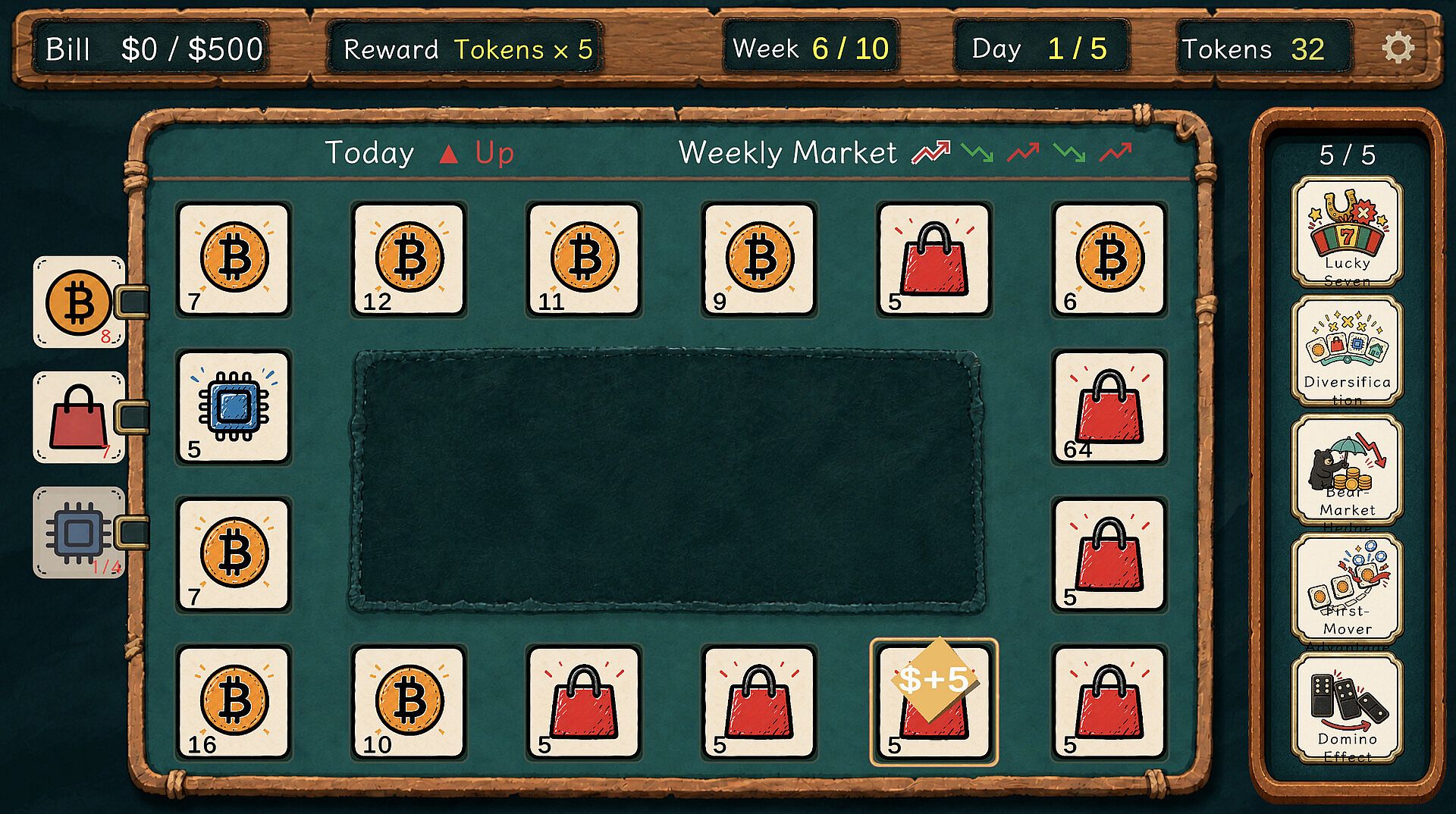
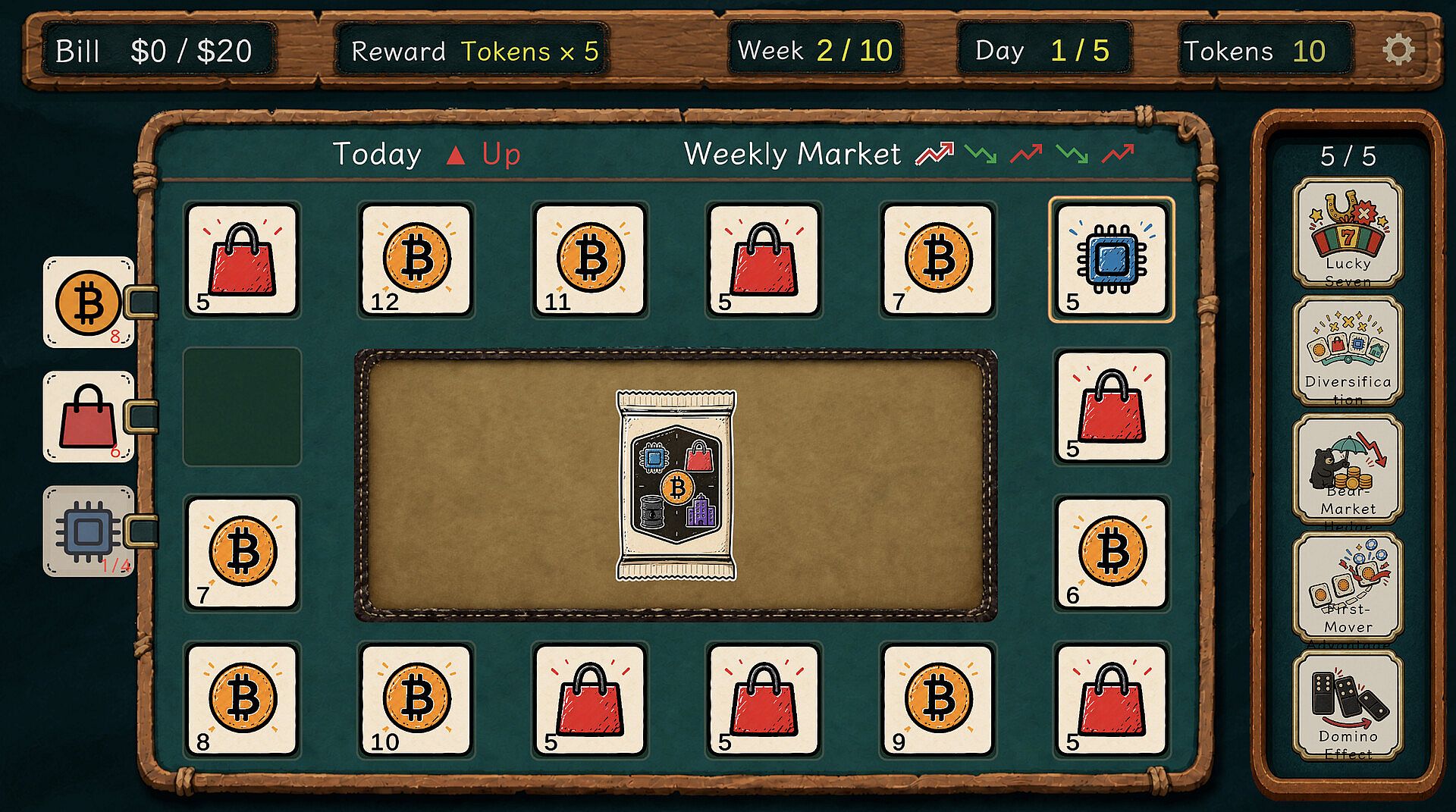
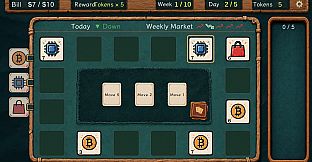
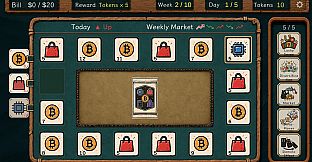
Wheel Street is a single-player strategy game that blends roguelike deckbuilding with financial simulation on a circular board. Players manage assets across sectors like technology, crypto, consumer goods, commodities, real estate, and banking while navigating weekly market cycles that are fully visible in advance. The core loop involves positioning a pawn and assets to capitalize on up days and down days, building combos through movement cards and strategy cards for escalating returns.
Gameplay
Each run begins with a randomized set of starting assets and market patterns. At the start of every week, the five-day outlook appears, showing which days will rise or fall for specific assets. Landing on an asset during an up day collects its current value, while hitting it on a down day doubles its future value. This setup rewards careful planning over pure chance.
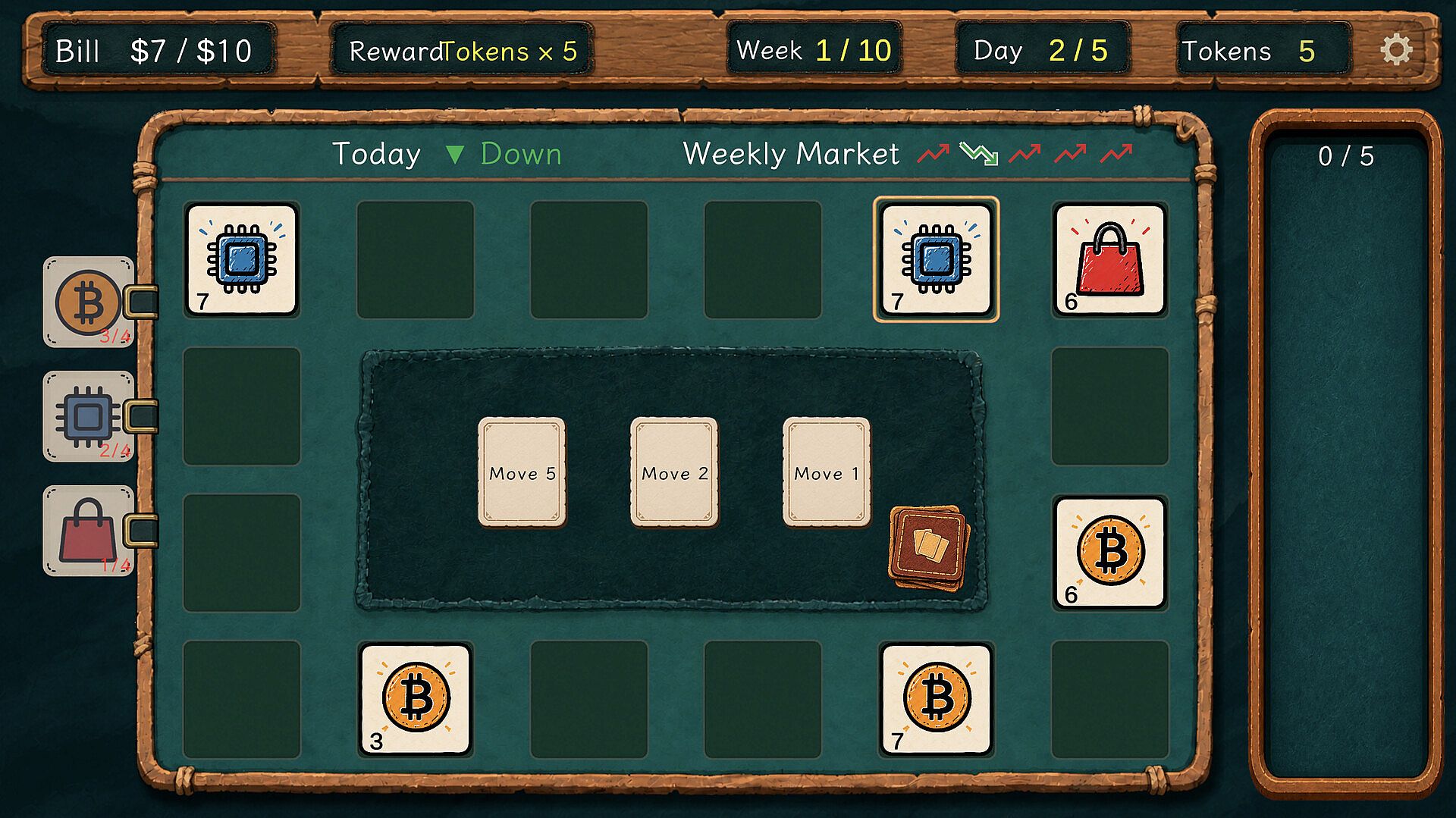
Movement happens through three cards chosen each day. These allow the pawn to advance clockwise or let players reposition assets on the board. Empty spaces can receive new assets, matching sectors can merge to boost combined value, and swaps can rearrange the layout for better positioning. Every choice influences future landings and triggered effects.
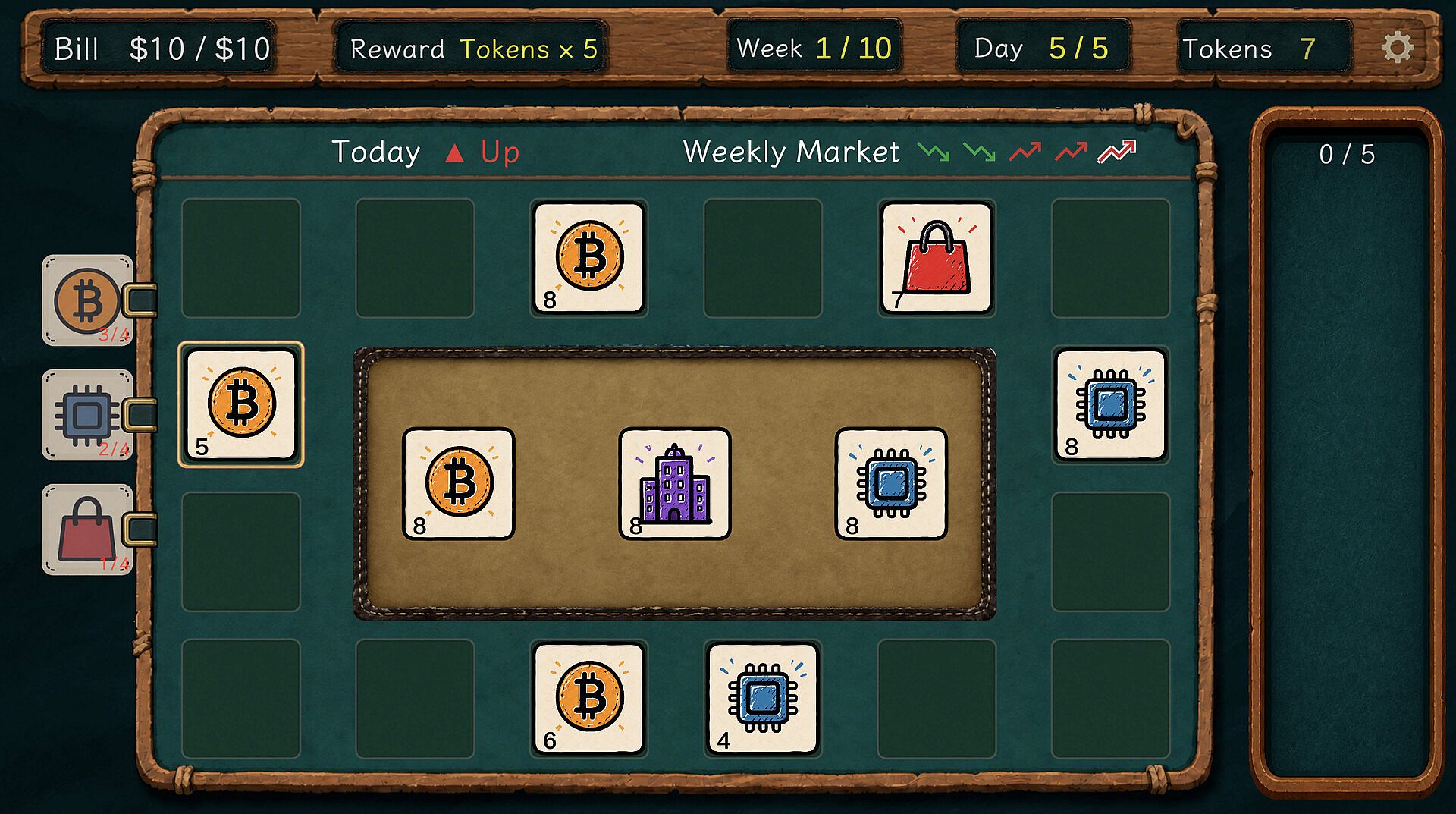
Portfolio building centers on concentrating assets from the same sector to unlock abilities such as dividends, sector rotation, leverage, futures, location bonuses, and compound interest. Strategy cards add layers by altering growth rules, settlement timing, or creating chain reactions when conditions align and trigger order is managed correctly.
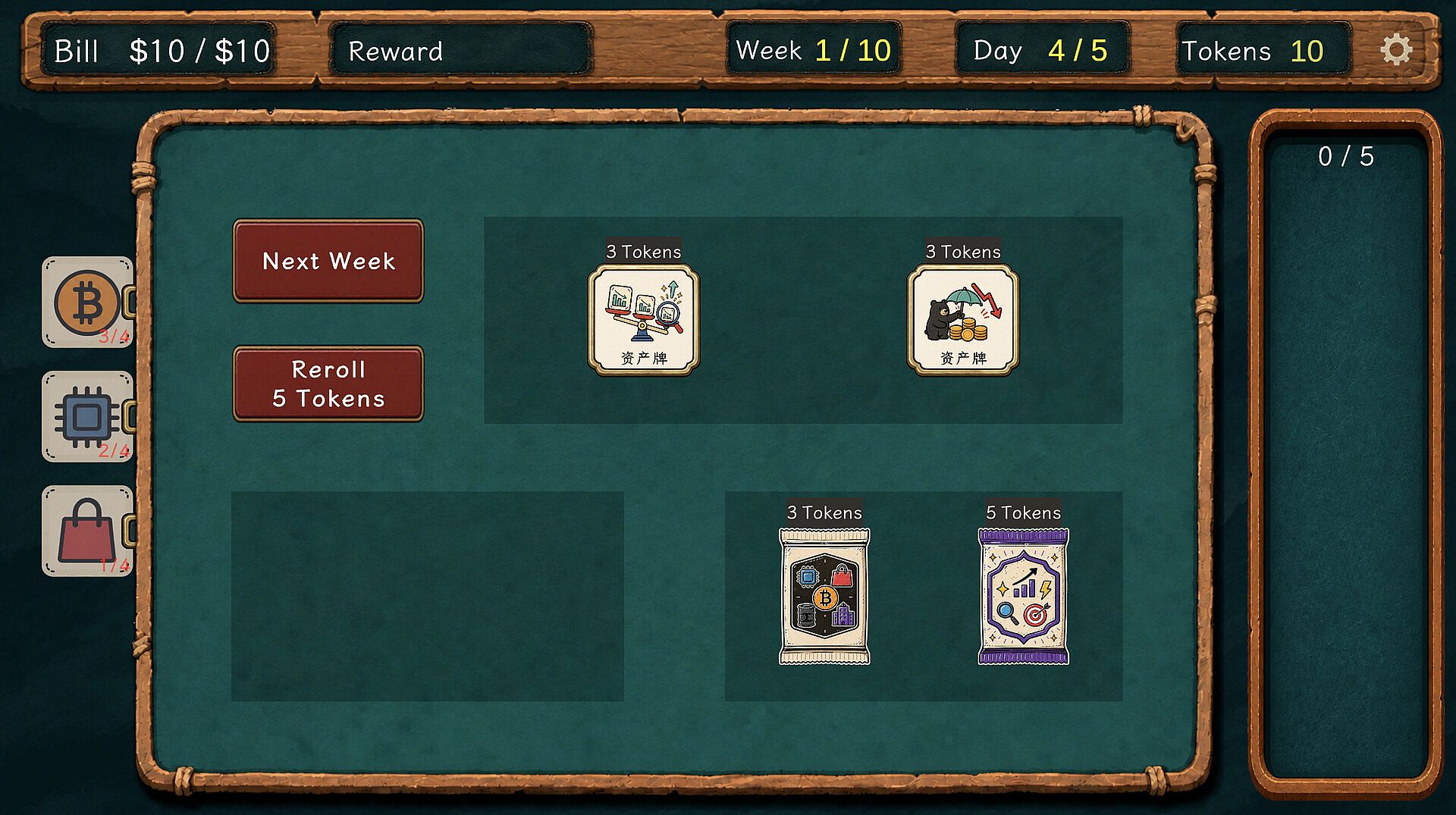
The wallet serves dual purposes as both the run score and available funds. Purchasing new assets strengthens the portfolio but reduces cash available for the weekly target. Meeting the target advances the run and unlocks shop visits for tokens, while falling short ends the attempt. Randomized elements in assets, patterns, cards, and shop stock ensure each attempt presents fresh strategic challenges.
Game Modes
Wheel Street operates as a single-player experience focused on repeated roguelike runs. Every attempt starts fresh with new starting conditions, encouraging players to adapt strategies around the opportunities presented rather than following a fixed path. The structure emphasizes high replayability through procedural variation in market cycles and card availability.
Progression ties directly to weekly targets that increase in difficulty. Successful runs grant tokens for shop purchases that carry benefits into future attempts, while failures reset the board but allow experimentation with different asset concentrations and card synergies. No separate modes exist beyond this core loop of building and surviving market swings.
Key Mechanics and Features
The circular board creates constant interaction between movement, asset placement, and market timing. Players must balance immediate cash collection against long-term growth by deciding when to invest versus when to cash out. Sector synergies reward focused builds, while strategy cards enable rule-bending combos that turn modest positions into large payouts.
Visible market information removes hidden information but shifts the challenge to execution and board control. Luck influences card draws and initial setups, yet player decisions determine how those options translate into results. The system supports both cautious accumulation during downturns and aggressive positioning ahead of rises.
Is It Worth Playing?
Wheel Street suits players who enjoy strategic deckbuilders and roguelikes with a distinctive theme. The circular movement and asset manipulation add a spatial layer uncommon in the genre, while the financial mechanics provide clear cause-and-effect feedback without requiring prior knowledge. Randomized runs and escalating targets create meaningful decisions around risk and resource management.
Those drawn to combo crafting and adapting to procedural challenges will find depth in sector synergies and card interactions. The single-player format keeps focus on personal strategy rather than competition. Availability on PC makes it accessible for sessions of varying length, with each run offering a self-contained puzzle that builds on previous attempts through shop upgrades.