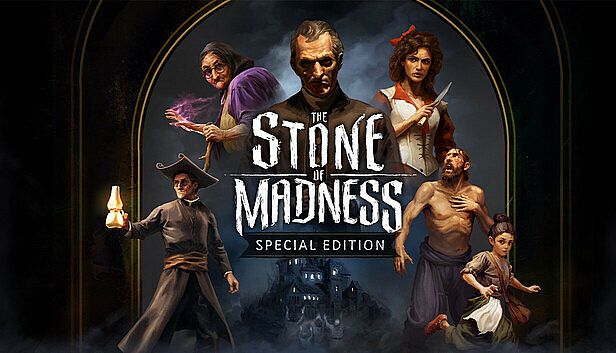






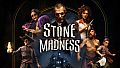

The Stone of Madness Special Edition delivers a real-time tactical stealth experience set in an 18th-century Spanish monastery that serves as both a madhouse and an inquisitorial prison. Players guide a group of five prisoners through this isolated Pyrenees location, managing their skills, fears, and sanity while working toward escape and uncovering hidden truths. The game blends action, strategy, indie sensibilities, RPG progression through character upgrades, and adventure elements into a single-player isometric title focused on careful planning and adaptive decision-making.
Gameplay
Core play revolves around selecting three of the five available characters for each daytime excursion into the monastery grounds. Each prisoner brings distinct abilities such as moving heavy objects, sneaking through tight spaces, climbing walls, picking locks, casting spells, or creating distractions. These skills combine with environmental interactions to open paths, bypass guards and clergy, or handle hostile spirits that appear as daylight fades.
A continuous time system governs the day, with patrol routes shifting and areas becoming restricted as hours pass. Players must weigh the risks of lingering in one spot against the need to complete objectives like gathering resources or advancing story goals. At night the group returns to their cell for recovery, where sanity can be restored through rest or interaction, items crafted, and plans refined for the next cycle. Phobias tied to each character trigger under specific conditions, draining a sanity meter and potentially causing breakdowns that alter behavior or impose new limitations during missions.
Upgrades improve individual skills over time, while collected materials support both daytime tools and nighttime preparations. The isometric perspective provides clear sightlines for vision cones and sound ranges, encouraging precise positioning and timing to avoid detection or confrontation.
Game Modes
Two distinct campaigns form the main structure, each presenting its own narrative arc, objectives, and supporting characters. One campaign runs shorter while the other extends further, allowing players to choose a focused path or tackle both for a longer overall journey. Progression remains linear within each story but rewards experimentation with different character combinations and routes through the monastery.
Single-player focus keeps attention on the core loop of stealth, resource management, and psychological pressure without any multiplayer components. The campaigns share the same underlying systems yet diverge in story beats and environmental challenges, encouraging replay through alternate team selections and timing choices.
Setting and Atmosphere
The hand-crafted monastery environment draws from historical Spanish architecture and artistic influences, featuring detailed interiors and exteriors that shift in accessibility and danger across the day-night cycle. Guards, priests, nuns, and supernatural elements populate the halls, creating layered threats that demand constant awareness. The setting emphasizes isolation and institutional cruelty, with prisoner backstories and phobias adding personal stakes to every decision.
Exploration reveals clues about the monastery's secrets while players balance immediate survival needs against long-term escape strategies. Resource scarcity and the ever-present risk of mental strain reinforce the oppressive tone without relying on overt horror mechanics.
Is It Worth Playing?
This title suits players who appreciate tactical stealth games with added layers of character management and time pressure. The combination of unique prisoner abilities, phobia-driven consequences, and a strict day-night rhythm creates memorable moments of tension and clever problem-solving. Campaigns offer meaningful variety in objectives and pacing, supporting multiple playthroughs for those who enjoy optimizing routes or testing different team compositions.
Technical issues noted around launch, including occasional bugs and control quirks, may affect some sessions, though the core systems remain engaging for fans of deliberate, systems-driven gameplay. Availability on PC makes it accessible for those with compatible hardware, and the experience rewards patience with its depth of interaction between characters, environment, and mental state. Individuals drawn to strategy titles that integrate psychological elements alongside traditional stealth will find the most consistent satisfaction here.