

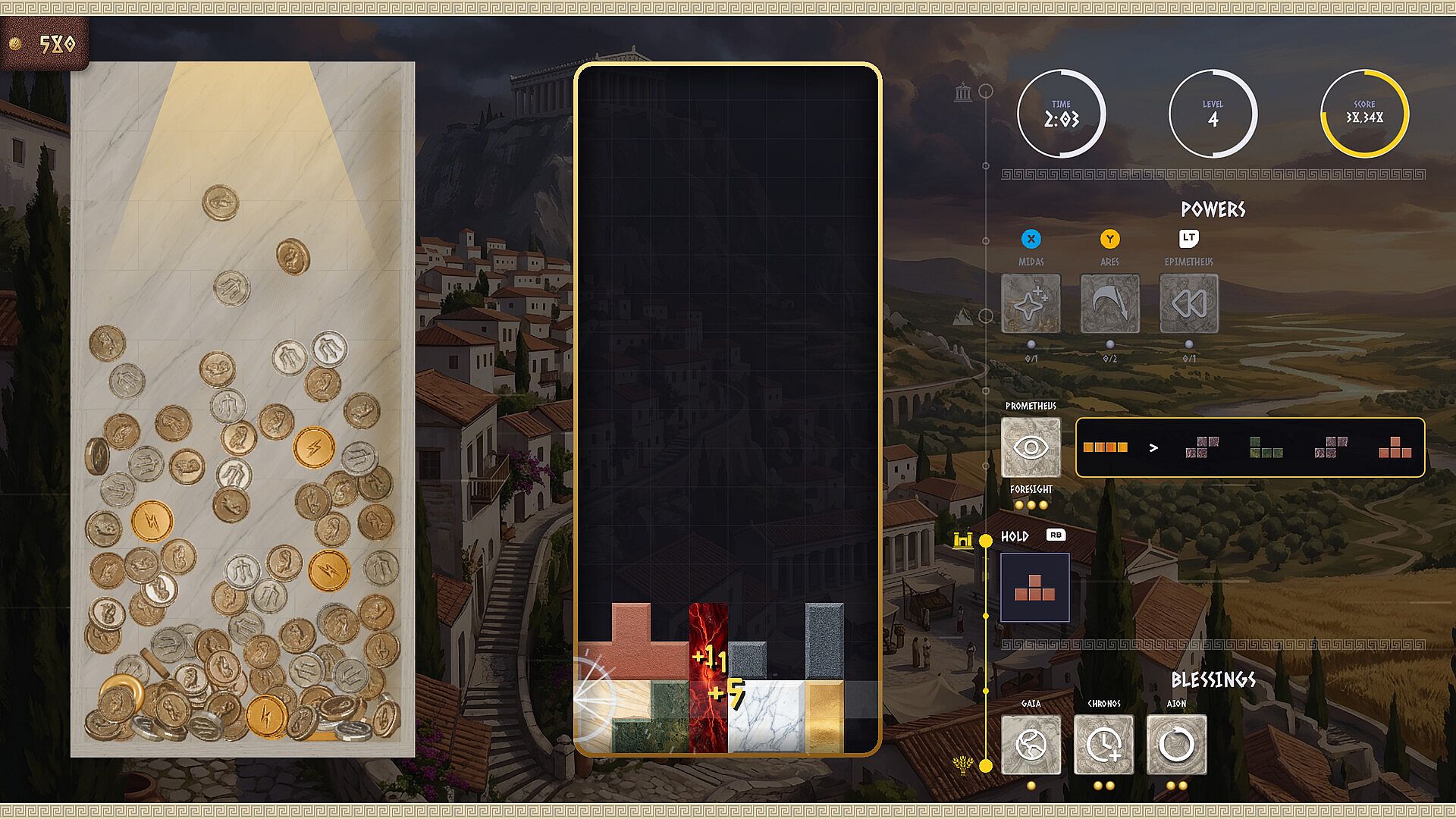
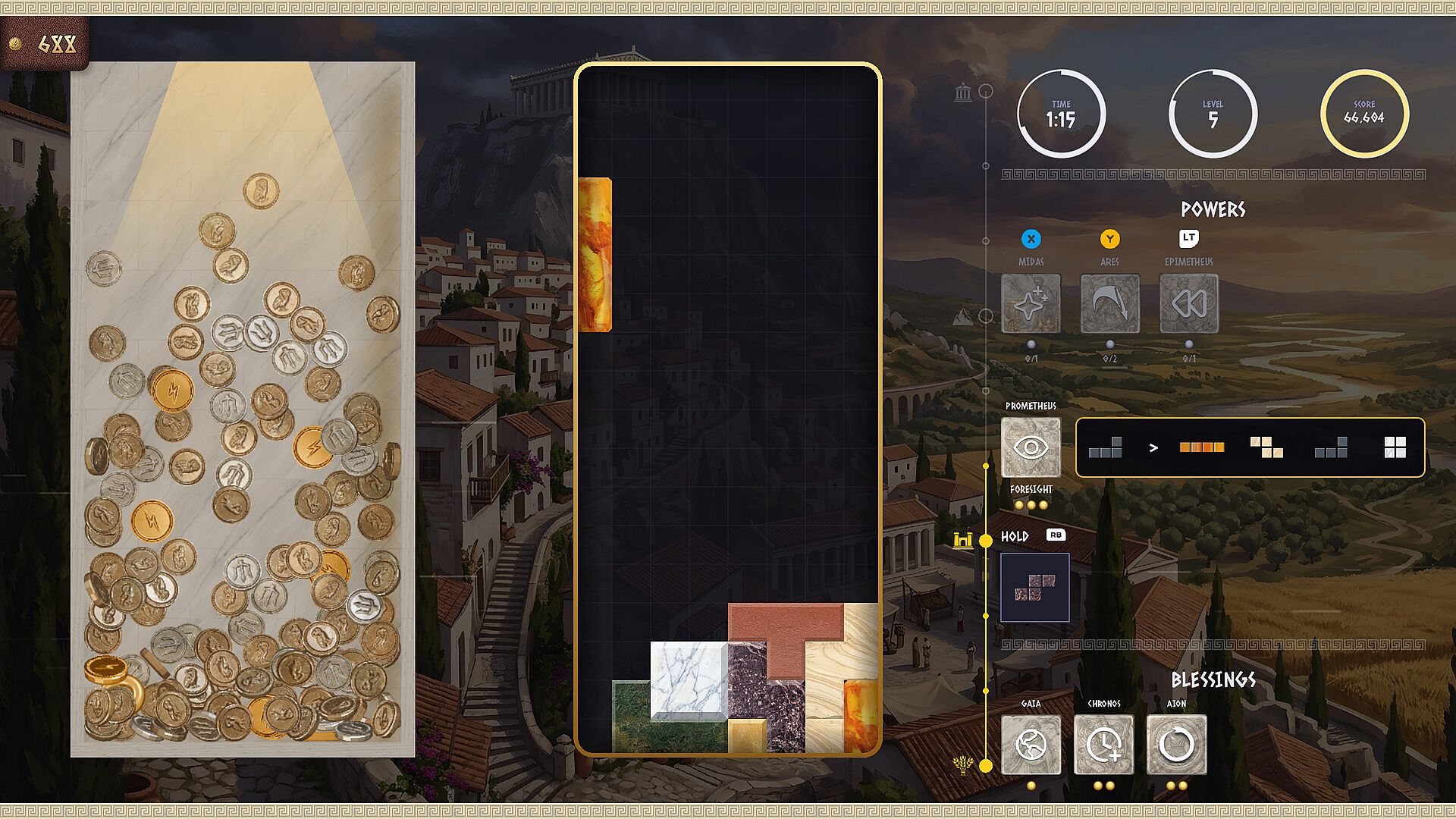
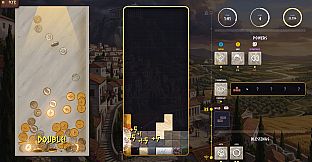
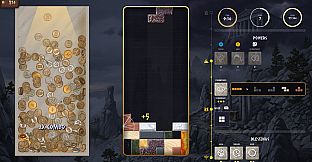
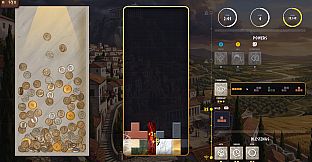
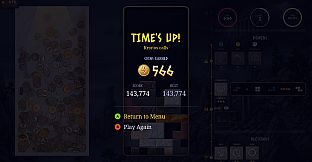
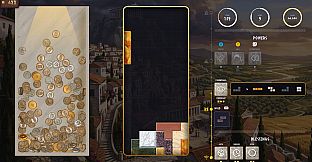
Tetragrade is a single-player casual block-stacking roguelite developed for PC. Players stack falling pieces made from seven distinct materials to clear lines and earn gold that funds permanent upgrades from ten Greek gods. The core loop centers on precise placement in a growing playfield, with each run building toward longer survival through god favors that alter piece behavior and board dynamics.
Gameplay
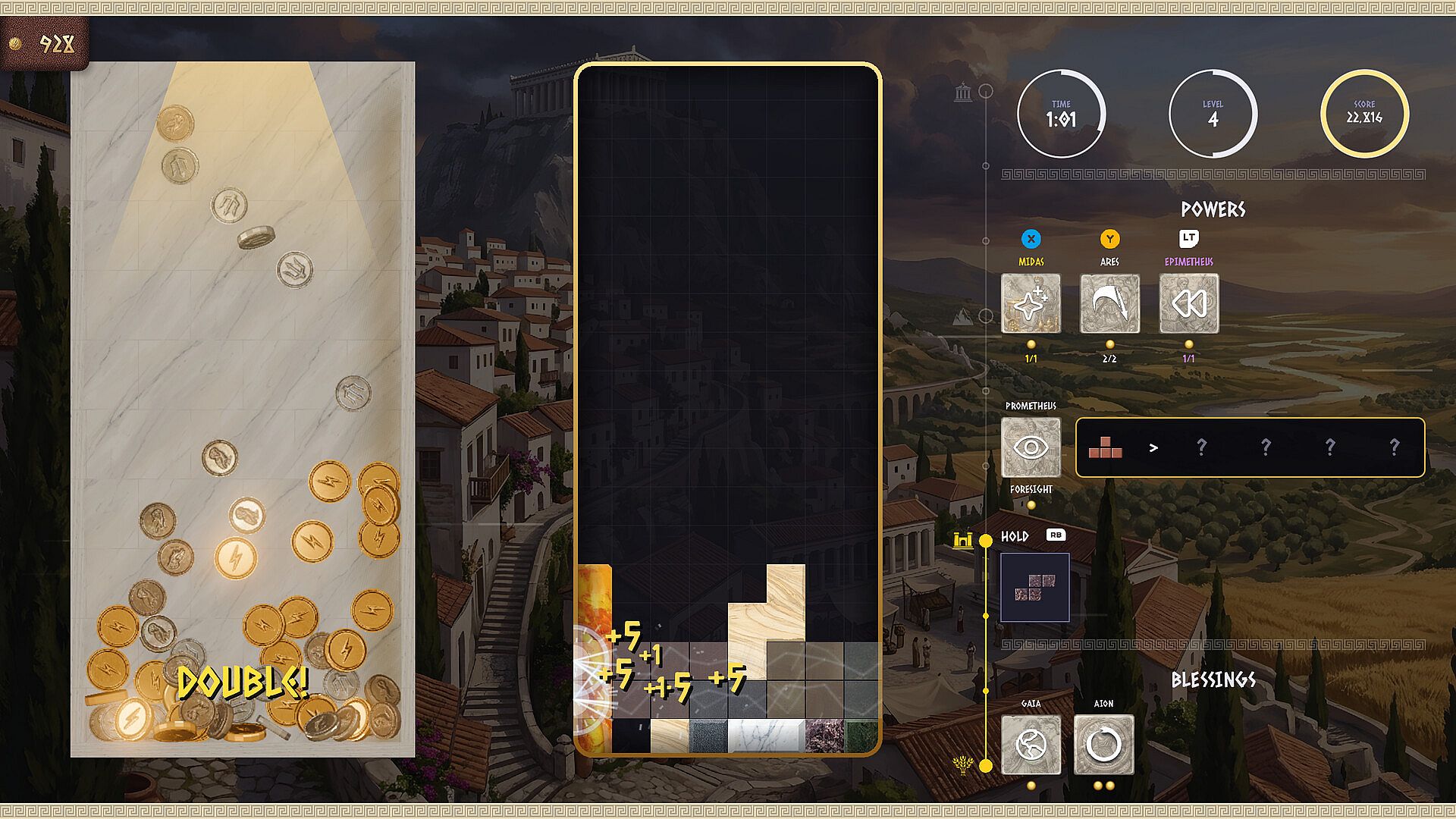
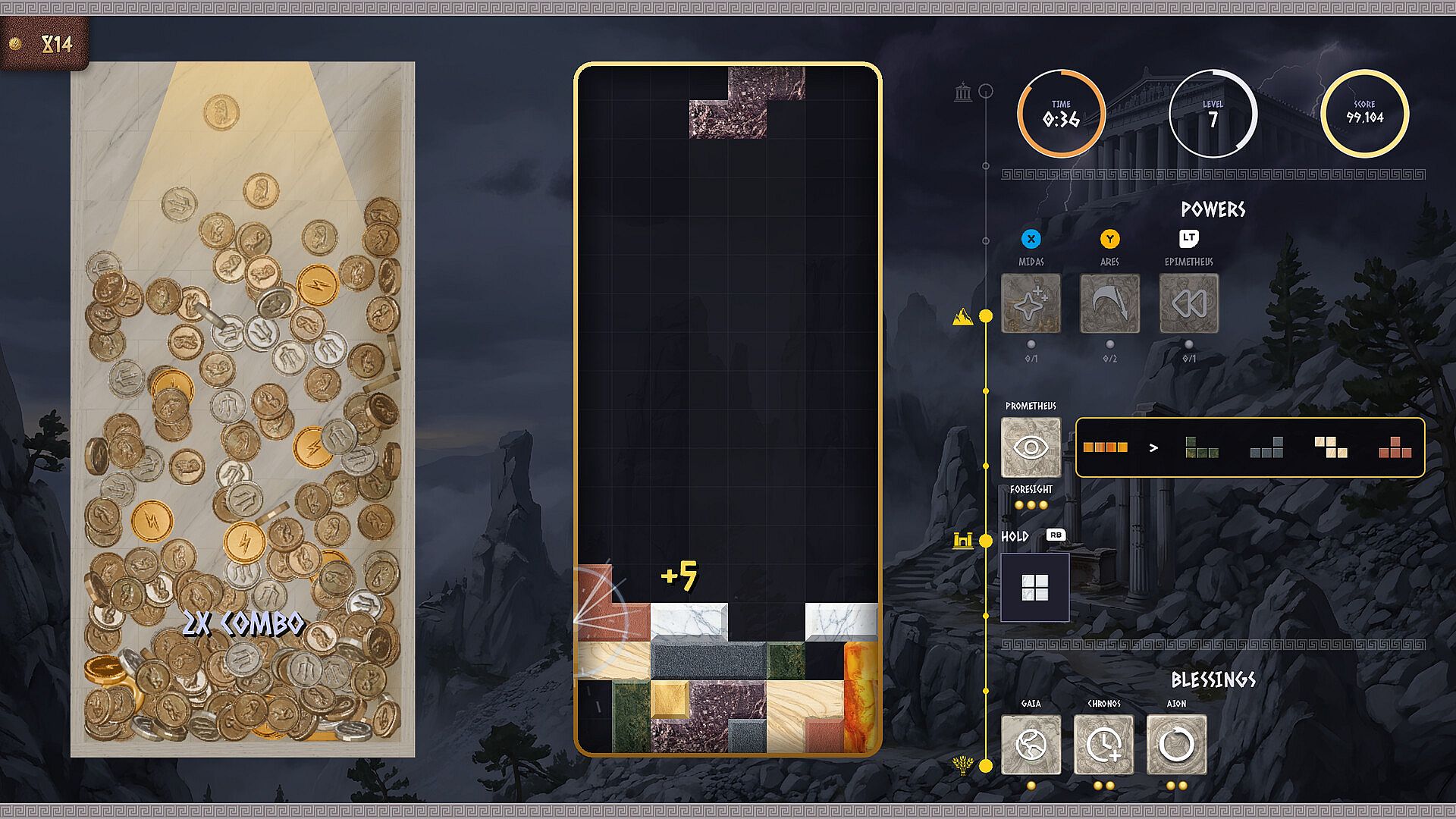
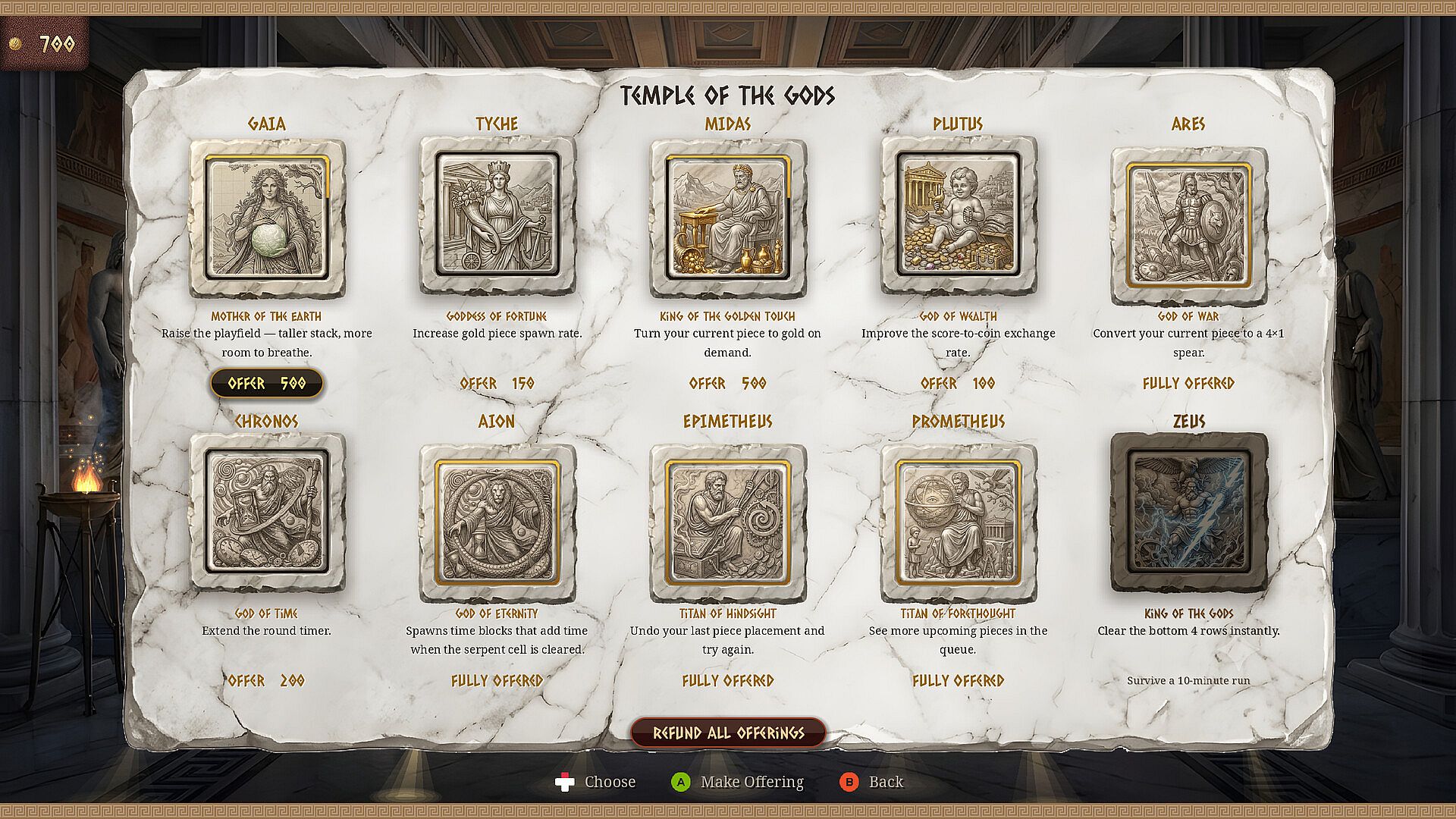
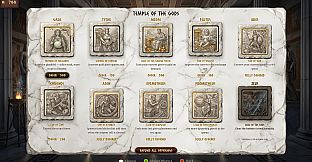
The foundation follows standard falling-block rules with a seven-bag randomization system and conventional scoring. Pieces descend into a board that expands over time, and clearing lines triggers cascades while releasing physical coins into a marble offering bowl. Seven materials appear in sequences that rarely align with player preference, requiring adaptive stacking to maintain space. Gold collected from clears purchases upgrades across twenty-four tiers from ten gods, with each tier refundable to allow complete rebuilds of a run strategy. Specific gods introduce targeted changes: Gaia elevates the playfield, Tyche influences piece distribution, Prometheus reveals upcoming pieces, Midas converts a piece to gold, Ares transforms it into a spear, Aion places Ouroboros stones that return time, and Zeus provides a lightning bolt to clear the bottom rows. Runs begin at ninety seconds and extend through repeated gold offerings to Chronos. Four biomes each feature unique music, weather, and lighting that accompany the stacking sessions.
Game Modes
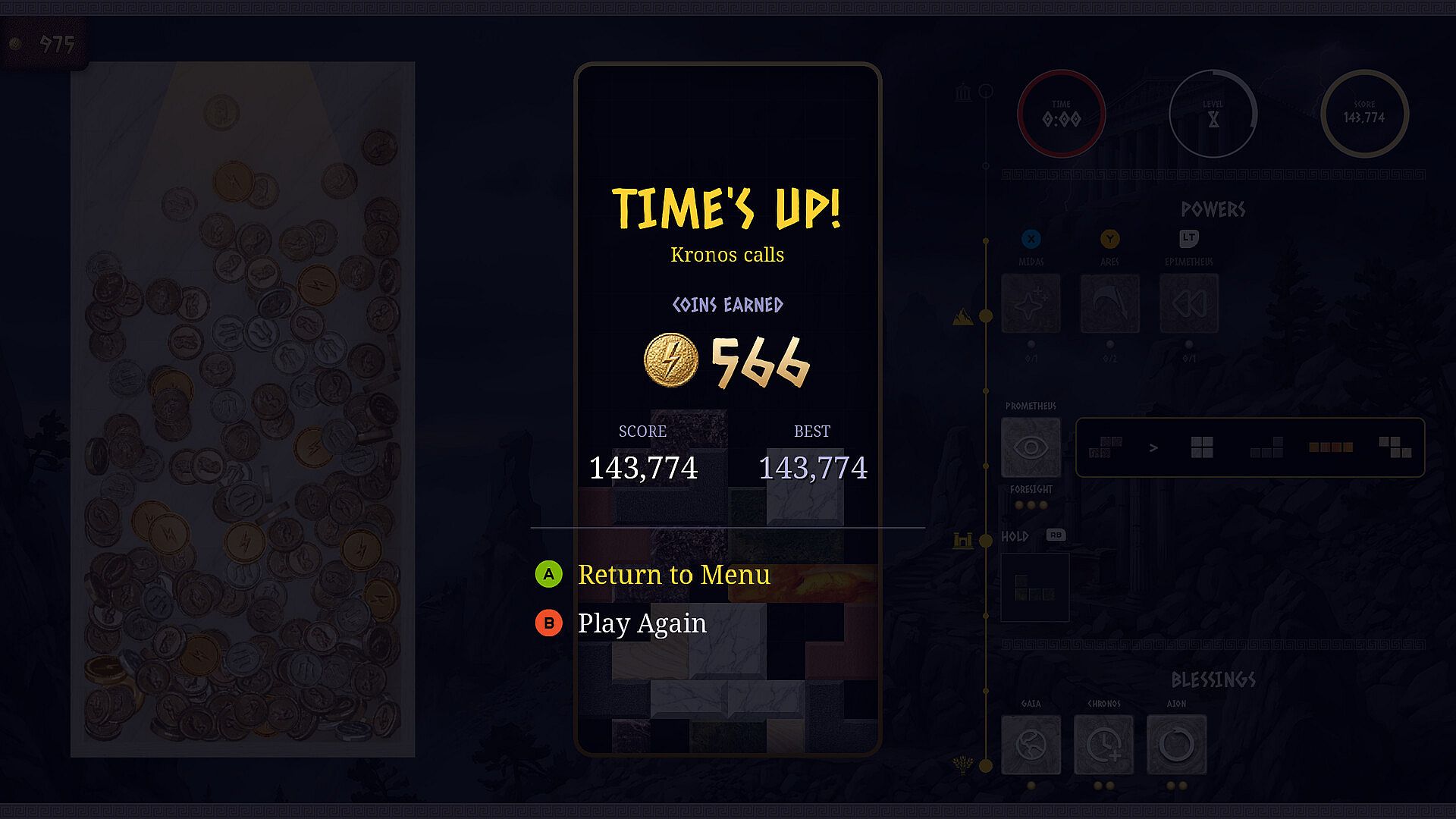
All play occurs through roguelite runs that emphasize progression across repeated attempts. Each session starts short and lengthens as players invest gold to extend time limits and acquire god blessings. Global leaderboards track performance for direct comparison with other players. The structure supports controller input throughout, including native Steam Deck compatibility, and focuses on single-player sessions without additional variants.
Key Mechanics and Features
Upgrades remain permanent once purchased and reshape future runs rather than simply increasing speed or score multipliers. Gold pieces and Ouroboros stones add layers to the stacking process, while the board itself grows in response to player advancement. Physics simulation governs the tumbling coins in the libation bowl beside the play area. The design maintains an unaltered falling-block experience without simplified rules or added distractions, prioritizing the satisfaction of exact fits and chain reactions.
Is It Worth Playing?
Tetragrade targets players who enjoy precise block placement combined with roguelite progression and light mythology-themed upgrades. The refundable upgrade system allows experimentation with different god combinations, and the short initial runs encourage quick restarts to test new builds. With a planned release in Q1 2027 and no reviews available yet, the appeal rests on the described core loop of stacking, clearing, and god-assisted extension. Those drawn to unadorned Tetris-style mechanics paired with meaningful permanent changes will find the structure matches that interest directly. Controller support and biomes add polish for extended sessions on PC or portable hardware.