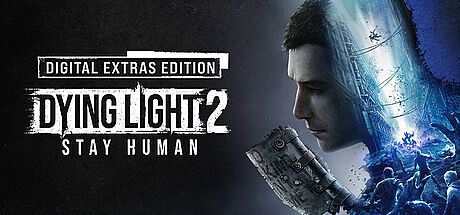





Dying Light 2 Stay Human Digital Extras Edition is a first-person action RPG adventure that places players in the role of Aiden Caldwell, an infected survivor navigating the vertical city of Villedor. The experience centers on fluid movement through ruined buildings and streets while managing resources against both infected hordes and hostile human groups during a persistent day and night cycle.
Gameplay
Traversal forms the foundation of the loop. Players climb ledges, wall-run, slide, and use a grappling hook alongside a paraglider to cross rooftops and reach elevated areas. Recent updates refined these systems with a toggleable physical parkour mode that increases manual control and challenge, plus knife-assisted slides on surfaces like billboards. Combat blends melee weapons that can be modified for elemental effects with environmental traps and UV light sources to repel the infected. Firearms were added through post-launch content and remain limited by scarce ammunition. Nights received a major overhaul that reduces visibility, introduces dynamic flashlight shadows, and heightens tension with more aggressive infected behavior, creating a heavier horror atmosphere. Skill progression splits between parkour and combat trees, with Legend Levels providing endgame upgrades that carry over in certain modes. Choices made during the campaign alter faction influence, open or close regions of the city, and shift available resources or encounters in subsequent play sessions.
Game Modes
The core campaign supports solo play or online co-op for up to four players on the same platform, allowing hosts and joiners to experience different world states based on individual decisions. Tower Raid serves as a permanent endgame activity where up to four players select from four classes-T Tank, Brawler, Ranger, or Specialist-and tackle randomized tower floors with quick, normal, or elite difficulty options. The Breach initiative, launched via patch 1.28, introduces community-submitted and studio-polished maps that support third-person traversal, low-gravity parkour segments, hardcore survival pockets, and experimental modifiers. Progression from the main game carries into these maps through shared XP and new gear rewards. Events such as Infected Outbreak periodically increase infected density across the city and offer limited-time rewards.
World and Progression
Villedor divides into distinct districts that players unlock progressively. Daytime encourages exploration and scavenging among survivors and rival groups, while darkness forces reliance on safe zones lit by UV lights. Faction systems, including the military-oriented Peacekeepers, allow players to align with different philosophies that reshape districts and unlock unique quests or vendors. Regular patches have streamlined early-game onboarding, rebalanced loot distribution, and improved visual consistency across environments, cutscenes, and lighting. Legend Levels now retain progress on resurrection in supported modes, and additional tiers unlock further upgrades.
Is It Worth Playing?
The game maintains a Mostly Positive reception on its primary platform, with hundreds of thousands of reviews reflecting sustained player engagement years after launch. Ongoing free updates continue to add maps, refine nights and parkour, and introduce events that keep the world active. It suits players who prioritize traversal mechanics, co-op sessions, and choice-driven world changes over linear storytelling. Those seeking a polished parkour-focused zombie survival loop with regular content drops will find consistent value in the current version, especially when the campaign is paired with Tower Raid or Breach maps for extended play. The Reloaded Edition bundles prior expansions and improvements into the base experience, making the complete package readily accessible for new or returning players.